
Buda — Royal Hill Above the Danube
At a Glance
| City | Buda, a fortified royal city above the Danube |
|---|---|
| Realm | Kingdom of Hungary |
| Political moment | Ladislaus V’s reign; rival court households and Hunyadi’s commanders compete for influence |
| Royal household | King Ladislaus V; royal officers, advisers and noble families whose rivalries reach the city gates |
| River and neighbour | The Danube; the markets and landings of Pest stand across the water |
| Languages | Hungarian and German in the streets; Italian among some merchants; Latin and other learned languages among certain scribes and scholars |
| Local worship | Household gods, ancestral rites, river and hill shrines, and traditions brought by travellers from across the kingdom |
| Services | Inns, ferrymen, stables, armourers, physicians, midwives, moneychangers, scribes, warehouses and skilled artisans |
| Immediate dangers | Rival warrants, missing couriers, river disappearances, factional violence and spies hunting frontier intelligence |
A river pilot shouts for the last carts to board the ferry before the wind turns. Up on the royal hill, a courier waits outside a guarded gate with a letter no clerk will accept. A moneychanger has just closed his shutters because men carrying the same seal are questioning every merchant from the south. Buda has food, work and strong walls, but a traveller who knows the wrong secret can be in danger before reaching an inn.
What Is Happening Right Now?
The ledger that vanished from the royal stores
Two wagons of iron fittings were paid for by a noble household and received at the royal stores. The wagons arrived, but the ledger recording their contents has disappeared. Bálint the armourer insists that several of the crates held finished weapons, not tools. Captain János, responsible for the gate watch, cannot explain why his men waved the load through after dark. An honest search could reveal a private army being equipped inside the king’s own city; a false accusation could leave the southern garrisons short of supplies.
Someone is taking the ferry crews
Three river hands have vanished from the landing below Castle Hill. Ilona, who manages a working ferryboat, has found wet footprints on a deck that was locked all night. A vodyanoi claims a deep channel beneath the landing. Its grievance is not against every traveller: a stone marker was dragged into the river when workmen widened the quay. The spirit wants the stone returned before another vessel crosses its water. Ilona wants the missing men brought home alive.
The southern courier
A rider from Wallachia reaches Buda at dusk. His papers describe a Dominion scouting party at a Danube crossing, but he is followed by men who say he stole a prince’s seal. A Hungarian commander offers payment for the papers; the rider asks only for a horse and a way out of the city. Whoever shelters him must decide whether the pursuers are spies, honest officials or both.
Places Adventurers Reach First
The royal hill and palace
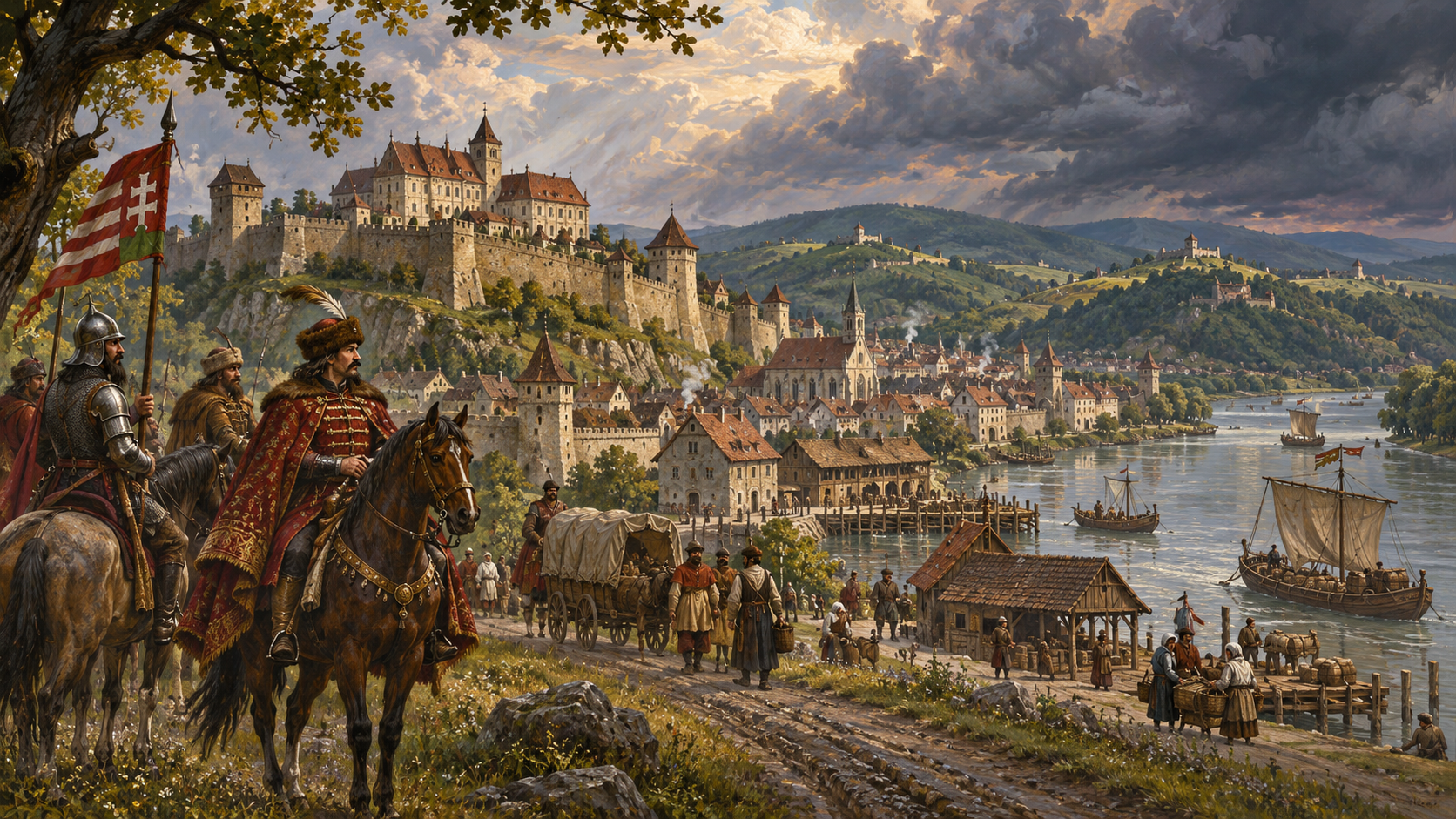
Castle Hill holds guarded residences, court offices, workshops, storehouses and the great royal palace built up by earlier kings. High officials maintain town houses close to the court, while clerks and servants know which households are welcoming visitors. The city has not yet acquired all the grander works associated with later rulers. Guards here are alert to threats, but their orders can change when an adviser falls from favour.
St George’s Market and the upper streets
Near the royal approaches, merchants sell cloth, wax, horse tackle, metalwork and imported luxuries. A court servant may buy a dozen fine candles without explaining why; a merchant whose client has been imprisoned may suddenly need an interpreter and a witness. The northern streets hold smaller shops, lodging rooms and houses whose owners serve very different political interests.
The Saturday Market
Waggoners, apprentices and river carriers gather to find labour and exchange news. Bálint’s smithy repairs ordinary blades and broken harness buckles; expensive armour and specialised work require a patron or a trusted introduction. Dorottya, who keeps an eating house just off the market, serves hot barley stew and knows which caravan masters still pay their people on time.
The Danube landings and Pest
Down at the water, grain barges, fishing boats and hired ferries compete for landing space. The opposite bank belongs to Pest, with its own markets and town interests. A traveller crossing the river must arrange passage with a boatman who knows the current. Floods, drifting timber, river ice and soldiers searching cargo can all delay a crossing. Ilona takes passengers who help mend the landing; she refuses armed men who threaten her crew.
The hill shrines and old wells
Families leave offerings at stones, wells and household sanctuaries whose keepers remember the dead by name. Some sanctuaries serve several languages and different local divine traditions. A sick child may receive care from a healer trained in herbs, while a worried parent asks the shrine keeper whether a dream came from an ancestor or an uninvited spirit. None of these powers answers every bargain. At the quay, the old river marker remains missing.
People and Rival Houses
Ladislaus V wears Hungary’s crown, but powerful men act in his name and dispute what service they owe him. An audience may require several introductions. The king wants obedience and a secure capital; his advisers fear the commander who could enforce those orders without them.
John Hunyadi remains Hungary’s great soldier, with captains who trust him more readily than many courtiers. His supporters seek reliable supplies and warning of attacks on the southern frontier. Ulrich of Celje protects his own standing near the crown and regards independent military networks with suspicion. Neither man needs to march an army into Buda to cause trouble there.
Ilona the ferrymaster is proud of her crews and will oppose any lord who treats them as disposable. She offers safe passage and knowledge of the river, but will not carry captives secretly without knowing why. Bálint the armourer wants payment for missing weapons and fears his workshop will be blamed for another man’s conspiracy. Dorottya of the Saturday Market feeds drivers, labourers and strangers who cannot afford the royal inns; her loyalty goes first to the families who live in the streets around her.
Food, Healing and Useful Services
The larger inns can stable horses and accommodate merchants with guards and wagons. Smaller rooms above shops cost less but offer little privacy. A traveller can find bread, cooked beans, smoked fish, ale, rope, nails and fodder in the market. Armourers, carpenters, cartwrights and saddlers accept straightforward work; a finely balanced sword or unusual fitting may require a specialist who serves a noble household.
Physicians, midwives, herbalists and shrine healers tend wounds, fever and sickness. Moneychangers weigh foreign coin, while scribes copy letters and write contracts in several languages. Powerful magic is not sold at a public counter. A learned practitioner may accept an introduction from a court officer, a merchant house or a respected shrine keeper, and will want to know why a stranger needs a difficult spell.
Danger, Rumour and Consequence
The sleepless herald. A royal messenger repeatedly knocks at the door of a merchant who died last winter. The herald insists the order has been delivered and cannot explain why the seal on it is still warm. The merchant’s daughter says her father did not die at home.
The hungry storehouse. Children living near the lower gate say grain sacks have moved by themselves. The storekeeper blames rats. Dorottya has seen food carried away at night to the families of unpaid soldiers, while a night watchman has found claw marks cut through a locked door.
The river marker. A stonecutter admits he sold the old channel marker after the quay was repaired. It now stands in a wealthy patron’s garden, where his household has begun hearing the river inside the walls. Returning it may settle the vodyanoi’s grievance, but the patron refuses to let the stone leave without payment.
Help Ilona bring her boatmen home and river crews will remember the travellers. Expose the arms shipment fairly and Bálint may find reliable work again; accuse the wrong house and the smith will lose customers overnight. Save the southern courier and a frontier captain may warn the party of a later danger. Buda is large enough for news to travel quickly and small enough for the same faces to meet again.
Leaving Buda
Northward, the Danube road leads towards Visegrád and the trade routes reaching Pozsony and the western markets. Eastward, Pest connects to roads through the plains and on towards Transylvania. To the south, river craft travel towards guarded crossings and Hungary’s frontier strongholds, where army supplies compete for boats with merchant cargo.
Travellers aiming for Târgoviște leave the Hungarian towns for the mountain roads through Brașov, then descend by the Rucăr–Câmpulung pass into Wallachia. The roads are genuine but weather, guides and patrols matter; no royal safe-conduct opens every bridge. For a wider journey, follow the East Central Europe regional atlas, the Kingdom of Hungary or Croatia under the shared crown.
The City Behind the Court
Buda grew into one of the chief royal and commercial centres of medieval Hungary after the Mongol devastations. Strong walls, a defensible hill, river trade and the presence of the royal household brought merchants, officials and skilled craftspeople into its streets. The town has never been merely a palace with servants living beyond it. Its markets, neighbourhoods, ferrymen and shopkeepers possess their own interests.
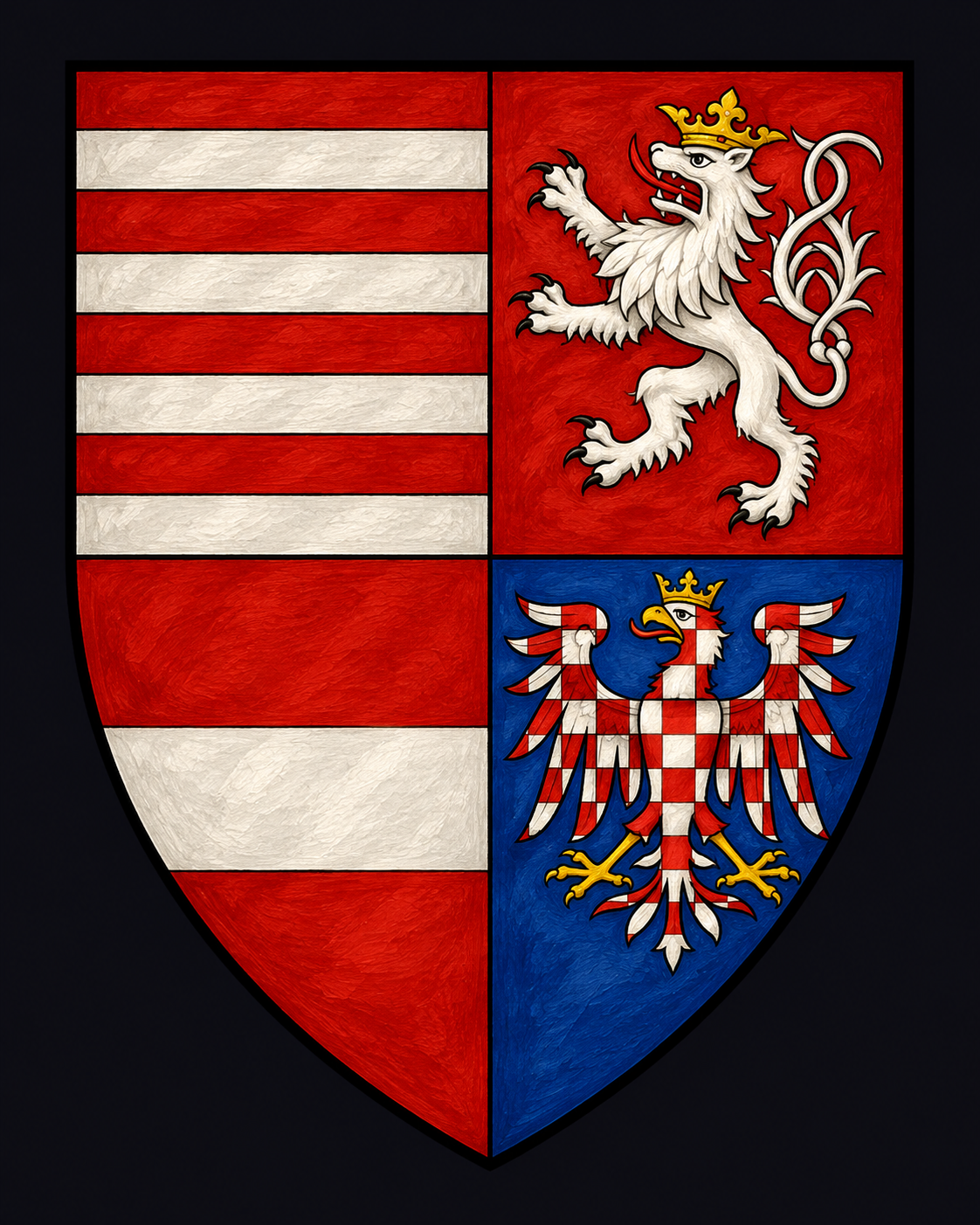
Modern visitors know a larger city and later royal buildings, but the old streets and palace approached from the Danube remain the centre of life here. Buda’s civic seal is distinct from the royal arms displayed above; the latter belong to Ladislaus V’s household. The kingdom’s future struggles will change the city, though none of its present inhabitants knows which walls will be tested first.
Historical Sources
Budapest History Museum — The History of Buda to 1541 describes the medieval castle district, palace and urban growth. National Archives of Hungary — Medieval Town Seals records Buda’s older great seal and the use of Árpád stripes. The painted arms above are those of Ladislaus V and are not presented as Buda’s municipal arms. The royal rivalries, town life and river routes draw on historical evidence; named supporting townsfolk, supernatural encounters and altered sacred customs belong to the living fantasy setting.
Keep this reference growing
If this page helped with your reading or game, you can support its upkeep or explore the curated books.
Explore the Bookshop — epics, classics and stories behind imagined worlds.