
The StoryTeller (1987–1989)
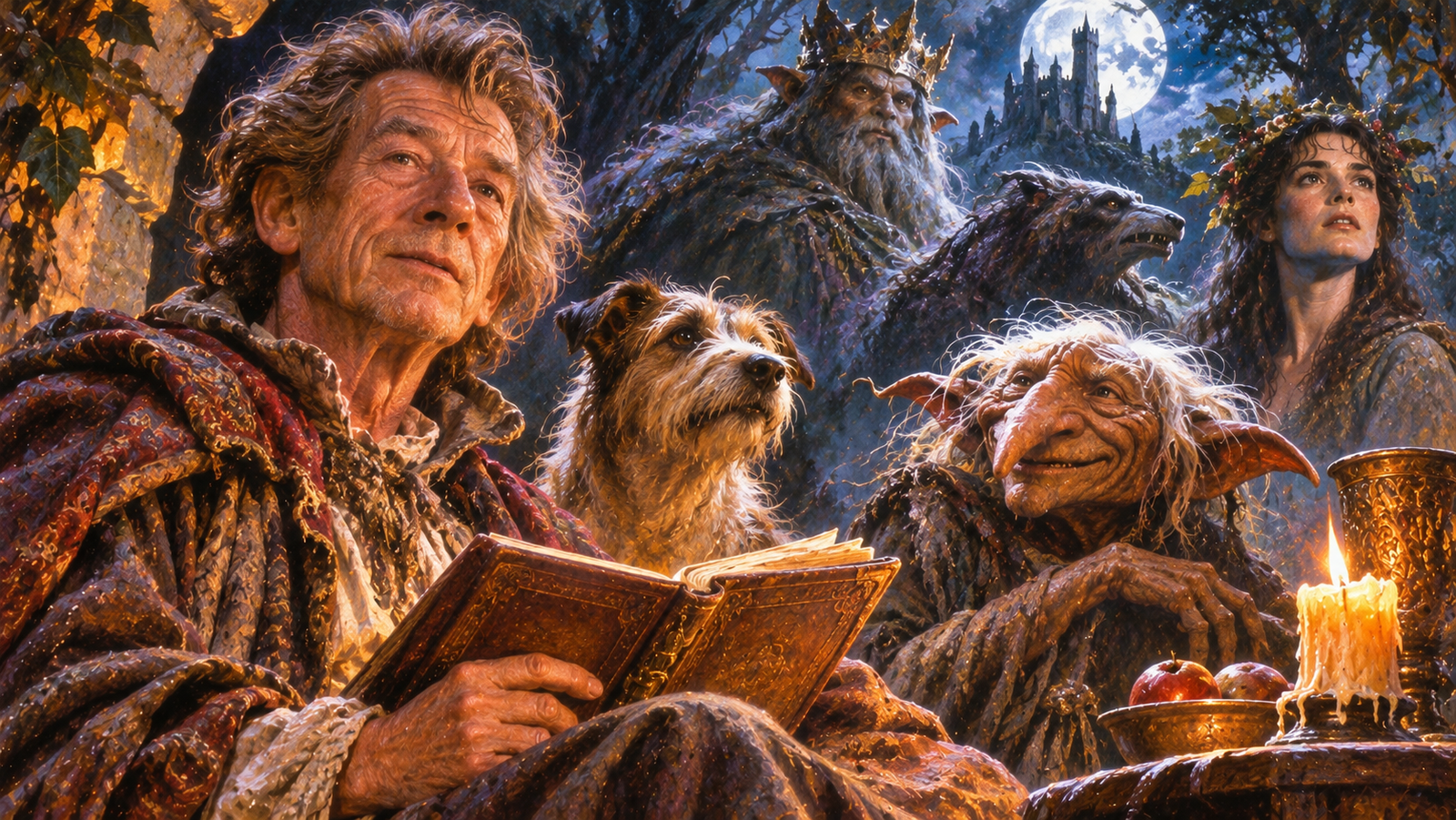
Old tales told by firelight, where a promise can be more dangerous than a monster.
Jim Henson’s The StoryTeller (1987–1989) turns European folk tales into richly textured television fantasy. A weathered old man sits beside his hearth and tells stories to a sceptical, talkative dog. Within the tales, princes meet impossible helpers, soldiers bargain with Death and ordinary people discover that cleverness, compassion or a broken promise can change everything. The series’ greatest strength is its sense that these stories have survived through generations of retelling, rather than having been invented for television.
At a Glance
| Series | Jim Henson’s The StoryTeller (original European folk-tale series, 1987–1989) |
|---|---|
| Creator | Jim Henson |
| Storyteller | John Hurt |
| The Dog | Performed and voiced by Brian Henson |
| Writer | Anthony Minghella |
| Producer | Duncan Kenworthy |
| Music | Rachel Portman |
| Original stories | Nine episodes, drawing on European folk traditions |
| Format | Television anthology; live action, puppetry and creature effects |

Why This Series Matters
The programme does not try to modernise every folk tale into a familiar three-act adventure. Strange bargains remain strange. Magical helpers may be blunt, unfriendly or reluctant, and an apparent punishment may conceal a lesson the hero does not yet understand. The Storyteller’s voice offers warmth, but the world inside the stories is capable of genuine cruelty. This mixture gives the series its distinctive tone: intimate and unsettling at once.
Stories by the Hearth
John Hurt’s old storyteller speaks directly to his dog, who interrupts, questions and occasionally spots weaknesses in a tale. Their conversations provide a gentle counterweight to what happens within the stories. The dog is not merely comic relief; he gives the audience permission to be curious, frightened or doubtful. The narrator, in turn, sometimes seems less certain of a story’s meaning than his confident voice suggests.
Episodes such as Hans My Hedgehog, The Soldier and Death, The Heartless Giant and A Story Short demonstrate how different the tales can be. One concerns a creature whose appearance conceals vulnerability, another a dangerous attempt to outwit mortality; others turn on promises, loyalty and the terrible consequences of a careless act. Each works as a complete tale while belonging to the same imagined tradition of fireside storytelling.
Characters and Performances
The Storyteller (John Hurt) has the authority of someone who has told the same story a hundred times, yet remains capable of surprise. His expressive voice and weathered appearance anchor the fantastical episodes in an ordinary human room. The Dog (Brian Henson) responds with impatience, delight and practical objections, creating an affectionate partnership between performer and puppet.
Guest performers, creatures and human characters vary by episode. Heroes are not always noble, monsters are not always what they appear, and the outcome of a story can depend on a single act of empathy rather than a triumph of strength.
The World on Screen
The creatures bear the hallmarks of Jim Henson’s workshop: textured faces, irregular silhouettes, expressive eyes and a physical presence shaped by puppetry and practical fabrication. Forests, castles, huts and crossroads feel as though they belong to a shared body of folklore, even though no one map connects them. Magic is often encountered as something ancient and local, subject to obligations that cannot be bypassed by force.
Like The Dark Crystal, the series believes that nonhuman beings can have motives and physical cultures of their own. Unlike that feature film, its settings are deliberately episodic. A single episode may contain a complete kingdom, its customs and its supernatural secrets.
Behind the Camera
Jim Henson created the series and helped guide its blend of live action and creature work. Anthony Minghella wrote the original stories for television, drawing on versions of European folk tales rather than one modern fantasy franchise. Duncan Kenworthy produced and Rachel Portman’s score gives the intimate narration a sense of wonder and loss. Jim Henson directed episodes including The Soldier and Death and The Heartless Giant.
The original nine episodes appeared in a complicated pattern of British and American broadcasts between 1987 and 1989. A later Greek Myths companion series should be distinguished from these original European tales, rather than counted as the same nine episodes.
Themes and Critical Assessment
The programme’s recurring subjects are the weight of promises, the cost of greed, the possibility of mercy and the danger of assuming that a frightening appearance proves evil. Its moral lessons are often ambiguous enough to invite argument. A trick that saves one character may carry a burden for another; a bargain may be technically fulfilled but emotionally devastating.
What works: John Hurt’s storytelling, the lively dog, imaginative creature design, and stories that retain an older, less predictable sense of wonder. What works less well: some abrupt endings and uneven clarity in the rules of magic. Those rough edges are part of the folk-tale form, though viewers expecting a single continuous plot may find the anthology structure unfamiliar.
Ideas for the Table
Use a traditional tale as the opening situation of a sandbox, not as a script the players must follow. A farmer makes a promise to an unseen helper; a soldier returns from war carrying an object that Death wants back; a giant asks for a friend who will not betray him. Give each participant an understandable need and allow the players to discover the bargain’s terms through conversation and investigation.
Three useful questions make a folk-tale adventure playable: what does each being truly want, what rule of the supernatural world makes the situation difficult, and what happens if the party finds a solution no storyteller anticipated? Reward empathy, negotiation and ingenuity alongside courage. The Fey Bestiary supplies many possible inhabitants, while the NPC archive can help populate the neighbouring villages and courts.
Legacy and Related Viewing
Explore The Dark Crystal (1982) and Labyrinth (1986) for two other major Henson fantasy worlds. The central achievement of The StoryTeller is different: it shows how a short, self-contained piece of traditional narrative can have the richness of an entire world.
Sources and Credits
- The Jim Henson Company — The StoryTeller (official series introduction).
- Museum of the Moving Image — John Hurt and The StoryTeller (series and performance background).
- Jim Henson’s Red Book — series development (folklore research, puppetry and writing).
Series imagery and characters remain the property of their respective rights holders. The review and original game suggestions are independent editorial content.
Keep this reference growing
If this page helped with your reading or game, you can support its upkeep or explore the curated books.
Explore the Bookshop — epics, classics and stories behind imagined worlds.