
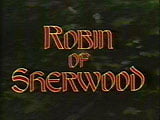
Robin of Sherwood (1984–1986)
A forest outlaw takes up a supernatural calling in a land divided by power, poverty and old loyalties.
Richard Carpenter’s Robin of Sherwood combines the English outlaw legends with supernatural fantasy. Its woodland atmosphere and recurring antagonists make Sherwood more than a refuge: it is a landscape of competing claims, old magic and communities struggling to survive.
At a Glance
| Title | Robin of Sherwood (1984–1986) |
|---|---|
| Original run | 1984–1986; three series |
| Creator | Richard Carpenter |
| Broadcaster | ITV |
| Principal cast | Michael Praed, Jason Connery, Judi Trott, Ray Winstone, Clive Mantle, Nickolas Grace, Robert Addie, John Abineri |
| Music | Clannad |
| Genre | Folkloric fantasy; historical adventure |
Why This Series Matters
The outlaw band depends on cooperation with communities beyond the forest. The recurring Sheriff, rival knights and supernatural patrons mean that every successful intervention can alter the balance of power. Its treatment of the outlaw mantle also allows the fellowship to continue beyond the career of a single hero.
The Story — Without Major Spoilers
Robin of Loxley becomes the chosen champion of Herne the Hunter and gathers companions in Sherwood. The Sheriff and Guy of Gisburne repeatedly threaten the band and the people who shelter it. Later, Robert of Huntingdon inherits the mantle of Robin Hood, introducing a different temperament to the same struggle.
Characters and Performances
Michael Praed brings a reflective intensity to Robin of Loxley, while Jason Connery’s Robert of Huntingdon faces the burden of following him. Judi Trott’s Marion, Clive Mantle’s Little John, Ray Winstone’s Will Scarlet, Phil Rose’s Tuck and Peter Llewellyn Williams’s Much give the fellowship distinct personalities. Nickolas Grace and Robert Addie provide memorable rivalries as the Sheriff and Gisburne; John Abineri plays the enigmatic Herne.
The World on Screen
Woodland, villages, abbeys and fortified households form a coherent landscape of recurring disputes. The supernatural is frequently ambiguous, and local people’s knowledge is valuable. The show’s treatment of Herne, kingship and medieval belief is a creative synthesis, not a historical reconstruction.
Behind the Camera
Carpenter’s writing and Clannad’s distinctive music establish a sustained folkloric atmosphere. Location photography and economical practical effects keep the fantasy close to the landscape. The series ran for three seasons, ending in 1986.
Themes and Critical Assessment
The series is strongest when solidarity is difficult rather than automatic. Its outlaws have incompatible tempers and priorities, and the best episodes let those differences shape their choices. Its supernatural invention is particularly effective when it remains mysterious; some episodic villains and effects are inevitably products of their television era.
Explore in SpiralWorlds
- Robin Hood, Maid Marian, Little John and Will Scarlet — the legendary outlaws and their allies.
- Tuck of Sherwood and Much the Miller’s Son — members of the outlaw fellowship.
- Guy of Gisbourne and the Sheriff of Nottingham — independent campaign rivals whose identities and motives differ from their screen counterparts.
- Sherwood Forest and Nottingham — the campaign’s playable locations.
Herne’s role invites comparison with the Horned Hunter and Cernunnos. These are related motifs, not evidence that Herne, the Celtic god and the campaign’s fey hunter are the same being. The programme’s Nasir belongs to its own continuity.
Ideas for the Table
The contested woodland. Foresters, charcoal burners and outlaws claim the same road. Discover who profits from restricting access and which communities depend on it.
The mantle passes. A leader disappears, leaving trusted companions divided over a successor. Their allegiance depends on the candidate’s deeds rather than a title alone.
The antlered patron. A supernatural hunter offers aid, but its interest in the forest differs from the outlaws’ concerns. Establish the price and alternatives before accepting.
Related Viewing
Compare Robin Hood: Prince of Thieves (1991) for a more conventional cinematic adventure.
Sources and Credits
The screen production and promotional artwork remain the work of their respective rights holders. This review and original adventure ideas are independent commentary.
Keep this reference growing
If this page helped with your reading or game, you can support its upkeep or explore the curated books.
Explore the Bookshop — epics, classics and stories behind imagined worlds.