
Ludwig IX the Rich — Duke of Bavaria-Landshut
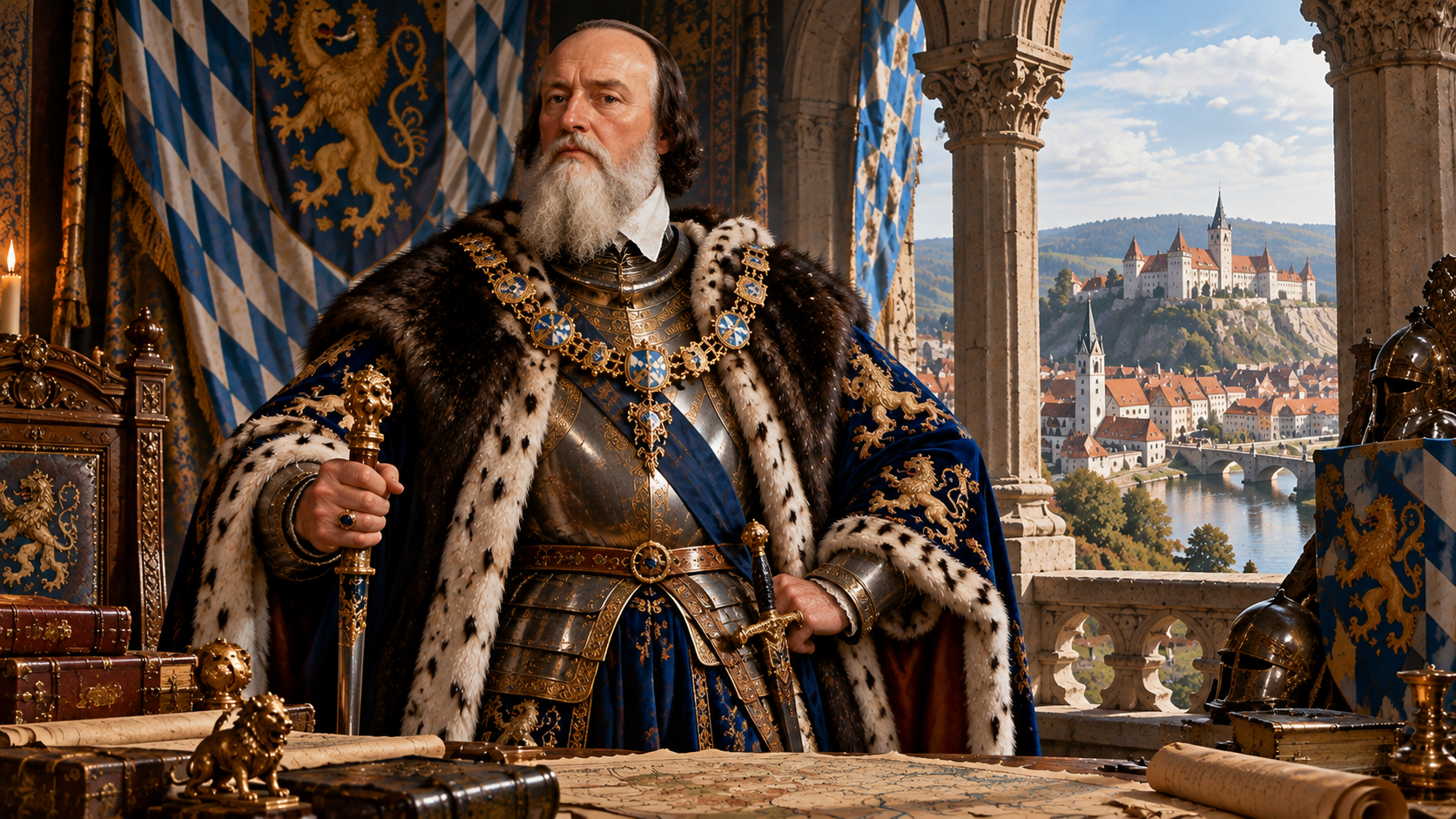
The Rich Duke · Master of the Landshut treasury · Wittelsbach ruler of the Isar court
Above Landshut, in the guarded chambers of his castle, Ludwig IX studies two sealed petitions. One seeks permission to collect an inherited toll; the other proves that the same toll has already been collected three times. A clerk waits for a verdict, a captain waits for an arrest order, and a dwarven craftsman waits outside the gate with a claim no one at court wishes to read. The duke does not raise his voice. He asks whose seal authorised the third collection.
At a Glance
| Identity | Ludwig IX (Louis IX), called the Rich; House of Wittelsbach |
|---|---|
| Ancestry and Alignment | Human; lawful neutral (campaign interpretation) |
| Age | 37 in the campaign present; born in 1417 |
| Title | Reigning Duke of Bavaria-Landshut since 1450, not Duke of Bavaria-Munich |
| Seat | Trausnitz Castle above Landshut; also Burghausen |
| Family | Son of Henry XVI the Rich and Margaret of Austria; married to Amalia of Saxony since 1452 |
| Court Languages | Bavarian German, Latin; interpreters for visiting courts |
| Strengths | Command, legal authority, wealth, strategic patience and courtly leverage |
| Present Concern | Secure the Ingolstadt inheritance, expose corrupt toll officers and maintain his dynasty’s standing |
| Game Role | CR 5 fifth-edition noble commander; comparable original conversions for Pathfinder 1e and D&D 3.5e |
Game Mechanics — Choose Your Edition
These four original adaptations depict Ludwig himself, not the entire ducal guard. His seal and social authority matter only where recognised by local law. The statistics do not automatically grant him a summoned army, magical dominion or free control of other characters.
Ludwig IX, Rich Duke — CR 5
Medium Humanoid (Human), Lawful Neutral
AC 18 (breastplate, shield) · Initiative +2 (12) · HP 104 (16d8 + 32) · Speed 30 ft.
| STR | DEX | CON | INT | WIS | CHA |
|---|---|---|---|---|---|
| 18 (+4) | 14 (+2) | 14 (+2) | 16 (+3) | 14 (+2) | 18 (+4) |
Saving Throws Str +7, Wis +5, Cha +7
Skills History +6, Insight +5, Intimidation +7, Persuasion +7
Senses Passive Perception 12
Languages Bavarian German, Latin; court interpreters available
Challenge 5 (1,800 XP; PB +3)
Traits
Trained Commander. Ludwig has Advantage on saving throws against being Frightened while he can see or hear a conscious allied guard within 30 ft. This provides no benefit to guards.
Ducal Authority (Roleplay). When an official lawfully recognises Ludwig’s rank, he has Advantage on Charisma (Persuasion) checks to request records or an audience. This does not compel hostile, independent or magically influenced creatures and never overrides a player’s agency.
Actions
Multiattack. Ludwig makes three Longsword attacks.
Longsword. Melee Attack Roll: +7, reach 5 ft. Hit: 8 (1d8 + 4) Slashing damage.
Heavy Crossbow. Ranged Attack Roll: +5, range 100/400 ft. Hit: 7 (1d10 + 2) Piercing damage. Loading limits this weapon to one attack when he uses the action to fire it.
Bonus Actions
Command the Line. One ally Ludwig can see within 30 ft. that can hear him can immediately use its Reaction either to move up to half its Speed without provoking Opportunity Attacks or to make one weapon attack against a creature in range. Ludwig cannot choose an unwilling ally.
Reactions
Parry. Ludwig adds 3 to his AC against one melee attack that would hit him, provided he sees the attacker and holds his longsword.
Optional Court Encounter Mechanics
Calling for the Guard. When at a guarded ducal residence, Ludwig may use an action to call for help. Any guards arrive according to the established scene, distance and obstacles; no creature materialises by magic. Such guards are a separate encounter and are not part of his CR.
Seal and Ledger. During a formal hearing, a character presenting a relevant authentic record can attempt a DC 15 Intelligence (Investigation) or Charisma (Persuasion) check, as appropriate. Success identifies one contradiction in a ducal claim or persuades Ludwig to hear the claimant. Forged evidence may instead be exposed by an opposed check against an official’s Investigation. These are social scene options, not supernatural lair actions.
Ludwig IX, Rich Duke — CR 5
Medium humanoid (human), lawful neutral
Armor Class 18 (breastplate, shield) · Hit Points 104 (16d8 + 32) · Speed 30 ft.
| STR | DEX | CON | INT | WIS | CHA |
|---|---|---|---|---|---|
| 18 (+4) | 14 (+2) | 14 (+2) | 16 (+3) | 14 (+2) | 18 (+4) |
Saving Throws Str +7, Wis +5, Cha +7 · Skills History +6, Insight +5, Intimidation +7, Persuasion +7 · Senses passive Perception 12 · Languages Bavarian German, Latin · Challenge 5 (1,800 XP)
Traits
Trained Commander. Ludwig has advantage on saving throws against being frightened while a conscious allied guard he can see or hear is within 30 feet.
Ducal Authority. Ludwig has advantage on Charisma (Persuasion) checks to request an audience or records when his ducal authority is lawfully recognised; a hostile or autonomous official is not obliged to comply.
Actions
Multiattack. Ludwig makes three longsword attacks.
Longsword. Melee Weapon Attack: +7 to hit, reach 5 ft., one target. Hit: 8 (1d8 + 4) slashing damage.
Heavy Crossbow. Ranged Weapon Attack: +5 to hit, range 100/400 ft., one target. Hit: 7 (1d10 + 2) piercing damage; the loading property applies.
Bonus Actions
Command the Line. One willing ally within 30 ft. that can hear Ludwig may use its reaction immediately to move up to half its speed without provoking opportunity attacks or to make a single weapon attack against a target in range.
Reactions
Parry. Ludwig adds 3 to his AC against one melee attack that would hit him, provided he can see the attacker and is holding his longsword.
Optional Court Encounter Mechanics
Guard Response. An action to shout for guards alerts only creatures that can reasonably hear him. Guards arriving from elsewhere are separate creatures and do not change Ludwig’s personal CR 5.
Records Hearing. A relevant authentic document and a successful DC 15 Intelligence (Investigation) or Charisma (Persuasion) check can win a hearing or reveal a contradiction in an official account. A forged document invites scrutiny; success never guarantees a predetermined verdict.
Ludwig IX, Duke of Bavaria-Landshut — CR 5
Male human fighter 6; LN Medium humanoid (human)
Init +6; Senses Perception +7
Defence
AC 20, touch 12, flat-footed 18 (+6 breastplate, +2 heavy steel shield, +2 Dex)
hp 51 (6d10 + 12 plus Toughness)
Fort +7, Ref +4, Will +5
Offence
Speed 30 ft. (armour training permits normal speed in medium armour)
Melee +1 longsword +13/+8 (1d8+6/19–20; includes weapon training +1)
Ranged heavy crossbow +8 (1d10/19–20; reload as standard action)
Special Abilities armour training 2, weapon training (heavy blades +1), bravery +2
Statistics
Str 18, Dex 14, Con 14, Int 14, Wis 12, Cha 16
Base Atk +6; CMB +10; CMD 22
Feats Weapon Focus (longsword), Power Attack, Improved Initiative, Combat Expertise, Toughness, Skill Focus (Diplomacy), Iron Will, Improved Shield Bash
Skills Diplomacy +12, Intimidate +12, Knowledge (nobility) +8, Perception +7, Sense Motive +7; Languages Bavarian German, Latin
Combat and Court
Power Attack. He may take a –2 penalty on melee attack rolls for a +4 bonus on one-handed weapon damage rolls. With Power Attack, his longsword attack is +11/+6 (1d8+10/19–20); the principal attack line excludes this adjustment.
Order the Guards (Ex, 1/round). As a standard action, Ludwig can allow one willing allied guard within 30 ft. who can hear him to immediately move up to its speed, using its next turn’s move action in advance. This does not grant an additional move action and remains an original encounter option, not a standard fighter class feature. This is an original encounter option, not a standard fighter class feature.
Hearing of Seals (Ex). In a functioning ducal court, a character producing credible documents can attempt a DC 15 Diplomacy or Knowledge (nobility) check to earn an interview; documents may be challenged with opposed Linguistics checks. The court’s guards are separate NPCs and are not included in CR 5.
Ludwig IX, Rich Duke — CR 6
Male human fighter 6; lawful neutral Medium humanoid (human)
Initiative +6; Senses Listen +1, Spot +1; Languages Bavarian German, Latin
Defence
Armor Class 20, touch 12, flat-footed 18 (+6 breastplate, +2 heavy steel shield, +2 Dex)
Hit Points 45 (6d10 + 12)
Fort +7, Ref +4, Will +5
Offence
Speed 20 ft.
Melee +1 longsword +12/+7 (1d8+7/19–20)
Ranged heavy crossbow +8 (1d10/19–20; reload as full-round action)
Base Attack +6/+1; Grapple +10
Abilities and Feats
Str 18, Dex 14, Con 14, Int 14, Wis 12, Cha 16
Feats Weapon Focus (longsword), Weapon Specialization (longsword), Power Attack, Improved Initiative, Combat Expertise, Improved Disarm, Iron Will, Negotiator
Skills Diplomacy +9, Intimidate +9, Knowledge (nobility and royalty) +6, Sense Motive +7; Possessions breastplate, heavy steel shield, +1 longsword, heavy crossbow and bolts, personal signet
Combat and Court
Power Attack. Ludwig can accept a penalty on melee attack rolls of up to 6 to gain an equal bonus to damage rolls with his one-handed longsword; the listed attacks do not include this option.
Rallying Order (Ex, 1/day). As a standard action, Ludwig grants allied guards within 30 feet who can hear him a +1 morale bonus on attack rolls and saving throws against fear for 3 rounds. This is an original optional NPC ability, not an official fighter feature.
Judgment by Seal. A DC 15 Diplomacy or Knowledge (nobility and royalty) check supported by relevant evidence may win an audience. The GM determines legal authority, witnesses and consequences; the ducal seal is not a mind-control effect.
Edition differences. The fifth-edition CRs represent a single elite commander. Pathfinder NPC CR and 3.5e CR are computed under different character-building assumptions and need not match; all social hearing and entourage rules are optional. Guards and other allies have their own initiative, statistics and experience value.
What Is Ludwig IX Doing Right Now?
A New Duke with Old Debts
Ludwig succeeded his father Henry XVI in 1450. The Treaty of Erding secured most of the former Bavaria-Ingolstadt inheritance for his duchy, but not a clean account book. He is demanding reports from bailiffs, inspecting security along the Isar and Danube roads, and quietly negotiating with families whose charters were issued under another branch of the Wittelsbachs. A court that looks prosperous can still be alarmed by a missing inventory.
The Dwarven Petition
Guild disputes and special levies have pushed some dwarven smithing households from the duchy. Ludwig maintains that ducal taxes apply to all craft privileges; the displaced families argue that their agreements were altered after the inheritance. Neither account need be wholly true. He wants proof of forgery more than a public confrontation, provided the inquiry does not discredit his office.
A Marriage Alliance, Not a Future Wedding
Ludwig married Amalia of Saxony in 1452, binding his court more closely to the Saxon electoral family. In this campaign present he is concerned with preserving that alliance and securing his own succession. His son George is not yet born and the great Landshut Wedding is not an event being arranged now.
A Watchful Imperial Relationship
He watches the privileges claimed by Free Imperial Cities and the court of Emperor Frederick III. Their future disputes are not predetermined; in 1454 Ludwig is navigating claims, tolls and local influence, not celebrating later victories.
How Adventurers Meet the Duke
Most visitors encounter his chamberlain, a treasury clerk, a senior household knight or a council secretary first. The duke grants an audience for a matter affecting his revenues, honour or legal authority, especially where the petitioners bring an authentic seal, corroborating witnesses and a clear remedy. He is more likely to hire capable outsiders to retrieve an old Ingolstadt charter than to personally ride into a ruined mine.
Three Ways to Earn His Attention
- The Toll Chest. A caravan master hands the party a set of mutually contradictory toll receipts; the Duke wants the honest clerk found before a captain raids the merchants’ camp.
- The Dwarven Witness. A smith has proof that a ducal charter was amended, but will speak only under a guarantee of safe-conduct. Ludwig sends outsiders because his own officers are suspected.
- The Broken Courtesy. An emissary from Munich is detained in a disputed district. Releasing him preserves peace; discovering who forged his invitation may prevent a wider dynastic quarrel.
Personality, Relationships and Secrets
Appearance. At thirty-seven, Ludwig is a capable horseman whose expensive coats, fur and enamelled fittings advertise his treasury rather than unusual supernatural power. During formal hearings he dresses as a ruling prince, with household guards close enough to hear an order.
Voice. He uses short questions and expects precise answers. He seldom repeats a demand. He will hear a plain-spoken clerk who brings a sound document before a flattering lord who brings only complaints.
Virtue and fault. He can be fiercely protective of legitimate merchants and travellers under his peace, but he may mistake resistance to an unjust levy for defiance of government itself. Public humiliation makes compromise difficult.
Amalia of Saxony. His wife operates through household patronage and dynastic ties. Her attendants can provide a quieter route to a hearing than the ducal chancery.
Albrecht III and Albert IV. Munich remains a separate Wittelsbach court. Albert IV is already an adult prince in the campaign’s deliberately altered chronology; Ludwig regards him as a skilled, ambitious envoy, not his direct subordinate.
The Emperor. Frederick III’s distant authority matters when city privileges and ducal rights collide. Ludwig would rather win a written settlement than provoke a military confrontation over a petty official’s error.
Hidden weakness. A duplicate treasury book names beneficiaries of levies imposed on displaced dwarven families. If the original emerges, Ludwig must decide whether protecting a corrupt officer is worth making his own ducal seal seem dishonourable.
Encounters and Adventure Hooks
| d6 | The Rich Duke’s Commission |
|---|---|
| 1 | The Forged Ingolstadt Deed. Two charters award the same mine to different families. A lost notary can reveal which record predates the 1450 treaty. |
| 2 | The Missing Treasurer. A clerk flees Trausnitz with a ledger revealing double levies. Agents of both the guilty bailiff and an innocent claimant pursue him. |
| 3 | The Smiths’ Oath. Displaced dwarves will return to negotiate only if their escort first retrieves confiscated tools from a river customs house. |
| 4 | A Prince’s Letter. A messenger associated with Albert IV seeks shelter carrying a document that could reopen a sensitive Wittelsbach inheritance dispute. |
| 5 | The Toll under the Water. A nixie has claimed a bridge’s coins after a river pact was broken. Ludwig’s officers call it smuggling; the ferrymen insist payment has already been made. |
| 6 | The Candle Cipher. A document thief sells ducal archive copies to a covert cell of the Bavarian Illuminati. Ludwig needs the copies recovered without exposing a related family’s embarrassment. |
Possessions, Patronage and Rewards
Equipment. A ceremonial chain, personal signet, ducal writs, guarded travel chests, armour, sword and crossbow. His court wealth belongs to the duchy’s treasury and households; it is not a personal hoard automatically available to a character who defeats him.
Rewards. Depending on the scale of service, Ludwig can order a fair fee, restore a wrongly seized charter, issue a narrowly worded letter of passage, arrange a household audience, commission an escort or provide temporary hospitality. He cannot legally overrule Regensburg’s independent government merely by handing a party his seal.
If made an enemy. He may summon witnesses, suspend a commission, freeze a disputed claim or authorise a lawful arrest. Sending soldiers across a frontier risks an imperial complaint. For the strongest campaign, give the characters a chance to challenge him with evidence before drawing weapons.
Historical Portrait and Context
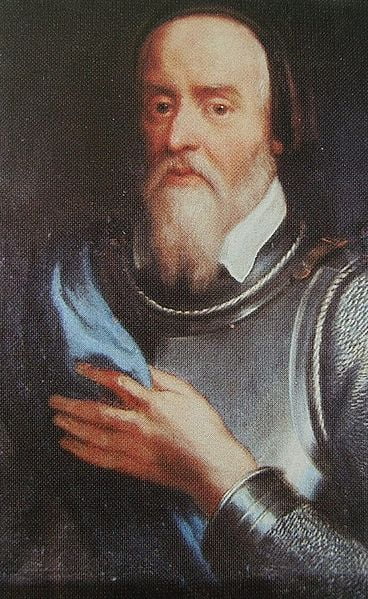
The historical Ludwig IX the Rich was born at Burghausen in 1417 and ruled Bavaria-Landshut from 1450 until his death in 1479. His father was Henry XVI; his mother was Margaret of Austria. He married Amalia of Saxony in 1452. The historical invasion of Dinkelsbühl and Donauwörth occurred in 1458; the establishment of the university at Ingolstadt followed in 1472, and George’s famous wedding in Landshut followed in 1475. These later events have not happened in the campaign present.
Connections and Further Reading
Enter the court through Bavaria-Landshut and its Trausnitz stronghold; examine the neighbouring divided Bavarian duchies, Munich, Albert IV, the Empire NPC archive and the Bavarian Illuminati. More conflicts arise along the Alpine wilderness and river trade routes; for the legal background consult the Treaty of Erding.
Historical sources. Deutsche Biographie: Ludwig IX documents his genealogy, rule and death. Ludwig-Maximilians-Universität: Foundation of the Ingolstadt university confirms the later foundation in 1472. The Bavarian Palace Administration’s Trausnitz Castle history supplies the ducal seat’s history. Political intrigue, non-human communities and all game mechanics in this entry belong to the fantasy campaign rather than the historical record.
Rules and licensing. Original tabletop NPC adaptations use 2024 SRD 5.2.1 and 2014 SRD 5.1 concepts under Creative Commons Attribution 4.0 where applicable; Pathfinder 1e and 3.5e conversions reference their respective Open Game Content under OGL 1.0a. The custom court actions, adventure situations and named character statistics here are not official published stat blocks.
Keep this reference growing
If this page helped with your reading or game, you can support its upkeep or explore the curated books.
Explore the Bookshop — epics, classics and stories behind imagined worlds.