
At a Glance
| Location | Hertfordshire · north-west road from London |
|---|---|
| Landscape | Rise above the River Ver, abbey precinct, market and old Roman ruins |
| Character | Market town divided between temple and borough interests |
| Local authority | Temple abbot, townspeople, market officers and Crown |
| Livelihood | Grain, cloth, inns, pilgrims and timber |

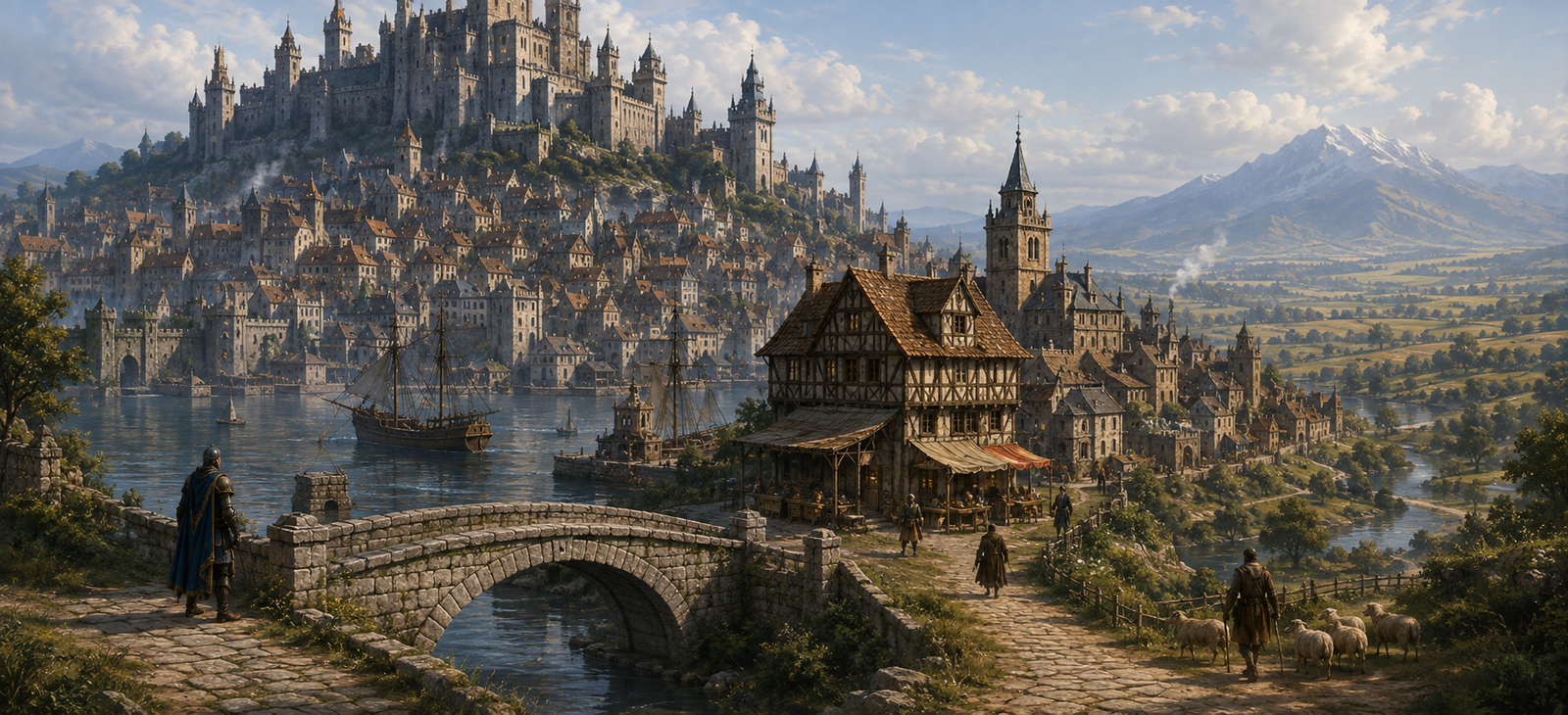
Bakers open their shutters beneath St Albans’ clock tower while wool merchants lead packhorses across the market. The great sacred precinct stands above the River Ver, its bells answering the town’s own. After dark, the old temple custodians walk again. Their wet footprints have begun appearing beyond the precinct gates, among stalls where children play by day.
What Is Happening Right Now?
Last night the town bell rang after the temple’s final watch. A carter’s horse broke loose, overturned a bread stall and dragged its traces through the market. In the morning, a line of damp, bare footprints ended beside a newly laid stone step. The temple’s dead custodians have crossed into the streets for the first time in living memory.
Keeper Ellen Vey says she did not ring the bell. Steward Aldred Fen wants the tower closed before tonight, but the townspeople use it to call for fire, danger and curfew. A mason who helped lay the new market step has vanished from his lodgings. Until the party learns who rang the bell and where the stone came from, frightened traders are shutting early and the streets grow empty before dusk.
Streets and Landmarks
The Clock Tower
Finished by 1405, the tall freestanding belfry lets the townspeople sound their own hours and alarms. Ninety-three narrow steps climb towards the bell and a view across the market, the precinct and the valley. Ellen keeps its keys close. A visitor trusted to climb the tower could examine the bell rope, check who crossed the square at dusk or warn the market when the dead appear.
The Great Sacred Precinct
Its vast halls, workshops, gardens and guest buildings rise above the River Ver. Its shrines honour several gods, and living keepers still follow the route of a much older nightly watch. They leave one stone-paved passage clear after the last bell. Pilgrims seek healing and counsel here; craftsmen maintain the doors and roofs, and the keepers can explain which entrances have stood closed for generations.
Market Place and High Street
Cloth sellers, bakers, farriers and drovers crowd the open spaces near the clock tower. There is fresh mortar beneath one of the weighing steps. Its dressed stone bears a worn carving that resembles the border marks on the precinct’s oldest thresholds. No one agrees who ordered the work, but the mason’s companions can describe where the stone was collected.
Fishpool Street and Verulamium’s Old Stones
Fishpool Street follows the older way west towards the valley. Outside the living town, broken walls and scattered masonry mark Roman Verulamium. Grass covers much of the ruin, and a wanderer can still lose the path among the old foundations. Local labourers know which fragments were brought into town for building, while the ruins shelter older dangers that are not part of the temple procession.
Where to Eat, Drink, Sleep and Find Help
The Bell and Measure — near the market
Moderate, comfortable. Isabel Crane serves beef broth and brown bread, with curtained beds and a guarded stable. Merchants, scribes and travelling performers gather by her hearth; a singer with a good repertoire may earn supper. Isabel has given shelter to a frightened stonecutter who saw where the market’s new step was quarried. She will not expose him to armed strangers.
The Ver Ford — lower street
Cheap, rough lodging. Hobb Marsh sells lentils, weak ale and a place by the fire to drovers, boatmen and workers. His yard is unguarded, and a horse went missing there when the town bell sounded after dark. Its broken halter lies near the river path. Hobb can find a local guide or a place on a northbound cart, but neither comes free.
The Precinct Guest House
Travellers in genuine need can request a plain meal and a shared bed from the temple’s guest keeper; armed visitors leave their weapons with the guard. Attendants tend ordinary wounds and fevers, while the shrine’s senior healers decide which cases require sacred intervention. Copyists can transcribe a letter or examine an old inscription with permission. They do not sell miraculous cures or rare spells across a counter.
Market Forge and Herb Stalls
By the market a working forge handles horseshoes, harness fittings, buckles and simple weapon repairs. Common rope, lamp oil, pack straps and food can be found among the traders; specialised armour and unusual magical components require a better-connected supplier. Herbal sellers know local plants and can provide ordinary remedies. A rider with an injured horse should ask at the forge before setting out for Dunstable. No one here promises to replace a shattered suit of armour before the next bell.
People Worth Meeting
Ellen Vey tends the civic clock and refuses to abandon it. She would rather share the tower keys with capable travellers than have them seized and the market left without an alarm. Aldred Fen, steward of the sacred precinct, knows the dead follow old boundary stones. He fears a panicked crowd will break into the temple seeking shelter and provoke them further.
Isabel Crane knows who carries news from London, who buys salvaged goods and who can write a fair account of events. Hobb Marsh is less influential but knows the riverbanks, the cart drivers and the tracks horses take when frightened. Neither has reason to want the procession in the market; both can help visitors who treat them well.
Adventures and Difficult Choices
- Who rang the second bell? Look for fresh scuff marks in the tower, question the people who closed their stalls last night, or keep watch above the square. The missing stonecutter knows who moved the old threshold stone but may flee if threatened. The clock must still be able to warn the town of fire.
- Return the stone before dusk. The market’s new step was taken from the temple’s old procession route. Replacing it may guide the dead home, but the work must be done while merchants depend on the market crossing. A healer or priest can approach the custodians respectfully; a strong party can move the stone; a convincing negotiator may persuade both Ellen and Aldred to keep people clear.
- The horse by the river. Follow Hobb’s frightened horse towards Fishpool Street and the Roman valley. It is trapped in a thicket near scattered masonry, and someone else has been searching the ruins at night. Recovering the animal wins Hobb’s trust and may reveal where the replacement stone was first loaded.
These leads meet in one living town: talking, tracking, research and practical repair can change the result as much as fighting. If the adventurers ignore the bell, the market empties and the next procession reaches the inn yards.
The Dead Who Keep the Temple Watch
The Night Procession
After the last temple bell, dead custodians cross the precinct in a silent line. Their burial cloaks hang heavy, and their feet leave water on dry paving. The procession has kept its route for generations; the living temple workers make certain the path stays unobstructed. A stolen boundary stone or a forced ancient doorway draws the dead towards the nearest gate. Some of the watch are ghosts capable of remembering a name or answering a question, but none will willingly abandon the watch they swore to keep.
The civic bell sounds across the same courts. When it is rung after the temple’s final watch, the procession can follow its sound beyond the old precinct. The newly laid market step has disturbed one of the boundaries they recognise. The custodians do not hunt every living soul: they block the passage, reclaim what was taken and confront those who force their way through. Returning the stone to its proper place offers another answer besides battle or silence.
The Roman dead beyond town belong to older ground. Their presence does not turn every ruin, grave and alley into part of the same haunting.
Travel and Onward Roads
South, the road returns to London; north-west, the old route carries travellers towards Dunstable and then Stony Stratford. Isabel can arrange secure cart space with traders she knows. Hobb’s drovers know where the River Ver has softened the track and whether animals have been shying from the roadside after dark. Water, oats and ordinary provisions are easy to buy on a market day; a caravan leaving late should secure beds or arrange a trustworthy escort before the next stopping place.
Deeper History
Roman Verulamium stood in the valley beside today’s town. The medieval settlement developed around a wealthy and influential abbey, with markets and pilgrimage bringing travellers through the streets. By 1405 the townspeople had raised their own clock tower: a rare public belfry whose bell could mark their hours and warn of danger without depending on the abbey’s. In this living world the sacred precinct serves several gods, while the old rivalry between town and temple still shapes everyday life.
Map and Geographic Orientation
This locator shows the present-day position of St Albans; its roads and buildings are not a reconstruction of the campaign town.
Sources and Continue Travelling
Local folklore research: Hertfordshire Archives: Ghosts and Hauntings.
Historical geography, markets and buildings are documented in the sources below. Names of most innkeepers, current disputes and adventure hooks are original parts of the campaign.
St Albans Museums — Clock Tower · St Albans Civic Society — Clock Tower
On the route: London · St Albans · Dunstable · Stony Stratford · Towcester · Northampton · Market Harborough · Leicester · Loughborough · Nottingham.
Keep this reference growing
If this page helped with your reading or game, you can support its upkeep or explore the curated books.
Explore the Bookshop — epics, classics and stories behind imagined worlds.