
Sir Charles Sibthorp — The Lincolnshire Firebrand
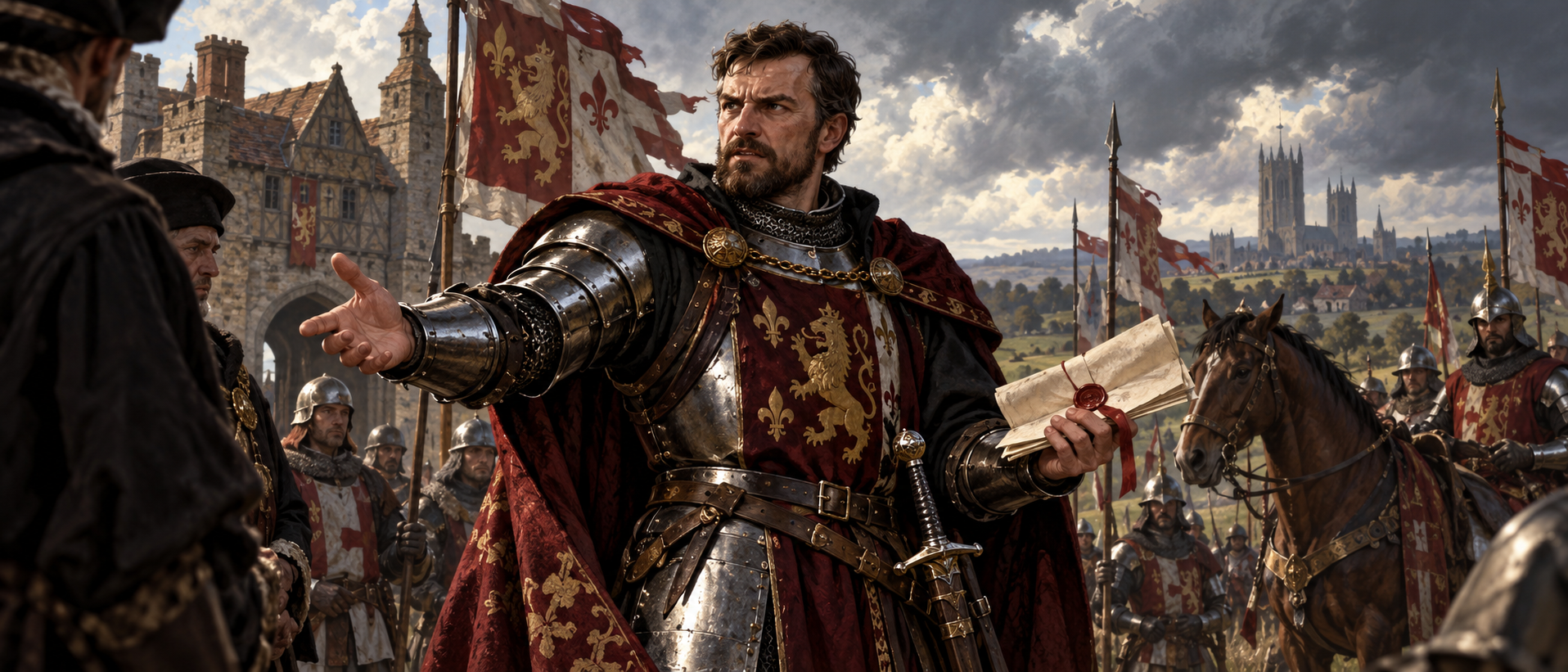
Sir Charles Sibthorp is a Lincolnshire knight, veteran man-at-arms and knight of the shire whose greatest weapon is often not the sword at his hip but his refusal to let an order, warrant or claim pass unchallenged. Loud, stubborn and fiercely protective of what he considers the ancient rights of his county, Sibthorp can turn a routine audience into a political battle and a minor irregularity into a hunt for whoever signed the wrong document.
Adventurers are most likely to meet him in Lincolnshire, on the road to Westminster, at a county muster, or in the middle of an argument that everyone else had hoped was already settled. He can be an exhausting obstacle, a valuable patron or an unexpectedly loyal ally. Once convinced that someone has been wronged, he is very difficult to persuade to abandon them.
At a Glance
- Name: Sir Charles Sibthorp
- Known as: The Lincolnshire Firebrand
- Species: Human
- Age: Early forties
- Homeland: Kingdom of England
- Primary region: Lincolnshire
- Role: Knight of the shire, veteran soldier, landholder and county political agitator
- Military role: Captain of his own retinue and experienced commissioner for local musters
- Political role: One of Lincolnshire’s representatives in Parliament
- Base: Family lands near Lincoln; frequently travelling between Lincolnshire and London
- Allegiance: The English Crown, Lincolnshire and the lawful privileges of the county—in roughly that order when they do not contradict one another
- Alignment: Lawful Neutral
- Languages: English and French
- Campaign status: Alive and active
- Campaign use: Patron, political obstacle, military ally, investigator of forged authority, or inconvenient defender of the party
Game Statistics
5.5e / 2024
Sir Charles Sibthorp
Medium Humanoid (Human), Lawful Neutral
Armor Class 18 (plate)
Hit Points 85 (10d8 + 40)
Speed 30 ft.
| STR | DEX | CON | INT | WIS | CHA |
|---|---|---|---|---|---|
| 16 (+3) | 12 (+1) | 18 (+4) | 13 (+1) | 14 (+2) | 17 (+3) |
Saving Throws Str +6, Wis +5, Cha +6
Skills Athletics +6, History +4, Insight +5, Intimidation +6, Persuasion +6
Senses passive Perception 12
Languages English, French
Challenge 5 (1,800 XP; PB +3)
Traits
Stubborn Resolve. Sibthorp has Advantage on saving throws against the Charmed and Frightened conditions.
Unyielding Argument (1/Short or Long Rest). When Sibthorp fails an Intelligence, Wisdom or Charisma saving throw, he can reroll it and must use the new roll.
Voice of the County. Sibthorp has Advantage on Charisma (Persuasion) checks made to secure a formal hearing, demand that a lawful warrant be examined, or require an official acting within English institutions to state the authority under which they are acting. This feature does not compel obedience and has no effect on creatures that do not recognise the institution concerned.
Actions
Multiattack. Sibthorp makes three Longsword attacks.
Longsword. Melee Attack Roll: +6, reach 5 ft. Hit: 7 (1d8 + 3) Slashing damage, or 8 (1d10 + 3) Slashing damage when used with two hands.
Lance. Melee Attack Roll: +6, reach 10 ft. Hit: 9 (1d12 + 3) Piercing damage. While mounted and after moving at least 20 feet straight toward the target, the attack deals an extra 7 (2d6) Piercing damage on a hit.
Heavy Crossbow. Ranged Attack Roll: +4, range 100/400 ft. Hit: 6 (1d10 + 1) Piercing damage.
Call the Retinue (Recharge 5–6). Sibthorp chooses one ally who can hear him within 60 feet. That ally can use its Reaction to move up to half its Speed without provoking Opportunity Attacks and then make one weapon attack.
Bonus Actions
Rally the Bench (2/Day). One ally within 30 feet that can hear Sibthorp gains 7 temporary Hit Points and has Advantage on the next saving throw it makes against being Frightened before the end of its next turn.
Reactions
Stand Your Ground. When Sibthorp or an ally within 5 feet is hit by a melee attack, Sibthorp can interpose weapon, shield or armoured shoulder. The target gains +2 AC against that attack, potentially causing it to miss.
Combat
Sibthorp does not seek duels for their own sake. He wants a fight to end decisively and with witnesses still alive to explain why it happened. Mounted, he uses his lance to break a dangerous line or reach an exposed commander. On foot, he fights beside retainers, calls allies into position and refuses to retreat while people under his protection remain threatened.
Sir Charles Sibthorp — 5e / 2014
Medium humanoid (human), lawful neutral
Armor Class 18 (plate); Hit Points 85 (10d8 + 40); Speed 30 ft.; Challenge 4 (1,100 XP; proficiency bonus +2).
STR 16 (+3), DEX 12 (+1), CON 18 (+4), INT 13 (+1), WIS 14 (+2), CHA 17 (+3).
Saving Throws Str +5, Wis +4, Cha +5; Skills Athletics +5, History +3, Insight +4, Intimidation +5, Persuasion +5; Senses passive Perception 12; Languages English, French.
Traits
Stubborn Resolve. Sibthorp has advantage on saving throws against being charmed or frightened.
Unyielding Argument (1/Short or Long Rest). When Sibthorp fails an Intelligence, Wisdom or Charisma saving throw, he may reroll it, using the new result.
Voice of the County. Sibthorp has advantage on Charisma (Persuasion) checks to secure a formal hearing or challenge a questionable warrant within institutions that recognise his office.
Actions
Multiattack. Sibthorp makes three longsword attacks or one heavy crossbow attack.
Longsword. Melee Weapon Attack: +5 to hit, reach 5 ft., one target. Hit: 7 (1d8 + 3) slashing damage, or 8 (1d10 + 3) if wielded with two hands.
Lance (Mounted). Melee Weapon Attack: +5 to hit, reach 10 ft., one target. Hit: 9 (1d12 + 3) piercing damage. A mounted charge after a straight 20-foot approach deals an additional 7 (2d6) piercing damage; apply normal 2014 lance rules.
Heavy Crossbow. Ranged Weapon Attack: +3 to hit, range 100/400 ft., one target. Hit: 6 (1d10 + 1) piercing damage. Loading applies.
Call the Retinue (Recharge 5–6). One willing allied retainer within 30 feet who can hear Sibthorp may use its reaction to move up to half its speed and make one weapon attack.
Original 5e/2014 combat conversion of the fictional 1454 knight, separate from the nineteenth-century historical parliamentarian. Retainers count as separate creatures.
Pathfinder 1e
Sir Charles Sibthorp CR 5
XP 1,600
Human aristocrat 3/fighter 3
LN Medium humanoid (human)
Init +1; Senses Perception +6
Defense
AC 19, touch 11, flat-footed 18 (+6 armor, +1 Dex, +2 shield)
hp 48 (6 HD)
Fort +7, Ref +3, Will +7; +2 vs. fear from bravery
Offense
Speed 20 ft.
Melee mwk longsword +10 (1d8+3/19–20) or mwk lance +9 (1d8+3/×3)
Ranged light crossbow +6 (1d8/19–20)
Statistics
Str 16, Dex 12, Con 16, Int 13, Wis 12, Cha 16
Base Atk +5; CMB +8; CMD 19
Feats Iron Will, Mounted Combat, Power Attack, Ride-By Attack, Spirited Charge, Weapon Focus (longsword)
Skills Diplomacy +12, Intimidate +12, Knowledge (nobility) +10, Perception +6, Ride +10, Sense Motive +8
Languages English, French
SQ armor training 1, bravery +1
Special Abilities
County Authority (Ex). Sibthorp gains a +2 circumstance bonus on Diplomacy and Intimidate checks made with English county officers, household retainers and officials who recognise his commission or parliamentary standing. The bonus applies only when his identity and authority are relevant to the exchange.
Battlefield Harangue (Ex) 1/day. As a standard action, Sibthorp can rally allies who can hear him within 30 feet. Those allies gain a +1 morale bonus on attack rolls and saving throws against fear for 3 rounds.
Combat Gear
Masterwork breastplate, heavy steel shield, masterwork longsword, masterwork lance, light crossbow with 20 bolts, dagger, warhorse, military saddle, seal case and travelling papers.
D&D 3.5e
Sir Charles Sibthorp CR 5
Human aristocrat 3/fighter 3
LN Medium humanoid
Init +1; Senses Listen +4, Spot +4
Languages English, French
Armor Class and Hit Points
AC 19, touch 11, flat-footed 18 (+6 armor, +1 Dex, +2 shield)
hp 48 (6 HD)
Fort +7, Ref +3, Will +7
Offense
Speed 20 ft.
Melee masterwork longsword +10 (1d8+3/19–20) or masterwork lance +9 (1d8+3/×3)
Ranged light crossbow +6 (1d8/19–20)
Base Attack +5; Grapple +8
Abilities and Feats
Str 16, Dex 12, Con 16, Int 13, Wis 12, Cha 16
Feats Iron Will, Mounted Combat, Power Attack, Ride-By Attack, Spirited Charge, Weapon Focus (longsword)
Skills
Diplomacy +12, Intimidate +12, Knowledge (nobility and royalty) +10, Ride +10, Sense Motive +8, Spot +4, Listen +4.
Special
County Authority (Ex). Sibthorp gains a +2 circumstance bonus on Diplomacy and Intimidate checks when dealing with English officials, retainers and county officers who recognise his status and when the matter falls within that authority.
Rouse the Retinue (Ex) 1/day. As a standard action, Sibthorp gives a furious battlefield address. Allies within 30 feet who can hear him gain a +1 morale bonus on attack rolls and saves against fear for 3 rounds.
What Is Sir Charles Sibthorp Doing Right Now?
Sibthorp is moving between Lincolnshire and Westminster with copies of three military warrants that cannot all be genuine. One orders an immediate muster. A second delays it. A third redirects men and supplies to a household with no obvious right to command either.
Someone has copied or misused a legitimate seal. Sibthorp has refused to let the county muster proceed until he knows which command is false and who benefits from the confusion. That decision has made enemies among men who want troops moving before anyone asks further questions.
With Henry VI unable to exercise the full authority of kingship and Richard, Duke of York exercising the protectorate, every disputed instruction has political weight whether Sibthorp wants it to or not.
He wants adventurers because armed strangers with no place in Lincolnshire’s local rivalries can go where his own retainers would be noticed immediately.
Encounters
Sibthorp rarely enters a scene quietly. He arrives already discussing the problem, expects everyone present to keep up and asks direct questions before introductions are complete. He is not needlessly rude to ordinary people, but he has little patience for evasive officials, elegant excuses or anyone who invokes authority without being able to name its source.
He prefers evidence that can survive hostile scrutiny: seals, witnesses, dates, account rolls, physical possession and statements made in front of reputable observers. Magical evidence interests him, but he dislikes conclusions that only a wizard can verify. If the party can explain a supernatural event in terms that a county court could understand, they gain his attention immediately.
First Impressions
- He speaks as though the argument began ten minutes before everyone else arrived.
- He carries more papers than most soldiers and more weapons than most clerks.
- He notices inconsistencies quickly and will return to them repeatedly.
- He is willing to look ridiculous if he believes the point matters.
- He does not forget who stood beside him once a dispute became dangerous.
Personality
Sibthorp is stubborn, theatrical, energetic and deeply suspicious of polished explanations that seem designed to prevent further questions. He enjoys opposition more than is sensible. An argument convinces him that the matter is important; resistance often convinces him that he is close to the truth.
Beneath the noise lies a practical soldier. He understands horses, roads, the difficulty of feeding armed men and how quickly an order written in London becomes something quite different when enforced by a frightened local officer. His patriotism is intensely local as well as national. England matters to him, but England is made of real counties, households, obligations and people rather than proclamations alone.
He can be vain and infuriating. He can also be brave, personally loyal and almost impossible to intimidate once he has decided that retreat would abandon someone who trusted him.
Appearance and Manner
Sibthorp is broad-shouldered, weathered and unmistakably a fighting landholder rather than a court ornament. His best clothes are expensive but slightly unfashionable, chosen for quality and durability rather than elegance. When travelling on dangerous business he wears plate harness beneath or alongside a heavy riding cloak and keeps his sword close.
He points with whatever is in his hand, including sealed letters. He drums his fingers on tables while other people speak. When genuinely angry he becomes quieter, not louder, and begins asking very short questions.
Relationships and Political Pressure
Henry VI
Sibthorp’s loyalty is to the Crown as an institution, but the king’s present incapacity makes that loyalty difficult to exercise. He is particularly hostile to anyone using the king’s condition as cover for personal enrichment or invented authority. Henry VI remains the king; Sibthorp treats documents issued in the king’s name as serious enough to investigate rather than automatically trustworthy.
Richard, Duke of York
Sibthorp recognises the Protector’s lawful authority but does not confuse obedience with silence. He will execute clear instructions and then argue over the wording, cost and precedent they create. Richard, Duke of York can use such a man, but cannot expect him to remain conveniently quiet.
Lincolnshire Gentry
Some local landholders value Sibthorp because he says publicly what they only complain about in private. Others dread seeing his riders approach because his arrival usually means a levy, inquiry, disputed obligation or demand for records. His strongest local support comes from people who believe distant officials underestimate the cost of their decisions.
His Retinue
Sibthorp’s household men know that their lord argues constantly but pays attention to supply, horses and wounded retainers. They are accustomed to long journeys undertaken because of a single suspicious line in a document. They tease him in private and defend him fiercely in public.
Equipment and Possessions
- Plate harness: well-maintained field armour made for riding and dismounted combat.
- Longsword and dagger: practical weapons rather than ceremonial pieces.
- Lance: carried when travelling with an armed retinue or expecting battle.
- Warhorse: a disciplined destrier or heavy courser depending on the journey.
- Seal case: holds Sibthorp’s personal seal and protected copies of commissions, warrants and correspondence.
- County rolls: names of landholders, obligations, prior musters and payments. Losing these would create immediate political danger.
- Travelling writing chest: parchment, ink, wax, spare cords, copied orders and enough blank material to send several angry letters before supper.
Sibthorp’s Seal
The seal is mundane but important. A character openly carrying it with Sibthorp’s authority can usually prove that they are acting for him when dealing with people who know his household or office. Possessing it without authority is extremely dangerous: forged orders bearing a recognisable seal could raise armed men, redirect supplies or create evidence of treason.
Running Sibthorp at the Table
Use Sibthorp when the adventure needs an authority figure who creates pressure without simply ordering the party around. He asks adventurers to investigate because his own involvement would reveal what he suspects. If they return with weak evidence, he cross-examines them. If they return with strong evidence, he acts on it rapidly and very publicly.
He works especially well in adventures involving forged warrants, disputed arrests, missing messengers, military levies, corrupt officials, stolen seals, competing jurisdictions and supernatural events hidden behind ordinary paperwork.
Adventure Hooks
- The Third Warrant: Three orders concerning a Lincolnshire muster contradict one another. Sibthorp wants the party to discover which clerk produced the false one before armed men assemble under competing commands.
- The Missing Seal: A seal used by one of Sibthorp’s deputies disappears. Within two days, villages receive orders to surrender horses and grain. The documents are convincing enough that simple denial will not stop them.
- The Silent Messenger: A royal messenger reaches Lincoln alive but unable to speak and terrified of a road he refuses to approach. Sibthorp wants the message delivered and the route investigated.
- The Wrong Prisoner: A local officer arrests someone under a warrant Sibthorp believes was altered after sealing. Freeing the prisoner by force would make matters worse; proving the alteration may expose a larger network.
- The Muster at Dawn: Two groups of armed retainers arrive at the same field, each believing they hold lawful orders. Sibthorp gives the party until sunrise to determine which command is genuine before pride turns confusion into bloodshed.
- An Inconvenient Ally: Sibthorp publicly defends the adventurers after an accusation against them. His support keeps them free—but now every enemy he has assumes they are his agents.
Places Connected to Sibthorp
- England — the kingdom whose competing institutions and obligations shape his political life.
- Lincolnshire — his homeland, power base and the county whose interests he represents.
- London — where Parliament, royal government and factional politics repeatedly draw him away from home.
- British Isles NPCs — rulers, outlaws, officials and legendary figures connected to the wider campaign.
Mythical and Historical Context
Campaign chronology: The real Charles de Laet Waldo Sibthorp lived from 1783 to 1855. The knight of the shire met here is a fictional 1454 adaptation of his forthright character; his modern parliamentary career and nineteenth-century military rank are not part of the campaign present. The Dictionary of National Biography records the original career.
Charles de Laet Waldo Sibthorp was a Lincolnshire landholder, army officer, militia colonel and long-serving Member of Parliament for Lincoln whose public reputation rested on blunt speech, eccentric presentation, stubborn opinions and a willingness to attack proposals he distrusted. Those qualities are retained here while his offices, military service and chronology belong to fifteenth-century England.
Sources and Rules Notes
- Dictionary of National Biography — Charles de Laet Waldo Sibthorp — historical identity, Lincolnshire connections, military career and public character.
- UK Parliament — Knights of the Shire — medieval county representation in Parliament.
The game statistics on this page are original campaign adaptations designed for table use in their stated rules editions.
Related Places and People
Keep this reference growing
If this page helped with your reading or game, you can support its upkeep or explore the curated books.
Explore the Bookshop — epics, classics and stories behind imagined worlds.