
Ame-no-Uzume — Goddess of Dawn, Mirth and Sacred Dance
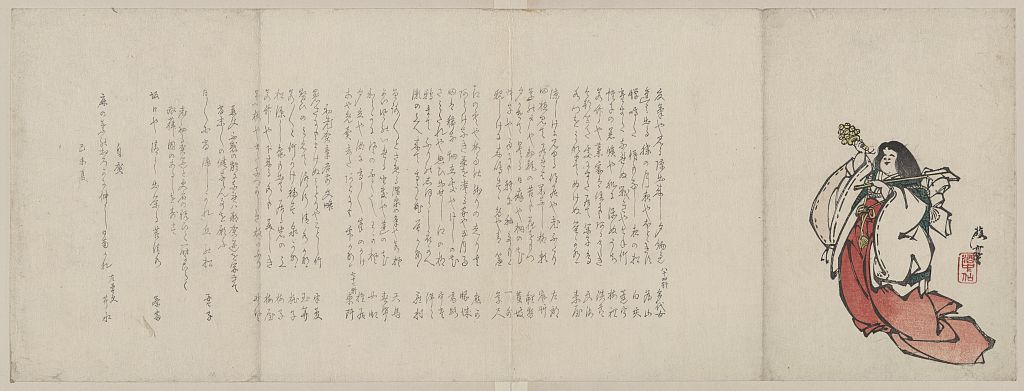
Japanese Pantheon · Intermediate Deity · Sacred performance, mirth, courage and the return of light
Ame-no-Uzume is the fearless divine performer of the heavenly rock-cave myth: the kami whose ecstatic dance makes the gathered gods laugh, draws Amaterasu’s attention and turns performance itself into an instrument for restoring light and order.
Ame-no-Uzume at a Glance
Tradition
Japanese
Divine standing
Intermediate Deity · Divine Rank 12
Campaign alignment
Chaotic Good
Portfolio
Sacred performance, mirth, laughter, courage, mediation and the restoration of light
Realm
Takamagahara, the Plain of High Heaven
Sacred imagery
Dance, overturned tub, sacred greenery and ritual adornment
Key relationships
Amaterasu · Sarutahiko
Lineage
Ancestress of the Sarume clan in the classical mythic tradition
Worship in the Present World
Ame-no-Uzume is honoured wherever sacred performance is expected to do real work. Dancers, musicians, shrine performers, actors and ritual specialists invoke her before ceremonies in which rhythm, movement, laughter or public courage must break fear, shame or paralysis.
Her cult does not require every festival to become comedy. The lesson of the rock-cave myth is sharper: there are moments when solemnity has failed and the world needs someone willing to behave unexpectedly enough to restore movement. Her priests and devotees therefore value timing, courage, embodied ritual and the ability to make a frightened community participate again.
Divine Mechanics
Campaign Divine Tier 32 describes Ame-no-Uzume’s setting-scale power and is not an official SRD challenge rating. These statistics present the deity herself, with mechanics built around performance, laughter, revelation and courageous intervention rather than generic martial attacks.
Ame-no-Uzume — D&D 5.5e / 2024
Medium Celestial (Deity), Chaotic Good
CR 32 (custom epic) · PB +9 · Campaign Divine Tier 32
AC 27 · HP 650 · Speed 50 ft.
| STR | DEX | CON | INT | WIS | CHA |
|---|---|---|---|---|---|
| 22 (+6) | 32 (+11) | 28 (+9) | 26 (+8) | 30 (+10) | 36 (+13) |
Saving Throws Dex +20, Wis +19, Cha +22
Damage Resistances psychic, radiant · Condition Immunities charmed, frightened
Senses truesight 180 ft., passive Perception 20 · Languages all; telepathy 180 ft.
Traits
Legendary Resistance (5/Day). If Ame-no-Uzume fails a saving throw, she can choose to succeed instead.
Magic Resistance. Ame-no-Uzume has Advantage on saving throws against spells and magical effects.
Sacred Performer. Ame-no-Uzume has Advantage on Charisma (Performance) checks, and she cannot roll lower than 20 on the d20 for a Performance check made as part of a rite or public ceremony.
Laughter Breaks Fear. Allies within 30 feet of Ame-no-Uzume are immune to the Frightened condition while they can hear her.
Divine Spellcasting
Charisma is Ame-no-Uzume’s spellcasting ability (spell save DC 30, +22 to hit with spell attacks). Light and Trickery are her clearest 2024 cleric expressions. In editions using broader campaign domains, Community, Charm and Luck also fit her portfolio. Signature spells include calm emotions, dispel magic, hypnotic pattern, greater restoration, daylight, mass suggestion, sunbeam and foresight.
Actions
Multiattack. Ame-no-Uzume makes three Rhythmic Burst attacks.
Rhythmic Burst. Ranged Spell Attack: +22 to hit, range 180 ft. Hit: 38 (6d8 + 11) thunder and radiant damage.
Dance Before the Cave (Recharge 5–6). Ame-no-Uzume performs a divine dance. Each hostile creature of her choice within 90 feet that can see or hear her makes a DC 30 Wisdom save. On a failure, the creature is charmed until the end of its next turn, loses its Reaction and must use its movement to turn toward Ame-no-Uzume if able. Allies in the area end the Frightened condition and gain 25 temporary Hit Points.
Roar of Divine Laughter (Recharge 4–6). Laughter erupts in a 60-foot-radius sphere. Hostile creatures make a DC 30 Constitution save, taking 54 (12d8) thunder damage and falling Prone on a failure, or half damage without falling Prone on a success. Magical silence of 8th level or lower ends in the area.
Draw Forth the Hidden (3/Day). One creature or object within 120 feet that is invisible, disguised by illusion or concealed behind magical darkness is outlined in divine light until the end of Ame-no-Uzume’s next turn. This does not reveal a deity of higher rank against its will.
Legendary Actions
- Joyous Step. Ame-no-Uzume moves up to half her Speed without provoking Opportunity Attacks.
- Burst. Ame-no-Uzume makes one Rhythmic Burst attack.
- Lift the Heart (Costs 2). One ally within 60 feet ends Charmed or Frightened and gains Advantage on its next saving throw.
Ame-no-Uzume — Pathfinder 1e
Medium outsider (deity, chaotic, good); Mythic Rank 8; campaign epic extension
CR 32 · MR 8 · AC 50 · hp 790 · Speed 50 ft.
Fort +31 · Ref +36 · Will +36 · DR 25/epic · SR 43
Immune charm, fear; resist electricity 20, fire 20, sonic 30
Str 22 · Dex 32 · Con 28 · Int 26 · Wis 30 · Cha 36
Base Atk +32 · CMB +38 · CMD 79
Special Abilities
Sacred Dance (Su). Every 1d4 rounds, creatures of Ame-no-Uzume’s choice within 90 feet make a Will save DC 38. Hostile creatures that fail are fascinated for 1 round; allies that fail voluntarily may instead end fear and gain a +4 morale bonus on saves until the start of Ame-no-Uzume’s next turn.
Divine Laughter (Su). Three times per day Ame-no-Uzume releases supernatural laughter in a 60-foot radius, dealing 16d6 sonic damage to hostile creatures and knocking them prone; Fortitude DC 38 halves and negates prone.
Unmask the Hidden (Su). Ame-no-Uzume continuously sees through illusion and magical darkness as true seeing, and may extend that revelation to all allies within 60 feet for 1 round as a swift action.
Spell-Like Abilities
At will—calm emotions, daylight, disguise self, greater dispel magic; 3/day—greater restoration, mass suggestion, sunbeam, true seeing; 1/day—foresight, miracle, plane shift. Caster level 26th; save DCs are Charisma-based.
Domain Access
Ame-no-Uzume has full campaign access to Charm, Community, Luck and performance/light-facing powers. These are adaptations of her portfolio rather than claims that every historical shrine used a fixed game-domain system.
Ame-no-Uzume — D&D 3.5e
Intermediate Deity; Divine Rank 12; Chaotic Good Medium Outsider (Chaotic, Extraplanar, Good)
Challenge benchmark 37 · Divine Rank 12 · AC 69 · hp 760 · DR 25/epic · SR 44
Speed 60 ft. · Fort +53 · Ref +59 · Will +58
Str 22 · Dex 32 · Con 28 · Int 26 · Wis 30 · Cha 36
Divine rules. Divine Rank applies to attacks, saves, checks and armour as normal for an intermediate deity. Portfolio spell-like abilities function at caster level 22nd.
Salient Divine Abilities
Divine Inspiration, Divine Splendor, Gift of Life, Power of Luck, Rejuvenation and Supreme Initiative are natural expressions of Ame-no-Uzume’s portfolio, supplemented by additional rank-appropriate abilities. Her sacred performance can dispel fear and expose hidden things without relying on an invented weapon artifact.
Portfolio Spell-Like Abilities
Ame-no-Uzume can use the spell-like abilities granted by Chaos, Charm, Community, Good and Luck where those domains are used in the 3.5e campaign rules. Her strongest effects centre on morale, revelation, sacred performance and the restoration of communal courage.
Defeat and Return
Destroying Ame-no-Uzume’s active divine body does not erase the mythic role through which sacred performance restores light. Outside Takamagahara she may reform through a consecrated performance or shrine rite unless her divine rank is separately overcome.
Divine Powers, Domains and Sacred Implements
Light
Light reflects her role in restoring Amaterasu and bringing the crisis of darkness to an end.
Trickery
Trickery expresses wit, surprise and the use of unexpected action to break a stalemate without making deception her entire identity.
Community
Community reflects the gathered kami whose laughter becomes part of the solution rather than an audience standing apart from it.
Luck and Charm
Luck and Charm support timing, presence and the ability to change the emotional direction of a gathering.
The Overturned Tub
In the classical rock-cave account, Ame-no-Uzume stamps upon an overturned tub while performing before the cave. The tub is not a unique magic artifact; its importance lies in ritual transformation. An ordinary object becomes the stage on which divine performance changes the fate of the world.
Sacred Greenery and Adornment
The Kojiki and Nihon Shoki traditions describe Ame-no-Uzume adorning herself with plants before the dance. Such greenery, hair ornaments and ritual costume are therefore more appropriate sacred attributes than invented swords or jewels.
Behaviour, Relationships and Divine Politics
Ame-no-Uzume is bold enough to act when a room full of gods has become trapped by fear and solemnity. She values courage, timing and the social intelligence to recognise what a crisis actually needs. Her humour is not humiliation for its own sake; it is a force that restores participation.
Amaterasu is the relationship that defines her best-known myth. Ame-no-Uzume’s performance helps draw the hidden sun goddess back toward the opening of the cave. Sarutahiko becomes important during the Descent of the Heavenly Grandchild: Ame-no-Uzume confronts and engages the formidable earth kami, and classical tradition connects her with the Sarume clan thereafter.
Susanoo is not her personal enemy, but his earlier violence creates the crisis in which her sacred performance becomes necessary. Her place in divine politics is therefore often that of mediator, performer and courageous first mover rather than warrior champion.
Where Worship Is Found
Ame-no-Uzume is honoured through shrine traditions associated with sacred performance, kagura and the Ama-no-Iwato myth. Her worship is especially resonant at places that preserve the memory of Amaterasu’s withdrawal and return, but no single universal cult centre exhausts her significance.
Performers carry her beyond major shrines. A travelling troupe, village festival or court ritual can all become places where her presence is felt if performance is treated as sacred action rather than entertainment added after the serious work is done.
Omens, Cults and Adventure Use
Signs of Favour
Laughter breaks out at the exact moment panic should have won; drums answer one another across an empty valley; a frightened performer suddenly remembers every step.
Signs of Warning
No one can laugh inside a festival ground; drums make no sound despite intact skins; performers forget only the part of a rite that reveals something hidden.
Broken Performance
A sacred dance is being repeated perfectly but has lost its effect because the performers no longer understand what crisis it was meant to resolve.
Divine Mediation
Two kami refuse to speak, and Ame-no-Uzume’s shrine demands that the mortals arrange a performance capable of bringing both parties into the same space.
Adventure Hooks
- A community struck by supernatural darkness can still hear laughter from inside a sealed shrine.
- A famous kagura mask causes every wearer to reveal a truth they intended to hide.
- Sarutahiko’s road-signs turn away from a sacred procession, implying that its performers have violated an old compact.
- On the eve of a major festival every musician in the region dreams of the same overturned tub.
Mythological and Historical Context
The Encyclopedia of Shinto identifies Ame-no-Uzume as the goddess whose dance lures Amaterasu from the heavenly rock cave. In the classical account she undergoes divine possession, adorns herself with plants, stamps on an overturned tub and provokes laughter from the assembled kami. Amaterasu’s curiosity at the noise helps bring the crisis toward its resolution.
The same classical tradition also places Ame-no-Uzume in the Descent of the Heavenly Grandchild, where she encounters Sarutahiko and becomes associated with the Sarume clan. Her divine personality is therefore broader than “goddess of parties”: performance, fearless social action and mediation are central to her mythic role.
Sources and Licensing
- Kokugakuin University, Encyclopedia of Shinto — Amenouzume
- British Museum — Heavenly Rock Cave painting
- Library of Congress — Ame no uzume no mikoto by Hōjō Katei
Artwork: hero image is Hōjō Katei’s Japanese colour woodcut of Ame-no-Uzume, around 1800, from the Library of Congress; no known restrictions on publication.
Rules: 5.5e, Pathfinder 1e and D&D 3.5e deity statistics are campaign adaptations built to the site’s deity-scale rules rather than official published statistics for Ame-no-Uzume.
Keep this reference growing
If this page helped with your reading or game, you can support its upkeep or explore the curated books.
Explore the Bookshop — epics, classics and stories behind imagined worlds.