
Jade Emperor — Sovereign of the Celestial Court
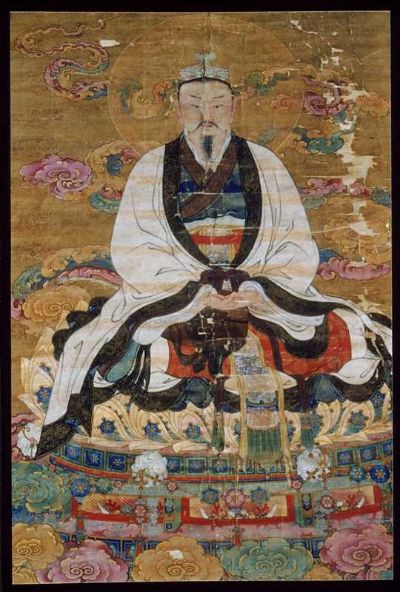
Chinese Pantheon · Greater Deity · Heavenly government, judgment, divine law and celestial office
The Jade Emperor is the sovereign administrator of the celestial court: the divine ruler who receives reports, appoints and disciplines heavenly officials, hears petitions and keeps the immense machinery of Heaven functioning.
Jade Emperor at a Glance
Names
Yù Huáng, Yù Huáng Dàdì, Tiāngōng
Divine standing
Greater Deity · Divine Rank 18
Campaign alignment
Lawful Neutral
Portfolio
Heavenly government, divine law, judgment, celestial appointments, petitions and social order
Symbols
Jade ceremonial tablet, imperial robes, celestial seals and heavenly throne
Divine court
Gods, immortals, star powers, local officials and celestial ministers
Major observance
Ninth day of the first lunar month
Hierarchy
Supreme administrator in popular heavenly government; Daoist hierarchies may place the Three Pure Ones above him
Worship in the Present World
The Jade Emperor is approached through temples, household rites, incense, petitions and festivals that mirror the structure of the heavenly court. Officials, judges, householders and communities seeking order or redress address him as the ruler to whom lesser divine authorities ultimately report.
His birthday is observed on the ninth day of the first lunar month. New Year rites also connect the household to his wider government through figures such as the Kitchen God, whose report carries the conduct of a household upward into the celestial administration. Worship therefore moves in both directions: petitions rise toward Heaven and judgments, appointments or omens descend.
Divine Mechanics
Campaign Divine Tier 40 describes the Jade Emperor’s setting-scale authority and is not an official SRD challenge rating. These statistics present the deity himself as a heavenly sovereign, with mechanics centred on celestial office, judgment and divine administration.
Jade Emperor — D&D 5.5e / 2024
Medium Celestial (Deity), Lawful Neutral
CR 40 (custom epic) · PB +11 · Campaign Divine Tier 40
AC 30 · HP 900 · Speed 40 ft., fly 90 ft. (hover)
| STR | DEX | CON | INT | WIS | CHA |
|---|---|---|---|---|---|
| 30 (+10) | 24 (+7) | 32 (+11) | 34 (+12) | 36 (+13) | 36 (+13) |
Saving Throws Con +22, Int +23, Wis +24, Cha +24
Damage Resistances force, psychic, radiant · Condition Immunities charmed, frightened, poisoned
Senses truesight 240 ft., passive Perception 33 · Languages all; telepathy 1 mile
Traits
Legendary Resistance (6/Day). If the Jade Emperor fails a saving throw, he can choose to succeed instead.
Magic Resistance. The Jade Emperor has Advantage on saving throws against spells and magical effects.
Seal of Heavenly Office. Celestials, spirits and creatures holding a recognised divine office have Disadvantage on saving throws against the Jade Emperor’s Edict abilities while within 120 feet of him.
Celestial Administration. The Jade Emperor cannot be surprised. Within 1 mile he knows when a recognised celestial office, divine seal or consecrated appointment under his court is invoked, forged, transferred or violated.
Divine Spellcasting
Wisdom is the Jade Emperor’s spellcasting ability (spell save DC 32, +24 to hit with spell attacks). No single official 2024 cleric subclass maps exactly to heavenly administration, so the site’s Law, Knowledge and Protection domains are explicit campaign adaptations where those rules are used. Signature spells include command, zone of truth, divination, greater restoration, geas, true seeing, forbiddance, plane shift and gate.
Actions
Multiattack. The Jade Emperor makes three Jade Edict attacks.
Jade Edict. Ranged Spell Attack: +24 to hit, range 240 ft. Hit: 46 (6d10 + 13) force and psychic damage. Until the start of the Jade Emperor’s next turn, the target cannot benefit from invisibility or magical disguise.
Imperial Decree (Recharge 4–6). Up to six creatures the Jade Emperor can see within 120 feet make a DC 32 Charisma save. On a failure, he chooses one command for each target: kneel, depart, be silent or release. The creature is compelled to obey until the end of its next turn and takes 36 (8d8) psychic damage if it is hostile. A successful save halves the damage and ignores the command.
Seal the Celestial Office (Recharge 5–6). One celestial, spirit or divine office-holder within 180 feet makes a DC 32 Wisdom save. On a failure, one supernatural trait or spellcasting feature chosen by the Jade Emperor is suppressed until the end of the target’s next turn. This cannot suppress divine rank itself.
Open the Heavenly Gates (1/Day). The Jade Emperor opens a gate to a recognised celestial destination or calls a contingent of loyal celestial officials appropriate to the scene. This is a sovereign court power, not unrestricted creature creation.
Legendary Actions
- Celestial Step. The Jade Emperor teleports up to 40 feet to a space he can see.
- Edict. The Jade Emperor makes one Jade Edict attack.
- Correct the Record (Costs 2). One creature within 120 feet rerolls one saving throw, attack roll or ability check and uses the new result.
Jade Emperor — Pathfinder 1e
Medium outsider (deity, lawful); Mythic Rank 10; campaign epic extension
CR 40 · MR 10 · AC 59 · hp 1,080 · Speed 40 ft., fly 90 ft. (perfect)
Fort +39 · Ref +34 · Will +43 · DR 30/epic · SR 51
Immune charm, fear, poison; resist acid 30, cold 30, electricity 30, fire 30
Str 30 · Dex 24 · Con 32 · Int 34 · Wis 36 · Cha 36
Base Atk +40 · CMB +50 · CMD 90
Special Abilities
Edict of Heaven (Su). As a standard action, the Jade Emperor targets up to six creatures within 120 feet. Will DC 41 negates. A failed target is affected as greater command for 1 round and takes 10d6 divine damage if hostile.
Investiture and Censure (Su). Three times per day the Jade Emperor may suppress one supernatural or spell-like ability belonging to a celestial office-holder for 1d4 rounds, Will DC 41 negates. This does not remove divine rank.
Celestial Registry (Su). The Jade Emperor automatically recognises divine seals, celestial appointments, forged heavenly warrants and creatures serving in a recognised office of his court within 1 mile.
Spell-Like Abilities
At will—discern lies, divination, greater dispel magic, greater teleport, true seeing, zone of truth; 3/day—forbiddance, geas/quest, plane shift, greater scrying; 1/day—gate, miracle. Caster level 30th; save DCs are Wisdom-based.
Domain Access
The Jade Emperor has full campaign access to Law, Knowledge and Protection domain powers. Heavenly office, bureaucracy and investiture remain portfolio authorities rather than being forced into a universal domain that does not exist in every edition.
Jade Emperor — D&D 3.5e
Greater Deity; Divine Rank 18; Lawful Neutral Medium Outsider (Extraplanar, Lawful)
Challenge benchmark 46 · Divine Rank 18 · AC 80 · hp 1,020 · DR 30/epic · SR 50
Speed 60 ft., fly 120 ft. (perfect) · Fort +71 · Ref +67 · Will +75
Str 30 · Dex 24 · Con 32 · Int 34 · Wis 36 · Cha 36
Divine rules. Divine Rank applies to attacks, saves, checks and armour as normal for a greater deity. Portfolio spell-like abilities function at caster level 28th.
Salient Divine Abilities
Alter Reality, Area Divine Shield, Divine Blast, Divine Shield, Divine Spellcasting, Divine Splendor, Know Secrets, Power of Truth, Rejuvenation, Supreme Initiative and True Knowledge are natural expressions of his rank and sovereign portfolio, supplemented by additional legal rank-appropriate abilities.
Portfolio Spell-Like Abilities
The Jade Emperor can use the spell-like abilities granted by Law, Knowledge and Protection at divine caster level. His authority to appoint, censure and recognise celestial officials is a divine portfolio power rather than a mortal class feature.
Divine Aura
Within his divine aura, lawful allies gain confidence and recognised officials of the celestial court cannot knowingly present a forged heavenly warrant without the Jade Emperor becoming aware of the deception.
Divine Powers, Domains and Celestial Regalia
Law
Law governs judgment, command, celestial procedure and the authority of recognised office.
Knowledge
Knowledge reflects reports, records, divination and the information required to govern an immense divine administration.
Protection
Protection expresses the defensive purpose of heavenly government when it shields communities and maintains boundaries against disorder.
Celestial Office
Investiture, seals, appointments and censure are portfolio authorities unique to the Jade Emperor’s role rather than a generic cleric domain.
Jade Ceremonial Tablet
The Jade Emperor’s tablet is a sign of office, command and recorded authority, not a sword disguised as Chinese imagery. In the campaign it can authenticate an edict, expose a forged celestial seal and carry an order through the heavenly bureaucracy. Copies exist as ritual symbols; the sovereign tablet itself is not ordinary treasure.
Celestial Seals
A seal issued by the Jade Emperor can authorise a divine office, safe-conduct, investigation or summons. Possessing one does not make a mortal omnipotent: the seal has a defined jurisdiction, and using it outside that jurisdiction is itself a celestial offence.
Behaviour, Relationships and Divine Politics
The Jade Emperor values functioning institutions. He is less interested in abstract perfection than in whether appointed powers perform their duties, petitions reach the right authority and the divine order can correct its own failures. Corruption within Heaven therefore offends him more deeply than ordinary mortal disorder because it turns delegated authority against its purpose.
The Three Pure Ones are not simply subordinate ministers. In many Daoist hierarchies they stand above the Jade Emperor, while popular religion often presents him as the supreme ruler of the celestial bureaucracy. The two ideas can coexist: metaphysical supremacy and administrative sovereignty are not the same thing.
Xiwangmu retains an ancient western sovereignty that overlaps with, but is not reduced to, his administration. Kui Xing represents a specialised divine office tied to examinations and scholarly success. Household gods, city gods and other local powers form further layers through which reports, petitions and responsibilities move.
Where Worship Is Found
Worship of the Jade Emperor extends through Daoist temples, household observance and public festival. His birthday on the ninth day of the first lunar month is a major occasion for offerings and rites. He is especially important wherever Heaven is imagined as an organised administration whose officials can receive petitions, review conduct and issue decisions.
Household religion connects ordinary families to this enormous structure. The Kitchen God’s New Year report is one of the clearest examples: the divine life of a household is not isolated from Heaven but entered into a wider system of observation and consequence.
Omens, Cults and Adventure Use
Signs of Favour
A petition burns without ash; a seal impression appears perfectly on blank paper; a disputed appointment is confirmed by identical dreams in distant temples.
Signs of Warning
Official tablets split, divine messengers arrive with contradictory orders or household gods stop accepting offerings because their reports are being intercepted.
Corrupt Office
A local god is abusing a legitimate appointment, forcing mortals to gather evidence strong enough to survive review by the celestial court.
Heavenly Vacancy
A divine office falls empty and several temples nominate rival candidates, each backed by a different faction of gods and mortals.
Adventure Hooks
- A celestial seal granting safe-conduct is genuine, but it was issued to someone who died generations ago.
- The Kitchen God’s report for an entire city disappears on the road to Heaven.
- A minor deity refuses promotion because the office offered by the celestial court is cursed.
- A forged imperial edict orders several local gods to abandon their shrines on the same night.
Mythological and Historical Context
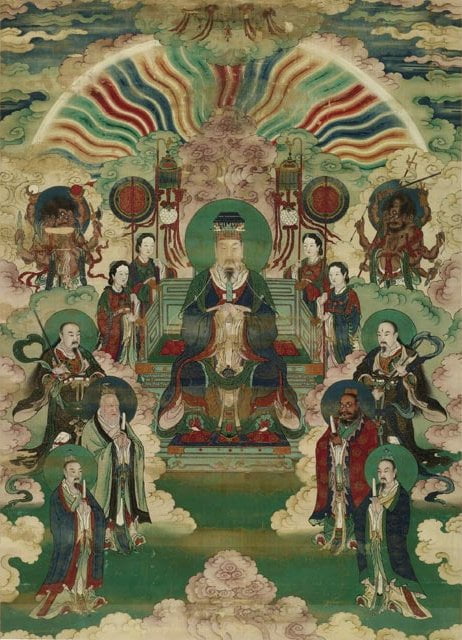
The Jade Emperor is not the primordial creator of every Chinese creation tradition. His importance developed within religious Daoism and popular religion, especially as heavenly government came to be imagined through the language of court, office, petition and imperial administration. Song imperial patronage significantly increased the prestige of his cult.
Daoist sources can place him below the Three Pure Ones while still giving him immense authority over the working administration of Heaven. Popular religious art frequently shows him enthroned among officials and subordinate gods, and household traditions connect him to reports from deities such as the Kitchen God.
Stories about his mortal origin, trials of cultivation, the Chinese zodiac and his role in individual legends vary widely by period and region. They are traditions about the sovereign, not a single fixed canonical biography that overrides every other account.
Sources and Licensing
- Ching Chung Taoist Association — Jade Emperor
- Metropolitan Museum of Art — Canonization scroll showing the court of the Jade Emperor
- British Museum — Kitchen God and report to the Jade Emperor
- Concise Oxford Dictionary of World Religions — Yü-huang
Artwork: historic Chinese images already held in the site’s media library.
Rules: 5.5e, Pathfinder 1e and D&D 3.5e deity statistics are campaign adaptations built to the site’s deity-scale rules rather than official published statistics for the Jade Emperor.
Keep this reference growing
If this page helped with your reading or game, you can support its upkeep or explore the curated books.
Explore the Bookshop — epics, classics and stories behind imagined worlds.