
Faroe Islands
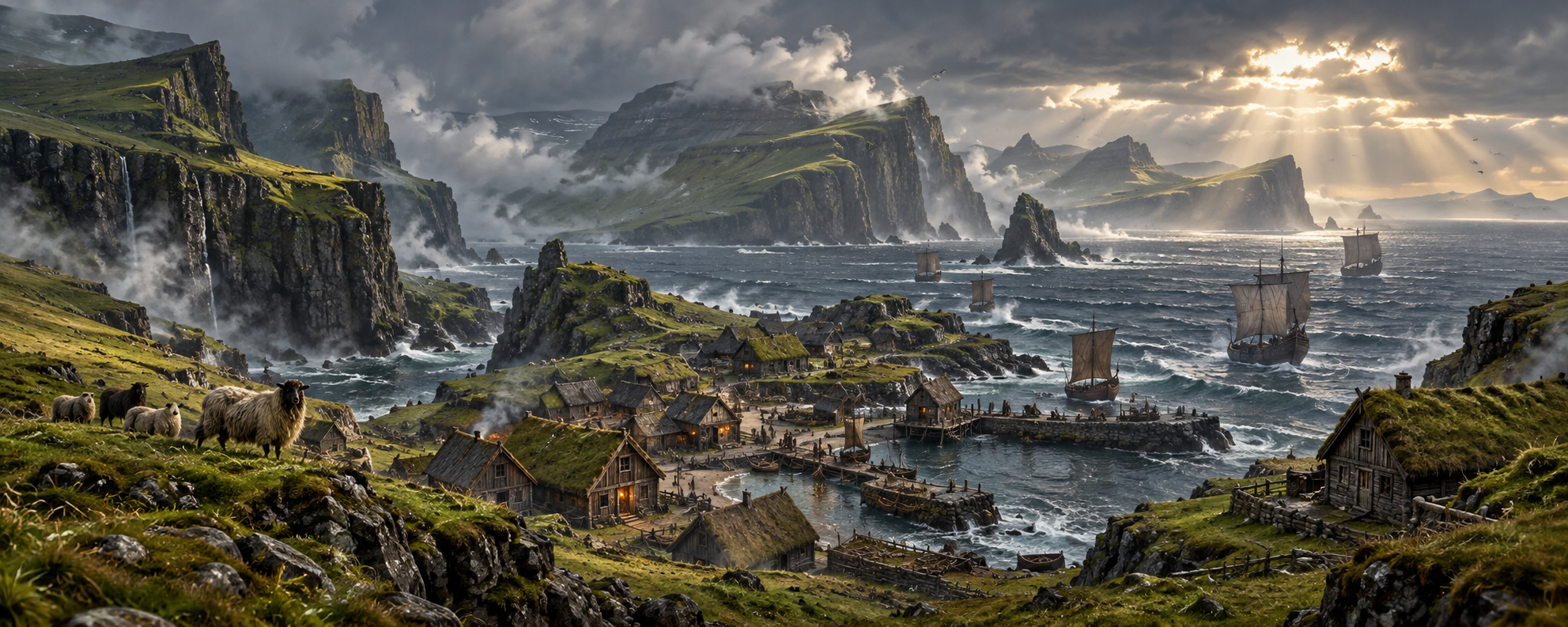
The storm-beaten Norwegian island chain where the Løgting, Kirkjubøur and Atlantic sea-roads hold the western kingdom together
At a Glance
| Realm | Kingdom of Norway under Christian I |
|---|---|
| Political Character | Norwegian crown dependency with strong local law, households and island custom |
| Assembly | Løgting at Tinganes in Tórshavn |
| Ritual and Learned Centre | Kirkjubøur, home of law-speakers, rune-keepers and sea-cult halls tied to Nidaros and the wider Norse world |
| Economy | Sheep and wool, fishing, seabirds, farming, pilotage and trade through Bergen and the wider North Atlantic |
| Landscape | Steep islands, narrow sounds, grass slopes, sea cliffs, exposed harbours and rapidly changing weather |
| Sacred Traditions | Norse sea cults, household rites, rune lore and the veneration of landvættir, ancestors and local spirits |
| Campaign Themes | Assembly law, storms, lost ships, wool trade, cult politics, sea monsters, island feuds and Atlantic expeditions |
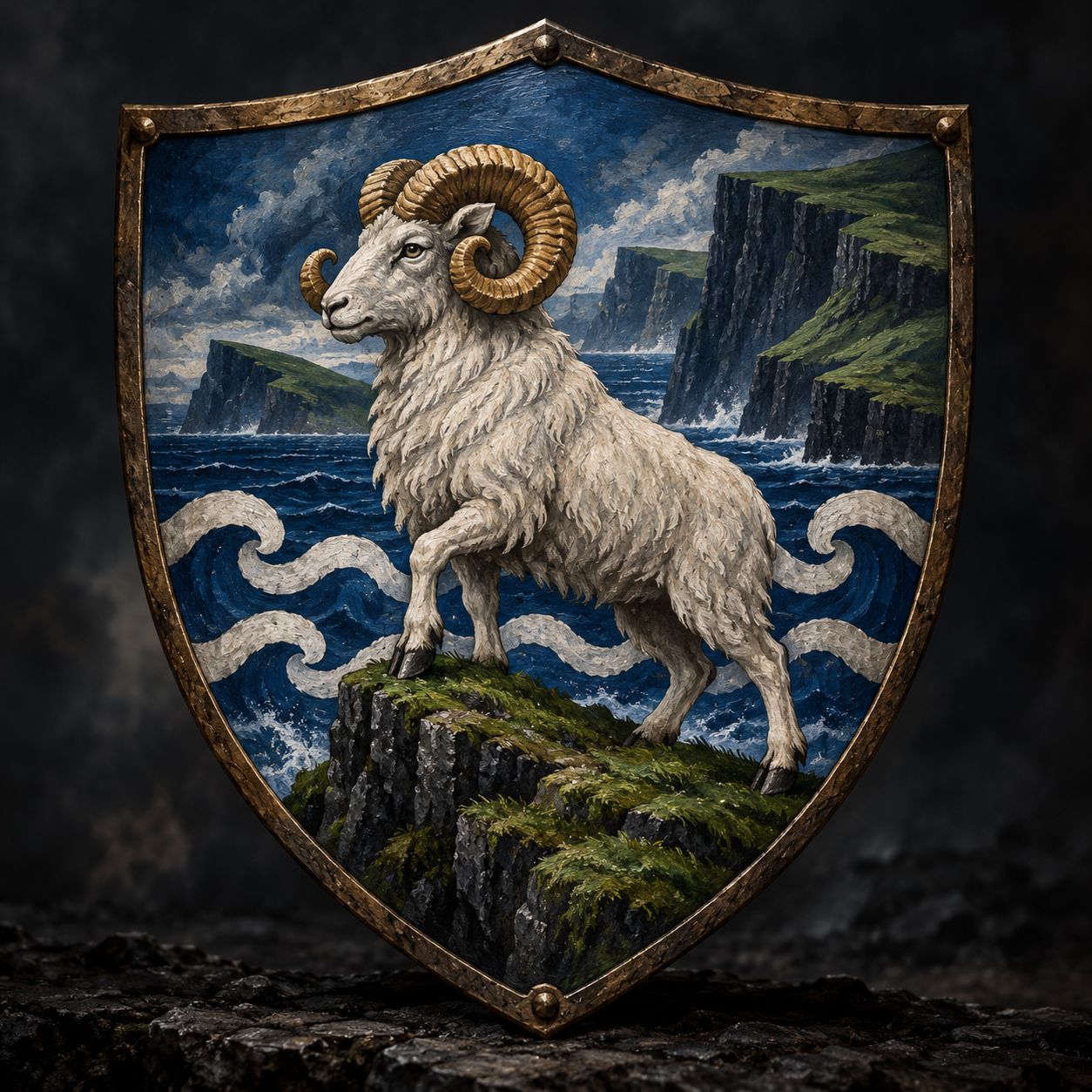
The Faroe Islands are the difficult stepping-stones of the North Atlantic: close enough to Norway to belong to its crown, remote enough that local knowledge decides whether royal policy means anything at all. Ships travelling between Bergen, Iceland and farther western destinations use Faroese waters for information, refuge and resupply when weather permits.
The islands are governed through a combination of Norwegian royal authority and deeply rooted local institutions. The Løgting meets at Tinganes, continuing an assembly tradition older than the kingdom’s present political arrangements. Law, testimony and local reputation matter enormously in communities where the same families repeatedly depend on one another for boats, grazing, rescue and survival.
Kirkjubøur provides a different centre of authority. Its rune-keepers, law-speakers and sea-seers preserve old judgements, genealogies, weather lore and ritual obligations reaching across the North Atlantic. Great timber halls, stone ritual enclosures and unfinished monumental works make the settlement one of the most important learned and sacred places in the islands.
Explore: Norway · Bergen · Iceland · Greenland · Union of Midgard
What Is Happening Right Now?
Bergen Wants Reliable Cargo
Wool, fish and northern goods move through Norwegian merchant networks, but storms and irregular shipping make every missed sailing politically significant. Hanseatic interests increasingly care who controls purchases and credit.
The Løgting Is Hearing a Dangerous Case
Two island families dispute wreck rights over a ship whose cargo belongs to a merchant house powerful enough to pressure Christian I’s officials.
Kirkjubøur Has Received an Impossible Runestone
A rune-cut stone arrives from the west bearing marks no local keeper recognises. The law-speakers want it examined quietly before the story reaches Bergen.
The Atlantic Weather Is Wrong
Experienced captains report winds reversing without warning in the same stretch of sea. One insists a giant figure is walking beneath the clouds.
Places to Use in Play
Tórshavn and Tinganes
Tórshavn is a modest harbour community built around the assembly ground at Tinganes rather than a great city. When the Løgting sits, litigants, witnesses, officials, merchants and crews gather from across the islands. A legal hearing can therefore become the largest political event of the season.
Kirkjubøur
The ritual centre combines farming wealth, education, law, rune lore and overseas contact. Its great halls and stone compounds preserve generations of judgements and sea-lore, while an unfinished monumental stone hall invites rumours about money, curses, politics and the intentions of the builders.
The Island Sounds
Short distances on a map can require dangerous sea crossings. Local boat crews know currents, landing places and weather signs. Adventurers who treat every island as connected by an easy road quickly learn otherwise.
The High Cliffs and Bird Grounds
Cliffs provide food, danger and places where the supernatural feels close. Ropes, weather and local skill matter as much as weapons. Hidden folk, storm beings and creatures from the sea can turn an ordinary collection trip into an expedition.
People and Powers
| Power | What It Wants | Adventure Pressure |
|---|---|---|
| The Løgting and Lawman | Settlements islanders will recognise as lawful and workable. | Witness protection, disputed judgements, missing evidence and blood-price cases. |
| Christian I’s Norwegian Officers | Revenue, loyalty, dependable shipping and enforcement of crown rights. | Royal messages, tax disputes, escorts and political investigations. |
| Kirkjubøur’s Rune-Keepers and Sea-Seers | Ritual authority, ancestral estates, education and links with Nidaros. | Oath-stones, lost sagas, sanctuary and supernatural disturbances. |
| Hanseatic and Bergen Merchants | Reliable access to wool, fish and North Atlantic cargo. | Credit, monopolies, convoy work and commercial espionage. |
| Island Households and Captains | Grazing, fishing, boat access, inheritance and enough independence to survive bad seasons. | Feuds, rescues, missing crews and rival landing rights. |
Magic, Weather and the Sea
Faroese sailors treat weather knowledge as survival craft. Sea-seers, rune-readers, experienced pilots and people sensitive to spirits are consulted because a correct heading is useless when the wind itself has supernatural intent.
The Norse powers remain part of island life. Njörðr matters to voyages and fishing; Thor is invoked against storms and giants; household spirits and landvættir can attach themselves to a farm, inlet or cliff, and old agreements with them are treated as practical obligations rather than distant myth.
Dangers, Rumours and Adventure Hooks
- The Empty Boat. A fishing craft returns under full sail with warm food aboard and no crew.
- The Løgting Witness. The only witness in a wreck-rights case disappears on an island from which no boat has departed.
- The Kirkjubøur Stone. A carved block raised for an unfinished oath-hall begins bleeding seawater whenever it is moved inland.
- The Wool Ship. A Bergen-bound cargo has doubled in weight without adding a single bale.
- The Storm Walker. Captains see a human-shaped silhouette striding between islands above the sea during every west wind.
- The Westbound Stranger. A traveller offers an extraordinary price for passage to Iceland but is recognised by an old woman as a man buried before the plague.
Travel and Law
Boats are the roads of the Faroes. Travel depends on wind, visibility, currents and safe landing places. Overland tracks cross steep ground between neighbouring settlements, but moving between islands always makes weather part of the journey.
The Løgting remains central to local legal life. Norwegian law and royal officers matter, yet decisions must work in communities where enforcement often depends on the cooperation of the same households who brought the dispute. Sacred oaths and recognised witnesses can carry both legal and supernatural weight.
Deeper History
Norse settlement created a free assembly tradition at Tinganes before the islands became firmly attached to the Norwegian kingdom. The Faroes were treated as a Norwegian tributary territory and followed Norway into the Danish-Norwegian union of crowns during the later fourteenth century.
Kirkjubøur grew into a ritual and learned centre linking island law, rune lore, seafaring knowledge and the wider Norse world through Nidaros. The Black Death struck the islands in the fourteenth century and left a demographic wound still visible in abandoned holdings, family lines and local memory.
Sources and Image Licensing
Historical grounding: Faroe Islands — History · Store norske leksikon — Færøyene.
Hero artwork: original campaign illustration created for the Faroe Islands entry.
Explore the Midgard Cluster
Union of Midgard · Norway · Bergen · Iceland · Greenland · Midgard Bestiary
Keep this reference growing
If this page helped with your reading or game, you can support its upkeep or explore the curated books.
Explore the Bookshop — epics, classics and stories behind imagined worlds.