
Kingdom of Sicily — Island of Trinacria
At a Glance
| Region | Mediterranean island south of the Italian mainland |
|---|---|
| Capital | Palermo |
| Sovereignty | Kingdom of the Crown of Aragon under Alfonso V |
| Ruler | Alfonso V of Aragon, also king of Naples |
| Older name | Trinacria |
| Notable power | Persephone and the island’s ancient sacred places |
| Campaign tone | Island law, grain ships, contested ports and underworld roads |
Sicily is a kingdom of the Crown of Aragon under Alfonso V, who also rules Naples, but its daily bargains are made in Palermo’s markets and on the roads between estates. Grain, ports and ships give Sicilian magnates bargaining power. Older shrines and volcanic heights make some claims harder to settle with a royal seal. The island still remembers the revolt that separated it from the mainland kingdom now called Naples.
Current Pressures
One king, two southern kingdoms
Alfonso V rules both Sicily and Naples, but the two kingdoms remain legally and politically distinct. Sicilian officers, nobles and cities defend their own privileges, while royal authority is judged by the ships, money and officials actually available on the island.
Palermo and the provinces
The capital stores records, charges dues and draws cargo from the countryside. Landholders want better prices; merchants want predictable levies; grain can become a weapon when either side closes a road.
Older powers
Persephone is present in the island’s lore and sacred landscape. Agreements made at a shrine may answer to a deeper authority than the palace archives.
Places and People
Palermo
The royal administration and harbour collect petitions, cargo and news. The city is the best place to acquire a ship, challenge a levy or lose a witness in a crowded market.
Strait of Messina
Currents and rival pilots make the narrow crossing a trial even before a ship encounters the monsters of older tales. Captains fear Charybdis as more than a navigator’s warning.
Etna and inland roads
Volcanic slopes overlook settlements, vineyards and routes across the island. Ash can alter a harvest or reveal a buried entrance.
Island estates
Local nobles, millers and tenant communities hold the grain that fills Palermo’s warehouses. A royal order must pass through their hands before it becomes food aboard a fleet.
Services and Access
Palermo’s factors arrange grain contracts and sea passage; inland guides know which roads are safe after rain or ashfall. A petition to the royal deputy needs witnesses, a copy of the charter and often a local guarantor. Those seeking an ancient sanctuary should ask whose land surrounds it before asking which power answers within.
Dangers and Adventure Hooks
- Two kingdoms, one charter: a document from Naples claims a Sicilian estate. The royal deputy accepts the seal but the island court rejects the witness.
- The missing grain fleet: ships vanish near Messina. Survivors blame a current, a Genoese captain and something moving beneath the water.
- Persephone’s return: an estate’s harvest revives after a shrine is reopened. The price appears in the names recorded by its keeper.
- A false royal letter: a distant order strips a harbour of its privileges. The courier died before reaching the island, so someone in Palermo copied the seal.
Travel and Connections
Sea routes connect Palermo with Naples, Sardinia and western Mediterranean ports. The Strait of Messina gives access to the mainland but demands experienced pilots. The Italy guide places these routes among the peninsula’s rival powers.
History and Sources
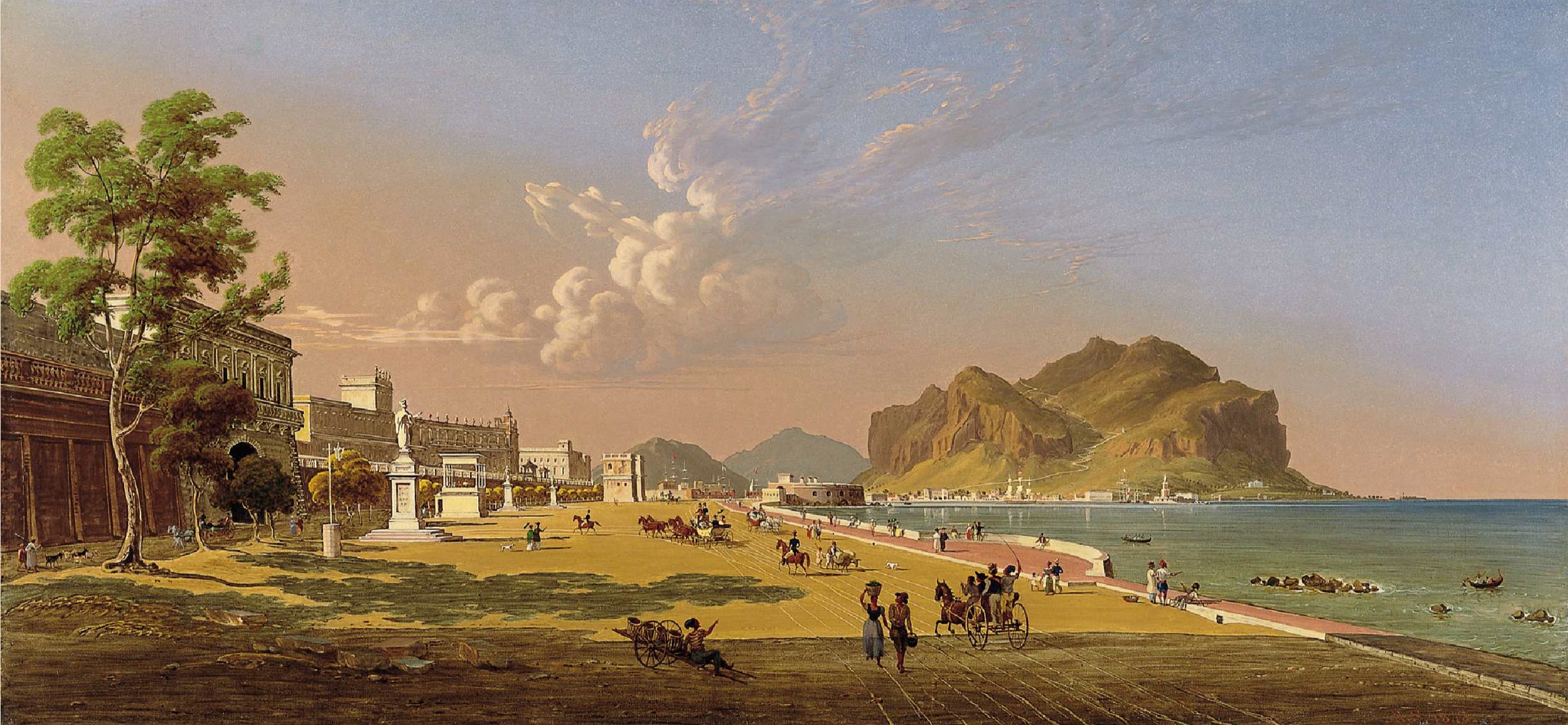
The revolt remembered as the Sicilian Vespers divided island sovereignty from the mainland realm. Aragonese rule tied Sicily to a wider Mediterranean crown while Palermo remained its administrative centre. In 1454 Alfonso V holds Sicily within the Crown of Aragon and also rules Naples, a union that will not survive his death in 1458. The island’s older sacred places and living myth make that political history only one layer of its terrain.
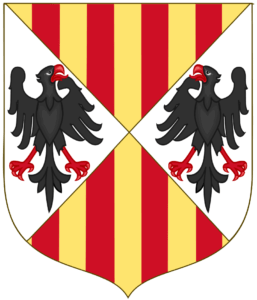
Historical background: Treccani, Sicilian Vespers; Treccani, Palermo. Image: Robert Salmon, View of Palermo (public domain).
Keep this reference growing
If this page helped with your reading or game, you can support its upkeep or explore the curated books.
Explore the Bookshop — epics, classics and stories behind imagined worlds.