
Kingdom of Poland — Crown, Estates and the Prussian War
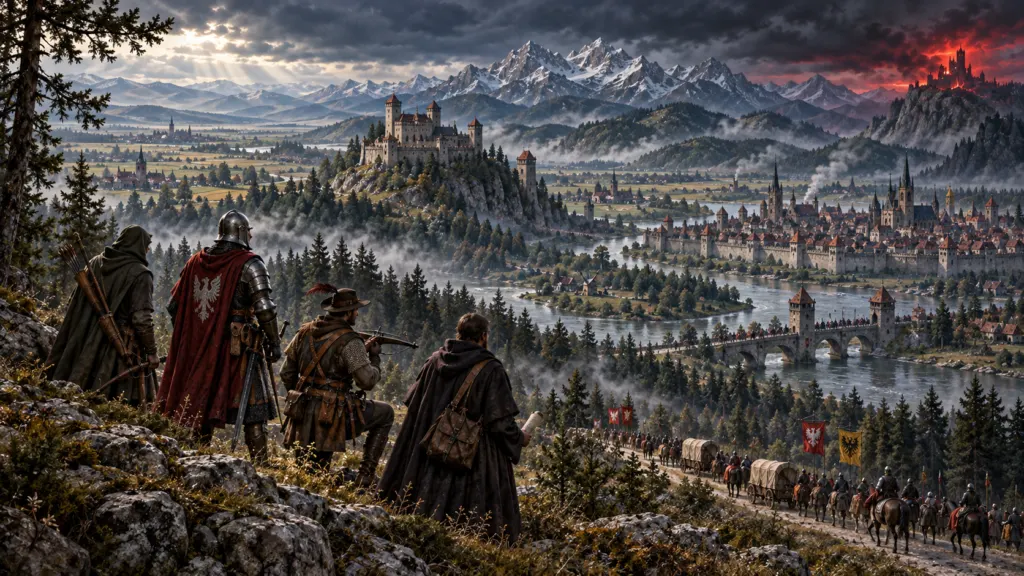
Kraków · Casimir IV Jagiellon · Prussian Confederation · Baltic War · Salt Roads
At a Glance
| Ruler | Casimir IV Jagiellon |
|---|---|
| Capital | Kraków |
| Political form | Monarchy governed through the crown, royal council, nobles, towns, regional assemblies and negotiated privileges |
| Linked realm | Grand Duchy of Lithuania, joined to Casimir through the Jagiellonian crown but retaining its own interests and institutions |
| Immediate crisis | War against the Teutonic States after the Prussian Confederation seeks Casimir’s protection |
| Major wealth | Grain, timber, livestock, crafts, river trade and the royal saltworks around Wieliczka and Bochnia |
| Sacred life | Regional divine traditions, ancestral rites, household cults, sacred groves, river powers, craft rites and local spirits |
| Campaign tone | War finance, noble privilege, disputed charters, Baltic politics, salt roads, river trade and dangerous frontier diplomacy |
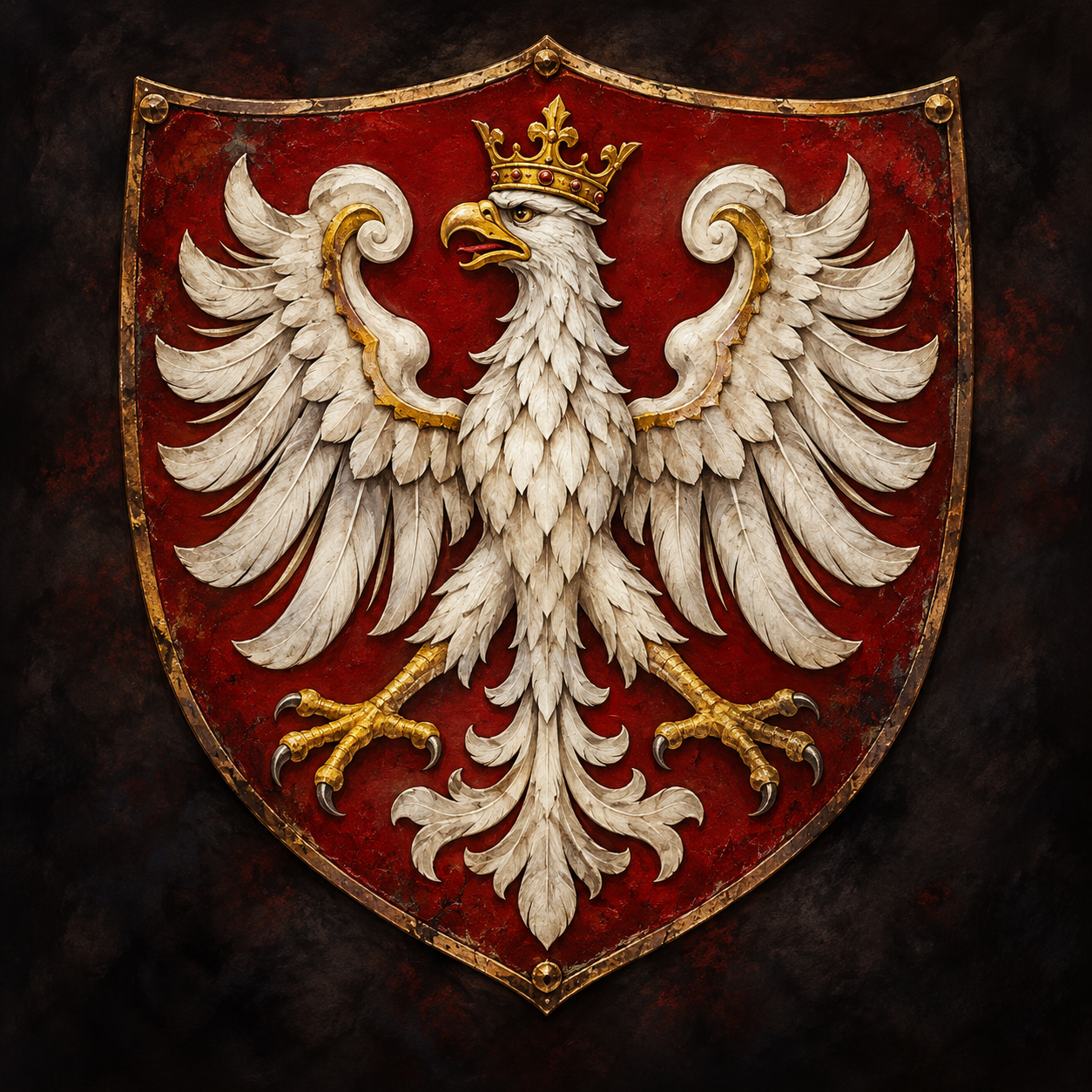
Poland is a large kingdom whose power depends on agreement as much as command. Casimir IV can call men to war, confirm charters and appoint officers, but great families, towns and regional assemblies expect old privileges to be observed. A royal order that ignores local rights may be lawful and still be impossible to enforce without bargaining.
The kingdom is now committed to a major northern war. Prussian towns and nobles have rebelled against the Teutonic States and asked Casimir for protection. Their decision opens Baltic ports, castles and trade routes to Polish influence, but it also creates a long frontier where every captured town brings new obligations, debts and rival claims.
Poland is also inseparable from the wider Jagiellonian world. Casimir is Grand Duke of Lithuania as well as King of Poland, yet Lithuania is not simply another Polish province. Courtiers, nobles and commanders on either side of the union can agree on a dynasty while disagreeing sharply over borders, taxes, military commitments and eastern policy.
Explore: Kraków · Lithuania · Teutonic States · Toruń · Hanseatic League · East Central Europe
What Is Happening Right Now?
The Prussian Confederation has chosen the Polish crown
Prussian towns and nobles have broken with the Teutonic regime and placed their hopes in Casimir. Their charters promise loyalty, but they also expect their liberties and commercial rights to survive the change of ruler.
The northern war consumes money
Armies require pay, horses, grain, wagons and river transport. Captains who are not paid become political actors of their own. Merchants who finance a campaign can demand privileges that last longer than the war.
Noble cooperation has a price
Casimir needs the military service and political cooperation of powerful families and regional communities. Mobilisation therefore becomes a negotiation over charters, exemptions, offices and the limits of royal power.
Lithuania follows its own interests
The shared ruler does not erase the ambitions of Lithuanian magnates or eastern frontier concerns. A Polish commander who assumes automatic Lithuanian support can discover that dynastic union and military cooperation are not the same thing.
Places Adventurers Reach First
Kraków
The royal capital is the place for court petitions, university scholars, money changers, noble households and sealed orders. A northern campaign may begin here with a document and end hundreds of miles away at a Baltic gate.
Wieliczka and Bochnia
The royal saltworks are strategic wealth. Salt moves by wagon and river into neighbouring lands, and control of a convoy can matter to the treasury as much as a minor fortress.
Toruń
A great Prussian and Hanseatic city whose allegiance has become part of the war. Merchant rights, minting, fortifications and river traffic make its politics far larger than its walls.
The Vistula road
Grain, timber, soldiers and messages move north along the river system toward contested Prussian lands. A lost barge can delay an army, ruin a merchant or expose a secret alliance.
Greater Poland
Noble estates, towns and western roads tie the kingdom toward the Empire and Baltic markets. Regional interests here can shape the crown’s ability to raise men and money.
The Lithuanian approaches
Roads east lead into a different legal and political world under the same ruler. Envoys who understand that distinction are more useful than soldiers who do not.
Factions and Interests
| Power | What It Controls | What It Wants | How Adventurers Get Involved |
|---|---|---|---|
| The Jagiellonian Crown | Royal offices, war policy, high justice, charters and diplomacy | Victory in Prussia, reliable revenue and cooperation from nobles and towns | Carry sealed orders, recover a charter, escort an envoy or investigate an officer abusing royal authority |
| Regional nobles | Estates, armed households, local influence and military service | Protection of privileges, offices, favourable judgements and influence over war policy | Settle an inheritance, prove an exemption or survive a feud disguised as a legal dispute |
| Royal and chartered towns | Markets, workshops, tolls, walls and local courts | Commercial rights, safe roads and predictable taxation | Protect a convoy, expose false weights, recover stolen civic seals or mediate between town law and noble privilege |
| Prussian Confederates | Rebel cities, local networks, money and knowledge of the northern war zone | Polish protection without losing their established liberties | Escort delegates, verify allegiance, move coin or prevent a town changing sides |
| Teutonic States | Fortresses, military households and surviving loyal territory | Break the rebellion and prevent Polish consolidation on the Baltic | Intercept agents, negotiate prisoners or discover who inside a Polish-held town still answers to the Order |
| Local sacred authorities | Sacred groves, ancestral obligations, river sites, household rites and older territorial claims | Respect for boundaries, offerings, oaths and inherited custom | Repair a broken oath, investigate a blighted boundary or learn why a road project has angered the powers of a place |
Trade, Services and Travel
- Salt: Wieliczka and Bochnia supply one of the crown’s most valuable commodities. Salt convoys require guards, toll records and reliable road intelligence.
- River transport: the Vistula and connected waterways carry bulk goods more efficiently than poor roads. Barges, ferries and river tolls can decide whether an army is supplied.
- Credit: merchants and court financiers turn future tax or cargo into immediate cash. War makes such credit indispensable and dangerous.
- Hanseatic connections: northern towns trade within networks that reach the Baltic and North Sea. A merchant’s partners may live under several different rulers.
- Guides and interpreters: Polish, German, Ruthenian, Lithuanian and other languages are heard across the kingdom and its borderlands. The right guide often matters more than a map.
Dangers and Adventure Hooks
- The Prussian charter: a town claims Casimir guaranteed a privilege that the royal chancery cannot find. The only surviving copy is travelling through enemy country.
- The salt convoy: a wagon train from Wieliczka disappears on a road controlled by a noble who insists no royal tax officer may search his estates.
- The unpaid company: soldiers on the northern frontier seize a merchant warehouse as security for wages the treasury has not delivered.
- The second allegiance: a Prussian councillor publicly supports Poland while his household secretly sends information to a Teutonic commander.
- The Lithuanian envoy: an eastern delegation arrives with terms that would solve one frontier problem and create another inside the Polish court.
- The sacred boundary: surveyors preparing a new military road move an old marker. Horses refuse the route, wells sour and nearby households demand the stone be restored.
Law, Privilege and Authority
Poland is not an absolute monarchy and it is not a modern parliamentary state. Royal power is substantial, but it works through inherited rights, noble cooperation, town charters, regional custom, courts and negotiated obligations. The crown can demand service; subjects can answer by producing a privilege that changes what that service means.
This matters at the table. An adventurer carrying a royal writ should still ask who controls the gate, which local court recognises the document and whether an older charter limits what the king’s officer can do. Political authority is strongest when several layers of law agree.
The Kingdom Behind the War
The current northern conflict is only one part of Polish life. Kraków remains a centre of scholarship, administration and trade. Salt wealth supports royal finance. Agricultural estates feed cities and armies. River routes connect inland production to Baltic markets. Forests, wetlands and older sacred landscapes divide settled districts from places where local knowledge is more valuable than a court map.
The kingdom’s scale creates room for very different adventures: court intrigue in Kraków, trade disputes on the Vistula, war missions in Prussia, border diplomacy toward Lithuania, or supernatural conflicts where human ownership and older territorial claims overlap.
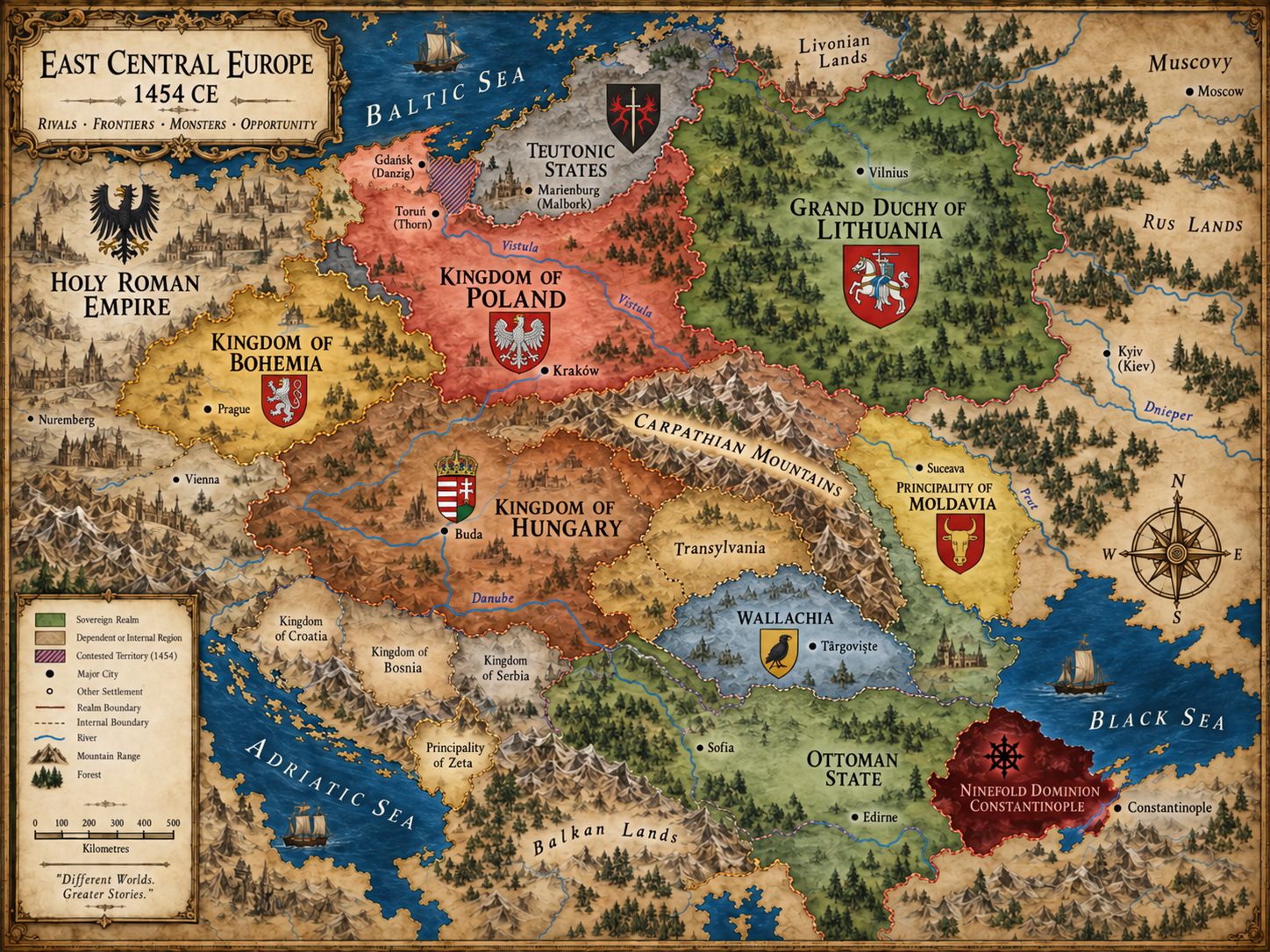
Map and Wider Region
Historical Sources
The opening of the Thirteen Years’ War, the Prussian Confederation’s appeal to Casimir and the incorporation crisis are documented by the Malbork Castle Museum and material held by the National Museum in Lublin. The scale and long operation of the Wieliczka and Bochnia saltworks is documented by the Cracow Saltworks Museum in Wieliczka. Divine, supernatural and adventure material follows the established setting.
Keep this reference growing
If this page helped with your reading or game, you can support its upkeep or explore the curated books.
Explore the Bookshop — epics, classics and stories behind imagined worlds.