
Port Royal — Harbour of Privateers and Rival Powers
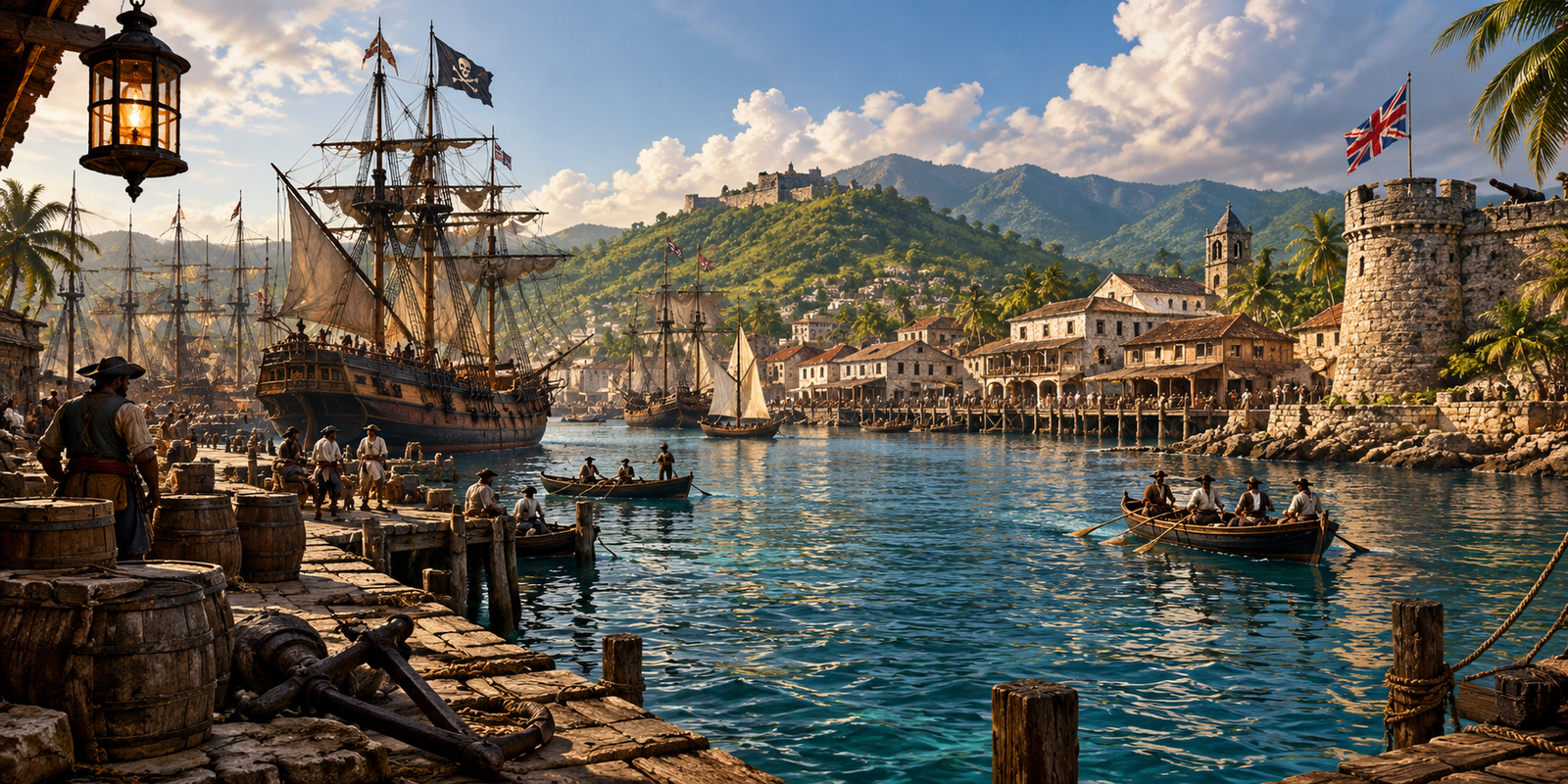
Jamaica · Palisadoes · Kingston Harbour · fortified privateer anchorage
At a Glance
- Settlement
- Port Royal, at the mouth of Kingston Harbour on the southern coast of Jamaica
- Political character
- A fortified foreign-governed port whose powerful merchants, wardens and captains do not agree on who should rule the waterfront
- Harbour
- Protected deep-water basin entered through shoals and guarded channels behind the Palisadoes
- Inhabitants
- Several thousand townspeople, sailors, fishers, shipwrights, traders, servants, merchants and visiting privateers; numbers rise with the fleets
- Economy
- Refitting, pilotage, trading, prize brokerage, cargo storage, fishing, timber and victualling
- Defences
- Batteries, signal posts, patrol boats and armed ships; the forts are only as reliable as their gunners and supplies
- Notable people
- Henry Morgan, Roche Braziliano and independent harbour pilots
- Present danger
- A stolen ship register, a prize vessel with captives aboard and missing gunpowder
- Best for
- Pirate intrigue, rescue, maritime trade, ship repairs, disputed prizes and dangerous alliances
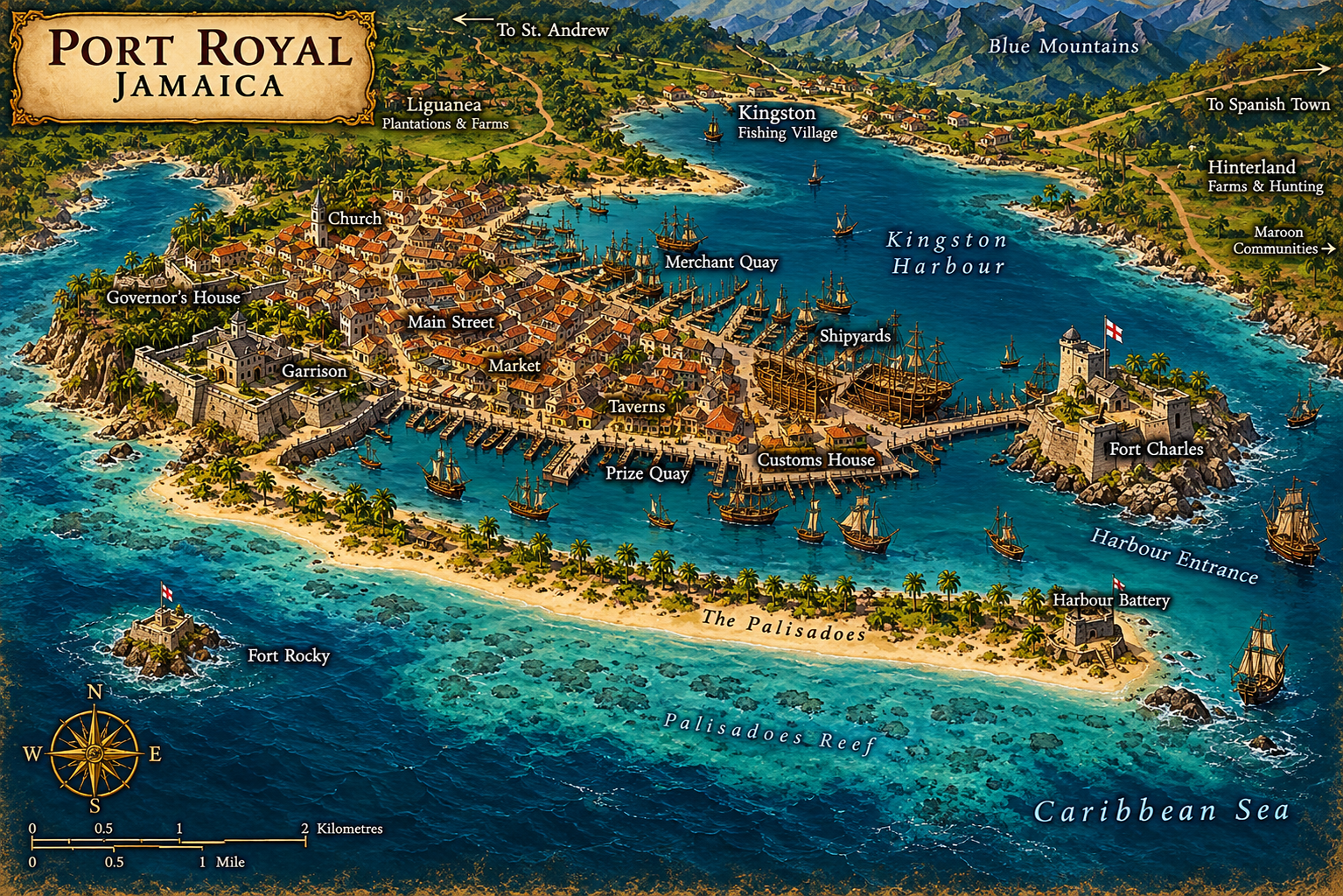
Port Royal Harbour Map
A battered prize ship enters Kingston Harbour, and the fort’s gunners discover their powder kegs are full of sand. The captured ship’s captain wants his reward, a prisoner below decks is calling for help, and another armed vessel waits beyond the Palisadoes. Whoever settles the dispute before nightfall may save the harbour—or decide who owns it.
Port Royal smells of pitch, hot timber, salt fish and spilled rum. Sailmakers shout from crowded yards; moneylenders count foreign coin; pilot boats race out to meet sails on the horizon. The harbour offers coin, work, passage and protection, but no one is safe merely because a governor claims the streets. A captain’s credit may be ruined by one frightened witness, and a warship with empty stores is less powerful than the fisher families who refuse to supply it.
What Is Happening Right Now?
The brig nobody will unload
A privateer brings in a richly laden ship but refuses to open the after hold. Shipwrights have heard people calling for help through the planking. The cargo broker wants the prize sold before another captain claims it; the watch commander demands testimony from those trapped aboard. Henry Morgan will lend his influence to a fair hearing if someone can produce the ship’s papers. Armed men arrive to collect the prize at sundown.
A stolen register, a dangerous sale
The clerk carrying the harbour’s register disappears between the quay and the battery. The missing book names every ship, its guns, intended destination and which refugees have been offered shelter. A merchant says the clerk fled with stolen coin, but a foreign squadron now knows more about Port Royal’s defences than it should. A quiet investigation may prevent ships at anchor from turning their weapons on one another.
Sand instead of gunpowder
The harbour gunners open three sealed kegs and find sand. An approaching frigate is already visible beyond the shoals, and the governor fears that revealing the theft will cause a panic. Someone has paid a ropeworker to hide barrels beneath the sail loft. Recovering them can save Port Royal, but the thief may have been ordered by a captain hoping to force the port to accept new protection.
Places to Explore
The Palisadoes Pilot Steps
Small boats gather by the stone landing at the harbour mouth. Local pilots understand shoals, hidden rock, weather and the colours of shallow water. They know how to bring a heavy merchantman in safely, and can keep a pursuing warship outside simply by refusing their service. Several pilot families demand compensation for nets smashed by a privateer’s careless passage.
The King’s Battery and Signal Tower
The fort’s guns overlook the entrance and its lookouts read ships’ flags as they emerge from the haze. A battery can challenge a vessel without ever hitting it; a dishonest signalman can also let an enemy in under friendly colours. Powder stores and gun crews matter more here than proclamations from distant rulers.
The Careening Beach and Ropewalk
Spars lie drying beside half-repaired hulls, and tar smoke hangs over ropes being twisted for rigging. Master shipwright Elian Morrow will refit a small vessel with sound timber and coin; a dismasted frigate needs labour, space and weeks of work. He knows which captain has hidden rotten planks beneath fresh paint and will not endanger his workers for a promised share of treasure.
Prize Quay and the Counting Houses
Merchants and witnesses dispute captured cargo beside stacks of cloth, barrels and sailcloth. A ship’s log may prove that a prize was taken in battle—or that it was stolen from an ally. Inez Calder’s counting house offers credit to captains who can pledge a vessel or goods, though no one knows how many claimants hold a receipt for the same cargo.
Fish Market and Canoe Shore
Fishers and independent coastal traders bring cassava, fruit, drinking water and news from outside the governor’s patrols. Taíno families know which shores welcome strangers and which refuse armed crews. Without their food and boats, the proudest port can be stranded behind its own batteries.
The Split Lantern
The waterfront tavern serves fish stew, cassava bread, strong drink and cramped beds above a noisy common room. Quartermasters recruit hands over battered tables; a sailor recently disappeared after showing the keeper a sealed packet. Three different visitors now claim it belongs to their captain.
People, Factions and Services
Henry Morgan believes a captain must keep the articles he promised his crew. He can muster disciplined privateers and make enemies listen to a bargain, but his influence is not a licence to command every ship at anchor. His hard sense of order protects the crews he recognises while offering far less comfort to those caught in their raids.
Roche Braziliano has a harsher reputation. He offers violence as a solution to almost every delay and expects fear to do the work of negotiation. His men may share the same taverns as Morgan’s, but a joint berth does not make their captains allies or their methods equally acceptable.
Marisol Tavares is a pilot who knows the shoals and the fishing villages of the eastern coast. She will guide a rescue boat through dangerous water, but refuses captains who injure her neighbours. Her family’s local knowledge cannot be purchased by a royal commission.
Warden Celia Vaun commands the shore watch and insists that evidence be heard before a prisoner is surrendered or a prize sold. She will arrest a famous captain’s favourite sailor for murder, even at the risk of losing the governor’s favour. She cannot enforce justice far beyond her patrols.
Inez Calder, a broker on Prize Quay, keeps shipwrights paid and warehouses stocked. She has also pledged the same cargo against more than one loan and will ruin an honest claimant to conceal it. She knows which captains secretly sell captives and which traders offer sanctuary.
The Brethren of the Coast use Port Royal’s markets and repair yards, but the port is not a subject harbour of their pirate republic. Tortuga is an ally and competitor, and the neighbouring coastal and highland communities of Jamaica negotiate on their own terms.
Useful Services
| Where | What is offered | The catch |
|---|---|---|
| The Split Lantern | Meals, shared lodging, messages, recruiting | The keeper will hide a wounded sailor but not shelter a violent pursuer |
| Morrow’s Yard | Ship repairs, sailcloth, ropes, timber, caulking | Payment and materials before substantial work begins |
| Pilot Steps | Safe entry, soundings, canoe passage, weather advice | Pilot families refuse captains who have damaged their shores |
| Prize Quay | Cargo sales, warehouse space, credit and interpreters | Ownership, honest ledgers and unsettled debts matter |
| Ship healers | Bandages, herbs, fresh water and care for the wounded | Remedies run short when several damaged crews return together |
For encounters on the quays, use the Shipmate, First Mate, Veteran Buccaneer, Pirate Captain and Pawnbroker / Fence entries.
Magic, Sacred Coasts and Dangerous Water
Port Royal’s deep anchorage opens onto waters inhabited and travelled long before the foreign batteries were built. Taíno households protect ancestral cemí and the places where fresh water is gathered. Stories of Atabey, the waters’ life-giving power, and Guabancex, whose storms can tear through entire coasts, are spoken by people who understand rain, currents and loss. A wealthy sailor’s desire to collect a sacred object does not make it available for sale.
Reefs beyond the harbour bear marks understood by the Sea-Elf Reef Kingdoms. Some passages are open to fishing craft but closed to armed vessels, not through whim but to protect living coral, sanctuaries and the people who dwell there. Local pilots may refuse a generous commission rather than violate those boundaries. Consult the Caribbean Sea for the wider storm gods, reef inhabitants and deep-sea dangers.
In the weeks after a storm, sailors sometimes hear a bell beneath the outer shoals. It could be the rigging of a wreck dragged by the current, a signal to smugglers, or a real haunt trying to lead a crew to a drowned vessel. Divers who ignore the current risk death without ever meeting a creature. Beyond the reef, the merrow and other hostile sea-dwellers may make a salvage bargain far more dangerous.
Dangers and Adventure Hooks
The prisoner in the after hold
A sailor passes a bloodied key through a crack in the captured brig’s hull. The after hold contains prisoners taken from a friendly vessel, along with the orders that authorised the seizure. Freeing them before the prize auction saves lives; finding them a safe home rather than returning them to another captain is the harder victory. The broker who financed the raid wants the papers destroyed.
The powder beneath the ropewalk
A powder supplier claims every keg left his warehouse properly sealed. Footprints and a damaged cart lead to the ropewalk, where the missing barrels are hidden for a captain preparing to force Port Royal into accepting foreign protection. Returning them will restore the battery, but the conspirators can still spread panic by announcing that the guns cannot fire. The characters may catch the buyer or arrange a defence that needs fewer cannon.
The reef that was sold twice
Inez Calder has sold a private chart to two captains, both promised the same safe route to a valuable wreck. The route crosses sea-elf markers and fishing grounds protected by Marisol’s kin. The characters can stop the reckless expedition, negotiate with the reef’s guardians or rescue a stranded crew after both ships take the passage. The treasure can be recovered; destroyed livelihoods and broken trust cannot be bought back so easily.
Travel and Lasting Consequences
Port Royal’s deep harbour is approached through shoals and the narrow Palisadoes passage. Heavy ships need careful sounding and an experienced pilot; smaller boats and canoes use water a warship cannot cross. The batteries command much of the entrance, but they cannot control every hidden landing on Jamaica. From here sailors seek the neighbouring Tortuga, the reefs near Nassau or passages across the Caribbean.
The fort enforces a governor’s orders while shipboard articles bind crews and waterfront wardens keep the public peace. These authorities do not speak with one voice, nor does any of them own the inland lands and coastal settlements of Jamaica. A party that frees captives may earn protection from the pilots and hatred from the prize brokers. Someone who murders a supplier can win a duel and lose access to food, a berth or a shipyard when the next storm arrives.
Deeper History
Taíno fishing communities knew the sheltered waters and the Palisadoes long before the great privateer harbour. The narrow approach gives a small force an advantage over ships it can identify and delay, but no coastal fort commands all the island’s rivers, mountains or people. Port Royal’s wealth grows because merchants, pilots, farmers, sailors and shipwrights make it possible for armed ships to remain at sea. Its future depends on whether they continue to accept the price.
In recorded history, England captured Jamaica in 1655, Port Royal grew into a powerful seventeenth-century port, and the earthquake of 7 June 1692 submerged much of the town. The privateer harbour described here already exists in the campaign year of 1454; these later dates distinguish its historical namesake.
Historical Sources and Related Places
UNESCO — Archaeological Ensemble of 17th Century Port Royal · Jamaica National Heritage Trust — Port Royal · Brethren of the Coast · Caribbean NPCs

Keep this reference growing
If this page helped with your reading or game, you can support its upkeep or explore the curated books.
Explore the Bookshop — epics, classics and stories behind imagined worlds.