
The Great Wall — Ming Frontier Forts and Mountain Passes
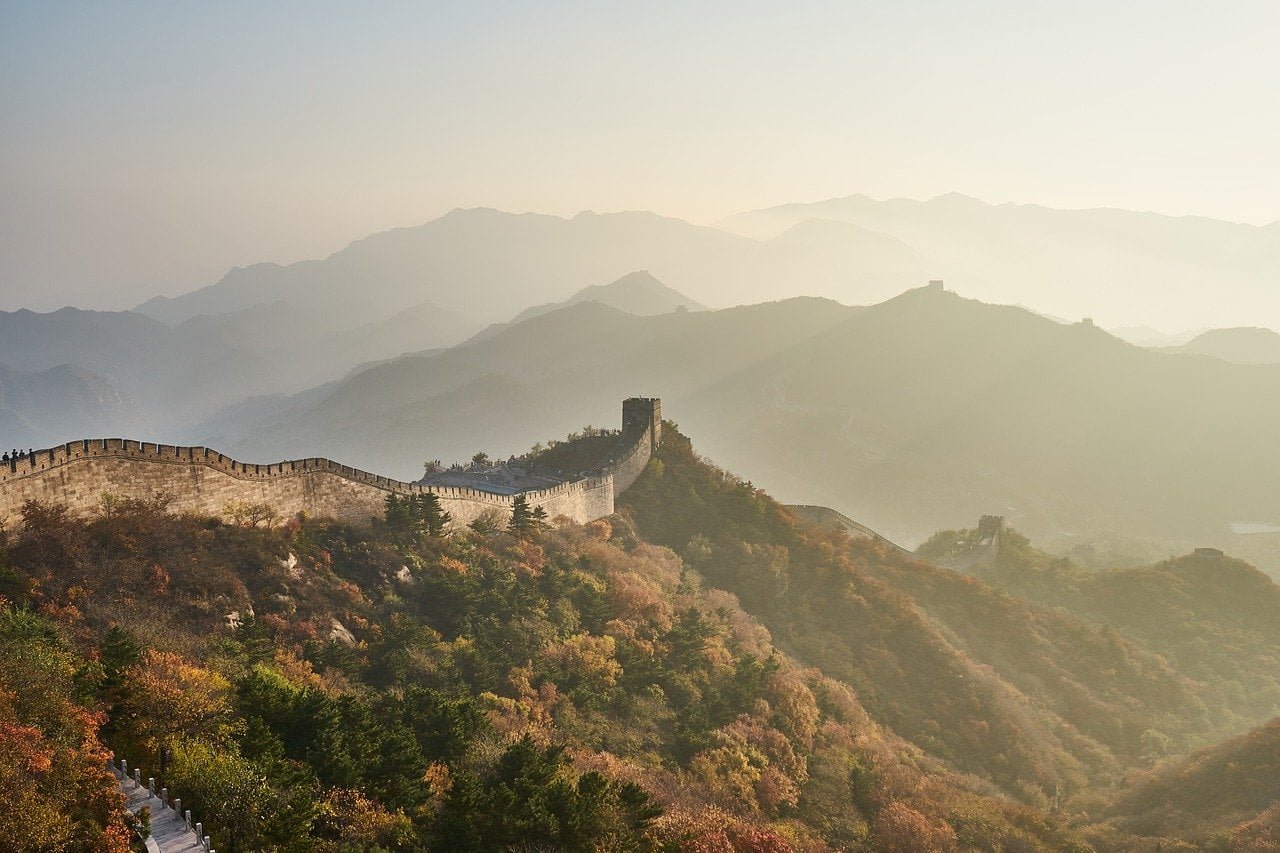
At a Glance
| Place | The northern forts, passes, walls and beacon lines of Great Ming |
|---|---|
| Present | 1454 CE |
| Authority | Imperial garrison commanders, frontier officers and the Jingtai court |
| Main approaches | Shanhaiguan by the eastern sea, Juyongguan north-west of Beijing, Datong’s mountain roads and Jiayuguan in the distant west |
| Form | Older walls, Ming earthworks, reinforced passes, watchtowers and scattered beacon posts; not one continuous finished stone barrier |
| Neighbours | Farmers, soldiers’ households, horse traders, couriers, pastoral peoples and northern orc warbands |
| Travel | Through guarded passes and settled valleys, with mountains and exposed steppe between |
| Greatest danger | Unreliable warnings after Emperor Yingzong’s capture and the breakdown of trust along the frontier |
The beacon above the pass should have burned before the night watch ended. Instead, its tower stands dark. Below it a caravan of grain mules waits for the gate captain to decide whether the road is safe, and smoke from a village chimney drifts toward the bare hills. The men on the towers are still there—or someone has hung their coats upon the battlements. On the far ridge, riders move in and out of the snowfall.
The Great Wall is not a single road or fortress. It is a long and uneven frontier where the Ming court relies on strong gates, mountain terrain, earth ramparts, older masonry, beacon stations, cavalry and the people who can keep soldiers fed. On some hills a traveller walks beside a substantial wall; elsewhere there is only a ditch, ruined watchpost, earthen bank or a fort guarding the one pass a wagon can take. The surviving works of earlier dynasties stand beside new repairs and unfinished military orders.
What Is Happening Right Now?
The tower without a fire
A chain of beacons above Juyongguan has gone silent, and the last riders sent to investigate have not returned. Refugees blame an orc scouting party; a mason reports that recent earth movement has broken an old tunnel below the tower. The commander needs people who can approach unnoticed and return with a truthful report before he lights every beacon in the district. A false alarm might pull the defenders from another threatened pass; silence might cost the villages their only warning.
Three prisoners and one emperor
Far to the north the Alliance of the Four Orcats still holds Jingtai’s elder brother, Emperor Yingzong. An orc envoy arrives bearing three captives and a message supposedly written by the prisoner. Two captives are ordinary frontier merchants who may have overheard a genuine conversation; the third knows the emperor’s personal seal but refuses to identify the officer who taught him its form. The nearest garrison could ransom them, interrogate them, or carry all three south to Beijing. None of those choices is without danger.
The drought beneath the western beacon
A well near Jiayuguan has begun to dry, though its keeper insists the spring flows beneath the ridge. Old stone channels were uncovered while repairing the fort, and a serpent-headed guardian has appeared in the low pool at midnight. The garrison commander needs water; the guardian demands that a stolen bronze token be returned before anyone uncovers the spring’s deeper chamber. The token has already been sold to a caravan heading east.
Four Frontier Approaches
Shanhaiguan — the passage by the sea
At the eastern edge of the northern defences, mountains approach the Bohai coast. Shanhaiguan holds an old strategic gate between the hills and the routes through Liaodong. Porters, fishermen, official riders and soldiers gather where land traffic narrows. Its commanders must protect the road without destroying the trade that sustains nearby villages. A merchant convoy has arrived with horse tack bearing the mark of a northern orc warband; the goods may be spoils, payment or a warning.
Juyongguan — the mountain throat of Beijing
North-west of Beijing, the road narrows between steep ridges. Here a gate, garrison and older earthworks guard an important approach to the capital. Riders carry messages toward the Forbidden City, while supply carts struggle up the slopes and muleteers know the hidden springs. The local watch captain is exhausted after weeks of false alarms. His scouts have found a child’s footprint in fresh snow inside a locked signal tower.
Datong — forts and wide northern roads
Near Datong, the frontier opens into a country of cold winds, ridges and routes used by soldiers, herders and trading parties. Forts protect the main movements, but no commander can watch every valley. The army depends on grain shipments, remounts and guides who know which ground remains passable after rain or snow. A soldier’s family may live for years in the shadow of an unfinished wall and care more about safe winter fuel than distant speeches about imperial glory.
Jiayuguan — the fortress at the western throat
The western garrison at Jiayuguan watches the passage between the Hexi Corridor and the open lands beyond. Built early in the Ming restoration, its fort stands where travellers, soldiers and caravans must think carefully before setting out. Water, animals and guides matter more here than a continuous wall. The frontier commander can organise an escort across the next stretch, but cannot promise a well will be full or that a hostile band has not moved since the last report.
People Beside the Wall
Captain Wen Shou — the eastern sentry. A practical fort officer who knows every working beacon under his command. He dislikes dramatic accounts and trusts a messenger who returns with observations, distances and proof. One of his sons serves beyond the next pass, and the captain has kept the boy’s last letter folded inside his riding coat.
Lady Gao, keeper of the mule train. She manages grain and salted food between a fortified town and two mountain posts. Her drivers include veterans, cousins and herders whose loyalties are not all to the Ming court. She wants the road open, not a pointless show of military courage.
Qorin, the northern interpreter. A traveller who understands the languages of several steppe peoples and knows which orc standards have fought one another. Officers call him a spy when his advice is unwelcome, but every successful prisoner exchange has depended on someone willing to listen to both sides.
Shen the Stonewright. His family repairs old mortar and packed-earth banks. He has discovered a hidden chamber behind a tower foundation and believes the channel beneath it once supplied water. A garrison officer wants the wall sealed again; Shen wants the villagers’ spring restored.
Inns, Garrisons and Places of Shelter
The Ash Tree Guesthouse
In a market lane beyond Juyongguan’s southern approach, Mistress Pan offers millet porridge, tea, stable space and two rooms above a warm kitchen. Watchmen and muleteers are frequent guests. A message can be left with her, but she will not carry it past the gate herself. She knows which patrol has failed to return and which officer is concealing the news.
The Windbreak Yard
Near a Datong supply road, a timber-walled yard shelters wagoners, cavalry remounts and packs of fodder during sudden storms. Its proprietor Huzi repairs harness, shoes animals and rents cramped sleeping space. The eastern shed has a locked alcove where a courier hid a message before being taken ill.
Water and help at Jiayuguan
Small caravan lodgings and well-keepers cluster around the roads serving the western fort. Travellers buy dried provisions, water skins, shoe repairs and guidance before entering rough country. A physician can treat frostbite, infected cuts or sickness from spoiled water; a temple keeper may bless a journey, but no priest or charm can replace a full waterskin.
Fortified posts do not provide free beds to every traveller. A commander may grant shelter inside a garrison during a genuine emergency, although strangers ordinarily remain in the adjoining settlement. Patrols check cargo, ask travellers where they have come from and warn them against roads recently used by raiders. Honest border traders may carry goods from orc-held territory without owing allegiance to the armies that rule it.
The Watchers of Stone and Wind
The oldest northern fortifications stand upon ridges that had guardians before the Ming or the orc khanates named them. Some gates have stone lions that stir when hostile spirits approach. A few signal towers keep fire spirits that wake only when a beacon is honestly lit in warning. These powers are not the Wall’s secret army: a stone lion may defend one gate, not patrol a hundred miles, and a spirit of the flame cannot distinguish friend from enemy if its keeper gives a false signal.
At a western spring, an old serpent-guardian remembers the time before the present walls. It will protect the water of its valley, but not bargain away its duty for promises of imperial conquest. Travellers who treat it as a resident rather than a monster may solve a dispute no cavalry could settle.
Travel and Routes
Leaving Beijing for the northern passes means climbing roads used by officials, grain caravans and military riders. A healthy courier with a good mount may travel quickly between established posts, but baggage trains, cattle and cold weather slow the journey sharply. Moving from one fort to another is not the same as following an uninterrupted wall-top highway. Between watched passes lie river crossings, open ground, steep paths and some stretches without any masonry.
North of the settled frontier, the Alliance of the Four Orcats and rival orc successor powers contest the steppe. They are not allies of the hobgoblin Ninefold Dominion occupying Constantinople. A guide who knows one northern standard cannot safely promise passage through another’s lands. Caravans need interpreters, local news, food for people and animals, and a plan for retreat before nightfall.
Great Ming · Forbidden City · Emperor Jingtai.
Deeper History
Chinese dynasties built walls, forts and signal systems across many centuries, adapting them to different frontier dangers. The Ming restoration began in 1368 after the fall of the orc-dominated Eastern Fang inheritance. Early Ming commanders strengthened selected passes and maintained or rebuilt useful older works. At Jiayuguan, the fort was established in 1372; other strongpoints remained important as the dynasty guarded the approaches to Beijing.
The immense, continuous-looking stone-and-brick ridgeline familiar from later centuries has not yet been completed in 1454. Far larger programmes of brick-faced construction lie in the future. The present frontier is a practical and sometimes fragile combination of military posts, old walls, rammed-earth banks, mountain barriers, beacon lines and the people responsible for them. Yingzong’s capture makes that weakness apparent to everyone who must travel north.
Historical Sources
UNESCO: The Great Wall · National Geographic: Ming frontier defences and the later stone wall · Historical chronology.
Keep this reference growing
If this page helped with your reading or game, you can support its upkeep or explore the curated books.
Explore the Bookshop — epics, classics and stories behind imagined worlds.