
Trickery Domain
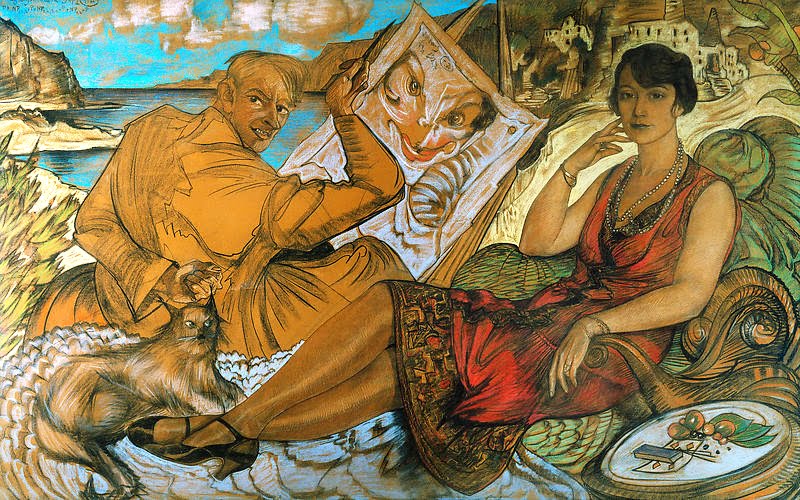
The Trickery Domain turns deception, illusion, stealth and disruptive misdirection into sacred tools. Its clerics do not all serve the same purpose: one may protect thieves, another expose pride through ridicule, another move unseen through hostile courts, and another use deception to break an unjust order.
At a Glance
| Divine Sphere | Trickery, deception, illusion, stealth, disguise, misdirection and subversion |
|---|---|
| Typical Role | Infiltrator, illusionist, support caster and tactical misdirector |
| Core Strengths | Stealth support, duplicated positioning, illusion, concealment and deceptive battlefield control |
| Published Rules | D&D 5.5e/2024, D&D 5e/2014, Pathfinder 1e and D&D 3.5e |
| Primary Ability | Wisdom |
| Typical Patrons | Loki, Hermes, Hecate, Anansi and Laverna where trickery is established in the cult |
| Best For | Players who want positioning, stealth and deception to matter as much as direct damage |
Trickery Domain Mechanics
Trickery is one of the domains that genuinely exists in all four supported rules traditions, but the mechanics change substantially between them. Use only the panel for the edition being played: the 2024 redesign is not merely the 2014 subclass moved to a new level, and Pathfinder’s Copycat rules are not the 3.5e granted power.
Trickery Domain — D&D 5.5e / 2024
Rules status: official 2024 Player’s Handbook Cleric subclass.
| Cleric Level | Trickery Domain Feature |
|---|---|
| 3rd | Blessing of the Trickster, Trickery Domain Spells, Invoke Duplicity |
| 6th | Trickster’s Transposition |
| 17th | Improved Duplicity |
Blessing of the Trickster
As a Magic action, choose yourself or a willing creature within 30 feet. The chosen creature has Advantage on Dexterity (Stealth) checks until you finish a Long Rest or use this feature again.
2024 Trickery Domain Spells
| Cleric Level | Always-Prepared Spells |
|---|---|
| 3rd | Charm Person, Disguise Self, Invisibility, Pass without Trace |
| 5th | Hypnotic Pattern, Nondetection |
| 7th | Confusion, Dimension Door |
| 9th | Dominate Person, Modify Memory |
Channel Divinity: Invoke Duplicity
As a Bonus Action, expend one use of Channel Divinity to create a perfect visual illusion of yourself in an unoccupied space you can see within 30 feet. It is intangible and lasts for 1 minute, ending early if you dismiss it or become Incapacitated. You can cast spells as though you occupied the illusion’s space, but you still use your own senses. When both you and the illusion are within 5 feet of a creature that can see the illusion, you have Advantage on attack rolls against that creature. As a Bonus Action, you can move the illusion up to 30 feet to an unoccupied space you can see within 120 feet of yourself.
Trickster’s Transposition
At 6th level, whenever you take the Bonus Action to create or move the illusion from Invoke Duplicity, you can teleport and swap places with the illusion.
Improved Duplicity
At 17th level, the duplicate provides Shared Distraction: you and your allies have Advantage on attack rolls against a creature within 5 feet of the illusion. It also gains Healing Illusion: when the illusion ends, you or a creature of your choice within 5 feet of it regains Hit Points equal to your Cleric level.
Trickery Domain — D&D 5e / 2014
Rules status: official 2014 Player’s Handbook Divine Domain.
| Cleric Level | Trickery Domain Feature |
|---|---|
| 1st | Domain Spells, Blessing of the Trickster |
| 2nd | Channel Divinity: Invoke Duplicity |
| 6th | Channel Divinity: Cloak of Shadows |
| 8th | Divine Strike |
| 17th | Improved Duplicity |
2014 Domain Spells
| Cleric Level | Domain Spells |
|---|---|
| 1st | Charm Person, Disguise Self |
| 3rd | Mirror Image, Pass without Trace |
| 5th | Blink, Dispel Magic |
| 7th | Dimension Door, Polymorph |
| 9th | Dominate Person, Modify Memory |
Blessing of the Trickster
Starting at 1st level, use an Action to touch a willing creature other than yourself. That creature has Advantage on Dexterity (Stealth) checks for 1 hour or until you use the feature again.
Channel Divinity: Invoke Duplicity
Starting at 2nd level, use an Action and Channel Divinity to create a perfect illusion of yourself within 30 feet for up to 1 minute. Maintaining it requires Concentration as though concentrating on a spell. As a Bonus Action, move it up to 30 feet, provided it remains within 120 feet. You can cast spells as though you were in the illusion’s space, using your own senses. When both you and the illusion are within 5 feet of a creature that can see it, you have Advantage on attack rolls against that creature.
Channel Divinity: Cloak of Shadows
At 6th level, use an Action and Channel Divinity to become Invisible until the end of your next turn. The invisibility ends early if you attack or cast a spell.
Divine Strike
At 8th level, once on each of your turns when you hit with a weapon attack, deal an extra 1d8 poison damage. The extra damage becomes 2d8 at 14th level.
Improved Duplicity
At 17th level, Invoke Duplicity creates four duplicates rather than one. As a Bonus Action, you can move any number of them up to 30 feet, to a maximum distance of 120 feet from you.
Trickery Domain — Pathfinder 1e
Rules status: published Pathfinder 1e Core Rulebook domain. Bluff, Disguise and Stealth are class skills for you.
Copycat
As a move action, create an illusory double that functions as a single Mirror Image. It lasts for a number of rounds equal to your Cleric level, or until destroyed or dispelled. You can have only one Copycat at a time, and it does not stack with Mirror Image. Uses per day equal 3 + your Wisdom modifier.
Master’s Illusion
At 8th level, create an illusion that changes the appearance of you and any number of allies within 30 feet, functioning like Veil. The save DC to disbelieve is 10 + half your Cleric level + your Wisdom modifier. You can maintain it for a total number of rounds per day equal to your Cleric level; the rounds need not be consecutive.
Pathfinder 1e Trickery Domain Spells
| 1st | Disguise Self |
|---|---|
| 2nd | Invisibility |
| 3rd | Nondetection |
| 4th | Confusion |
| 5th | False Vision |
| 6th | Mislead |
| 7th | Screen |
| 8th | Mass Invisibility |
| 9th | Time Stop |
Trickery Domain — D&D 3.5e
Rules status: published D&D 3.5e SRD domain.
Granted Power
Add Bluff, Disguise and Hide to your list of Cleric class skills.
D&D 3.5e Trickery Domain Spells
| 1st | Disguise Self |
|---|---|
| 2nd | Invisibility |
| 3rd | Nondetection |
| 4th | Confusion |
| 5th | False Vision |
| 6th | Mislead |
| 7th | Screen |
| 8th | Polymorph Any Object |
| 9th | Time Stop |
How the Trickery Domain Plays
Trickery clerics win by forcing opponents to react to the wrong information. They create false positions, hide real movement, disguise allies and attack from places the enemy did not expect. In the 2024 rules, the duplicate becomes a particularly strong mobility tool because it no longer consumes Concentration and can exchange places with the cleric from 6th level.
In Combat
- Use the duplicate to change geometry. Casting from the illusion’s space can bypass awkward lines and create threat from a position the cleric is not physically occupying.
- Protect Concentration in 2014. Invoke Duplicity competes directly with other Concentration spells in that edition; it does not in 2024.
- Pathfinder is a different play pattern. Copycat is a defensive image and Master’s Illusion is group disguise, not the mobile spell-origin duplicate used by 5e.
- Deception still needs a purpose. The best trick is the one that changes a guard route, splits an enemy group, creates an escape route or hides what the party actually intends to do.
Outside Combat
Trickery clerics are natural infiltrators, smugglers, performers, false witnesses, counter-spies, thieves’ priests and ritual specialists in disguise. Whether those acts are sacred rebellion, selfish theft, comic humiliation or protective misdirection depends on the patron.
Who Grants the Trickery Domain?
Strong established patrons include Loki, Hermes, Hecate, Anansi and Laverna. They do not represent the same kind of trickery: divine messenger, boundary-crosser, magical deceiver, story-trickster and patron of thieves produce distinct clergy.
Priests, Temples and Rites
Trickery cults may use masks, coded greetings, deliberately misleading entrances, ritual role-reversal, hidden shrines and stories whose meaning only becomes clear after the listener has been deceived once. Some have public temples and secret practices; others survive precisely because outsiders cannot easily tell priest from performer, thief or traveller.
What Are Trickery Priests Doing Now?
Trickery priests are carrying messages through watched roads, stealing evidence before a hostile court can destroy it, running confidence games against richer predators, smuggling people through closed borders, spreading false rumours to conceal real movements, and competing with rival tricksters whose deceptions threaten the wrong people.
Historical and Mythological Context
Trickster figures can be thieves, culture heroes, messengers, taboo-breakers, storytellers or agents of social reversal. Treating all of them as simple pranksters loses the reason trickery is sacred in the first place. The domain works best when each patron’s deceptions have a recognisable cultural purpose.
Related Domains and Character Options
Rules Sources and Licensing
- D&D 5.5e / 2024: official Trickery Domain from the 2024 Player’s Handbook. The current D&D Beyond Cleric update confirms Blessing at 3rd level, Bonus-Action/non-Concentration Invoke Duplicity, the revised spell list and the redesigned 17th-level feature.
- D&D 5e / 2014: official Trickery Domain from the 2014 Player’s Handbook.
- Pathfinder 1e: Copycat, Master’s Illusion and the domain spell list follow the Pathfinder Core Rulebook domain reference.
- D&D 3.5e: granted power and spell list follow the 3.5 SRD Trickery Domain.
Keep this reference growing
If this page helped with your reading or game, you can support its upkeep or explore the curated books.
Explore the Bookshop — epics, classics and stories behind imagined worlds.