
Vermin · Winged reproductive caste
Giant Ant Drone
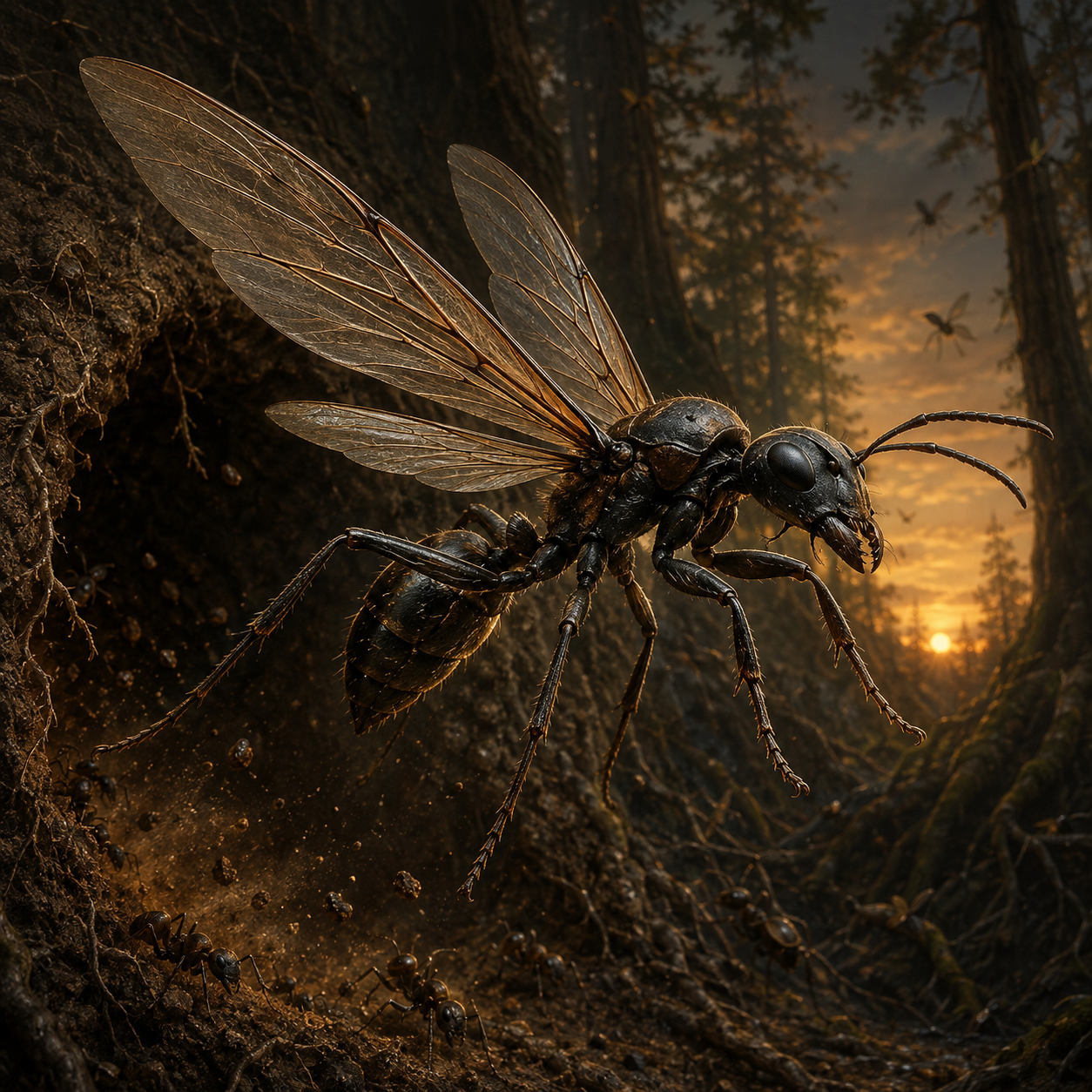
A Giant Ant Drone is a heavy-bodied male alate bred for one brief season of flight. It rises from the colony beside virgin queens, crosses dangerous ground on beating wings and answers interference with crushing mandibles and a venomous sting.
“When the soil begins to hum, look upward. The colony is not marching—it is taking to the air.”
Giant Ant Drone Game Statistics
Choose the rules tab used by your campaign. Each Giant Ant Drone version represents the same Medium, winged CR 3 creature; without JavaScript, all three rulesets remain visible.
Giant Ant Drone — D&D 5.5e
Medium Beast, Unaligned
- AC 15
- Initiative +2 (12)
- HP 52 (7d8 + 21)
- Speed 40 ft., climb 20 ft., fly 30 ft.
| STR | DEX | CON | INT | WIS | CHA |
|---|---|---|---|---|---|
| 18 (+4) | 14 (+2) | 16 (+3) | 1 (−5) | 14 (+2) | 5 (−3) |
- Skills Perception +4
- Senses Blindsight 10 ft., Darkvision 60 ft.; Passive Perception 14
- Languages —
- CR 3 (XP 700; PB +2)
Traits
- Keen Antennae. The drone has Advantage on Wisdom (Perception) checks that rely on smell.
- Sure-Footed Climber. The drone can move across difficult earthen and rocky surfaces without spending extra movement.
Actions
- Multiattack. The drone makes one Bite attack and one Sting attack.
- Bite. Melee Attack Roll: +6, reach 5 ft. Hit: 8 (1d8 + 4) Piercing damage. If the target is Medium or smaller, it has the Grappled condition (escape DC 14). The drone can grapple only one creature at a time.
- Sting. Melee Attack Roll: +6, reach 5 ft. Hit: 7 (1d6 + 4) Piercing damage plus 7 (2d6) Poison damage. The target must succeed on a DC 13 Constitution saving throw or have the Poisoned condition until the end of its next turn.
Combat
The Giant Ant Drone uses flight to cross obstacles rather than circle safely at range. It bites to hold one intruder, follows with its sting and then climbs or flies towards the colony while dragging the captive only when the encounter terrain makes that movement possible.
Giant Ant Drone — Pathfinder 1e
CR 3 · XP 800 · N Medium vermin
- Init +2
- Senses darkvision 60 ft., scent
- Perception +7
Defence
AC 19, touch 12, flat-footed 17 (+2 Dex, +7 natural)
hp 22 (2d8 + 13)
Fort +8, Ref +2, Will +3
Immune mind-affecting effects
Offence
Speed 50 ft., climb 20 ft., fly 30 ft. (average)
Melee bite +5 (1d6 + 4 plus grab), sting +5 (1d4 + 4 plus poison)
Space 5 ft.; Reach 5 ft.
Statistics
Str 18, Dex 14, Con 21, Int —, Wis 17, Cha 15
Base Atk +1; CMB +5 (+9 grapple); CMD 17 (25 vs. trip)
Feats ToughnessB
Skills Climb +12, Perception +7, Survival +5; Racial Modifiers +4 Perception, +4 Survival
Special Abilities
Poison (Ex) Sting—injury; save Fort DC 14; frequency 1/round for 4 rounds; effect 1d2 Str; cure 1 save.
Ecology
Environment any
Organization solitary, pair, mating flight (3–12 drones and 1 queen), or colony (10–100 workers, 3–12 soldiers, 2–8 drones and 1 queen)
Treasure none
This Giant Ant Drone applies the advanced simple template and a 30-foot average fly speed to the standard Pathfinder giant ant. It closes from the air, grabs with its bite and stings held opponents.
Giant Ant Drone — D&D 3.5e
| Size/Type | Medium Vermin |
|---|---|
| Hit Dice | 2d8 + 6 (15 hp) |
| Initiative | +2 |
| Speed | 50 ft. (10 squares), climb 20 ft., fly 30 ft. (average) |
| Armor Class | 19 (+2 Dex, +7 natural), touch 12, flat-footed 17 |
| Base Attack/Grapple | +1/+5 |
| Attack | Bite +5 melee (2d4 + 4) |
| Full Attack | Bite +5 melee (2d4 + 4) |
| Space/Reach | 5 ft./5 ft. |
| Special Attacks | Improved grab, acid sting |
| Special Qualities | Darkvision 60 ft., scent, vermin traits |
| Saves | Fort +6, Ref +2, Will +3 |
| Abilities | Str 18, Dex 14, Con 17, Int —, Wis 17, Cha 15 |
| Skills | Climb +12, Listen +3, Spot +3, Survival +3 (+7 when tracking by scent) |
| Feats | TrackB |
| Environment | Temperate plains, forests and hills |
| Organization | Solitary, pair, mating flight (3–12 drones and 1 queen), or colony (10–100 workers, 3–12 soldiers, 2–8 drones and 1 queen) |
| Challenge Rating | 3 |
| Treasure | None |
| Alignment | Always neutral |
| Advancement | 3–4 HD (Medium); 5–6 HD (Large) |
| Level Adjustment | — |
Special Attacks
- Improved Grab (Ex). To use this ability, the drone must hit a Small or smaller creature with its bite attack. It can then attempt to start a grapple as a free action without provoking an attack of opportunity. If it wins the grapple check, it establishes a hold and can sting.
- Acid Sting (Ex). A Giant Ant Drone that establishes a hold with improved grab can attempt to sting the grappled opponent each round at +5. A hit deals 1d4 + 2 piercing damage plus 1d4 acid damage.
Skills
Giant ants have a +4 racial bonus on Survival checks when tracking by scent and a +8 racial bonus on Climb checks. A Giant Ant Drone can always choose to take 10 on Climb checks, even if rushed or threatened.
The D&D 3.5e Giant Ant Drone dives onto an isolated target, establishes a hold with improved grab and uses its acid sting while the rest of the colony blocks escape routes.
What the Giant Ant Drone Actually Does
A drone is not an oversized worker. It is a winged reproductive male produced when a mature colony is ready to send a new generation into the air. It does not normally excavate tunnels, gather food, tend larvae or command the hive.
Before the mating flight, drones remain in protected chambers and feed from the colony’s stores. When heat, humidity and season align, they emerge beside virgin queens. Their size makes the flight a dangerous event: livestock panic, predators gather and several colonies may release alates on the same day.
| Caste | Primary role | How it fights |
|---|---|---|
| Giant Ant Worker | Excavation, transport, brood care and foraging | Overwhelms intruders by weight and numbers |
| Giant Ant Soldier | Routine defence of tunnels, stores and entrances | Grabs with its jaws and delivers venom at close range |
| Giant Ant Knight | Heavy defence against major subterranean threats | Holds narrow ground as the colony’s armoured caste |
| Giant Ant Drone | Reproduction and the seasonal mating flight | Uses flight to reach, seize and sting exposed intruders |
| Giant Ant Queen | Reproduction, colony continuity and pheromonal control | Protected by other castes except during colony founding |
Running a Giant Ant Drone Encounter
Use the Giant Ant Drone when the colony’s reproductive cycle changes the battlefield. A drone encountered alone is displaced, injured or scouting the air immediately above a nest; several drones indicate that a nuptial flight has begun or is about to begin.
Terrain That Matters
- Colony shafts: vertical routes let the drone change elevation while ground castes hold the entrance.
- Forest clearings: branches divide the air into short lanes and prevent effortless circling.
- Rocky slopes: climb speed gives the drone stable landing points above difficult ground.
- Open pasture: terrified animals and scattered equipment create moving obstacles.
Behaviour at the Table
- The drone attacks creatures that block its route, threaten a queen or approach the colony exit.
- It uses its bite to hold one target and follows with the sting.
- It does not fight to the death far from the colony unless trapped.
- A wounded drone seeks altitude, cover or the nearest pheromone trail back to the nest.
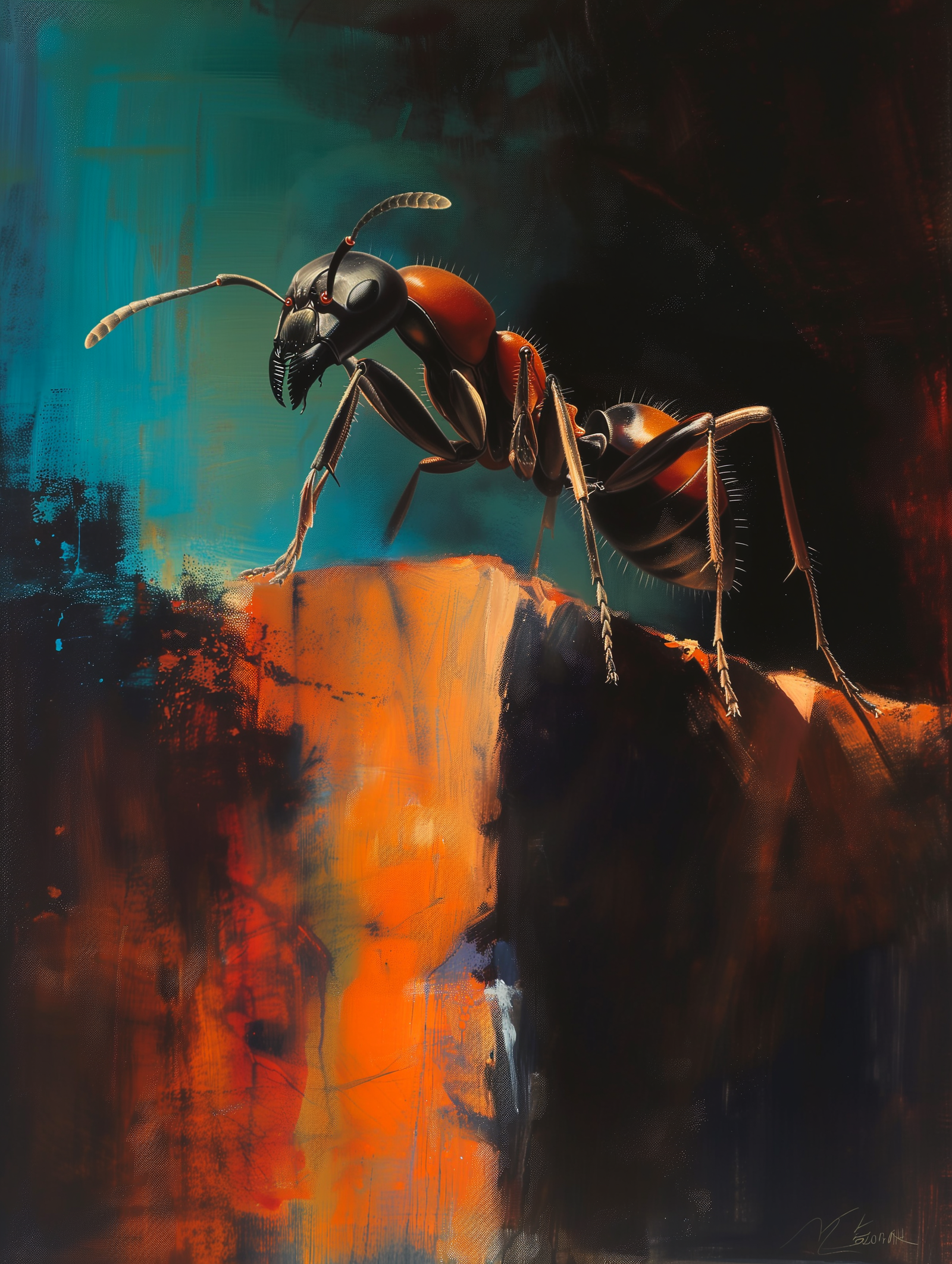
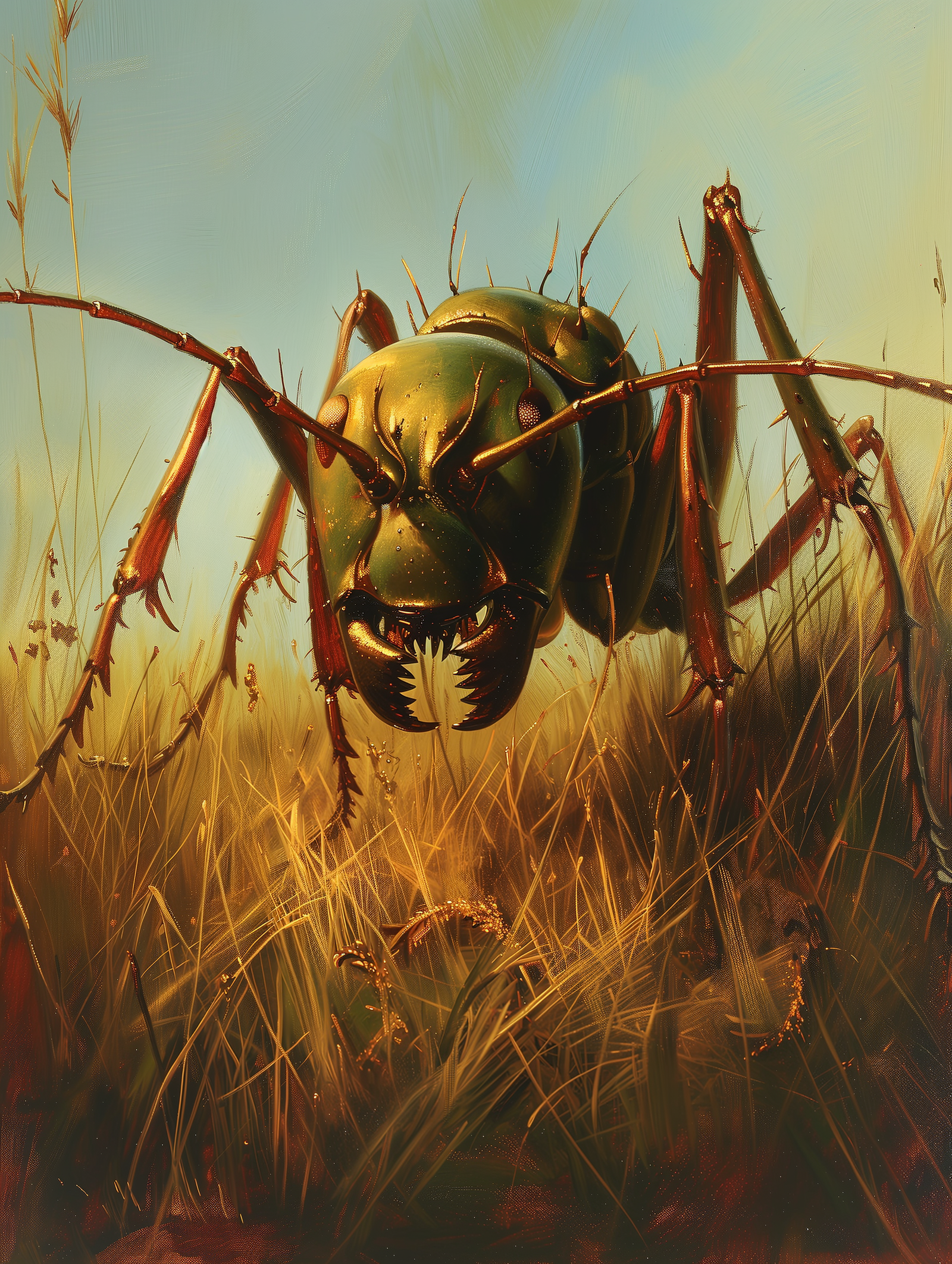
Giant Ant Colony Artwork
Two portrait illustrations show the ground castes and colony environment at their natural 1856 × 2464 aspect ratio.
Giant Ant Drone Adventure Hooks
The Black Noon Flight
Thousands of alates rise from several hills at once and darken a trade road. The swarm is not invading, but frightened guards begin a battle that could draw the ground castes from every nest.
The Queen Above the Walls
A virgin queen lands inside a fortified town with three drones still circling overhead. The defenders have minutes to remove her before workers beneath the foundations follow the new pheromone trail.
The Silent Colony
Dead drones litter the fields after an early flight, but no predators touch them. Their poison carries a mineral taint that points towards something contaminating the colony’s deepest water chamber.
Rain Before Wings
A druid predicts the season’s only safe nuptial-flight window. A rival settlement blocks the valley exit, forcing the characters to choose between breaking the blockade and allowing a failing colony to disappear.
Natural History and Giant Scale
In real ant colonies, mature nests seasonally produce winged reproductive ants called alates. The males are commonly called drones. They leave with virgin queens, mate during a nuptial flight and generally play no worker or soldier role within the colony. The basic reproductive pattern is summarised in the overview of ant nuptial flight.
Flight timing is influenced by environmental conditions rather than a single universal “flying ant day”. A British citizen-science study found spatial patterns and weather-linked triggers across large numbers of recorded flights; see Hart, Hesselberg, Nesbit and Goodenough, The Spatial Distribution and Environmental Triggers of Ant Mating Flights.
SpiralWorlds enlarges this brief natural event into a dangerous encounter. The drone retains its reproductive purpose, but its size, venom and capacity to grapple make the colony’s mating season a threat to travellers, livestock and settlements built over old nests.
Sources and Licence
Pathfinder Source
The Pathfinder statistics derive from the giant ant and its Drone (+1 CR) variant in Pathfinder Roleplaying Game Bestiary, page 16. The corrected organisation, encounter guidance and edition conversions are SpiralWorlds additions.
D&D 3.5e Source
The D&D 3.5e conversion applies the drone’s advanced abilities and flight to the SRD giant ant soldier, retaining that edition’s improved grab, acid sting and bonus Track feat.
Section 15: Copyright Notice
Open Game License v 1.0a Copyright 2000, Wizards of the Coast, Inc.
System Reference Document Copyright 2000–2003, Wizards of the Coast, Inc.; Authors Jonathan Tweet, Monte Cook, Skip Williams, Rich Baker, Andy Collins, David Noonan, Rich Redman, Bruce R. Cordell, John D. Rateliff, Thomas Reid, James Wyatt, based on original material by E. Gary Gygax and Dave Arneson.
Pathfinder Roleplaying Game Bestiary Copyright 2009, Paizo Publishing, LLC; Author Jason Bulmahn, based on material by Jonathan Tweet, Monte Cook and Skip Williams.
Artwork
The hero illustration was created for SpiralWorlds in 2026 and depicts the winged male caste during a nuptial flight. The two supporting colony illustrations are existing SpiralWorlds Media Library assets created with Midjourney and uploaded in 2024.
Keep this reference growing
If this page helped with your reading or game, you can support its upkeep or explore the curated books.
Explore the Bookshop — epics, classics and stories behind imagined worlds.