
Minauros — The Sinking Marsh
Minauros is a drowned infernal jurisdiction of poisonous marshes, acidic rain, sinking roads, prison-pits and accumulated wealth, dominated by the black city of Minauros the Sinking and the avaricious court of Mammon.
The Third Perdition
Minauros is an immense dismal wetland where civilisation survives only by forcing stone, timber, iron and chained labour against a landscape that continually tries to swallow them.
Foul soil lies beneath shallow water and rotting vegetation. Carrion gathers in stagnant pools, fog reduces visibility and the ground can change from apparently firm earth to sucking mire within a few steps.
The weather is equally hostile. Acidic rain falls across large regions of the Third, while violent winds and hard cutting hail can turn exposed travel into an ordeal.
Minauros is dangerous because of its environment, inhabitants and infernal authorities. It does not automatically change a visitor’s alignment and possesses no universal planar-infusion system.
Mammon and the Government of Minauros
Mammon
Lord of the Third · Arch-Duke of MinaurosMammon is the present Lord of Minauros and one of Hell’s greatest accumulators of treasure, debt and enforceable financial obligation.
He rules from Minauros the Sinking, where his wealth and administration are concentrated despite the city’s perpetually failing foundations.
Mammon’s court is less tightly gathered than many other infernal courts. His dukes, agents, collectors and financial officers are scattered through the Third, judged above all by what wealth, claims and advantages they deliver to their lord.
Like every Lord of the Nine, Mammon governs beneath the ultimate sovereignty of Asmodeus.
Wealth and Ownership
Wealth, debt, tribute, ownership and enforceable financial claims form the heart of Mammon’s political power.
Wealth into Obligation
Mammon and his agents are notorious for arrangements in which apparent wealth becomes long-term obligation.
Competitive Service
His servants may compete fiercely, provided that Mammon receives what he considers his proper share.
The Marshes of Minauros
The Drowned Mire
Most of the Third is composed of foul marsh, rotting ground, shallow pools and low basins obscured by mist and rain.
Acid Rain and Cutting Hail
The skies regularly produce corrosive rain, hard winds and dangerous hail. Travellers caught without shelter may find the weather as threatening as the creatures of the marsh.
The Cells
Across parts of the marsh lie shallow water-filled pits known simply as the Cells. Heavy stones, chains and manacles allow infernal guards to keep prisoners half-submerged in cold and polluted water.
Minauros the Sinking
The principal city of the Third is a monumental contradiction: an infernal capital of immense wealth that is continually disappearing into the swamp beneath it.
The city stands in a marshy basin upon enormous foundations and pillars. Its black stone buildings rise above polluted water while the weight of the metropolis slowly drives the whole structure deeper into the mire.
Repair is therefore permanent rather than occasional. Engineers, overseers, prisoners, enslaved labourers and claimed souls work continually to reinforce foundations, replace sunken roads and recover structures threatened by the bog.
At the political centre of the city stands Mammon’s residence: a vast mausoleum-like palace of gold whose splendour is made more grotesque by the sinking black city around it.
Travel Through Minauros
Cross-country movement through the Third is slow and dangerous. The safest recognised routes follow maintained causeways, bridges, raised roads and guarded approaches where infernal authorities have forced stable passage across the bog.
Those routes are valuable infrastructure and therefore heavily controlled. Checkpoints may demand payment, permits, seals, sponsorship or proof of recognised infernal business.
Travellers approaching Minauros the Sinking must also contend with the city’s changing relationship with the surrounding water. A road that once reached a gate safely may later require a bridge, ferry, replacement causeway or detour around a collapsed district.
Routes from Dis enter the Third through controlled approaches.
The recognised descent from Minauros toward Phlegethos is a controlled crossing between the jurisdictions of Mammon and Belial.
Places and Powers of Minauros
Minauros the Sinking
The black-stone capital of the Third is both Mammon’s seat and one of Hell’s most extraordinary feats of perpetual engineering.
Its foundations sink continually, forcing endless reinforcement simply to keep important districts above the mire.
Jangling Hiter
The City of Chains hangs above the polluted marsh, suspended by colossal chains whose upper anchorage disappears into the gloom.
It is strongly associated with chain devils, or kytons , whose mastery of chains, imprisonment and torment makes the settlement one of the most feared enclaves of the Third.
Scax, Duke of Riches
Scax is one of Mammon’s important financial servants, directing wealth toward schemes intended to enrich the Third and extend infernal influence.
His methods favour investment, compromised patronage, cursed wealth and long-term financial corruption over open military conquest.
Melchom, Duke of Profit
Melchom is associated with Mammon’s accounting, profit and lending apparatus.
The Ledger of Melchom is used in traditions concerning Mammon’s financial contracts and infernal loans.
Together with other scattered officials of the Third, he represents the bureaucratic side of Mammon’s avarice: debt recorded, assigned, inherited and eventually enforced.
Denizens of Minauros
Devils of Mammon
Barbed devils and other infernal soldiers protect roads, prisons, city approaches, storehouses and important property throughout the Third.
Kytons
Chain devils are strongly associated with Jangling Hiter and with the imprisonment, restraint and interrogation for which parts of Minauros are infamous.
Labourers and Prisoners
Prisoners, enslaved beings and souls held under infernal claims work throughout the marsh and city, particularly where foundations, roads and flood defences require constant maintenance.
Souls in Minauros
Minauros does not automatically receive every greedy, miserly or wealthy mortal.
Souls reach the Third through recognised infernal claims, contracts, allegiance, supernatural circumstances or a cosmological destination that legitimately brings them within Hell’s authority.
Mammon is particularly associated with financial bargains. A mortal may deliberately accept wealth, credit, property or assistance in exchange for obligations whose ultimate value is far greater than the apparent loan.
A valid infernal agreement may therefore give Mammon a specific claim without creating a universal rule that greed alone sends a soul to Minauros.
Once claimed, souls can be imprisoned, used as labour, traded, pledged against debts, interrogated or subjected to infernal transformation. Their treatment depends upon the claim and the authority enforcing it.
Wealth in the Third
Mammon’s influence makes wealth unusually visible in Minauros, but the Third’s economy is not simply a mountain of gold.
Treasure and Tribute
Coins, precious metals, jewels, magical objects, tribute and confiscated property flow toward Mammon’s vaults and the holdings of his officers.
Debt
An obligation can be worth more than the payment that created it. Contracts, liens, loans and inherited claims allow infernal wealth to produce political power long after the original transaction.
Information
The location of hidden treasure, unpaid debts, inheritances, secret accounts and valuable objects is itself a commodity.
Labour and Access
Control of workers, roads, bridges, city foundations, storage, guarded routes and permits can be more useful than possession of coin alone.
Minauros Through Infernal History
Hell itself formed during Eon VII, long before organised devil civilisation reached mature form.
By Eon XVI, stable infernal government, ranks, contracts and territorial rule had developed. Mammon belongs to the early organised order of infernal rulers and has long been associated with the Third.
The political history of Hell has repeatedly altered alliances between its Lords, but the current Asmodean settlement recognises Mammon as Lord of Minauros beneath the sovereignty of Nessus.
The city, court and marsh therefore belong to the wider infernal state rather than forming an independent kingdom of greed.
A Mortal Vision of the Mire
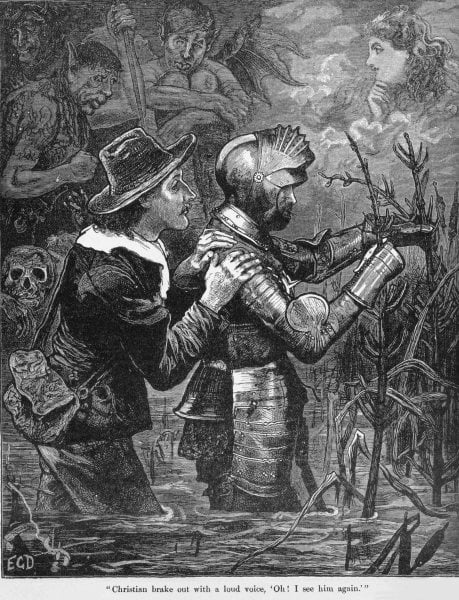
Mortal literature and art have repeatedly imagined dangerous marshes, drowned roads and hostile spirits. The following historical engraving is retained for atmosphere rather than as a literal view of Minauros.
Minauros Beyond SpiralWorlds
The following ambience track is retained for tabletop use. It presents an external Dungeons & Dragons interpretation and does not define SpiralWorlds canon.
Minauros Ambience
External fantasy ambience inspired by Minauros and the traditional Third Hell. Useful as gaming atmosphere rather than canonical description.
Keep this reference growing
If this page helped with your reading or game, you can support its upkeep or explore the curated books.
Explore the Bookshop — epics, classics and stories behind imagined worlds.