
Phlegethos — The Burning Realm
Phlegethos is Hell’s volcanic Perdition: a realm of active mountains, ash-choked plains, burning sand, magma rivers, fiery lakes and unstable ground, governed from the fortress-city of Abriymoch by Belial, Lord of the Fourth.
The Fourth Perdition
Phlegethos is a country shaped by fire, but it is not a featureless ocean of flame. Mountains, ash plains, volcanic basins, river valleys and fortified settlements survive within a landscape continually remade by heat and eruption.
Active volcanoes rise above hills of ash and blackened stone. Streams of magma descend through the wastes and join great fiery lakes where the heat becomes almost impossible for unprotected travellers to endure.
Burning sand, smoking pits and sudden gouts of fire make even apparently stable ground dangerous. Tremors are common, and fissures can open with little warning.
Above lies a dark and starless sky. The Fourth nevertheless rarely becomes truly dark: eruptions, molten rivers, furnace vents and distant volcanic glare cast shifting red light across the landscape.
Phlegethos is lethally hot because of its physical and supernatural environment. It does not automatically alter a visitor’s alignment and possesses no universal planar-infusion mechanic.
Belial and the Government of Phlegethos
Belial
Lord of the Fourth · Master of Pains and SufferingBelial is the recognised Lord of Phlegethos. His authority extends across the Fourth’s cities, fortresses, courts and penal institutions from his principal seat at Abriymoch.
His government prizes controlled suffering, discipline, interrogation and coercion. Pain in Phlegethos is not merely random violence: it is frequently administered by institutions and authorities that expect suffering to produce obedience, information or submission.
Belial governs beneath Asmodeus, Lord of Nessus and Overlord of Hell. Phlegethos remains one jurisdiction of the greater infernal state rather than an independent kingdom.
Belial Alone
Belial alone holds the lordship of the Fourth in the present infernal settlement.
Abriymoch
The great fortress-city is the political and administrative centre of Phlegethos.
Courts and Prisons
Prisons, courts, security forces and controlled sites of punishment reinforce the authority of the Fourth.
The Landscape of Phlegethos
The Volcanic Ranges
Active cones, shattered calderas and black ridges dominate large portions of the Fourth. Some erupt continually; others remain quiet for long periods before breaking open without warning.
Rivers and Lakes of Fire
Molten rivers descend from volcanic regions into great fiery lakes. Their banks form natural barriers and strategic routes through otherwise broken terrain.
Fire Beneath Darkness
The sky remains starless and dark while the land below supplies its own illumination through eruptions, lava flows, burning vents and continual distant flame.
Abriymoch
Abriymoch is the fortress-capital of the Fourth, built amid volcanic terrain where hardened magma provides foundations for walls, towers, palaces and guarded districts.
The city rises around the lip and interior of a vast volcanic caldera. Black walls and structures of hardened lava blend with the surrounding terrain, while bridges, causeways and defended roads cross fissures and volcanic channels.
Although still brutally hot, Abriymoch is more controlled than the open wastes. Its streets are patrolled, its gates are watched and outsiders enter only under the authority or tolerance of infernal officials.
Belial’s palace rises high within the city, its dark obsidian surfaces reflecting the volcanic glow. Elsewhere stand courts, prisons, barracks, administrative complexes and residences used by powerful members of the Fourth’s infernal hierarchy.
Fierna and the Powers of the Fourth
Fierna
Major Archdevil of PhlegethosFierna, also known as Naamah or Lady Fierana in older infernal records, remains one of the most powerful archdevils associated with Phlegethos.
She possesses considerable influence within the court of Abriymoch, commands her own followers and remains deeply connected to the political life of the Fourth.
The current infernal settlement does not recognise Fierna as a second Lord of the Fourth. Belial holds the Perdition.
Gazra
Governor of AbriymochGazra is a powerful pit fiend and the Governor of Abriymoch. His office gives him direct responsibility for the administration and security of the capital.
He also holds important security responsibilities extending beyond the city itself. His position illustrates the way Hell-wide offices and territorial government overlap inside the infernal state.
Gazra therefore stands among the most important officials of Phlegethos without possessing the territorial lordship held by Belial.
Places of Phlegethos
Abriymoch
The fortified capital and principal seat of Belial, built into the volcanic landscape and defended by devils accustomed to the extreme environment of the Fourth.
Its guarded districts contain courts, prisons, barracks, noble residences and the institutions through which Belial governs the Perdition.
The Pit of Flame
The Pit of Flame is a vast boiling region of fire, refuse and infernal energy watched closely by Hell’s authorities.
It serves as a controlled place of punishment and infernal transformation. Any elevation, punishment or alteration occurring there results from infernal process and authority rather than an automatic ambient property of Phlegethos.
The Lakes of Fire
At least two enormous fiery basins receive and feed the molten rivers of the Fourth.
Their shores are dangerous even to many infernal creatures and frequently become natural territorial boundaries, military obstacles and landmarks along recognised routes.
The Governorship of Abriymoch
Gazra’s authority is exercised through the security and administrative apparatus of the capital rather than through a separately established palace or territorial domain.
Guards, patrols, investigators and other officials operating under the governorship help keep Abriymoch under infernal control.
Denizens of Phlegethos
Barbed Devils
Hamatulas are particularly common within the Fourth. They serve as guards, jailers, patrol troops and security forces around important routes and infernal institutions.
Salamanders
Old populations of salamanders survive around the rivers and lakes of fire. They are well adapted to the volcanic environment and do not necessarily recognise infernal authority.
Infernal Officials
Devils serving the courts, prisons, military posts, roads and penal establishments of the Fourth form a substantial part of its organised population.
Travel Through Phlegethos
Open travel across the Fourth is exceptionally dangerous. Volcanic activity can destroy roads, open fissures or divert magma across previously usable routes.
Recognised infernal roads therefore favour relatively stable ridges, fortified crossings and maintained approaches to Abriymoch and other strategically important locations.
Patrols and checkpoints protect those routes. Travellers may be required to present recognised seals, permits, sponsorship, contracts or other proof that they have lawful business within Belial’s jurisdiction.
Routes from Minauros enter the Fourth through controlled infernal approaches.
The recognised descent toward Stygia crosses from Belial’s Fourth Perdition into the jurisdiction of Leviathan.
Souls in Phlegethos
Phlegethos does not automatically receive everyone associated with lust, cruelty, violence, pain or any other universal category of mortal wrongdoing.
A soul reaches Hell through an appropriate infernal contract, recognised claim, allegiance, supernatural circumstance or cosmological destination.
Souls properly held within Phlegethos may become prisoners, labourers, objects of exchange, sources of information or subjects of punishment and transformation.
Belial’s institutions make deliberate suffering particularly visible in the Fourth, but punishment follows infernal authority and circumstance rather than a universal automatic process imposed upon every soul entering the Perdition.
Phlegethos Through Infernal History
Hell itself formed during Eon VII, long before its present devil civilisation existed.
By Eon XVI, organised devil society, territorial government, courts and infernal offices had emerged. The volcanic Fourth became one of the formal Perditions within that developing state.
Its political history has included changes in authority, court rivalries and competing claims, but the present settlement is unambiguous: Belial is Lord of Phlegethos.
Fierna remains a major political power of the Fourth, while Gazra administers Abriymoch as its governor. Neither position displaces Belial’s territorial lordship.
Phlegethos now stands as one jurisdiction of the wider Asmodean state, connected politically and institutionally to the other Perditions and ultimately to Nessus.
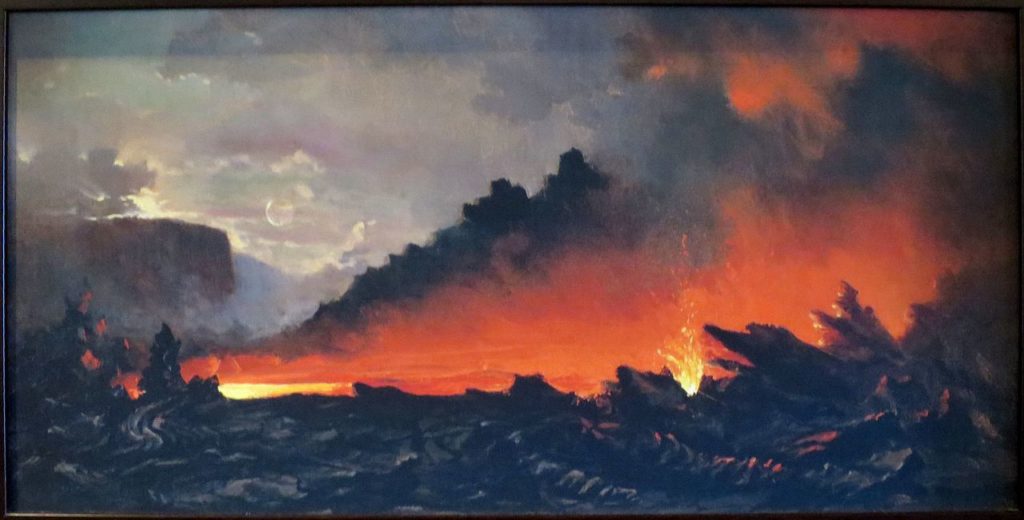
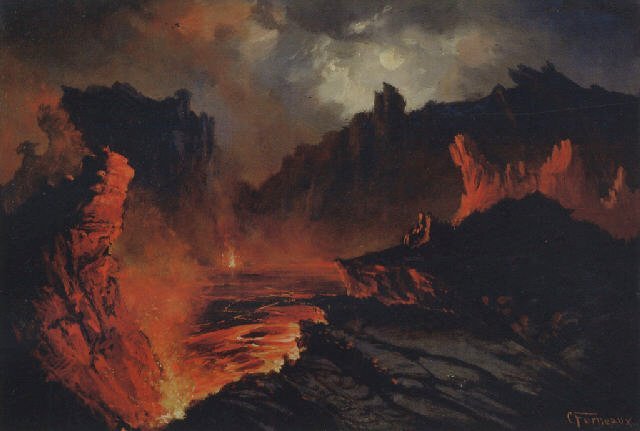
Mortal Visions of Volcanic Fire
Mortal volcanic landscapes provide unusually effective visual parallels for parts of Phlegethos. These historical works are retained for atmosphere and geological scale rather than as literal depictions of the Fourth.
Phlegethos Beyond SpiralWorlds
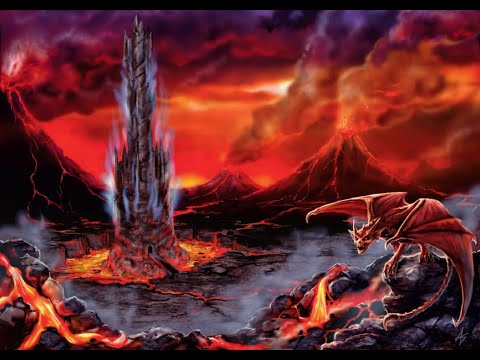
These videos are retained as external gaming reference and atmosphere. Their rulers, history and cosmology may differ from SpiralWorlds and do not define this setting’s canon.
Phlegethos in Dungeons & Dragons
An external survey of Phlegethos through different Dungeons & Dragons traditions. Useful for comparison rather than as an authority for SpiralWorlds.
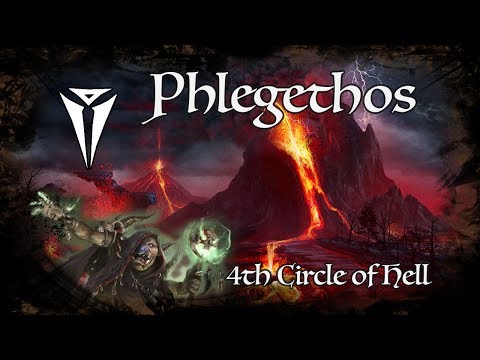
Phlegethos Ambience
External fantasy ambience inspired by the traditional Fourth Hell. Retained for tabletop atmosphere rather than canonical description.
Keep this reference growing
If this page helped with your reading or game, you can support its upkeep or explore the curated books.
Explore the Bookshop — epics, classics and stories behind imagined worlds.