
Destruction Domain
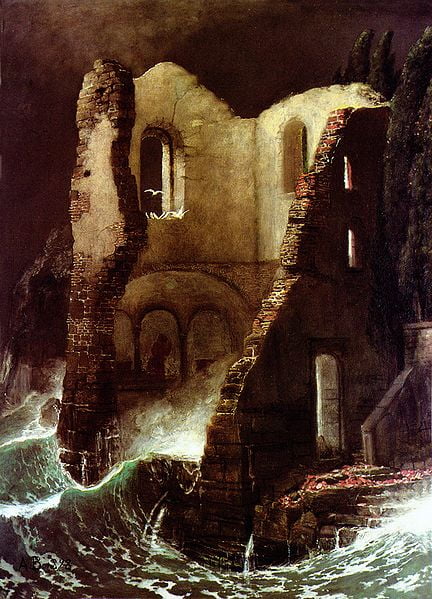
The Destruction Domain turns ruin, devastation and overwhelming force into cleric mechanics. Pathfinder 1e and D&D 3.5e share the name, but their granted powers and several domain spells differ and must not be blended.
At a Glance
| Divine Sphere | Destruction, ruin, devastation, collapse and overwhelming force |
|---|---|
| Typical Role | High-damage battle cleric and destroyer of creatures, objects and fortifications |
| Published Rules | Pathfinder 1e and D&D 3.5e |
| Modern D&D Status | No official same-named Destruction Domain in 2014 or 2024 D&D. |
| Possible Patrons | Apep, Nidhogg, and other powers whose established portfolios genuinely include ruin or annihilation |
Edition Applicability
The Destruction Domain is published in Pathfinder 1e and D&D 3.5e. Neither D&D 5e/2014 nor the 2024 Cleric rules publishes a same-named Destruction Domain, so no modern rules tab is added.
Destruction Domain — Pathfinder 1e
Rules status: published Pathfinder 1e Core Rulebook domain.
Destructive Smite
Before making a melee attack, declare a destructive smite. If the attack hits, add a morale bonus to damage equal to half your Cleric level, minimum +1. Uses per day equal 3 + your Wisdom modifier.
Destructive Aura
At 8th level, emit a 30-foot aura for a total number of rounds per day equal to your Cleric level. All attacks made against targets inside the aura, including attacks against you, gain a morale bonus on damage equal to half your Cleric level, and all critical threats are automatically confirmed.
Pathfinder 1e Destruction Domain Spells
| 1st | True Strike |
|---|---|
| 2nd | Shatter |
| 3rd | Rage |
| 4th | Inflict Critical Wounds |
| 5th | Shout |
| 6th | Harm |
| 7th | Disintegrate |
| 8th | Earthquake |
| 9th | Implosion |
Destruction Domain — D&D 3.5e
Rules status: published D&D 3.5e SRD domain.
Granted Power: Smite
Once per day, declare a smite before making a melee attack. That attack gains a +4 bonus on the attack roll and, if it hits, a bonus on damage equal to your Cleric level.
D&D 3.5e Destruction Domain Spells
| 1st | Inflict Light Wounds |
|---|---|
| 2nd | Shatter |
| 3rd | Contagion |
| 4th | Inflict Critical Wounds |
| 5th | Mass Inflict Light Wounds |
| 6th | Harm |
| 7th | Disintegrate |
| 8th | Earthquake |
| 9th | Implosion |
How the Destruction Domain Plays
Pathfinder makes the domain volatile: Destructive Aura increases damage for everyone attacking targets inside it, including enemies, so positioning and timing matter. D&D 3.5e is more straightforward, giving one accurate and hard-hitting smite each day plus a domain list built around direct harm and catastrophic magic.
Who Grants the Destruction Domain?
The domain fits powers whose portfolios genuinely centre on ruin, annihilation, collapse or destructive force. It should not be handed to every war, storm or fire deity merely because those gods can cause damage. Apep and Nidhogg are strong candidates where their established pages support that reading.
Priests, Temples and Rites
Destruction cults may glorify collapse, cleanse through ruin, tear down cursed structures, break enemies’ sacred places or serve powers that regard creation itself as temporary. Their rituals should reveal why destruction is sacred to that patron rather than treating demolition as an end in itself.
What Are Destruction Priests Doing Now?
They are targeting fortifications, searching for relics that can break ancient wards, sabotaging enemy sanctuaries, arguing over whether a corrupted place should be purified or erased, and awakening forces that may be much harder to stop than to release.
Related Domains and Character Options
Rules Sources and Licensing
- Pathfinder 1e: Destructive Smite, Destructive Aura and the domain spell list follow the Pathfinder Core Rulebook.
- D&D 3.5e: smite and the domain spell list follow the 3.5 SRD Cleric Domains.
- Correction made: the legacy page combined Pathfinder’s domain powers with the 3.5e spell list. The two rulesets are now separated.