
Classical Witch Tradition — Regional Old Ways
The Classical tradition is a family of regional Witch practices rooted in local gods, spirits, seasonal rites and inherited customs. It is not one worldwide faith: each branch develops from its own landscape, history and patrons.
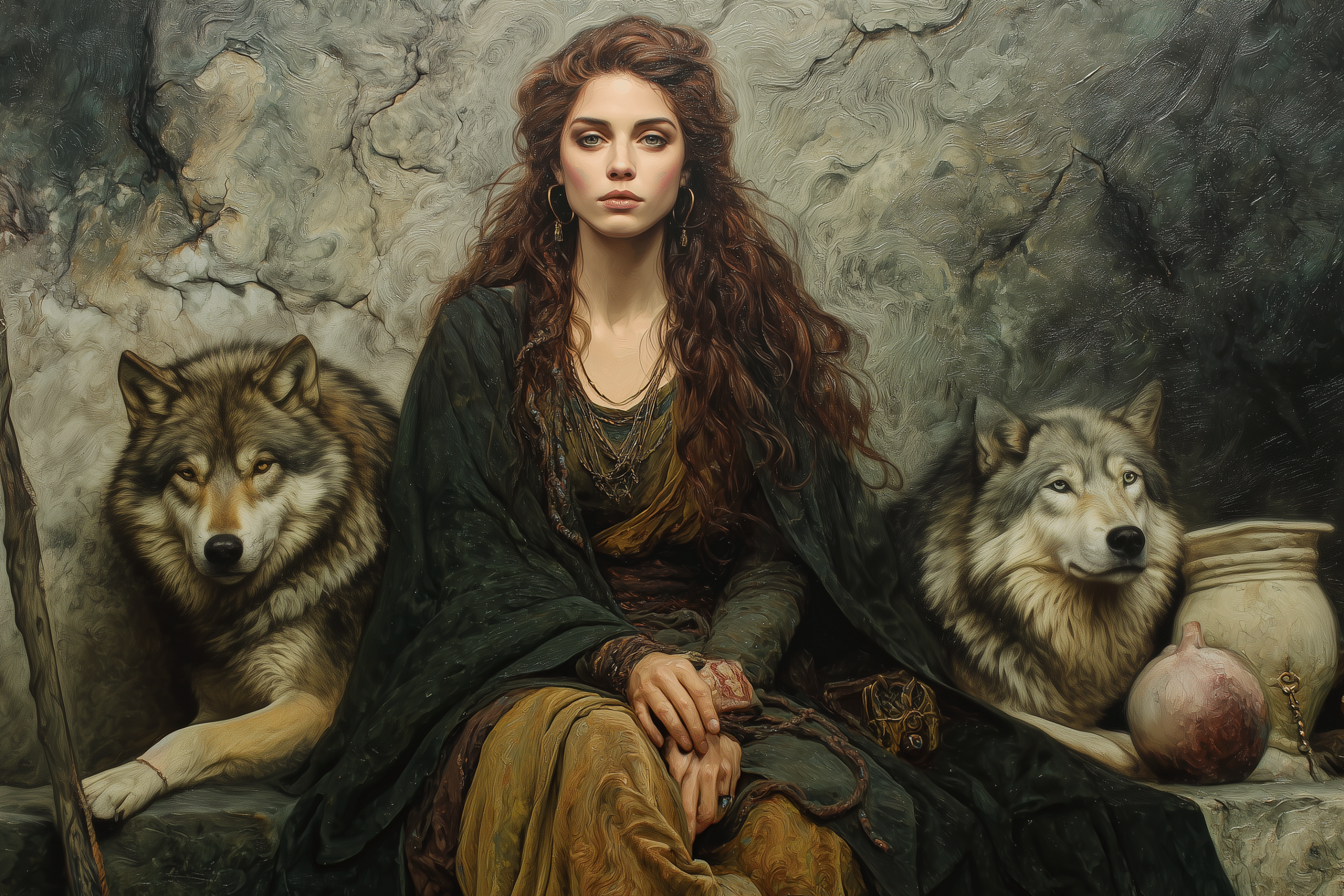
Choose the Classical Tradition If…
- You want a Witch rooted in a specific place, people and inherited way of life.
- You like seasonal rites, local spirits, practical crafts and magic that belongs to the landscape.
- You want your tradition to feel different in Norway, Italy, Britain, Greece or another region.
- You enjoy a Witch whose power comes with customs, duties and community expectations.
At a Glance
| Play style | Versatile regional Witch, ritualist and community spellcaster. |
|---|---|
| Signature identity | Local customs, regional patronage and inherited practice. |
| Best stories | Old rites, family obligations, threatened traditions and disputes over sacred places. |
| Legacy strengths | Extra knowledge, practical craft expertise and land-linked Occult Powers. |
What it feels like to play: a Classical Witch knows things because people have been doing them here for generations. You know which spring is safe to drink from, which hill is avoided after dusk and which old custom everyone remembers only when it matters.
5.5e / 2024 Tradition
Level 3: Old Ways Spells
The following spells are always prepared and do not count against your prepared Witch spells: Animal Friendship, Detect Magic, Aid and Augury. At Witch level 5 add Plant Growth and Remove Curse; at level 7 add Divination and Hallucinatory Terrain; at level 9 add Commune with Nature and Greater Restoration.
Level 3: Practical Lore
Choose Arcana, Medicine, Nature, Religion or Survival. You gain proficiency in the chosen skill. If you already have proficiency, gain Expertise instead.
Level 6: Protective Charm
When you or a creature you can see within 30 feet takes damage, use your Reaction and expend one Hexcraft use to reduce that damage by two rolls of your Hex Die + your Intelligence modifier.
Level 10: The Old Road
As a Bonus Action, expend one Hexcraft use to teleport up to 30 feet to an unoccupied space you can see. You can bring one willing creature within 5 feet of you; it appears in an unoccupied space within 5 feet of your destination.
Level 14: Keeper of the Old Ways
Your Protective Charm now reduces damage by three rolls of your Hex Die + your Intelligence modifier. In addition, after each Long Rest choose one level 5 or lower spell with the Ritual tag from the Cleric, Druid or Wizard spell list. Until your next Long Rest, it counts as a Witch spell for you and is always prepared.
Legacy rules source
Liber Mysterium: The Netbook of Witches and Warlocks, Timothy S. Brannan and the Netbook of Witches and Warlocks team.
Description: Classical Witches belong to regional traditions that preserve older rites, local magical customs and relationships with established gods, spirits or patrons. There is no single Classical Tradition; the term groups together many distinct branches that share some methods while remaining culturally separate.
The various Classical sub-traditions have their own names, rules, powers, skills and customs. Some survive through family teaching, some through local covens, and some because their communities still value the rites they perform. Their relationships with temples, rulers and other magical traditions vary from region to region.
Any race can become a member of the Classic traditions, and some races even have their own varieties.
Role: Classical witches come in many different types. The key element that separates one sub-tradition from another is geography. Generally you will not find two Classical sub-traditions within the same geographical area. Some of the most common Classical sub-traditions are:
- Astaru: The pagan beliefs of the Norse. Found in Norway, Sweden, Iceland and the northern tip of Denmark. 1,000 years old or more.
- Benandanti: Mostly good witches from the central and southern portions of Italy. Contrasted with the Stregheria below. Also used to describe gnome witches.
- Celtic: found in Ireland and Scotland. These witches most resemble druids.
- Greek: The ancient Greeks had many religious practices that resembled those of Witchcraft. The Priestesses of Artemis or Hesta are two examples. The Bacche, followers of the God of Wine, Bacchus, are another. It is also believed the Cult of Diana (Amazons) grew from this Tradition.
- Pictish: A Classic Tradition similar to the Scottish Celts, but on the western side of the country and up into Wales. Possibly an older form of the Scottish Celt Tradition.
- Saxon: The Tradition of England after the Saxon invasions. Blends many of the ideas of Celtic and Astaru Tradition.
- Sortilega: Diviners originally from Greece who then moved into Italy.
- Stregheria: Also known as Strix, or Strega, these are witches from northern Italy. They are sometimes identified with the vampire or Lamia
- Teutonic: Witches of ancient Germany. Similar in practice to the Astaru Tradition, but with a darker tone.
There are other sub-traditions and the GM is encouraged to define their own for use in your current game world.
Joining this Tradition: Most Classical Witches learn from an established local practitioner, family member or coven. A newcomer can also be adopted into the tradition after proving commitment to its customs, patron and community obligations.
The Classical Traditions have the most in common with Family or Craft of the Wise Traditions, but for the Classical Witch, witchcraft is seen as a way of life.
Many Classical covens gather at solstices, equinoxes and other locally important seasonal dates. Some rites are private; others form part of larger community festivals where non-Witches may also take part.
Leaving this Tradition: A Classical Witch can abandon a coven or local practice without automatically becoming an enemy of the community. Under the legacy rules, tradition powers can be restored through reconciliation, renewed service or another suitable rite agreed with the Games Master.
Skills & Feats: Classical Witches have one additional Knowledge Skill as a class skill. A Classical Witch also begins with a +2 bonus to a Craft Skill or Profession Skill related to a rural environment, such as Farming, Fishing, Herbalism, or Weaving.
Occult Powers:
- Minor: 7th Level: Of the Land. Once per day, the Classical Witch can invoke a rite that conceals herself and 1 other person per 2 witch levels from view. This functions as per the spell Mind Obscure, but affects all humanoids.
- Medial: 13th Level: Visage of Another. The Classical Witch can use the druid ability, Thousand Faces as per the spell alter self once per day. That is they can change their appearance and then back to their own.
- Greater: 19th Level: Witch’s Blessing. The witch can place on one subject (or herself) the combined effects of Aid (2nd Level Cleric spell), remove
curse (3rd Level Cleric spell) and Healing Circle (5th Level Cleric spell, target only). The total benefits are +4 to attack, +4 to saves vs. Fear, +6 to any ability, 19+1d8 additional temporary hit points and heals all but 1d8 hit points. This lasts a number of hours equal to the witch’s level. The Classical Witch can use this ability once per day as a standard action.
Special Benefits: None, other than the free skill above.
Legacy Restriction: The original d20 write-up applies a -2 reaction penalty because outsiders may stereotype rural Classical Witches as unsophisticated. Treat that as a social prejudice in communities where it makes sense, not as an intrinsic trait of the Witch.
Equipment: None required.
Many Classical covens use a cauldron and staff as ritual tools, but their symbolism depends on the branch and patron. Some associate them with paired divine powers; others with hearth, land, authority, transformation or the practical tools of rural life. An adventuring Witch may use the staff as both focus and weapon.
Coven Domains: Any, Fertility
Preferred/Barred Covens: This tradition is suited to all covens.
Patrons and Old Powers: Patron relationships vary by regional sub-tradition. Some Classical covens serve named local deities, spirits, ancestors or fey powers; others use collective titles such as the Old Ones for a group of ancient powers.
Source/Views of Magic: Classical Witches usually treat magic as part of the living world and the history of a place. Many traditions study ley lines, sacred waters, seasonal changes or other currents of magical power, but travel and urban life do not automatically sever a Witch from the tradition.
Wealth: Classical witches start with the normal amount of wealth allotted to a witch. But the GM may choose to round it down by a significant factor.
Other: Classical Witches often share interests with druids, local healers and other regional magical practitioners. Relations with clerics, wizards and sorcerers depend on the specific patron, temple, school and local history rather than class labels alone.
Classical witches tend not to multi-class, but those who do often find it beneficial to become rangers. They are also not, as a general rule, interested in prestige classes. Hermetics tend to be a bit too urbane and most Warlocks go against everything the Classical witch was taught. There are always the odd witch who becomes a Witch Knight or even some other class.
In any case, as with most witches, the Classical witch is a witch first and a something else second.
Keep this reference growing
If this page helped with your reading or game, you can support its upkeep or explore the curated books.
Explore the Bookshop — epics, classics and stories behind imagined worlds.