
Bard Magic • Spell Reference
Major Image Spell
Dominion Phantasm
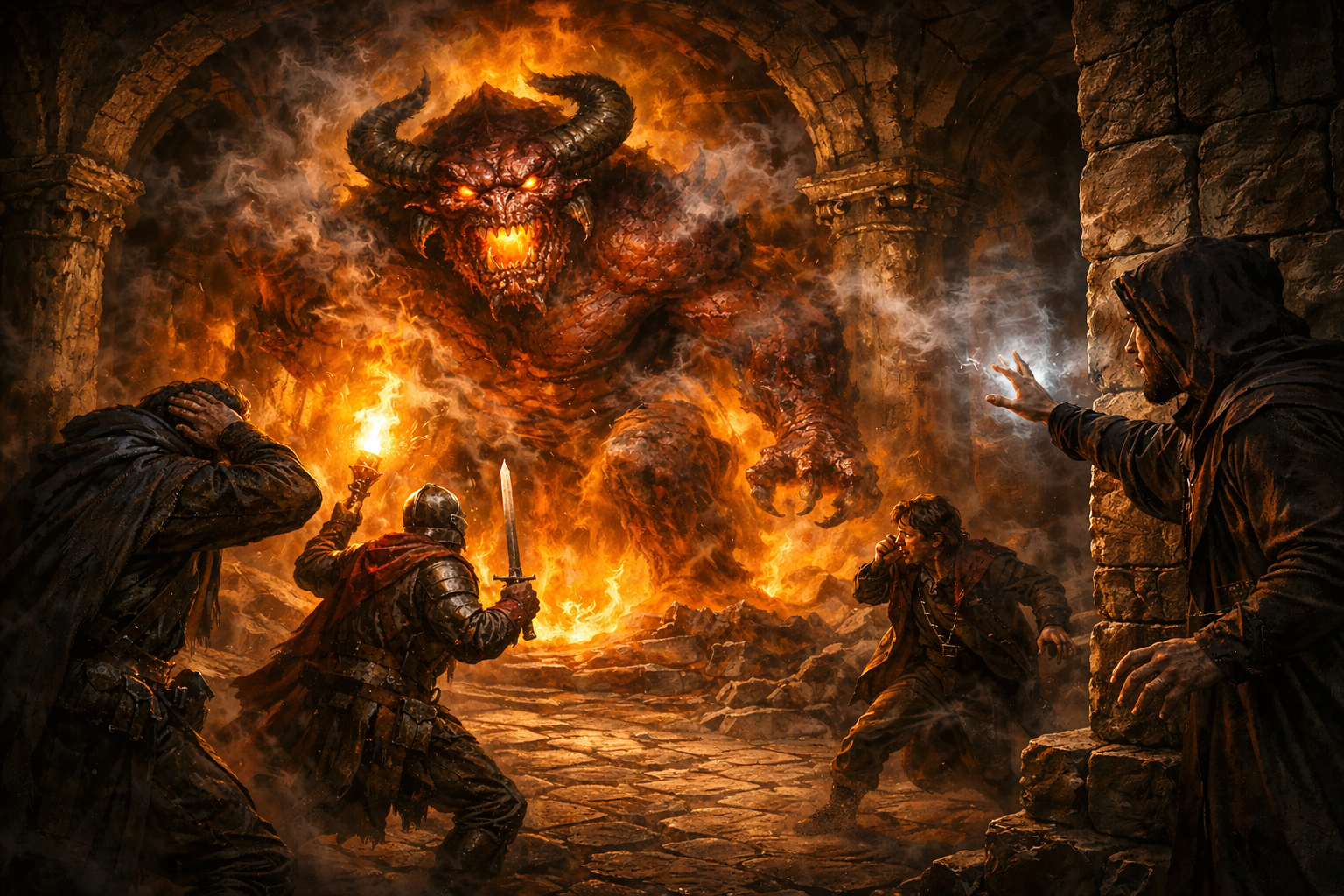
A lesser illusion misleads the senses for a moment; Major Image can command an entire place, filling a chamber, passage, shrine, or battlefield edge with a lie so rich that fear, awe, and confusion begin doing the caster’s work for them.
When illusion gains sound, scent, atmosphere, and felt presence, it stops being a trick and becomes a false reality others are forced to answer.
Major Image at a Glance
| School | Illusion |
|---|---|
| Bard level | 3 in all four editions |
| Purpose | A visual illusion with sound, smell and apparent temperature |
| Limits | No real substance; use your edition’s disbelief rules |
Spell Rules by Edition
Major Image — 5.5e / 2024
Rules source: System Reference Document 5.2.1.
| Spell | Level 3 Illusion |
|---|---|
| Classes | Bard, Sorcerer, Warlock, Wizard |
| Casting Time | Action |
| Range | 120 feet |
| Components | V, S, M (a bit of fleece) |
| Duration | Concentration, up to 10 minutes |
You create the image of an object, a creature, or some other visible phenomenon that is no larger than a 20-foot Cube. The image appears at a spot that you can see within range and lasts for the duration. It seems real, including sounds, smells, and temperature appropriate to the thing depicted, but it can’t deal damage or cause conditions.
If you are within range of the illusion, you can take a Magic action to cause the image to move to any other spot within range. As the image changes location, you can alter its appearance so that its movements appear natural for the image. For example, if you create an image of a creature and move it, you can alter the image so that it appears to be walking. Similarly, you can cause the illusion to make different sounds at different times, even making it carry on a conversation, for example.
Physical interaction with the image reveals it to be an illusion, for things can pass through it. A creature that takes a Study action to examine the image can determine that it is an illusion with a successful Intelligence (Investigation) check against your spell save DC. If a creature discerns the illusion for what it is, the creature can see through the image, and its other sensory qualities become faint to the creature.
Using a Higher-Level Spell Slot. The spell lasts until dispelled, without requiring Concentration, if cast with a level 4+ spell slot.
Major Image — 5e / 2014
Rules source: System Reference Document 5.1.
| Spell | Level 3 Illusion |
|---|---|
| Classes | Bard, Sorcerer, Warlock, Wizard |
| Casting Time | 1 action |
| Range | 120 feet |
| Components | V, S, M (a bit of fleece) |
| Duration | Concentration, up to 10 minutes |
You create the image of an object, a creature, or some other visible phenomenon that is no larger than a 20-foot cube. The image appears at a spot that you can see within range and lasts for the duration. It seems completely real, including sounds, smells, and temperature appropriate to the thing depicted. You can’t create sufficient heat or cold to cause damage, a sound loud enough to deal thunder damage or deafen a creature, or a smell that might sicken a creature (like a troglodyte’s stench).
As long as you are within range of the illusion, you can use your action to cause the image to move to any other spot within range. As the image changes location, you can alter its appearance so that its movements appear natural for the image. For example, if you create an image of a creature and move it, you can alter the image so that it appears to be walking. Similarly, you can cause the illusion to make different sounds at different times, even making it carry on a conversation, for example.
Physical interaction with the image reveals it to be an illusion, because things can pass through it. A creature that uses its action to examine the image can determine that it is an illusion with a successful Intelligence (Investigation) check against your spell save DC. If a creature discerns the illusion for what it is, the creature can see through the image, and its other sensory qualities become faint to the creature.
At Higher Levels. When you cast this spell using a spell slot of 6th level or higher, the spell lasts until dispelled, without requiring your concentration.
Major Image — Pathfinder 1e
Rules source: Edition reference.
| School | Illusion (Figment) |
|---|---|
| Level | Arcanist 3, Bard 3, Magus 3, Medium 3, Mesmerist 3, Occultist 3, Psychic 3, Red Mantis Assassin 3, Skald 3, Sorcerer 3, Wizard 3 |
| Casting Time | 1 standard action |
| Components | V, S, F (a bit of fleece) |
| Range | Long (400 ft. + 40 ft./level) |
| Effect | Visual figment: four 10-ft. cubes + one 10-ft. cube/level (shapeable) |
| Duration | Concentration + 3 rounds |
| Saving Throw | Will disbelief (if interacted with) |
| Spell Resistance | No |
This spell functions like silent image, except that sound, smell, and thermal illusions are included in the spell effect. While concentrating, you can move the image within the range.
The image disappears when struck by an opponent unless you cause the illusion to react appropriately.
This spell inherits its base visual-image effect from Silent Image; sound, smell and thermal illusions are added here.
Major Image — D&D 3.5e
Rules source: Edition reference.
| School | Illusion (Figment) |
|---|---|
| Level | Bard 3, Sorcerer/Wizard 3 |
| Casting Time | 1 standard action |
| Components | V, S, F (a bit of fleece) |
| Range | Long (400 ft. + 40 ft./level) |
| Effect | Visual figment: four 10-ft. cubes + one 10-ft. cube/level (shapeable) |
| Duration | Concentration + 3 rounds |
| Saving Throw | Will disbelief (if interacted with) |
| Spell Resistance | No |
This spell functions like silent image, except that sound, smell, and thermal illusions are included in the spell effect. While concentrating, you can move the image within the range.
The image disappears when struck by an opponent unless you cause the illusion to react appropriately.
The casting time, range, effect size, saving throw, resistance and fleece focus follow Silent Image, with Major Image’s additions and longer duration.
Edition Differences
| Bard level | 3 in all four editions. |
|---|---|
| Duration | Modern base: Concentration, up to 10 minutes. Pathfinder / 3.5: Concentration + 3 rounds. |
| Lasting image | 2024: level 4+ slot. 2014: level 6+ slot. Either modern upcast lasts until dispelled without Concentration. |
| Disbelief | Modern: physical interaction reveals the image; Investigation against spell save DC can identify it. Legacy: Will disbelief when interacted with, and an opponent’s strike ends it unless it reacts appropriately. |
| Size and reach | Modern: 20-foot cube and 120-foot range. Legacy: four 10-foot cubes + one per caster level and long range. |
Overview
Major Image is where illusion magic becomes truly sovereign over a scene. It does not merely add one false detail or project one deceptive figure. It imposes a false presence large enough, rich enough, and convincing enough to alter the emotional truth of a place.
That is the spell’s great strength. A false guardian that can be seen is useful. A false guardian that can be seen, heard, smelled, and felt in the air around it becomes a force of pressure. A nonexistent blaze that crackles, smokes, and radiates oppressive heat changes movement before anyone dares test it. A phantom procession, divine visitation, awakening idol, infernal breach, or monstrous beast can seize attention so completely that those present begin making real decisions in response to an unreal world.
This is why Major Image stands as one of the defining illusion spells of mid-level play. It rewards intelligence, theatrical instinct, emotional timing, and an understanding of place. Used well, it does not simply distract. It governs perception.
Why Major Image Matters
Lesser illusion spells often succeed by winning a glance, a pause, or a mistaken assumption. Major Image can do more. It can reshape a chamber’s atmosphere, redirect a crowd, halt a pursuit, fracture enemy confidence, or make an entire approach feel suddenly cursed, occupied, or lethal.
Its role in the illusion ladder is clear.
Minor Illusion creates a small false sound or object.
Silent Image creates a broader visible deception.
Minor Image supports a larger image with fitting sound.
Major Image creates a fully persuasive sensory falsehood that can dominate a scene.
That distinction matters because Major Image is not simply a larger trick. It is the point where illusion becomes environment. It is where the lie begins to feel like the place itself.
Best Uses
These examples describe possible reactions to a convincing scene. Major Image itself does not impose the Frightened condition, compel movement, create actual light or darkness, or exert physical force.
False Guardians and Monsters
A colossal tomb sentinel, awakened saint-statue, divine beast, infernal presence, or looming dragon-shaped terror can delay intruders, scatter the weak-willed, and force armed enemies to reposition before battle even begins.
Environmental Lies
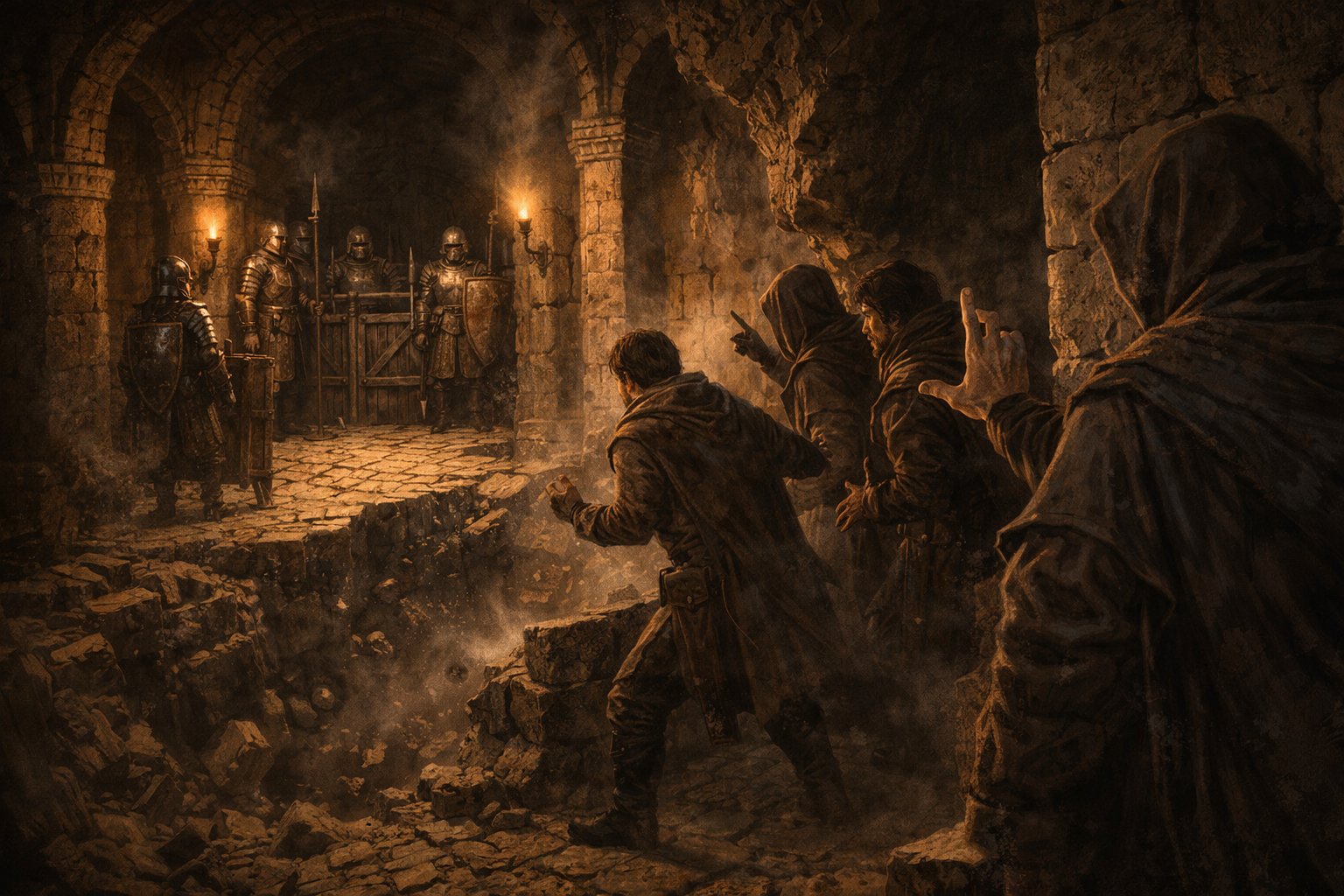
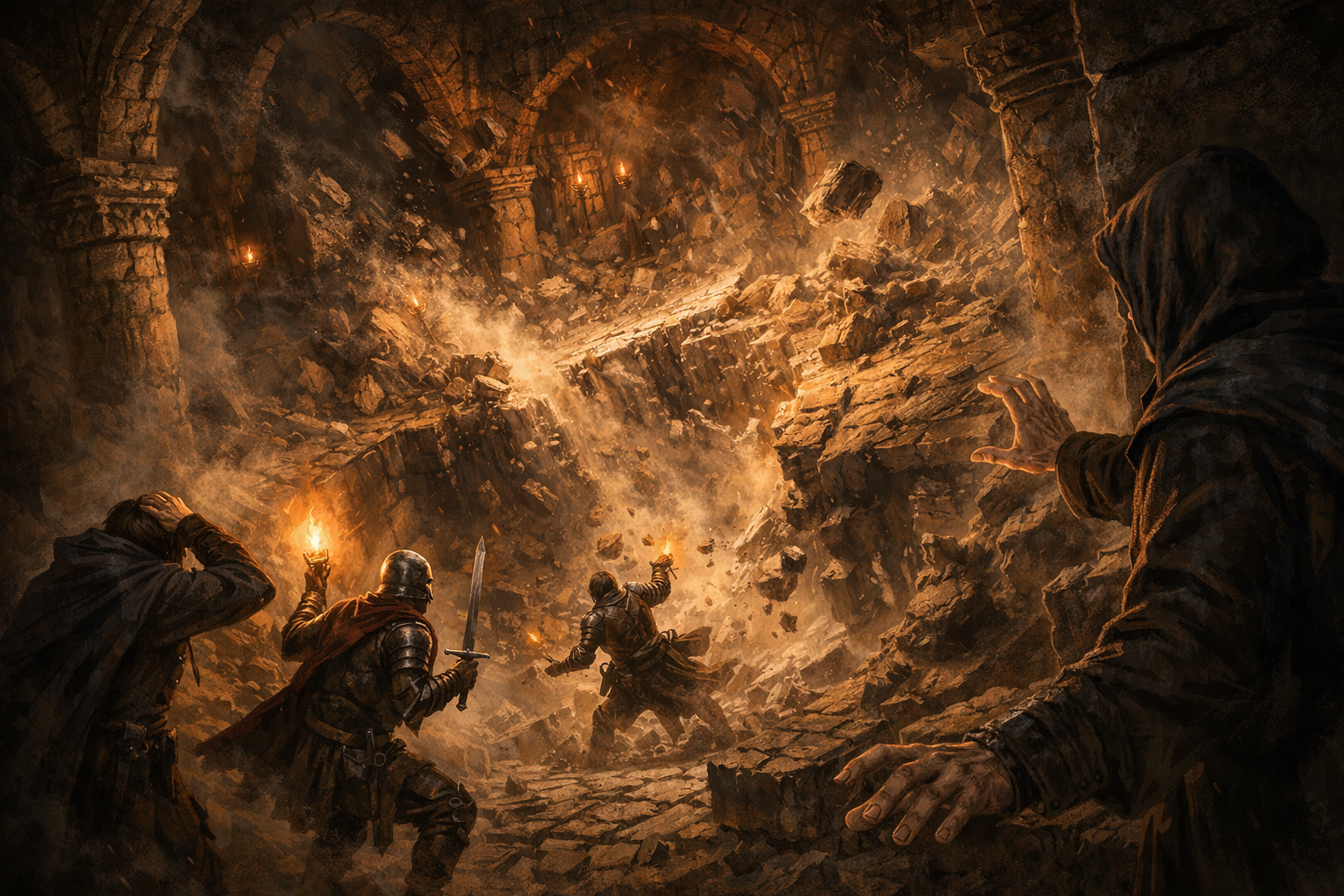
Major Image is superb for false fires, chasms, cave-ins, swarming vermin, ritual wards, divine manifestations, battlefield hazards, spectral processions, or collapsing architecture. These do not need to be physically real to control decisions.
Panic and Crowd Control
Crowds respond quickly to believable danger. Smoke, screams, heat, the smell of burning timbers, war-horns, hooves, or the apparent arrival of something sacred or cursed can break order long before anyone proves the truth.
Ambush and Escape
A richly convincing false danger can hold eyes in the wrong place while the real attack develops elsewhere. It can also buy retreat by making pursuit cautious, divided, or suddenly unwilling.
Sacred Dread and Psychological Warfare
In temples, tombs, courts, shrines, and ancestral halls, Major Image can feel like visitation, omen, haunting, revelation, or judgment. It is especially potent when it confirms what those present already fear may be true.
Practical Tactics
Build for Meaning
The strongest Major Image is rarely the most spectacular one. It is the one that belongs to the fears, hopes, symbols, and expectations of the people witnessing it. A false miracle in a desecrated shrine may carry more force than a random monster in the same room.
Use the Full Sensory Lie
The spell becomes powerful when its sound, smell, and temperature complete the deception. The heat of a false blaze, the grave-stench of a false crypt opening, the chill of an unreal abyss, or the incense haze of a phantom ritual can make creatures believe before reason catches up.
Control Space Indirectly
Major Image cannot physically block a corridor, but it can make creatures refuse to enter it. It cannot truly burn a bridge, but it can make others believe the crossing is death. That is enough. A spell that changes routes, formations, and priorities is already winning.
Cast at the Moment of Uncertainty
The spell is at its best when tension is already present: when a vault is breached, a rite goes wrong, a negotiation turns hostile, intruders round a bend, or defenders fear they are already too late. In such moments, Major Image does not need certainty. It needs momentum.
Let the Place Help You
Illusions rooted in the environment are stronger than arbitrary spectacle. Hauntings belong in crypts. Miracles belong in shrines. Fires belong in crowded timber halls. Riders belong beyond the gate. Let the architecture and story of the place carry part of the lie.
Limits of the Spell
For all its richness, Major Image remains an illusion. It has no true substance. It cannot hold a door, support weight, burn flesh, wound an enemy, or stop a charge by force alone. If the world presses hard enough against it, the truth begins to show.
This is not weakness. It is balance. The spell shapes decisions rather than physical law.
That means it thrives where creatures must react quickly, trust incomplete information, or fear what they are experiencing enough to avoid testing it. It weakens against calm, disciplined, fearless, or methodical opponents who are willing to verify what others merely dread.
DM Notes
Major Image works best when ruled according to plausibility, pressure, and response. If the illusion would reasonably redirect movement, interrupt action, scatter weaker foes, or create a brief but meaningful false reality, let it do so.
At the same time, keep the spell honest. A false inferno may drive enemies back with heat, smoke, and terror, but it will not truly consume them. A false giant may dominate a hall, but a spear passing through its chest changes the scene. A false chasm may halt the reckless, but the bold may test the edge.
Different creatures should react in different ways. Veterans may probe. Superstitious looters may flee. Priests may hesitate in awe. Fanatics may press forward through fear. The spell becomes far richer when reaction grows from character and circumstance rather than from a flat binary ruling.
Good Combinations
In modern play, Fog Cloud, Invisibility and a base-level Major Image all require Concentration. Use a second caster, finish one spell before starting another, or use the edition’s non-Concentration Major Image upcast before combining them. Silent Image and Minor Image describe a progression; Minor Image belongs to the legacy spell lists.
Minor Illusion: A second, smaller deception elsewhere can split attention and make the larger lie feel even more convincing.
Silent Image: A natural lower-tier comparison and a useful foundation spell in an illusion-focused progression.
Minor Image: Helps define the ladder between sound-supported deception and fuller sensory illusion.
Fog Cloud: Obscurement makes sensory lies harder to test and easier to fear.
Invisibility: An unseen illusionist can reposition, observe, and continue shaping the scene while others respond to the false threat.
Disguise Self: False environment and false identity together can create remarkably persuasive staged realities.
Misty Step or escape magic: Major Image is excellent for buying the confusion needed for a clean withdrawal or reposition.
Adventure and Story Uses
Major Image belongs in dramatic spaces: ruined temples, plague halls, cursed vaults, royal courts, hidden sanctums, battlefield ridges, haunted crypts, gatehouses under siege, and tunnels where fear arrives before truth.
It is one of the best spells for making myth feel suddenly present. A shrine can seem to awaken. A dead king’s chamber can seem watched by judgment. A desecrated altar can appear to breathe smoke and heat. A rebel can seem backed by a sign from heaven. A tyrant can seem haunted in full view of the court. A tomb can appear to answer trespass with living dread.
That is why Major Image lingers in memory. It does not merely falsify the senses. It gives a place a false truth and forces everyone present to decide how much they dare believe.
Illusions of Place
Rules Sources and Licensing
This work includes material taken from the System Reference Document 5.1 (“SRD 5.1”) by Wizards of the Coast LLC and available at https://dnd.wizards.com/resources/systems-reference-document. The SRD 5.1 is licensed under the Creative Commons Attribution 4.0 International License available at https://creativecommons.org/licenses/by/4.0/legalcode.
This work includes material from the System Reference Document 5.2.1 (“SRD 5.2.1”) by Wizards of the Coast LLC, available at https://www.dndbeyond.com/srd. The SRD 5.2.1 is licensed under the Creative Commons Attribution 4.0 International License, available at https://creativecommons.org/licenses/by/4.0/legalcode.
The Pathfinder and 3.5 spell mechanics and their tables are Open Game Content under the Open Game License v1.0a. Artwork and original setting prose are excluded from that designation.
Open Game License v1.0a and copyright notices
Permission to copy, modify and distribute the files collectively known as the System Reference Document (“SRD”) is granted solely through the use of the Open Gaming License, Version 1.0a.
This material is being released using the Open Gaming License Version 1.0a and you should read and understand the terms of that license before using this material.
The text of the Open Gaming License itself is not Open Game Content. Instructions on using the License are provided within the License itself.
The following items are designated Product Identity, as defined in Section 1(e) of the Open Game License Version 1.0a, and are subject to the conditions set forth in Section 7 of the OGL, and are not Open Content: Dungeons & Dragons, D&D, Player’s Handbook, Dungeon Master, Monster Manual, d20 System, Wizards of the Coast, d20 (when used as a trademark), Forgotten Realms, Faerûn, proper names (including those used in the names of spells or items), places, Red Wizard of Thay, the City of Union, Heroic Domains of Ysgard, Ever-Changing Chaos of Limbo, Windswept Depths of Pandemonium, Infinite Layers of the Abyss, Tarterian Depths of Carceri, Gray Waste of Hades, Bleak Eternity of Gehenna, Nine Hells of Baator, Infernal Battlefield of Acheron, Clockwork Nirvana of Mechanus, Peaceable Kingdoms of Arcadia, Seven Mounting Heavens of Celestia, Twin Paradises of Bytopia, Blessed Fields of Elysium, Wilderness of the Beastlands, Olympian Glades of Arborea, Concordant Domain of the Outlands, Sigil, Lady of Pain, Book of Exalted Deeds, Book of Vile Darkness, beholder, gauth, carrion crawler, tanar’ri, baatezu, displacer beast, githyanki, githzerai, mind flayer, illithid, umber hulk, yuan-ti.
All of the rest of the SRD is Open Game Content as described in Section 1(d) of the License.
More information on the Open Game License can be found at www.wizards.com/d20.
The terms of the Open Gaming License Version 1.0a are as follows:
OPEN GAME LICENSE Version 1.0a
The following text is the property of Wizards of the Coast, Inc. and is Copyright 2000 Wizards of the Coast, Inc (“Wizards”). All Rights Reserved.
1. Definitions: (a)”Contributors” means the copyright and/or trademark owners who have contributed Open Game Content; (b)”Derivative Material” means copyrighted material including derivative works and translations (including into other computer languages), potation, modification, correction, addition, extension, upgrade, improvement, compilation, abridgment or other form in which an existing work may be recast, transformed or adapted; (c) “Distribute” means to reproduce, license, rent, lease, sell, broadcast, publicly display, transmit or otherwise distribute; (d)”Open Game Content” means the game mechanic and includes the methods, procedures, processes and routines to the extent such content does not embody the Product Identity and is an enhancement over the prior art and any additional content clearly identified as Open Game Content by the Contributor, and means any work covered by this License, including translations and derivative works under copyright law, but specifically excludes Product Identity. (e) “Product Identity” means product and product line names, logos and identifying marks including trade dress; artifacts; creatures characters; stories, storylines, plots, thematic elements, dialogue, incidents, language, artwork, symbols, designs, depictions, likenesses, formats, poses, concepts, themes and graphic, photographic and other visual or audio representations; names and descriptions of characters, spells, enchantments, personalities, teams, personas, likenesses and special abilities; places, locations, environments, creatures, equipment, magical or supernatural abilities or effects, logos, symbols, or graphic designs; and any other trademark or registered trademark clearly identified as Product identity by the owner of the Product Identity, and which specifically excludes the Open Game Content; (f) “Trademark” means the logos, names, mark, sign, motto, designs that are used by a Contributor to identify itself or its products or the associated products contributed to the Open Game License by the Contributor (g) “Use”, “Used” or “Using” means to use, Distribute, copy, edit, format, modify, translate and otherwise create Derivative Material of Open Game Content. (h) “You” or “Your” means the licensee in terms of this agreement.
2. The License: This License applies to any Open Game Content that contains a notice indicating that the Open Game Content may only be Used under and in terms of this License. You must affix such a notice to any Open Game Content that you Use. No terms may be added to or subtracted from this License except as described by the License itself. No other terms or conditions may be applied to any Open Game Content distributed using this License.
3.Offer and Acceptance: By Using the Open Game Content You indicate Your acceptance of the terms of this License.
4. Grant and Consideration: In consideration for agreeing to use this License, the Contributors grant You a perpetual, worldwide, royalty-free, non-exclusive license with the exact terms of this License to Use, the Open Game Content.
5.Representation of Authority to Contribute: If You are contributing original material as Open Game Content, You represent that Your Contributions are Your original creation and/or You have sufficient rights to grant the rights conveyed by this License.
6.Notice of License Copyright: You must update the COPYRIGHT NOTICE portion of this License to include the exact text of the COPYRIGHT NOTICE of any Open Game Content You are copying, modifying or distributing, and You must add the title, the copyright date, and the copyright holder’s name to the COPYRIGHT NOTICE of any original Open Game Content you Distribute.
7. Use of Product Identity: You agree not to Use any Product Identity, including as an indication as to compatibility, except as expressly licensed in another, independent Agreement with the owner of each element of that Product Identity. You agree not to indicate compatibility or co-adaptability with any Trademark or Registered Trademark in conjunction with a work containing Open Game Content except as expressly licensed in another, independent Agreement with the owner of such Trademark or Registered Trademark. The use of any Product Identity in Open Game Content does not constitute a challenge to the ownership of that Product Identity. The owner of any Product Identity used in Open Game Content shall retain all rights, title and interest in and to that Product Identity.
8. Identification: If you distribute Open Game Content You must clearly indicate which portions of the work that you are distributing are Open Game Content.
9. Updating the License: Wizards or its designated Agents may publish updated versions of this License. You may use any authorized version of this License to copy, modify and distribute any Open Game Content originally distributed under any version of this License.
10. Copy of this License: You MUST include a copy of this License with every copy of the Open Game Content You Distribute.
11. Use of Contributor Credits: You may not market or advertise the Open Game Content using the name of any Contributor unless You have written permission from the Contributor to do so.
12. Inability to Comply: If it is impossible for You to comply with any of the terms of this License with respect to some or all of the Open Game Content due to statute, judicial order, or governmental regulation then You may not Use any Open Game Material so affected.
13. Termination: This License will terminate automatically if You fail to comply with all terms herein and fail to cure such breach within 30 days of becoming aware of the breach. All sublicenses shall survive the termination of this License.
14. Reformation: If any provision of this License is held to be unenforceable, such provision shall be reformed only to the extent necessary to make it enforceable.
15. COPYRIGHT NOTICE
Open Game License v 1.0a Copyright 2000, Wizards of the Coast, Inc.
System Reference Document Copyright 2000-2003, Wizards of the Coast, Inc.; Authors Jonathan Tweet, Monte Cook, Skip Williams, Rich Baker, Andy Collins, David Noonan, Rich Redman, Bruce R. Cordell, John D. Rateliff, Thomas Reid, James Wyatt, based on original material by E. Gary Gygax and Dave Arneson.
Pathfinder Roleplaying Game Core Rulebook. © 2009, Paizo Publishing, LLC; Author: Jason Bulmahn, based on material by Jonathan Tweet, Monte Cook, and Skip Williams. END OF LICENSE
Keep this reference growing
If this page helped with your reading or game, you can support its upkeep or explore the curated books.
Explore the Bookshop — epics, classics and stories behind imagined worlds.