
Sir Charles Sedley — The Scandalous Rake
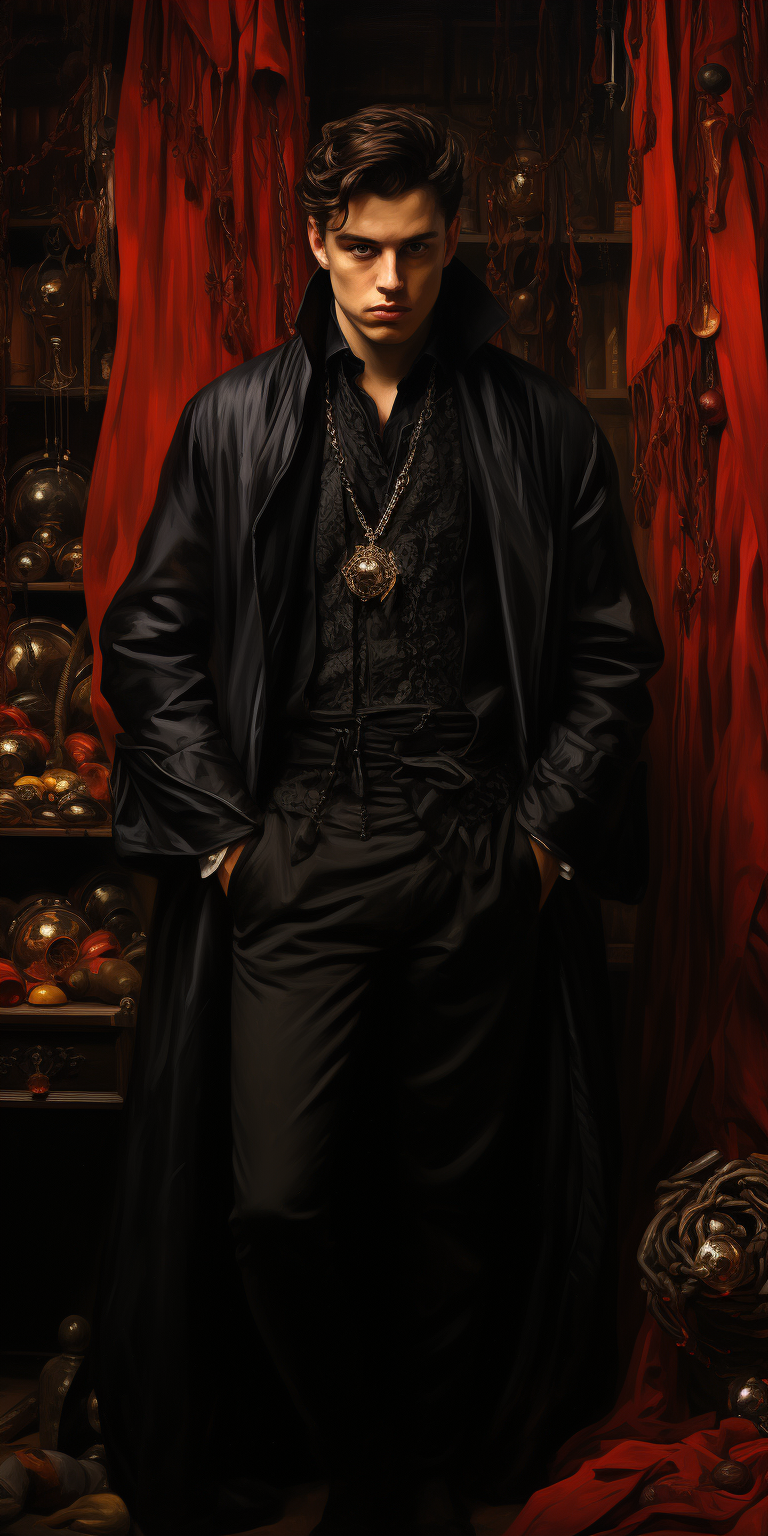
Sir Charles Sedley can make a royal councillor laugh while quietly destroying his reputation. He can also get roaring drunk, insult a powerful noble, expose himself from a tavern balcony and turn an evening’s revel into a street riot. His wit is formidable; so is the damage he leaves behind.
In London’s wine shops, playhouses and noble households, Sedley is a privileged knight, poet and professional disgrace: welcomed because he is irresistible company, threatened with prosecution when the laughter ends. He relishes gambling, flirtation, dirty songs, savage lampoons and humiliating people who consider themselves above ridicule. He is no harmless jester. People without his money or status sometimes pay for his amusement.
Yet the apparently careless rake listens to everything. He knows who secretly finances the watch, which lord pays for silence and why three different seals now appear on two contradictory warrants. Adventurers seeking his help may get a priceless secret, an outrageous joke and a new enemy before the evening is over.
At a Glance
- Name: Sir Charles Sedley
- Known as: The Laughing Courtier; the Scandalous Rake
- Species: Human
- Age: Mid-thirties (campaign incarnation)
- Base: London; taverns, playhouses and noble households
- Role: Libertine, poet, satirist, courtier and troublesome confidant
- Alignment: Chaotic Neutral
- Campaign status: Alive, notorious and regularly in trouble
- Campaign use: Scandalous patron, unreliable witness, dangerous ally, riot instigator or keeper of humiliating secrets
Game Statistics
Sir Charles Sedley — 5.5e / 2024
Medium Humanoid (Human), Chaotic Neutral
Armor Class 16 (reinforced court doublet)
Hit Points 91 (14d8 + 28)
Speed 30 ft.
| STR | DEX | CON | INT | WIS | CHA |
|---|---|---|---|---|---|
| 10 (+0) | 18 (+4) | 14 (+2) | 16 (+3) | 13 (+1) | 19 (+4) |
Saving Throws Dex +6, Cha +6
Skills Acrobatics +6, Deception +8, History +5, Insight +3, Performance +8, Persuasion +6
Senses Passive Perception 11
Languages English, French, Latin (or campaign equivalents)
Challenge 4 (1,100 XP; PB +2)
Traits
Social Access. Sedley has Advantage on Charisma (Persuasion) checks to obtain an invitation, introduction or audience from a noble, poet or court official acquainted with his reputation.
Remembered Phrase. Sedley has Advantage on Intelligence checks to recall the precise wording of a speech, verse, insult or toast heard within the previous month.
Notorious Rake. Sedley has Advantage on Charisma (Performance) checks to attract a crowd in a tavern or playhouse but Disadvantage on checks to pass as an unknown respectable gentleman among people familiar with his scandals.
Dirty Fighting (1/Turn). Sedley deals an extra 10 (3d6) Piercing damage when he hits a creature with a rapier attack and either has Advantage on that attack roll or has an ally within 5 feet of the target who is not Incapacitated, provided Sedley doesn’t have Disadvantage on the roll.
Actions
Multiattack. Sedley makes two Rapier attacks.
Rapier. Melee Attack Roll: +6, reach 5 ft. Hit: 8 (1d8 + 4) Piercing damage.
Dagger. Melee or Ranged Attack Roll: +6, reach 5 ft. or range 20/60 ft. Hit: 6 (1d4 + 4) Piercing damage.
Bonus Actions
Slippery Customer. Sedley takes the Dash or Disengage action.
Cutting Verse (Recharge 5–6). One creature Sedley can see within 30 feet that can hear and understand him must succeed on a DC 14 Charisma saving throw or have Disadvantage on its next attack roll or Charisma check before the end of its next turn. This is a nonmagical taunt.
Reactions
Uncanny Dodge. When an attacker Sedley can see hits him with an attack, he halves the attack’s damage against him (round down).
Courtly Epigram. When a creature Sedley can hear within 30 feet makes a Deception or Persuasion check, he can subtract 1d6 from that check if he points out a real contradiction the creature and its audience can understand.
Original fantasy NPC adaptation. He normally relies on allies to enable Dirty Fighting and escapes when a fight turns against him. His CR applies to his individual combat statistics; additional guards have their own encounter value.
Sir Charles Sedley — 5e / 2014
Medium humanoid (human), chaotic neutral
Armor Class 16 (studded leather beneath a court doublet)
Hit Points 91 (14d8 + 28)
Speed 30 ft.
Challenge 4 (1,100 XP; proficiency bonus +2)
| STR | DEX | CON | INT | WIS | CHA |
|---|---|---|---|---|---|
| 10 (+0) | 18 (+4) | 14 (+2) | 16 (+3) | 13 (+1) | 19 (+4) |
Saving Throws Dex +6, Cha +6; Skills Acrobatics +6, Deception +8, History +5, Insight +3, Performance +8, Persuasion +6; Senses passive Perception 11; Languages English, French, Latin (or campaign equivalents).
Traits
Social Access. Sedley has advantage on Charisma (Persuasion) checks to obtain invitations or introductions among nobles and courtiers familiar with his reputation.
Remembered Phrase. Sedley has advantage on Intelligence checks to recall the precise wording of speeches, insults and verses heard within the previous month.
Notorious Rake. Sedley has advantage on Charisma (Performance) checks to attract a tavern or playhouse crowd, but disadvantage on checks to pass as a stranger of spotless reputation among people who know his scandals.
Dirty Fighting (1/Turn). When Sedley hits a creature with a rapier attack, he deals an extra 10 (3d6) piercing damage if he has advantage on the attack roll or if an ally is within 5 feet of the target, the ally isn’t incapacitated, and Sedley doesn’t have disadvantage on the attack roll.
Actions
Multiattack. Sedley makes two rapier attacks.
Rapier. Melee Weapon Attack: +6 to hit, reach 5 ft., one target. Hit: 8 (1d8 + 4) piercing damage.
Dagger. Melee or Ranged Weapon Attack: +6 to hit, reach 5 ft. or range 20/60 ft., one target. Hit: 6 (1d4 + 4) piercing damage.
Bonus Actions
Slippery Customer. Sedley takes the Dash or Disengage action.
Cutting Verse (Recharge 5–6). A creature Sedley can see within 30 feet that can hear and understand him must succeed on a DC 14 Charisma saving throw or have disadvantage on its next attack roll or Charisma check before the end of its next turn. This is a nonmagical taunt.
Reactions
Uncanny Dodge. When an attacker Sedley can see hits him with an attack, he halves the attack’s damage against him (round down).
Courtly Epigram. When a creature Sedley can hear within 30 feet makes a Deception or Persuasion check, he can subtract 1d6 from the roll if he points out a real contradiction in its claim.
Original 2014 edition adaptation; the historical Sedley is the inspiration, not a contemporary of the 1454 setting. CR assumes Sedley fights tactically with an ally; companions count separately toward encounter difficulty.
Sir Charles Sedley — Pathfinder 1e
CR 4 (1,200 XP); human aristocrat 2/bard 4; CN Medium humanoid (human).
Init +3; Senses Perception +8.
Defense
AC 17, touch 14, flat-footed 13 (reinforced doublet as studded leather +3, Dex +3, Dodge +1); hp 42 (6 HD); Fort +2, Ref +7, Will +8; +2 vs. language-dependent and sonic effects, and against bardic performance.
Offense
Speed 30 ft.; Melee masterwork rapier +8 (1d6/18–20), dagger +7 (1d4/19–20).
Bardic Performance 14 rounds/day (countersong, distraction, fascinate [Will DC 16], inspire courage +1, inspire competence +2). A performance is normally started as a standard action and maintained as a free action.
Bard Spells Known (CL 4th; concentration +8; save DC 14 + spell level): 2nd (2/day) invisibility, mirror image; 1st (4/day) charm person (DC 15), disguise self, grease (DC 15), silent image (DC 15); 0 (at will) detect magic, ghost sound (DC 14), light, mage hand, message, prestidigitation.
Statistics
Str 10, Dex 16, Con 12, Int 16, Wis 13, Cha 19; Base Atk +4; Feats Dodge, Persuasive, Skill Focus (Perform [oratory]), Weapon Finesse; Skills Bluff +14, Diplomacy +15, Knowledge (history) +12, Knowledge (nobility) +14, Perform (oratory) +17, Sense Motive +10.
Social Access (Ex). Sedley gains a +4 circumstance bonus on Diplomacy checks to secure introductions in a circle of courtiers familiar with his name, but may suffer a –4 penalty when dealing with victims of his notorious behaviour.
Cruel Lampoon (Ex; 1/day). As a standard action, Sedley makes a Perform (oratory) check opposed by a target’s Sense Motive check; on success, he gives the target a –2 penalty on its next Charisma-based skill check within 1 minute if it hears and understands the insult. This does not affect mindless creatures.
The spellcasting above represents the fantastical PF1e adaptation, not a claim about the historical man.
Sir Charles Sedley — D&D 3.5e
CR 4; human aristocrat 2/bard 4; CN Medium humanoid (human).
Defense
AC 16, touch 13, flat-footed 13 (reinforced doublet as studded leather +3, Dex +3); hp 38 (6 HD); Fort +2, Ref +7, Will +8.
Offense
Speed 30 ft.; Melee masterwork rapier +8 (1d6/18–20), dagger +7 (1d4/19–20).
Bardic Music 4/day (countersong, fascinate, inspire courage +1, inspire competence +2); Bardic Knowledge +7.
Bard Spells Known (CL 4th; save DC 14 + spell level): 2nd (1/day) invisibility, mirror image; 1st (3/day) charm person (DC 15), disguise self, silent image (DC 15); 0 (3/day) daze (DC 14), detect magic, ghost sound (DC 14), light, mage hand, prestidigitation.
Statistics
Str 10, Dex 16, Con 12, Int 16, Wis 13, Cha 19; Base Atk +4; Feats Negotiator, Persuasive, Skill Focus (Perform [oratory]), Weapon Finesse; Skills Bluff +14, Diplomacy +15, Knowledge (nobility and royalty) +14, Perform (oratory) +17, Sense Motive +10.
Social Access (Ex). Sedley gains a +4 circumstance bonus on Diplomacy checks to obtain introductions among courtiers familiar with him, but may take a –4 penalty from those harmed by his scandals.
Cruel Lampoon (Ex; 1/day). As a standard action, Sedley makes a Perform (oratory) check opposed by a target’s Sense Motive check. Success imposes a –2 penalty on the target’s next Charisma-based skill check within 1 minute if it understands the insult. This is nonmagical.
Spells and bardic abilities are a fantasy conversion for this edition.
What Is Sir Charles Sedley Doing Right Now?
Last night, Sedley climbed onto a crowded tavern’s balcony after far too much wine, made an indecent spectacle of himself and delivered a filthy mock sermon about the honesty of London’s finest councillors. A furious crowd threw stones, a shutter splintered and the city watch dragged several people away. Sedley escaped through the kitchen, laughing, but the innkeeper wants payment and the watch wants names.
Before fleeing, he sang a scurrilous new verse about three seals upon one command. The audience thought it a joke about corrupt officials. In fact he has seen two conflicting warrants and a third seal that should not exist. The rhyme points to a forged order that could send innocent prisoners to the gallows.
Now a noble household has offered to pay his fine if he surrenders his notes. A court official has issued an invitation too courteous to be trusted. Sedley wants the adventurers to find the false seal and the missing tavern servant who witnessed the exchange. Whether he will risk his own safety to protect that servant remains another question entirely.
Encounters
At the tavern: Sedley is halfway through an obscene song, laughing at the mayor’s expense, when armed watchmen enter. He proposes a toast, a diversion or a wager: whichever leaves him closest to the back door. His companions may abandon him once the bill arrives.
At court: His outrageous behaviour vanishes behind beautiful manners—until he casually repeats a secret only the guilty should know. He offers the adventurers access to a guarded household, but asks them to obtain a page of evidence before the evening’s entertainment ends.
After the riot: Broken glass, angry tradespeople and frightened servants tell a less charming story. A successful investigation can recover a genuine clue while also revealing exactly who has paid the price for Sedley’s recklessness.
He loves brave people who answer a barb with a better one. He grows suspicious of anyone who is never amused, never embarrassed or too eager to forgive him.
Combat, Companions and Escape
Before trouble starts. Sedley usually has two paid guards or loyal drinking companions nearby when visiting hostile noble households. Use appropriate existing guard or veteran NPC statistics for them; count their challenge separately when assessing an encounter. He is far less secure if caught alone after a drunken escapade.
During a fight (5.5e and 5e). Sedley opens with Cutting Verse to unsettle a dangerous opponent, lets an ally distract his target so that Dirty Fighting applies, and makes two quick rapier attacks. He uses Uncanny Dodge against a serious hit and Slippery Customer to Disengage when surrounded. Neither ability makes him immune to pursuit or a concerted attack.
During a fight (Pathfinder 1e and D&D 3.5e). Sedley uses mirror image to avoid the first rush, encourages companions with bardic performance or bardic music, and escapes with invisibility if the fight goes badly. He does not volunteer for a fair duel unless someone has wounded his pride.
Defeat. Sedley may offer ransom, betray a secret or surrender his notebook rather than fight to the death. His connections complicate the aftermath, but he has no automatic escape, resurrection or plot immunity.
Personality
Sedley is dazzling company: quick-witted, shameless, theatrical and capable of making even his enemies laugh against their better judgement. Wine loosens his tongue, an audience encourages him and a pompous official almost guarantees trouble. His poems mix brilliant observation with vicious personal cruelty; he can destroy a reputation in four lines and claim he was only being amusing.
He is generous with money when he has it, extravagant when he does not, reckless in love and slow to apologise. His charm is genuine, but so are his selfishness and sense of entitlement. He may defend a friend from persecution one day and thoughtlessly endanger a servant the next. Unlike a stock villain, Sedley sometimes recognises the wrong he has done; unlike a hero, he does not always put it right.
Playing Sedley: Speak lightly, laugh often, never flatter without an edge and turn uncomfortable truths into jokes. When someone mentions the tavern riot, let his smile falter for just a moment.
Relationships
Fanny Murray: a worldly confidante and formidable judge of character. She knows when Sedley’s scandal is theatre—and when someone vulnerable is being sacrificed to protect him.
Damaris Page: knows the discreet entrances, dangerous clients and quiet bargains behind respectable London’s public face. Sedley needs her help more than he admits.
Richard, Duke of York: a formidable political presence whom Sedley is unwise enough to lampoon. The Protector’s supporters do not all share their master’s patience.
The city watch: officers regard him as both a recurring nuisance and a man protected by powerful friends. Some would welcome a lawful chance to arrest him.
Courtiers, playwrights and household servants: his audiences, informants, victims, creditors and occasionally his rescuers. Each remembers a different Charles Sedley.
Equipment and Resources
- An elegant rapier and a concealed dagger, more often displayed than drawn
- Expensive clothes, embroidered gloves, a reinforced court doublet (studded-leather statistics), and a silver wine flask
- A notebook containing indecent songs, merciless caricatures and observations made when others assumed he was too drunk to listen
- Letters of introduction, playhouse invitations and notes from people begging him not to publish a particular rhyme
- Unpaid gambling debts, tavern fines and an informant’s bill disguised as a wine merchant’s receipt
- A scrap of wax bearing an impression of the mysterious third seal
Adventure Hooks
- The Balcony Riot: The city watch arrests the wrong tavern servant for the damage caused during Sedley’s drunken performance. The party has one day to find witnesses or Sedley himself before the servant is punished.
- The Three Seals: A filthy drinking song conceals the difference between a lawful warrant and a forged order for executions. Sedley knows the words; the forgers want his notebook.
- The Price of a Joke: A humiliated lord challenges Sedley to a duel, then hires professionals to make sure it ends in death. The party must discover who is manipulating the quarrel.
- A Song for the Wrong Lady: A vicious satire attributed to Sedley threatens a woman’s life and reputation. He denies writing it—convincingly for once—and asks the party to find the author.
- Fanny’s Masquerade: Fanny Murray arranges an evening where powerful guests exchange rumours behind masks. Sedley promises the party an introduction, then drinks away the fee meant to keep the guards outside.
- The Last Toast: A court official offers to settle every debt Sedley owes if he reveals the witness to the forged seal. Will he sell the servant out—or finally prove that his conscience survives beneath his vanity?
Connected Places and People
Mythical and Historical Context
Campaign chronology: The historical Sir Charles Sedley (c. 1639–1701) belonged to Restoration England, not the fifteenth century. The Sedley encountered in the 1454 campaign is a deliberately fictional, earlier namesake inspired by that later poet’s documented character. His new scandals, relationships, game statistics and forged-warrant plot are campaign inventions, not events attributed to the historical man.
The real Sedley was a poet, dramatist, politician and notorious member of the dissolute circle sometimes called the Merry Gang. Samuel Pepys recorded the infamous 1663 drunken balcony spectacle near Covent Garden: public indecency and outrageous mock preaching helped provoke a disturbance, legal proceedings and a heavy fine. Sedley’s reputation also included less amusing cruelty and involvement in violence. A compelling court rake should not be mistaken for a harmless one.
His conversation impressed contemporaries, including Pepys and the poet John Dryden. Later, his daughter Catherine became a mistress of James II, while Sedley participated in the political opposition to the king. His original writings included the play The Mulberry-Garden, the comedy Bellamira and the song Phyllis is My Only Joy.
Historical reading: Dictionary of National Biography: Sir Charles Sedley; Folger Catalogue of English Literary Manuscripts: Sedley; Sir Charles Sedley, 5th Baronet.
Rules Notes
These are game adaptations, not claims that the historical Sedley was a swordsman, spellcaster or supernatural being. The social traits represent reputation, contacts, timing and sharp observation; they do not automatically compel a creature to believe him. The 1454 campaign incarnation is fictional. His threats lie principally in scandal, influence and the people willing to act on his behalf rather than personal battlefield power.
Keep this reference growing
If this page helped with your reading or game, you can support its upkeep or explore the curated books.
Explore the Bookshop — epics, classics and stories behind imagined worlds.