
Sir Percival — Knight of the Grail

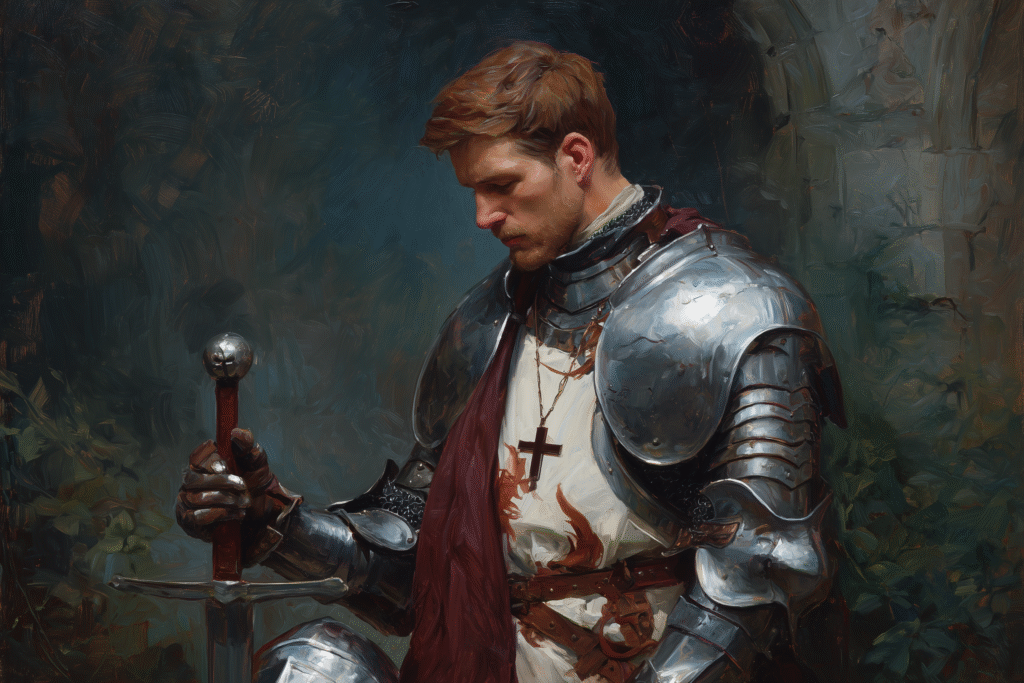
In 1454, a moss-grown track opens through the Fey World to an older age of Arthur’s kingdom. Sir Percival has stopped beside a wounded keeper of the roads. The stranger says a castle appeared beyond the river last night and vanished at dawn. Percival remembers a hall where he once remained silent when another man needed help. He will not ride past a second unanswered question. He asks the travellers to accompany him to the ford and identify who has been carried away.
At a Glance
- Identity
- Sir Percival (Perceval, Percivale), knight of the Round Table and Grail companion
- Nature
- Human knight, patient investigator, defender of vulnerable travellers
- Family
- Son of King Pellinore in the later Arthurian genealogy; brother of Sir Aglovale and Sir Lamorak; paternal half-brother of Sir Tor
- Allies
- King Arthur, Sir Galahad and Sir Bors the Younger
- Opposition
- Knights who exploit the helpless, dishonest escorts, and the inherited feud of Pellinore and Orkney
- Alignment
- Lawful Good — his courage is tempered by a willingness to admit errors and listen before drawing his sword
- Language
- Common and Brythonic
- Place
- Arthur’s older realm, reached from 1454 through an exceptional crossing into the Fey World
- Immediate decision
- Search the river road for a missing witness, or pursue a tournament champion fleeing with a sealed reliquary
What Is Happening Right Now?
Three people have vanished on the road between the ferry and a ruined watchtower. A fourth has returned with a wound and a story about a lantern moving between the trees. The ferryman wants the bank sealed until sunrise. Percival instead asks who last saw the missing travellers together. One witness says the light belongs to a knight carrying a grail-shaped vessel; another swears the knight died years before. Percival needs both accounts compared, and he will not assume that the shining object is the Grail.
First Meeting
A plain-faced knight in polished but patched armour approaches on foot, leading a tired horse. His cloak has been mended more often than his shield. He offers water to the wounded man before asking the party their names. He speaks without ceremony, pauses when others speak and admits that the most important lesson of his life came from a question he failed to ask. When a terrified child points toward the ford, he turns immediately.
Three Scenes Tonight
- The borrowed seal: a supposed herald bears Pellinore‘s mark, though its wax has been softened and pressed twice.
- The silent guest: the youngest witness has seen the missing boat but cannot speak after an enchantment.
- The last question: a wounded lord refuses aid until the party asks why he has hidden his household’s own key.
Appearance and Manner
Percival is tall, spare and strong from years in the saddle. His armour is maintained carefully, though not ostentatiously, and he rides with a plain sword, a lance and a close-fitting shield. His face is open enough that a villain may mistake courtesy for weakness. When challenged, he speaks once and stands his ground; when an opponent falls he offers surrender before a second blow. He can misjudge a courtly deception, but learns quickly when an ordinary servant tells him something he has overlooked.
Ambition, Pressure and Private Truth
- Ambition: defend the helpless and complete the quest without demanding that a suffering stranger perform for him.
- Pressure: his father’s enemies seek revenge, while competing stories of the Grail make every witness’s claim politically dangerous.
- Private truth: he fears that the lesson of his earlier silence has not yet been learned; he will accept personal shame if it leads to another’s rescue.
- Flaw: he sometimes trusts a sincere confession before testing what the speaker leaves unsaid.
- Reward: safe escort through the older court, a sworn introduction to the Grail fellowship or evidence that exposes a false claimant.
Relationships and Allegiances
King Pellinore is the root of Percival’s inherited feuds. Aglovale guards the family’s testimony, Lamorak faces the sharpest Orkney hostility, and Tor remains a half-brother whose upbringing differs from the court’s assumptions. Percival trusts Galahad and Bors on the Grail road, but their shared journey does not make the three knights identical in temperament or destiny. The old anger of Gawain’s house is carried into every gathering where Pellinore’s sons are present.
Game Statistics
Percival rides into danger to protect others and fights with the discipline of a veteran knight. His greatest gift is judgement born from failure; the Grail does not give him an unlimited supply of spells or the powers of a divine sovereign.
Sir Percival — D&D 2024
Medium Humanoid (Human), Lawful Good
Armor Class 20 (plate, shield); Initiative +1 (11); Hit Points 144 (17d8 + 68); Speed 30 ft.; Challenge 8 (3,900 XP; PB +3).
| STR | DEX | CON | INT | WIS | CHA |
|---|---|---|---|---|---|
| 20 (+5) | 12 (+1) | 18 (+4) | 12 (+1) | 16 (+3) | 14 (+2) |
Saving Throws Str +8, Con +7, Wis +6; Skills Athletics +8, Insight +9, Perception +6, Persuasion +5, Survival +6; Senses passive Perception 16; Languages Common, Brythonic.
Traits
Humble Resolve. Percival has Advantage on saving throws against being Frightened and on Wisdom (Insight) checks made to identify an appeal for aid from a creature that cannot speak.
Question the Wound (1/Day). When Percival asks a wounded creature a direct question about who harmed it and listens to its response, he gains a +4 bonus on his next Wisdom (Insight) or Intelligence (Investigation) check to understand the testimony. He cannot compel an answer or discover concealed facts magically.
Actions
Multiattack. Percival makes three Longsword attacks. His mounted Lance action is separate from Multiattack.
Longsword +1. Melee Attack Roll: +9 to hit, reach 5 ft., one target. Hit: 10 (1d8 + 6) Slashing damage. Once per turn, when he hits a creature that has harmed someone under his protection, Percival deals an additional 7 (2d6) Slashing damage.
Lance (Mounted Only). Melee Attack Roll: +8 to hit, reach 10 ft., one target. Hit: 10 (1d10 + 5) Piercing damage. If Percival’s mount has travelled at least 20 feet straight toward the target this turn, the attack deals an extra 7 (2d6) Piercing damage. On a hit with a lance, the Topple mastery property may be applied: the target makes a DC 16 Constitution saving throw or falls Prone. He makes only one such attack as his action.
Open the Way (Recharge 5–6). Percival chooses up to two allies within 30 feet who can hear him. Each may use its Reaction to move up to half its Speed without provoking Opportunity Attacks, provided it has a Reaction available.
Bonus Actions
Hold Fast (2/Day). Percival and up to two creatures of his choice within 30 feet that can hear him each gain 9 temporary Hit Points.
Reactions
Shield Parry. When an attacker Percival can see hits him with a melee attack, he adds 2 to his AC against that attack, potentially causing a miss.
Tactics
Percival shields an injured witness while keeping opponents away from a crossing. He asks the party to find the truth before he offers a challenge; he refuses to pursue a retreating foe while civilians need protection.
Sir Percival — D&D 2014
Medium humanoid (human), lawful good
Armor Class 20 (plate, shield); Hit Points 144 (17d8 + 68); Speed 30 ft.; Challenge 8 (3,900 XP; PB +3).
| STR | DEX | CON | INT | WIS | CHA |
|---|---|---|---|---|---|
| 20 (+5) | 12 (+1) | 18 (+4) | 12 (+1) | 16 (+3) | 14 (+2) |
Saving Throws Str +8, Con +7, Wis +6; Skills Athletics +8, Insight +9, Perception +6, Persuasion +5, Survival +6; Senses passive Perception 16; Languages Common, Brythonic.
Traits
Humble Resolve. Percival has advantage on saving throws against being frightened and on Wisdom (Insight) checks made to identify an appeal for aid from a creature that cannot speak.
Question the Wound (1/Day). When Percival asks a wounded creature a direct question about who harmed it and listens to its response, he gains a +4 bonus on his next Wisdom (Insight) or Intelligence (Investigation) check to understand the testimony. He cannot compel an answer or discover concealed facts magically.
Actions
Multiattack. Percival makes three Longsword attacks. His mounted Lance action is separate from Multiattack.
Longsword +1. Melee Weapon Attack: +9 to hit, reach 5 ft., one target. Hit: 10 (1d8 + 6) slashing damage. Once per turn, when he hits a creature that has harmed someone under his protection, Percival deals an additional 7 (2d6) slashing damage.
Lance (Mounted Only). Melee Weapon Attack: +8 to hit, reach 10 ft., one target. Hit: 11 (1d12 + 5) piercing damage. If Percival’s mount has travelled at least 20 feet straight toward the target this turn, the attack deals an extra 7 (2d6) piercing damage. Percival has disadvantage on this lance attack against a target within 5 feet of him. The lance requires two hands when he is not mounted. He makes only one such attack as his action.
Open the Way (Recharge 5–6). Percival chooses up to two allies within 30 feet who can hear him. Each may use its Reaction to move up to half its Speed without provoking opportunity attacks, provided it has a Reaction available.
Bonus Actions
Hold Fast (2/Day). Percival and up to two creatures of his choice within 30 feet that can hear him each gain 9 temporary Hit Points.
Reactions
Shield Parry. When an attacker Percival can see hits him with a melee attack, he adds 2 to his AC against that attack, potentially causing a miss.
Tactics
Percival shields an injured witness while keeping opponents away from a crossing. He asks the party to find the truth before he offers a challenge; he refuses to pursue a retreating foe while civilians need protection.
Sir Percival — Pathfinder 1e
Sir Percival CR 13; XP 25,600; male human fighter 14; LG Medium humanoid (human); Init +5; Senses Perception +10.
Defense
AC 26, touch 12, flat-footed 25 (+10 armour, +3 shield, +1 Shield Focus, +1 Dex, +1 deflection); hp 119 (14d10 + 42); Fort +12, Ref +5, Will +7; Defensive Abilities bravery +4 against fear.
Offense
Speed 30 ft. (armor training 3); Melee +1 longsword +25/+20/+15 (1d8+13, 17–20/×2); Alternative masterwork lance +20/+15/+10 (1d8+5, ×3; single mounted charge +22); Ranged javelin +15/+10/+5 (1d6+5, range 30 ft.); Space/Reach 5 ft./5 ft.; Base Atk +14; CMB +19; CMD 30.
Tactics
Before Combat Percival arranges witnesses and riders along a route through the older Arthurian roads. During Combat he defends the wounded and attempts a mounted lance strike only when there is a clear route. Morale he withdraws when a retreat is needed to protect the people he escorts.
Statistics
Str 20, Dex 12, Con 16, Int 12, Wis 16, Cha 14.
Feats Weapon Focus (longsword), Weapon Specialization (longsword), Greater Weapon Focus (longsword), Greater Weapon Specialization (longsword), Improved Critical (longsword), Power Attack, Cleave, Great Cleave, Mounted Combat, Ride-By Attack, Spirited Charge, Improved Initiative, Toughness, Iron Will, Combat Reflexes, Shield Focus (16 feats including human and fighter bonus feats).
Skills Ride +13 (14 ranks, +1 Dex, +3 class, −3 plate, −2 shield), Intimidate +19 (14 ranks, +2 Cha, +3 class), Perception +10 (7 ranks, +3 Wis), Diplomacy +6 (4 ranks, +2 Cha); Languages Common and Brythonic.
Gear +1 full plate, +1 heavy steel shield, +1 longsword, masterwork lance, ring of protection +1, trained warhorse, written witness statements and a small token of the Grail fellowship.
Special Abilities
Armor Training 3; Weapon Training (heavy blades) +3; Bravery +4. These fighter abilities are included above. His normal lance attack is not a charge. On a mounted charge he makes one attack at +22 (including the +2 charge bonus) and deals triple damage with the lance when Spirited Charge applies; he cannot also make iterative attacks.
Sir Percival — D&D 3.5e
Male human fighter 14; Lawful Good Medium humanoid (human); CR 14; Init +5; Senses Listen +7, Spot +7.
Defense
AC 24, touch 12, flat-footed 23 (+9 armour, +3 shield, +1 Dex, +1 deflection); hp 119 (14d10 + 42); Fort +12, Ref +5, Will +7.
Offense
Speed 20 ft. in heavy armour; Melee +2 longsword +23/+18/+13 (1d8+11, 17–20/×2); Alternative masterwork lance +20/+15/+10 (1d8+5, ×3; mounted charge +22, one attack); Ranged javelin +15/+10/+5 (1d6+5, range increment 30 ft.); Space/Reach 5 ft./5 ft.; Base Atk +14; Grapple +19.
Tactics
Before Combat Percival places a guard at the ford and confirms the escort’s destination. During Combat he relies on sword and shield after a single mounted charge. Morale he refuses to abandon vulnerable companions to save his own weapons or reputation.
Statistics
Str 20, Dex 12, Con 16, Int 12, Wis 16, Cha 14.
Feats Weapon Focus (longsword), Weapon Specialization (longsword), Greater Weapon Focus (longsword), Greater Weapon Specialization (longsword), Improved Critical (longsword), Power Attack, Cleave, Great Cleave, Mounted Combat, Ride-By Attack, Spirited Charge, Improved Initiative, Toughness, Combat Reflexes (14 feats including human and fighter bonus feats).
Skills Ride +18 (17 ranks, +1 Dex), Intimidate +19 (17 ranks, +2 Cha), Diplomacy +6 (4 cross-class ranks, +2 Cha), Spot +5 (2 cross-class ranks, +3 Wis), Listen +5 (2 cross-class ranks, +3 Wis); Languages Common and Brythonic.
Possessions +1 full plate, +1 heavy steel shield, +2 longsword, masterwork lance, ring of protection +1, a trained warhorse, letters of safe conduct, and the keepsake his mother gave him.
Special Abilities
Percival is a fighter rather than a spellcaster in this adaptation. His two-handed and mounted attacks follow the 3.5e weapon and mounted-combat rules, not Pathfinder’s Armor Training or Weapon Training. One mounted charge with a lance and Spirited Charge deals triple damage. He does not make a full attack during that charge.
Run the Encounter
The light moves from the ford toward a house where no one has lived for decades. The missing servants are shut inside, but a rival knight insists the door cannot be opened without breaking a sacred oath. Percival wants the oath read aloud, then asks who made it and whether those now trapped ever consented to its terms. The characters may break the enchantment, rescue the prisoners or expose a forger. Slaying the knight is the most immediate victory, but can leave the mystery intact.
Five Encounters
- The Ferry at Dusk: a missing child appears on the far bank, but the ferryman sees no footprints crossing the water.
- The Dish and the Spear: a lord displays a shining vessel as proof of authority; the item is genuine treasure, but not the Grail.
- Testimony at the Gate: two surviving pages give conflicting descriptions of an Orkney crest after a midnight assault.
- The Empty Seat: a courtly feast has one setting for a guest who has not arrived. Percival suspects the host is waiting for a victim.
- The Wounded Keeper: a guardian asks the party to heal his wound without revealing what caused it; the right question changes the bargain.
Six Adventure Hooks
- An ancient river road appears for one night in 1454, ending at a tower where Percival seeks three lost travellers.
- Percival offers to escort a witness from Pellinore’s household before Gawain’s envoys can seize him.
- A woman presents a sword supposedly left by the Red Knight, but its makers’ marks belong to a later age.
- A ferryman claims that Blanchefleur sent a message from a distant castle; Percival knows the name but not the messenger.
- A false Grail relic causes a wounded nobleman to refuse ordinary treatment. Percival needs proof before the fever claims him.
- Three knights are due to meet at a hidden ford: Galahad, Bors and Percival. One sealed invitation has been changed.
Equipment, Travel and Consequences
Plate armour, shield, longsword, lance, trained riding horse, water flask, travel cloak and a bundle of testimony sealed by Arthur’s court. Percival has no standing right to seize the property of a ferry village. The old roads of Camelot are found only through exceptional Fey crossings from 1454; their dangers and obligations can follow the travellers home even where the roads themselves do not remain open. A promise made in the earlier age may have a witness who outlives it in the Fey World.
Deeper History: Three Grail Traditions
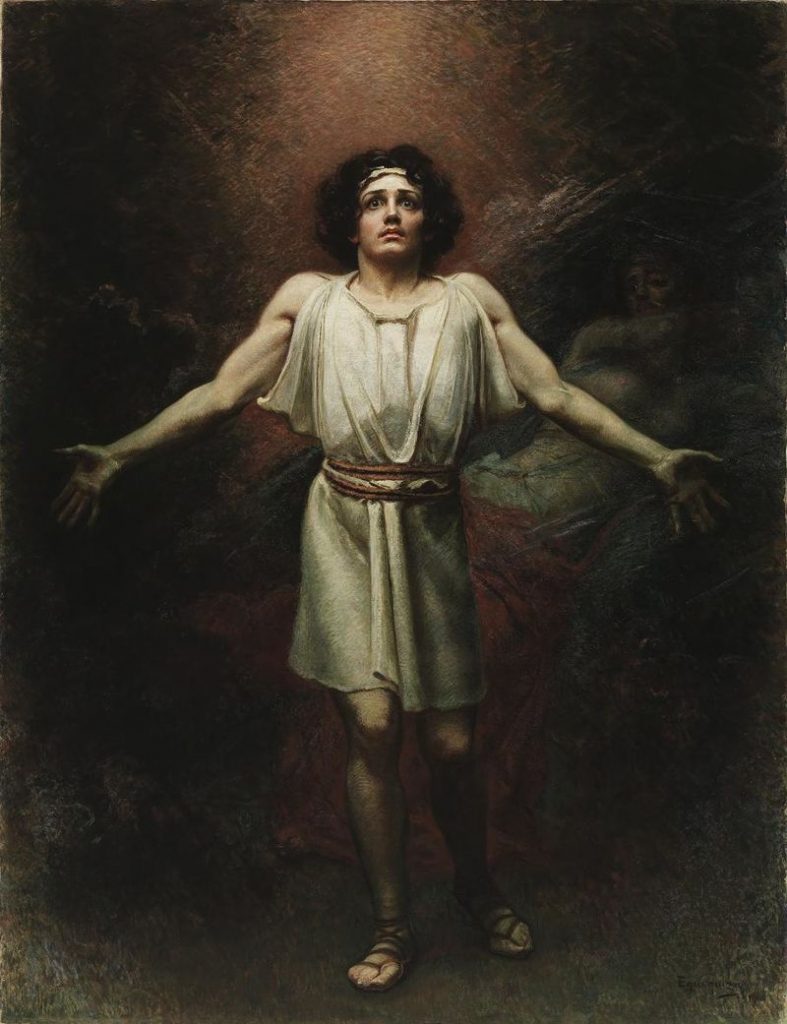
The first Percival. In Chrétien de Troyes’ unfinished Conte du Graal, the forest-raised youth leaves his mother, learns the rules of knighthood from Gornemant, protects Blanchefleur and witnesses a Grail procession at a wounded king’s castle. He fails to ask its meaning. Chrétien leaves the work unfinished; the later healing and triumph must not be presented as his completed ending.
The German Parzival. Wolfram von Eschenbach develops another ending: Parzival heals Anfortas, becomes the Grail King, reunites with his wife Condwiramurs and has a son named Lohengrin. This line belongs to the German romance and does not make Malory’s Percival king of Carbonek or father to the Swan Knight.
The Grail fellowship. In Malory’s Le Morte d’Arthur, the Pellinore family is woven into the Arthurian court, and Percival joins Galahad and Bors in the Grail quest. The three reach Sarras. After Galahad’s death, Percival enters a hermitage and dies a year and two months later; Bors returns to Arthur. The Grail fellowship is remembered not because the three heroes become kings together, but because their loyalties lead them to different endings.
Related People and Places
Arthurian characters · King Pellinore · Sir Aglovale · Sir Lamorak · Sir Tor · Sir Galahad · Sir Bors · King Arthur · Sir Gawain

Sources and Artwork
- University of Rochester, Camelot Project — Perceval, on the early romance and changing Grail traditions.
- Thomas Malory, Le Morte d’Arthur, Book XVII, Chapter XXIII, on Percival, Bors and Galahad after Sarras.
- Ralph Norris, Malory’s Library, on the sources of the Grail tale.
- The University of Edinburgh, Wastiary, on the unfinished Grail question and wasteland motif.
- Painted portraits of Percival and Rogelio de Egusquiza’s historical image of Parsifal are retained from the original page.
Keep this reference growing
If this page helped with your reading or game, you can support its upkeep or explore the curated books.
Explore the Bookshop — epics, classics and stories behind imagined worlds.