
Jack the Ripper — The Unnamed London Killer
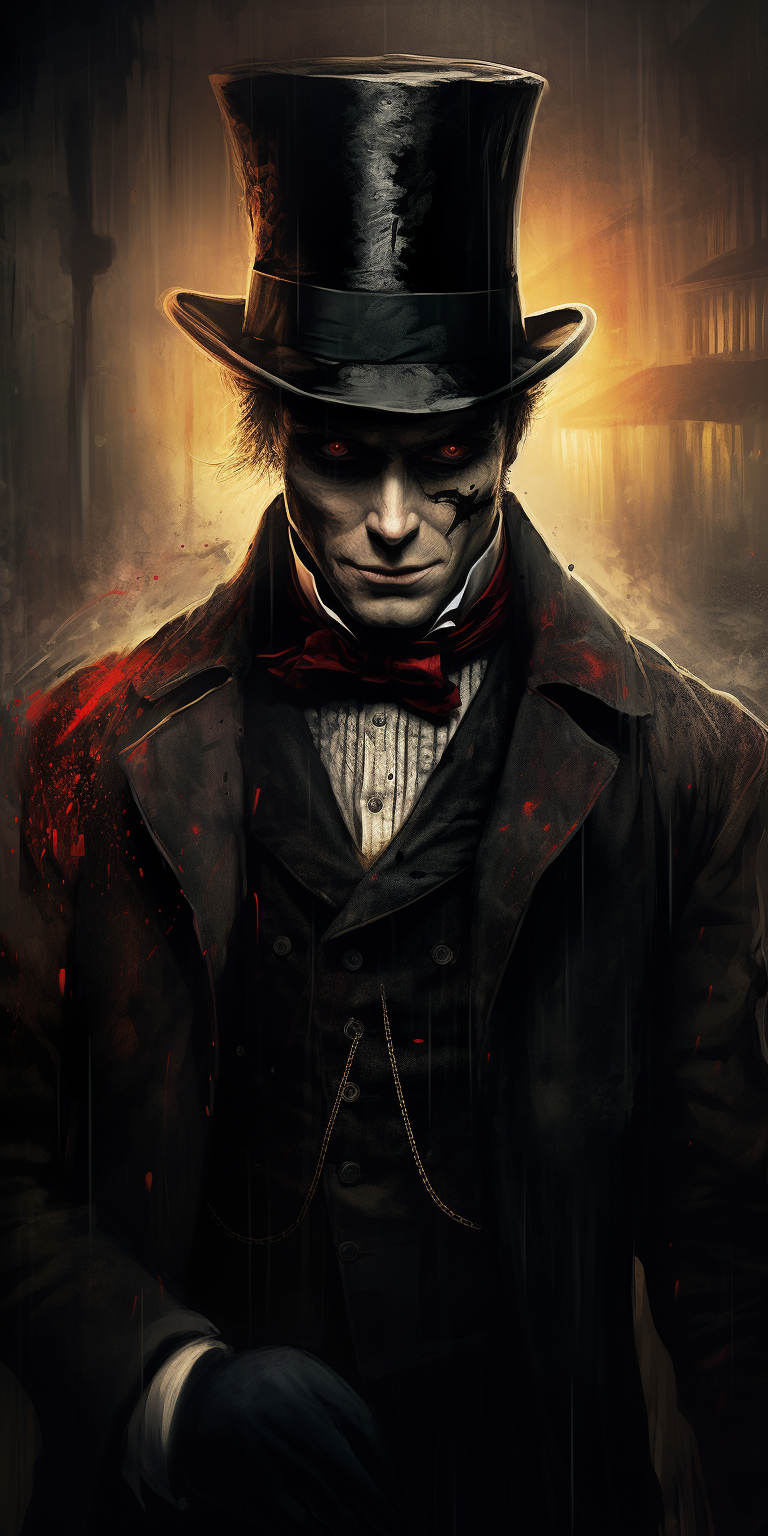
Jack the Ripper is not a public identity. It is the name London has given to an unknown killer whose crimes have created more rumours than reliable facts. The uncertainty is the point: every false witness, forged confession and frightened accusation gives the murderer more room to move.
In the campaign, Jack is active now. The case belongs to fifteenth-century London rather than a displaced later age. The methods, districts and victims are adapted to the city’s present conditions, and the killer’s true identity remains deliberately undefined unless the GM decides otherwise.
At a Glance
- Name: Unknown; called Jack the Ripper by frightened Londoners
- Species: Presumed human
- Base: London
- Role: Serial killer and investigation pressure
- Alignment: Evil; exact personality and motive intentionally undefined
- Campaign status: Alive and active
- Campaign use: Investigation antagonist, rumour engine, false-suspect network or urban horror mystery
Game Statistics
5.5e / 2024
Jack the Ripper
Medium Humanoid (Human), Evil
Armor Class 15
Hit Points 78 (12d8 + 24)
Speed 30 ft.
| STR | DEX | CON | INT | WIS | CHA |
|---|---|---|---|---|---|
| 12 (+1) | 18 (+4) | 14 (+2) | 16 (+3) | 16 (+3) | 13 (+1) |
Saving Throws Dex +7, Wis +6
Skills Deception +7, Investigation +6, Perception +6, Sleight of Hand +7, Stealth +10
Challenge 7 (2,900 XP; PB +3)
Traits
Unknown Face. Jack has Advantage on Deception checks to pass as an ordinary resident, servant, tradesperson or traveller when no witness has reliable identifying information.
Urban Escape. Jack can Hide as a Bonus Action while in a crowded street, alley, market, yard or building with multiple exits.
False Trail. Once per day Jack can leave behind misleading but plausible evidence. Detecting the deliberate deception requires a successful DC 16 Investigation check.
Actions
Multiattack. Jack makes two weapon attacks.
Knife. Melee Attack Roll: +7, reach 5 ft. Hit: 7 (1d6 + 4) Piercing damage.
Sudden Assault. If Jack hits a creature that has not yet acted in the encounter, the attack deals an extra 10 (3d6) damage.
The Unnamed London Killer — 5e / 2014
Medium humanoid (human), neutral evil
Armor Class 15; Hit Points 78 (12d8 + 24); Speed 30 ft.; Challenge 3 (700 XP; proficiency bonus +2). This measures one suspect’s combat danger, not an entire investigative case.
STR 12 (+1), DEX 18 (+4), CON 14 (+2), INT 16 (+3), WIS 16 (+3), CHA 13 (+1).
Saving Throws Dex +6, Wis +5; Skills Deception +5 (expertise), Investigation +5, Perception +5, Sleight of Hand +6, Stealth +8 (expertise); Senses passive Perception 15; Languages English.
Traits
Unknown Face. The suspect has advantage on Deception checks to pass as a plausible ordinary resident or worker when witnesses lack reliable identifying evidence.
Urban Escape. The suspect may Hide as a bonus action in a crowded street or building only when actually obscured or unseen; visibility rules still apply.
False Trail (1/Day). An already-prepared piece of misleading evidence may require a DC 16 Intelligence (Investigation) check to recognise its inconsistency. Real witnesses, physical traces and verified alibis may expose it normally.
Actions
Multiattack. The suspect makes two dagger attacks.
Dagger. Melee Weapon Attack: +6 to hit, reach 5 ft., one target. Hit: 6 (1d4 + 4) piercing damage.
Bonus Action
Disengage. The suspect takes the Disengage action and moves no farther than normal movement allows.
Original 5e/2014 investigative antagonist. Do not use real-world operational details or sensational injuries as encounter clues. The mystery must preserve witness testimony and player agency. Previous editions remain unchanged.
Pathfinder 1e
Jack the Ripper CR 7; human rogue 8; evil Medium humanoid. AC 20; hp 68; sneak attack +4d6; evasion, uncanny dodge.
Skills Bluff +15, Disguise +17, Knowledge (local) +14, Perception +15, Sleight of Hand +16, Stealth +19. Rogue Talents fast stealth, surprise attack, ledge walker.
D&D 3.5e
Jack the Ripper CR 7; human rogue 8; evil Medium humanoid. AC 19; hp 58; sneak attack +4d6; evasion, uncanny dodge.
Feats Alertness, Deceitful, Stealthy, Weapon Finesse. Skills Bluff +14, Disguise +16, Hide +18, Move Silently +18, Search +14, Spot +14.
What Is Jack the Ripper Doing Right Now?
A fresh killing has broken the pattern investigators thought they understood. The location is farther west, the victim does not fit the rumours people were repeating, and one witness insists the killer wore the livery of a respectable household.
Frederick Abberline believes someone is deliberately exploiting panic. Sherlock Holmes is less interested in the most dramatic testimony than in the fact that two witnesses remember the same impossible detail in exactly the same words.
Encounters
Adventurers should meet the investigation through people, evidence and competing explanations rather than repeated crime scenes. A frightened witness may need protection, a suspect may be guilty of another offence but not murder, and officials may prefer a fast arrest over a correct one.
Appearance and Manner
There is no canonical appearance. Witnesses disagree on height, age, clothing and accent. Some of that disagreement is fear; some may be disguise; some may mean witnesses are describing different people. Keep the uncertainty until evidence narrows it.
Personality
Do not overdefine Jack before the investigation earns it. Method, opportunity and evidence should establish character gradually. The killer may be calculating, compulsive, ideologically motivated, supernaturally influenced or simply violent—but the page does not decide that for the GM.
Relationships
Frederick Abberline: leads the official investigation and has to manage panic as well as evidence.
Sherlock Holmes: looks for repeated physical details and linguistic patterns.
London communities: fear creates vigilantes, false accusations and witnesses who begin remembering what others told them they saw.
Equipment
Keep equipment ordinary unless the chosen solution requires otherwise: a concealable blade, cloak, gloves, simple disguise pieces and whatever occupational tools fit the identity eventually selected.
Running the Ripper at the Table
The strongest version is an investigation, not a combat showcase. Give the players contradictory testimony, physical evidence, social pressure and suspects with secrets unrelated to the killings. If the final identity is fixed, decide it from the evidence you place before play begins rather than changing the culprit to defeat player deductions.
Adventure Hooks
- The Repeated Phrase: two witnesses use exactly the same unusual wording despite never meeting.
- The Wrong Livery: bloodstained household colours implicate a noble family whose servants deny losing any clothing.
- The False Confession: a frightened prisoner admits everything but cannot describe one fact the real killer must know.
- Abberline’s List: someone steals the official suspect list before a planned arrest.
- Holmes’s Quiet Detail: Holmes asks the party to identify who could have obtained a specific kind of lamp oil found at two scenes.
Connected Places and People
Mythical and Historical Context
“Jack the Ripper” is a later popular name for an unidentified murderer associated with 1888 London, not a named historical person in 1454. The suspect in this campaign is a fictional medieval criminal whose identity must be established through play; no individual is claimed to be the historical Ripper. The UK National Archives educational records provide later historical context. This scenario should centre the safety and dignity of victims, reliable evidence and the limits of witnesses rather than imitating details of actual crimes.
Historical Inspiration
The name and investigative structure are adapted from the unidentified nineteenth-century London murderer commonly called Jack the Ripper. This adaptation moves the mystery into fifteenth-century London and deliberately avoids selecting a historical suspect as the canonical culprit.
Rules Notes
The statistics and present-campaign investigation are original adaptations for the stated rules editions.
Sources and Adaptation
Adapted from the historical Whitechapel murder case and the existing campaign material. The killer’s identity remains deliberately unresolved; later fictional identities and copyrighted screen interpretations are not treated as canon.
Keep this reference growing
If this page helped with your reading or game, you can support its upkeep or explore the curated books.
Explore the Bookshop — epics, classics and stories behind imagined worlds.