
Terra Australis — Country, Peoples and Adventures
Before sunrise, smoke rises above the stone channels of an eel-fishing settlement. Far to the north, a coastal family watches weather building over the reef. Inland, travellers follow old paths towards water they cannot yet see. All three live on the same enormous continent, but each inhabits a different country with its own people, history and knowledge.
Terra Australis is not a single kingdom, a single desert or an unclaimed wilderness. Aboriginal peoples have lived across these lands for many thousands of years, building relationships with particular coasts, rivers, mountains, woodlands and dry country. Languages, customs and practical ways of living differ from place to place. In this fantasy Earth, a visitor who treats every community as interchangeable can lose the route, the welcome and the journey.
At a Glance
| Region | Mainland Australia: tropical north, the eastern ranges, temperate coasts, volcanic wetlands, woodland and arid interior |
|---|---|
| People | Many Aboriginal societies and language groups; no continent-wide capital, crown or uniform government |
| Ways through | Established walking routes and river corridors, known water sources, coastal journeys and crossings led by people who know the local country |
| Useful supplies | Water, suitable vessels, food, shelter, repair materials, weather knowledge and introductions to local hosts |
| Living wonder | Ancient managed wetlands, places of ancestral significance and the Bunyip of some wetland traditions in the setting |
| Immediate dangers | Unfamiliar water routes, drought, flash floods, dangerous fire conditions, exposed reefs and powerful beings tied to particular places |
What Is Happening Right Now?
The broken eel channel — Gunditjmara Country, southwest
Floodwater has shifted stones at the entrance to an eel-holding pond. A basket weir may fail before the next harvest, and a working community needs extra hands to shore up the channel. The people who built and maintain the system know precisely where the flow should go; outsiders do not. The party can carry stone, recover tools from flooded ground and divert a dangerous surge. If they insist on imposing their own design, they risk destroying more than they repair.
The setting is inspired by the well-attested Gunditjmara aquaculture landscapes around Budj Bim, where stone channels and weirs have been managed over millennia. The particular flood and characters are a fictional game situation, not an account of a historical incident.
The channel through the reef — northeast coast
A visiting boat reaches a reef passage as the wind begins to change. Its captain has a distant chart but does not know the tide over the submerged coral. A local navigator offers a safer route, though the ship’s cargo must be divided between two smaller craft. Characters can help shift the loads, secure another vessel, shelter until conditions improve or risk a hazardous departure. The coral, weather and skills of the pilot matter more than a fight at sea.
A call from the billabong — southeastern wetlands
At a deep backwater where fishermen usually approach at dawn, unfamiliar cries have begun to sound at night. In this campaign the Bunyip is real; it can threaten a canoe that enters its pool. The nearest households want the fishing passage safe, not a party of strangers trampling their other water sources. Tracks, water depth and the creatures’ habits provide options for avoidance, protection or battle. The game’s monster entry is a fantasy adaptation: it does not claim to reproduce one definitive account shared by every Aboriginal community.
Five Very Different Journeys
The northern wet and dry seasons
Monsoon rains swell rivers, spread across floodplains and may cut established crossings for weeks. During the dry season, shorter journeys become possible but sources of clean water can be farther apart. Mangrove shores, open country, wooded valleys and islands call for different boats and different local knowledge. The peoples of the north have their own distinct connections to country and sea; they are not one tropical nation.
Sea Country and the Great Barrier Reef
Off the northeast coast, reefs, islands and shallow passages make navigation a learned skill. A vessel bound for a distant trading place may need several smaller boats and people who know when the tide will uncover a safe channel. The reef has many Traditional Owner groups with enduring ties to particular stretches of sea. Continue to the Great Barrier Reef for the surrounding waters.
The eastern ranges and river valleys
Forested slopes, gorges and river flats can make a short distance on a map a demanding climb. Paths may be familiar to the people who live on them yet impossible to recognise from a coastal ship. Wet weather can close a creek crossing overnight. If the party brings horses, wagons or heavy armour, the problem of moving them safely is as important as any roaming beast.
Budj Bim: stone, water and eel farms
In the southwest of what is now Victoria, the Gunditjmara have used volcanic stone, weirs, channels and ponds to trap, hold and harvest kooyang, or short-finned eels. This is a productive inhabited landscape shaped by generations of skilled work, not an abandoned ruin. Some settlements support stored food and trade. A party arriving here should meet fishers, makers and water engineers with practical authority over their own places. The volcanic landscape also carries ancestral significance; such places are not ordinary monster lairs.
The dry interior and southern woods
Inland travel depends on knowing water, seasonal conditions, food and routes. Arid country includes hills, rocky ranges, plains, riverbeds and stretches of vegetation; it is not all sand. In the southwest, woodland and coastal country offer different resources and seasons from the centre. Knowledge from one region cannot simply be moved across the continent. When a local guide refuses a route in a dangerous season, the reason may be practical and immediate.
People, Shelter and Supplies
Begin an expedition by naming the coastline, valley or river where the party arrives. Who lives there? How are strangers introduced? What food and materials can reasonably be spared, and who knows the route onward? A visitor may be offered a sleeping place or a boat after trust is established, but there is no chain of inns, identical markets or magical shops covering the interior.
In fishing country, repair work might involve baskets, fibre, stakes, boat fittings and wet-stone channels. On the coast, sails, cordage, weather and hull damage matter. Inland, the difference between carrying enough water and leaving a dependable source can decide the adventure. Skilled local hosts do not exist merely to sell a guide service; their own households, tasks and judgement shape what help they can offer.
For a deliberately fictional starting place, the Split Channel Camp is an occasional meeting point beside a broad watercourse in the southeast. Its inhabitants have their own needs and movements rather than permanent rooms for hire. An experienced canoe-maker there can show the party a safe crossing after they help secure a damaged vessel. The place and situation are original campaign inventions, not named historical sites or representations of particular living people.
Living Folklore and Sacred Country
This is a world in which the supernatural can be real, but there is no single set of beings or ceremonies belonging to the entire continent. Some water places have dangerous inhabitants. The site’s existing Bunyip is suitable for an encounter in appropriate wetland country, especially where local people recognise the danger and can explain what keeps travellers safe. Its statistics are a fantasy bestiary adaptation, not a replacement for the different historical tellings of water beings.
Elsewhere, places may matter through ancestral relationships, remembered journeys, responsibilities and knowledge that outsiders do not possess. These are not blank dungeon sites to strip for treasure. A powerful place in a fantasy campaign can shape the decisions of those who live around it without exposing stories or ceremonies that are not publicly available for retelling. The Gunditjmara relationship with Budj Bim, for example, deserves to remain rooted in that particular country, rather than become a generic volcano-spirit encounter in every corner of Terra Australis.
Using This Region in Play
Ask what the players are trying to reach and why. Let the local season set real limits. A small party with the right knowledge can make a journey that a heavily equipped foreign army cannot. A ranger can read fire damage; a boatwright can mend a hull; a healer can preserve someone overcome by heat; a diplomat can secure an introduction; a warrior can stand watch at a dangerous channel. Give each kind of traveller work that matters.
When conflict arises, make its geography visible. The water source is not an abstract prize. It supplies households, animals and visitors. A flooded channel is part of a working system. A reef passage can wreck a boat but may also provide a haven from a larger storm. Supernatural danger should be as particular as these real conditions, not an interchangeable surprise attack on every road.
Other Places and Later Ages
Continue into The Bush, sail along the Great Barrier Reef, or return to the wider Oceania atlas. Van Diemen’s Land is a separate island region with its own peoples and history, not merely an extension of the mainland.
The site’s older record mentions Ned Kelly. That belongs to the much later bushranger period, not to the first journeys described here; campaigns that move into later ages can explore that history without putting nineteenth-century characters into an earlier landscape.
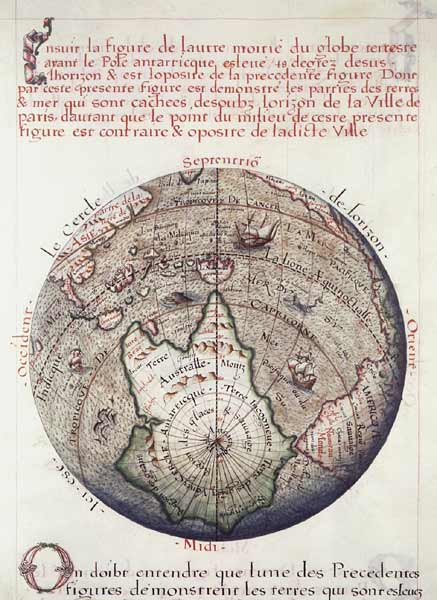
An Older Map in the Archive
Sources and Setting Notes
- UNESCO World Heritage Centre: Budj Bim Cultural Landscape — Gunditjmara aquaculture, volcanic country and long continuity.
- Australian Government: Budj Bim Cultural Landscape — stone channels, eel husbandry and managed wetlands.
- Great Barrier Reef Marine Park Authority: Traditional Owners — specific peoples and continuing Sea Country relationships.
- AIATSIS: Map of Indigenous Australia — cultural diversity and the limits of broad mapped groupings; the map itself is not reproduced here.
- Parks Australia: Respecting Culture — why access to sensitive places and information has restrictions.
- Australian Dictionary of Biography: Ned Kelly — later chronology, separate from the starting era.
The expedition incidents and Split Channel Camp are original fantasy scenarios. Archaeology and living cultural sources establish the places and traditions; they are not a licence to present restricted Indigenous stories or invented rituals as authentic.
Later History on Film: The Lady Juliana
The original page also featured a short documentary about the late-eighteenth-century convict ship Lady Juliana. It belongs to a much later chapter of Australia’s history, not to the earlier societies explored above. The video is preserved here for campaigns visiting those later centuries.
Keep this reference growing
If this page helped with your reading or game, you can support its upkeep or explore the curated books.
Explore the Bookshop — epics, classics and stories behind imagined worlds.