
Savonia
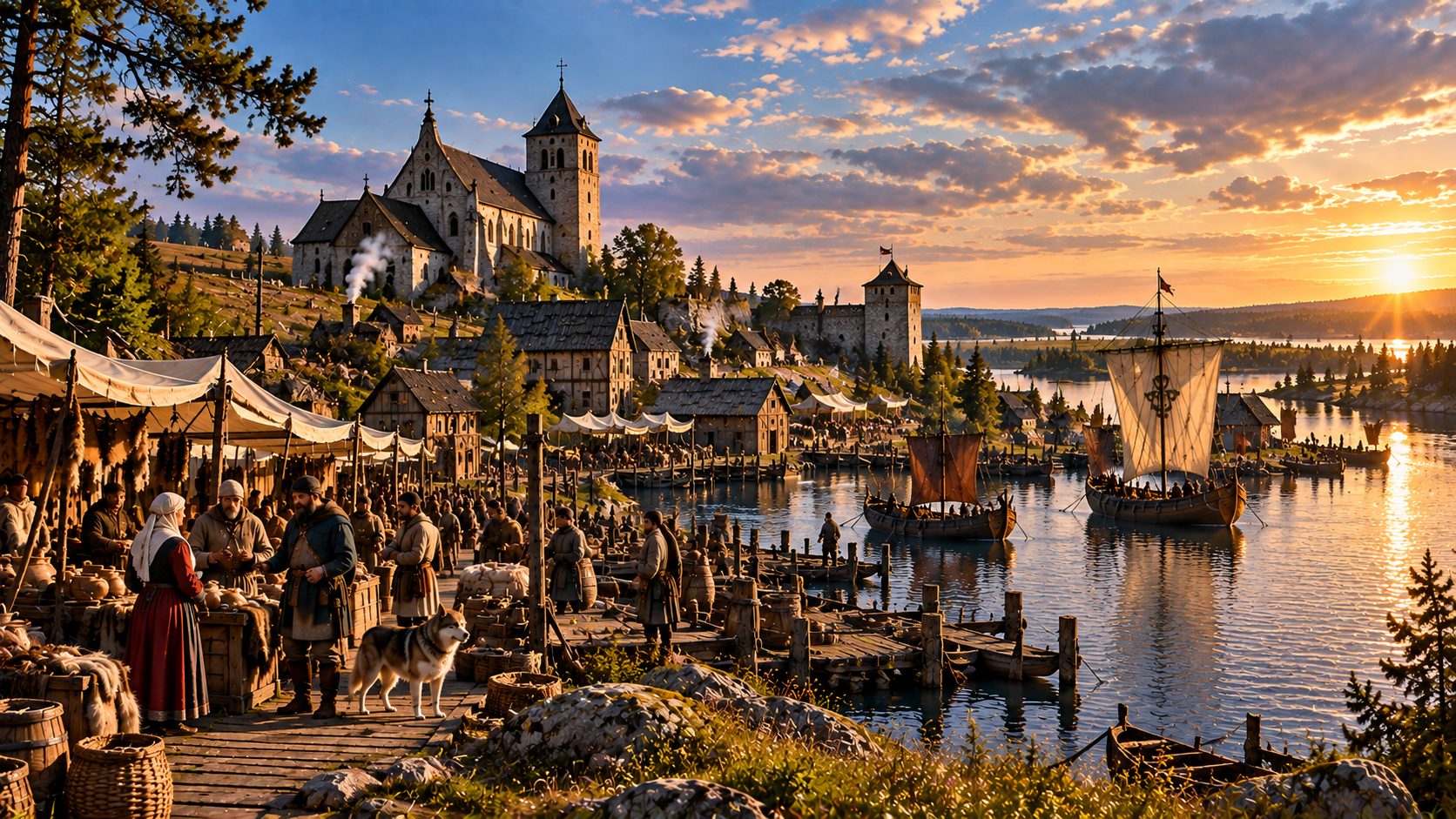
The eastern lake frontier of Savilahti and Juva, where Swedish rule meets disputed wilderness and the long shadow of Novgorod
At a Glance
| Region | Eastern Finland, west of the disputed Karelian borderlands |
|---|---|
| Principal Centres | Savilahti and the newer parish of Juva |
| Political Authority | Under the Swedish crown, but thinly administered through parishes, local leaders and distant castle authority |
| Eastern Pressure | Novgorodian claims, Karelian interests and an imprecise frontier inherited from the Treaty of Nöteborg |
| Landscape | Saimaa waterways, forests, ridges, fishing waters, hunting grounds and scattered farm settlements |
| Faith | Finnish gods, ancestral and landscape traditions, and Christian institutions |
| Campaign Themes | Border scouting, lake travel, wilderness settlement, rival hunting rights, Karelian diplomacy, spirits and fragile crown authority |
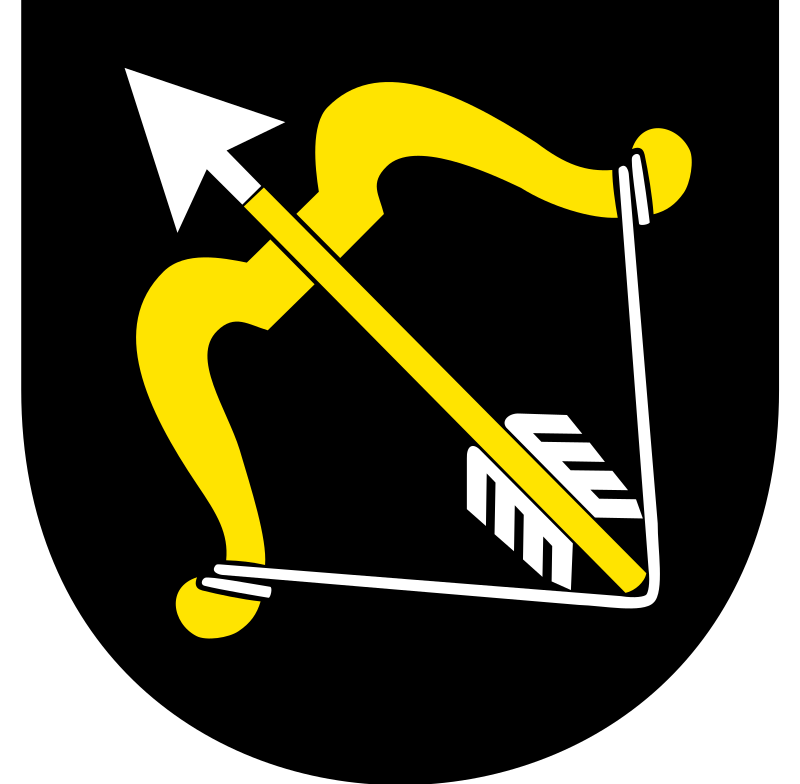
Savonia is not a country of large towns; it is a water-and-forest frontier whose settlements cling to the routes that make the interior navigable. Savilahti remains the old centre, while Juva has only recently become a separate parish. Beyond them stretch lake chains, portages and hunting territories where royal authority becomes weaker with every mile.
The eastern border is a political fact without being a perfectly surveyed line. The 1323 peace between Sweden and Novgorod placed Savonia on the western side, yet northern and wilderness limits remained disputed. Savonian, Tavastian and Karelian users continue to cross, hunt and remember the country differently.
No great stone fortress yet dominates the eastern lakes. That absence is itself campaign pressure. Royal officers know the frontier is exposed; local households know any attempt to strengthen control will demand labour, supplies and land. In later decades a castle may rise here, but in the present the border is held by people, boats, warnings and reputation.
What Is Happening Right Now?
Juva Is Still Becoming an Administrative Centre
Separated from Savilahti as its own parish only in 1442, Juva is accumulating records, obligations and influence faster than every household accepts.
The Eastern Routes Are Being Watched
Travellers from Karelian and Novgorodian territory move through the same waterways as traders, kin and hunters. Royal agents want information without turning every crossing into open conflict.
The Tavastian Hunting Dispute Is Spreading
Families from both regions claim wilderness they have used for generations. Old marks and oral testimony contradict one another, while spirits recognise boundaries of their own.
Someone Is Measuring a Castle Site
Stoneworkers and military men have quietly inspected defensible islands along the eastern waterways. Nobody admits who ordered the surveys.
Places to Use in Play
Savilahti
The old parish centre around the Mikkeli region ties local administration, church authority and lake traffic together. It is the best place to find witnesses, guides and people who know older Savonian claims.
Juva
Juva’s new status creates opportunity and resentment. Clerks, priests, household heads and travellers are defining what the parish will become while memories of dependence on Savilahti remain fresh.
The Saimaa Waterways
Lakes and narrows are the true roads of Savonia. Boats move people, fish, hides and messages through a landscape that becomes extremely difficult when a route is blocked.
The Eastern Wilderness
Here the frontier is lived rather than drawn. A hunting camp can contain Savonian, Karelian and Novgorodian connections at once. Adventurers who demand a single sovereign answer may discover that nobody on the ground uses the country that way.
People and Powers
| Power | What It Wants | Adventure Pressure |
|---|---|---|
| Savonian Households | Farm land, fishing water, hunting territory and freedom to expand settlement. | Boundary disputes, missing hunters, inheritance and settlement conflicts. |
| Swedish Crown Agents | Information, taxes, loyalty and defensible eastern routes. | Scouting, escorts, secret surveys and intelligence gathering. |
| Karelian Travellers and Kin Networks | Access to old routes, trade, family connections and sacred places across the frontier. | Diplomacy, accusations of spying and divided loyalties. |
| Tavastian Hunters | Recognition of older wilderness rights west and north of settled Savonia. | Feuds, disputed kills and competing boundary evidence. |
| Lake and Forest Specialists | Correct relations with waters, game and local spirits. | Weather, curses, spirit bargains and supernatural trespass. |
Dangers, Rumours and Adventure Hooks
- The Unfinished Map. A royal survey ends in the middle of a lake, with the final lines written in a hand nobody recognises.
- The Juva Bell. The new parish bell rings when armed strangers cross a boundary miles away.
- The Karelian Guest. A respected household shelters a traveller wanted by both Swedish and Novgorodian agents.
- The Castle Island. Stone markers appear overnight on a rocky island where nobody admits planning a fortress.
- The Shared Forest. Tavastian and Savonian hunters vanish after agreeing to settle a boundary dispute without witnesses.
- The Black Pike. A fish taken from the Saimaa carries a metal tag engraved with a royal seal dated decades in the future.
Travel and Law
Water is the primary road. Saimaa’s lakes and narrows connect settlements faster than overland tracks, while portages join one water system to another. Winter can create swift ice roads but also trap travellers far from shelter.
Law weakens with distance from recognised centres. Royal claims, parish authority, household custom, Karelian usage and sacred obligation overlap. Parties operating near the eastern frontier need interpreters and witnesses as badly as they need weapons.
Deeper History
Savonia entered Swedish rule through the Treaty of Nöteborg in 1323, when the Savilahti district passed from Novgorod to Sweden. The boundary that followed was clearer in the south than across the northern wilderness, leaving a long legacy of disputed use.
In 1454, Savilahti and Juva are the central ecclesiastical districts of the region. The great border fortress later known as Olavinlinna does not yet exist; its construction will not begin until 1475. That makes the present frontier markedly more open and vulnerable.
Explore the Midgard Cluster
Union of Midgard · Finland · Tavastia · Karelia · Pohjola
Keep this reference growing
If this page helped with your reading or game, you can support its upkeep or explore the curated books.
Explore the Bookshop — epics, classics and stories behind imagined worlds.