
Zeeland — The Islands and Estuaries of the Burgundian Count
Middelburg · Scheldt waters · Dikes · Burgundian charters · Coastal patrols
At a Glance
| Realm | County of Zeeland in the Burgundian Netherlands, joined to Holland under the same count but retaining its separate maritime rights |
|---|---|
| Count | Philip the Good, Duke of Burgundy, Count of Holland and Zeeland since 1433 |
| Chief Town | Middelburg, a trading centre on Walcheren |
| Other Ports | Zierikzee, Veere and coastal markets serving the estuaries |
| Government | Count’s officers, chartered towns, estate holders, shipping guilds and local water authorities |
| Trade | Fishing, salt, grain, cloth, ferries and trade through the Scheldt and North Sea |
| Sacred Life | Nehalennia of safe voyages and homecomings; coastal shrines, sea spirits and protective household rites |
| Risks | Floods, tidal wrecks, raids, disputed tolls and conflicting maritime privileges |
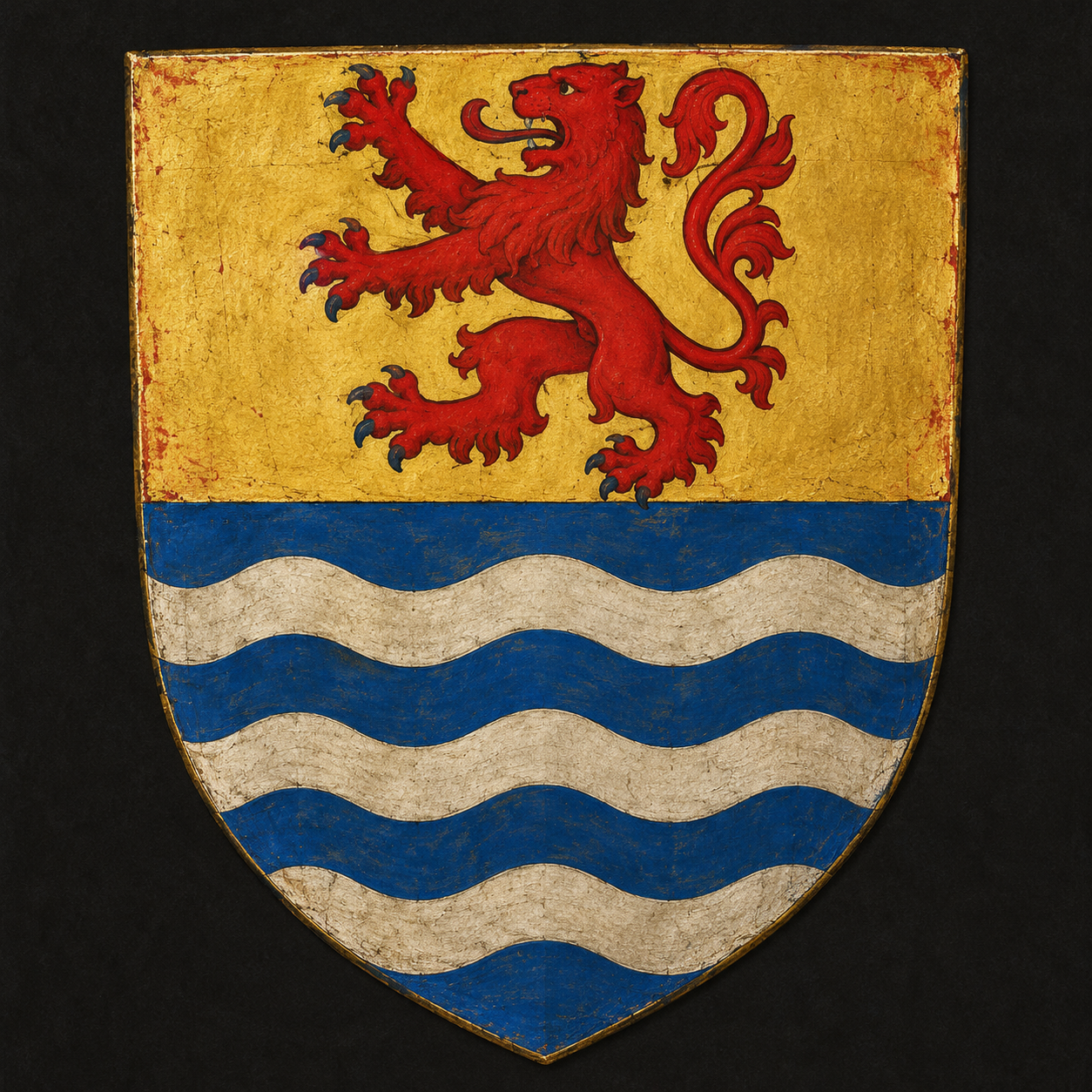
Arriving in Zeeland
Zeeland begins where the road ends at a landing stage. On Walcheren, carts of wool and sacks of salt wait for boats that cannot cross until the tide turns. Farther east, the water splits around low islands and sandbanks. The banks look close enough to walk between, but the channels are deep, swift and dangerous. A missed ferry can cost travellers their next safe bed.
From Middelburg, cargo often passes through the smaller boats and landings around Arnemuiden before reaching larger ships. Zierikzee faces the eastern estuary; Veere serves Walcheren’s waters. On the islands, people live by fish, salt, trade and the never-ending work of keeping the sea outside their fields. Mariners watch the clouds as carefully as the count’s seals.
Ask the ferryman how long the crossing takes today, not how long it took yesterday. A guide can point out firm ground on a dike road, a workshop for damaged boats or a sheltered yard for a horse. Do not set off onto a tidal flat because a distant bell sounds close.
What Is Happening Right Now?
The Ferry That Came Back Empty
A ferry returns to Zierikzee with its sail torn and no one aboard. A rope has been cut from the steering gear, and wet footprints lead from the deck to the stern. The ferryman’s sister, Janne, knows he was carrying two passengers and a small sealed chest. She needs a crew to search the channel before the outgoing tide takes the boat’s trail away.
One More Tide Before the Bank Breaks
On Walcheren, a short stretch of dike is sinking beside a pasture. Willem the dike-keeper has workers and timber, but no safe way to bring his heaviest beams along the flooded road. He needs a barge and people willing to unload it in driving rain. A nearby family will not leave their cattle behind, even when the water reaches the threshold.
The Offering in the Fishing Net
A crew fishing near an old submerged shore hauls up a carved stone showing a woman, a dog and the prow of a ship. The image belongs to Nehalennia, protector of seafarers and homecomings. Since the stone came aboard, the same dark swell has struck the harbour each evening. A keeper of the sea shrine believes the offering was taken from a place that still belongs to the goddess. Returning it may require a dangerous passage at low tide.
Other sailors bring warnings from Frisia. A captain claims black sails resembling those of Grutte Pier’s Black Hope of Arum followed his vessel before turning away at the shoals. His crew will not sail back without an escort.
Places, Landings and People
Middelburg and Arnemuiden
Middelburg is the place to buy rope, grain, salt and skilled repairs. Its merchants fill warehouses near the channels, while sailors and carters crowd the market before the morning bell. Bigger ships often unload onto smaller boats near Arnemuiden rather than brave the silting Arne channel. Hire a pilot who knows the sandbanks.
Zierikzee and Schouwen
Zierikzee looks towards the Eastern Scheldt. Fishers, salt merchants and ferrymen know the changing banks. Its boats can carry a party across the estuary, but the passage depends on wind and tide. Here Janne is looking for her missing brother; the abandoned ferry lies at a landing where frightened children refuse to play.
Veere and Walcheren
Veere’s quays serve island traders and fishing boats. Inland, raised paths run between fields, villages and sea banks. Water can climb a ditch faster than a traveller expects. Willem the dike-keeper needs extra hands; a visitor can earn food and local trust by helping bring his repair barge ashore.
Domburg and the Lost Shrine Coast
The coast around Domburg keeps the memory of an ancient sea sanctuary. A drowned Roman harbour is remembered near Colijnsplaat across the waters. Nehalennia still answers sailors who honour her here. A carved stone recovered in a fishing net points towards the old submerged shrine, and the tide gives visitors only a short time to reach it. The stones are older than the island towns, but their keepers still know where a sailor can leave an offering.
Shipmasters, net-makers, salt workers, shrine attendants and dike-keepers all have work for visitors. The wider Low Countries offer larger markets; Zeeland’s island channels make local guides much harder to replace.
Where to Stay and Find Help
- The Salt Gate, near Middelburg’s market: a tidy, moderately priced house kept by Maartje. There is stew, a few private beds, a lockable store and space for three horses. Sailors and buyers eat in the common room. Maartje knows a wheelwright and the boatmen who can take a heavy chest to Arnemuiden.
- The Red Net, by Zierikzee’s landing: Janne’s aunt Els offers cheap sleeping space above the fish sheds, warm broth and a corner for wet cloaks. Horses must stay with a carter elsewhere. Els keeps the doors open for ferry crews and has already heard three versions of what happened to Janne’s missing brother.
- The Tern’s Rest, Veere: a firmer roof and more costly room for traders waiting out a gale, with a guarded stable yard, clean water and locked chests. Host Dirk can find a pilot or sailmaker. He will not hire out his boat in a storm, but his neighbour might for the right reason.
Port smiths mend tools and iron fittings, carpenters patch carts, and boatwrights replace planks and rigging. The sea shrines offer shelter and healing, but a badly hurt sailor may need several days on land. Stock dry food, oil and rope before crossing to a smaller island.
Old Gods and Water Spirits
Nehalennia’s Safe Return
At the oldest coastal shrines, sailors honour Nehalennia with fruit, carved offerings and promises made before a voyage. Her dog and a ship’s prow are worked into sacred stones. She watches over the homecoming, not merely the outward journey. A crew that steals from her drowned sanctuary may find that every channel leads back to the same shore until the offering is returned.
Her coastal cult belongs to a wider sacred landscape of the Lower Rhine and delta. Explore the Low Countries Pantheon for Nehalennia’s neighbouring gods and ancient shrines.
The Mermaid of Westenschouwen
Near Westenschouwen, the fishing crews remember a mermaid captured in a net and refused her freedom. Her mate’s grief became a warning against keeping what belongs to the sea. A living mermaid now follows boats near the shoals. She has not attacked them. She is searching for one missing companion, and the next crew to take a net into her waters may have to choose between its catch and her trust.
The Osschaart and the Little Mound Folk
Across the Scheldt in the creeks of Zeeuws-Vlaanderen, people speak of the Osschaart, a water spirit that waits in pools and channels. In South Beveland, the outermannetjes are small, long-bearded folk associated with raised mounds and quiet night work. A farmer who leaves an offering may wake to find a broken fence repaired, while another fears the tiny footsteps he hears beside an old mound. Neither should be mistaken for the sea goddess or a court of distant faeries.
Travel, Weather and Onward Routes
The islands are connected by ferries, not reliable bridges. Give the skipper a destination and ask for the tide; a crossing that looks short on a map may take half a day with the wind against it. On an exposed shore, a sudden fog can hide the landing entirely. Inland, carts follow dike tops or firm creek ridges, with fields and drainage cuts on either side.
Travellers heading west towards Flanders or north into Holland should hire a local pilot at the last safe port. Ask where to sleep if the next crossing is cancelled, and keep provisions dry enough to survive a night on an island road. A sailor who knows the channel’s sandbanks is worth more than a fine map in bad weather.
History and Sources
Zeeland and Holland came under Philip the Good in 1433. The Dutch National Archives preserve records of his government. Zeeland remained a country of island ports, shipmasters, sea banks and strong local customs. Its waterways are part of its economy and often the only sensible roads between settlements.
The ancient goddess Nehalennia is known from Roman votive altars recovered near Domburg and Colijnsplaat. The Rijksmuseum van Oudheden explains her links with seafarers, household protection and the dog at her side. Geopark Schelde Delta documents the medieval ports and tidal routes, including Middelburg, Zierikzee and Veere. The Encyclopaedia of Zeeland’s folklore records the Westenschouwen mermaid, the Osschaart and the outermannetjes. Their surviving retellings were recorded in later generations and preserve more than one version of each tale.
Related Lands
Keep this reference growing
If this page helped with your reading or game, you can support its upkeep or explore the curated books.
Explore the Bookshop — epics, classics and stories behind imagined worlds.