
Madness Domain
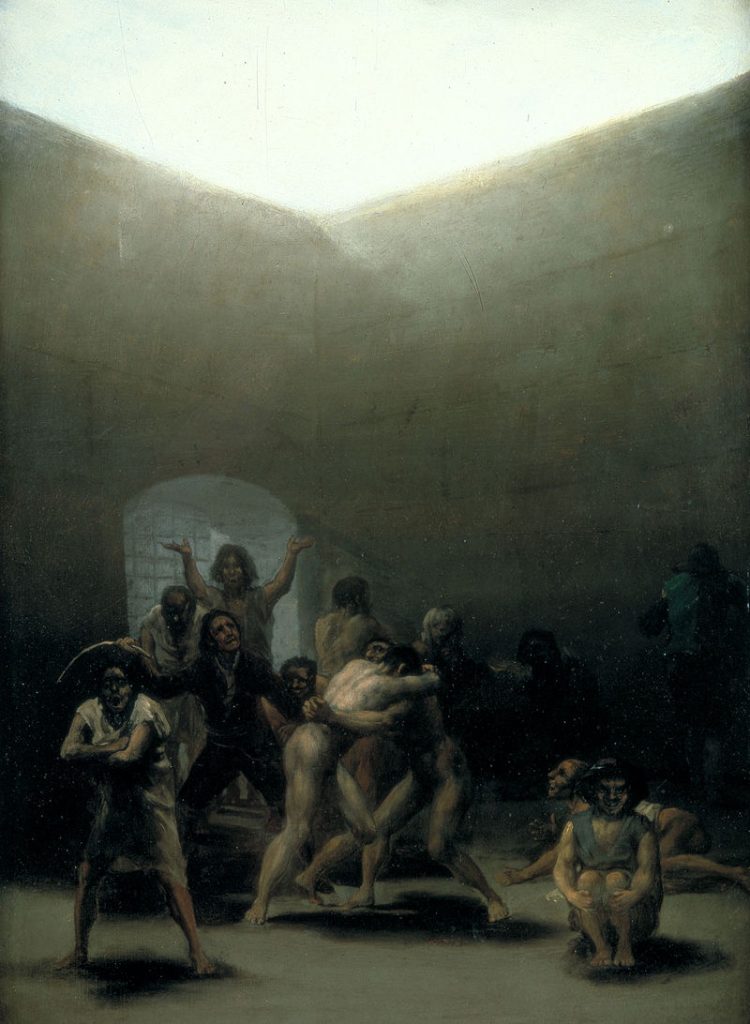
The Madness Domain represents supernatural confusion, destabilising visions and dangerous insight that fractures ordinary perception. Pathfinder 1e and D&D 3.5e both publish a Madness Domain, but their mechanics are fundamentally different and should not be mixed with third-party replacement spells.
At a Glance
| Divine Sphere | Supernatural madness, confusion, impossible insight, altered perception and mind-affecting divine power |
|---|---|
| Typical Role | Debuffer, confusion controller and high-risk mind-magic specialist |
| Published Rules | Pathfinder 1e and D&D 3.5e |
| Modern D&D Status | No official same-named Madness Domain in D&D 5e/2014 or the 2024 Cleric rules. |
| Campaign Framing | These mechanics represent supernatural or magical disruption of the mind, not a model of ordinary real-world mental illness. |
| Possible Patrons | Dionysus, Eris, and other powers whose established portfolios genuinely include divine frenzy, confusion or destabilising revelation |
Edition Applicability
Madness is published in Pathfinder 1e and as a D&D 3.5e additional domain. The former page blended the 3.5e Insanity-score power with third-party replacement spells. Those materials are now separated, and only the published domain progression is presented as the core rules.
Madness Domain — Pathfinder 1e
Rules status: published Pathfinder 1e Core Rulebook domain.
Vision of Madness
As a melee touch attack, choose attack rolls, saving throws or skill checks. For 3 rounds, the target gains a bonus to the chosen category equal to half your Cleric level, minimum +1, and takes the same value as a penalty to the other two categories. Uses per day equal 3 + your Wisdom modifier.
Aura of Madness
At 8th level, emit a 30-foot aura for a total number of rounds per day equal to your Cleric level. Enemies in the aura are affected by Confusion unless they succeed on a Will save with DC 10 + half your Cleric level + your Wisdom modifier. The effect ends when a creature leaves the aura or the aura ends. A creature that succeeds on the save is immune to your aura for 24 hours.
Pathfinder 1e Madness Domain Spells
| 1st | Lesser Confusion |
|---|---|
| 2nd | Touch of Idiocy |
| 3rd | Rage |
| 4th | Confusion |
| 5th | Nightmare |
| 6th | Phantasmal Killer |
| 7th | Insanity |
| 8th | Scintillating Pattern |
| 9th | Weird |
Madness Domain — D&D 3.5e
Rules status: published D&D 3.5e SRD additional domain.
Granted Power: Insanity Score
Your Insanity score equals half your class level. For spellcasting, use your Wisdom score plus your Insanity score when determining bonus spells and save DCs. For other Wisdom-based purposes, including skills and saves, use Wisdom minus your Insanity score instead.
Once per day, before making a Wisdom-related roll, you can treat your Insanity score as a positive modifier rather than a penalty for that roll.
D&D 3.5e Madness Domain Spells
| 1st | Lesser Confusion |
|---|---|
| 2nd | Touch of Madness |
| 3rd | Rage |
| 4th | Confusion |
| 5th | Bolts of Bedevilment |
| 6th | Phantasmal Killer |
| 7th | Insanity |
| 8th | Maddening Scream |
| 9th | Weird |
How the Madness Domain Plays
Pathfinder Madness is a tactical exchange: Vision of Madness can sharpen one category of rolls while sabotaging two others, making it useful either as a buff or a debuff depending on timing. Aura of Madness then becomes a powerful close-range control tool. D&D 3.5e instead changes the cleric’s underlying Wisdom calculations, trading everyday stability for stronger spellcasting and one daily burst of clarity.
Who Grants the Madness Domain?
Dionysus can support this domain where divine frenzy, altered perception or ecstatic loss of ordinary boundaries is part of his established cult. Eris may support it where destabilisation and discord genuinely overlap with the domain. It should not be assigned to a deity merely for eccentricity.
Priests, Temples and Rites
Madness-domain rites may use sensory deprivation, overwhelming music, intoxicants, impossible riddles, dream incubation or deliberately contradictory revelations. The purpose is supernatural rupture or insight, not the mockery of ordinary illness.
What Are Madness Priests Doing Now?
They are investigating shared visions, tracing outbreaks of magical confusion, decoding prophecies that contradict themselves, determining whether a prophet has seen too much or been deliberately attacked, and containing relics that alter the minds of everyone who studies them.
Related Domains and Character Options
Rules Sources and Licensing
- Pathfinder 1e: Vision of Madness, Aura of Madness and the spell list follow the Pathfinder Core Rulebook Madness Domain.
- D&D 3.5e: the Insanity-score granted power and spell list follow the SRD Additional Domains.
- Correction made: third-party spells such as Haunted, Spark of Insight, Method of Madness and Splinter the Mind are no longer blended into the official domain progression.