
Sahara
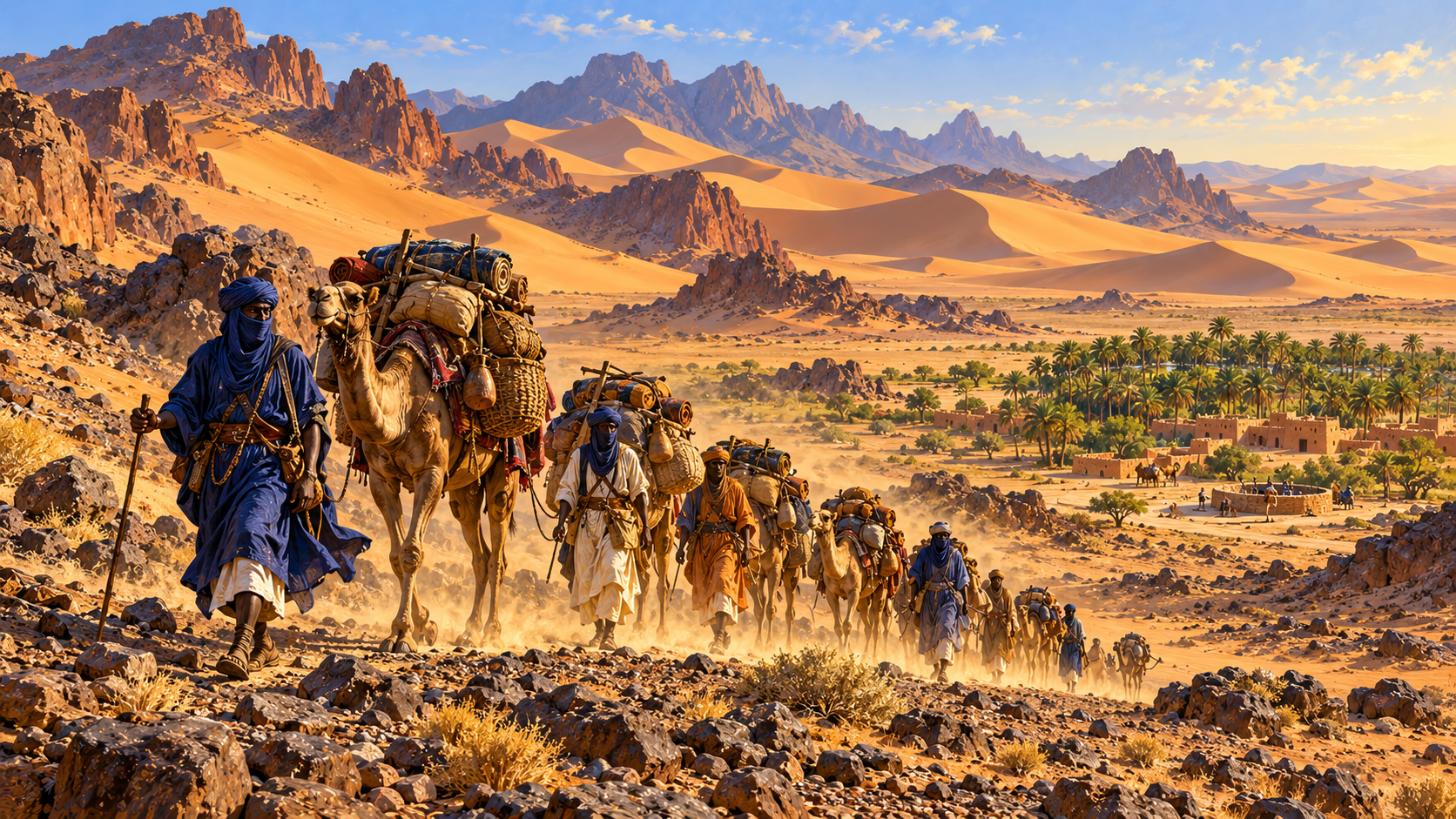
Caravan wilderness · oasis roads · salt and gold routes · Tuareg power · hidden ruins · Zerzura
At a Glance
| Terrain | Sand seas, gravel plains, rocky plateaus, dry valleys, mountains and oasis corridors |
|---|---|
| True roads | Known wells, caravan tracks, seasonal routes and agreements with people who control water |
| Common expeditions | Survival travel, caravan intrigue, lost cities, monster hunts, escort missions and hidden-realm expeditions |
| Current pressure | Changing power in Mali and the Maghreb makes caravan routes more valuable and more contested |
| Resupply | Oases, caravan camps, market settlements and protected wells |
| Supernatural pressure | Desert spirits, jackal shapeshifters, giant scorpions, dust creatures and rumours of Zerzura |
The Sahara is crossed by roads that do not look like roads. A line between two cities means little unless a traveller knows the wells, grazing, shelter and agreements that make the journey possible. Caravans survive because knowledge moves with them: which oasis is safe, which chief expects payment, which valley floods after distant rain and which ruin should be passed before sunset.
Explore the Desert
- Atlas Mountains — northern passes and approaches.
- West Africa — Mali, Niger trade and the southern end of major caravan systems.
- North-East Africa — routes toward the Nile, Horn and Red Sea worlds.
- Zerzura — the hidden oasis beyond ordinary geography.
What Is Happening Right Now?
Trade across the desert remains enormously valuable, but the powers at both ends of the roads are changing. Mali is weakening, Tuareg groups hold crucial northern trade centres and Maghreb courts compete for revenue and influence. A caravan that changes route can enrich one oasis and ruin another.
That makes information dangerous. A newly reliable well, a dried spring, a safer pass or an unknown shortcut can be worth more than the cargo it serves. Rumours of Zerzura are treated the same way: nonsense until someone returns with water, fruit, worked metal or a map that should not exist.
Caravan Powers
The Tuareg Caravan Powers draw their influence from mobility, wells, protection and knowledge of roads. Merchants, guides, camel drivers, guards, interpreters and oasis authorities form the practical government of long journeys even when distant kings claim the land on a map.
Landmarks and Waypoints
Oases
Water turns a patch of desert into a strategic settlement. Whoever controls an oasis controls rest, grazing, information and often tolls.
Salt Roads
Caravan routes linking desert resources to the Sahel carry enormous value. Their schedules, wells and protection arrangements are political secrets.
Rocky Massifs and Passes
Not all Sahara travel is across dunes. Stone country can provide shelter, concealment, difficult passes and ancient sites far from ordinary settlement.
Lost Roads
Abandoned wells and ruined markers preserve older routes. Following them may shorten a journey—or lead toward a place the living stopped using for good reason.
Where Travellers Rest and Resupply
Travellers rest in oasis lodging, caravanserais where established, merchant compounds, tent camps, guarded wells and temporary markets that appear when major caravans meet. The quality of a stop matters less than whether it has water, fodder, shade, trustworthy guides and enough armed people to discourage theft.
Surviving the Sahara
- Water: plan by distance between reliable sources, not by miles per day.
- Heat and cold: travel schedules must account for fierce daytime heat and cold nights.
- Navigation: wind can erase tracks; storms can hide landmarks; a lost caravan may die within sight of the wrong ridge.
- Animals: mounts need water, fodder and rest. Losing animals can strand cargo and people at once.
- Sandstorms: visibility, direction and breathing can become more dangerous than combat.
- Authority: a well or oasis may be controlled by people whose permission matters more than a distant royal claim.
Magic and Desert Services
Useful specialists include guides who know taboo ground, healers experienced with heat and dehydration, diviners who read journeys, ward-makers, caravan masters and people able to negotiate access to protected water. Access to magical aid depends on local loyalties and obligations.
Dangers and Monsters
The African Bestiary records creatures of the desert roads. Giant scorpions haunt rocky shelter, jackal shapeshifters stalk isolated travellers, and living dust gathers around abandoned tracks and ruined wells.
- Dehydration and heat exhaustion.
- Cold exposure at night.
- Lost routes and false wells.
- Banditry, caravan rivalry and disputes over protected water.
- Giant scorpions, jackalweres, dust devils and other desert creatures.
- Salt Drakes where mineral wastes and salt routes support them.
Trouble in the Desert
The Well That Was Not There
A guide leads the party to a full stone-lined well absent from every caravan record. The water is excellent. The carvings around the rim show travellers who have not arrived yet.
The Empty Caravan
Thirty loaded camels walk into an oasis without riders. Nothing has been stolen, and every water skin is still sealed.
The Price of the Shortcut
A Tuareg caravan leader offers a route that will save ten days, but only if the party carries a sealed bronze box and never opens it inside the desert.
The Birds of Zerzura
White birds appear over a dry camp three mornings in a row. A dying traveller claims they always return to the hidden oasis before sunset.
Travel, Custom and Caravan Law
Desert travel depends on agreements: who may use a well, where animals graze, how escorts are paid, who answers for theft and which route is considered safe under whose protection. A royal letter may impress a city official and mean nothing to the people controlling the next oasis.
Parties should establish a guide, water plan, resupply points, spare animals, emergency signals and rules for abandoning cargo before departure. The desert punishes arguments settled too late.
History and Older Roads
Generations of caravan travel have joined the Maghreb, Sahel, Nile lands and western kingdoms. Old wells, abandoned settlements and ruined waymarks survive beside newer routes. Mobile peoples preserve the knowledge that allows journeys across enormous distances; an apparently empty plain can hold the remnants of several roads, each with its own obligations and dangers.