
Africa
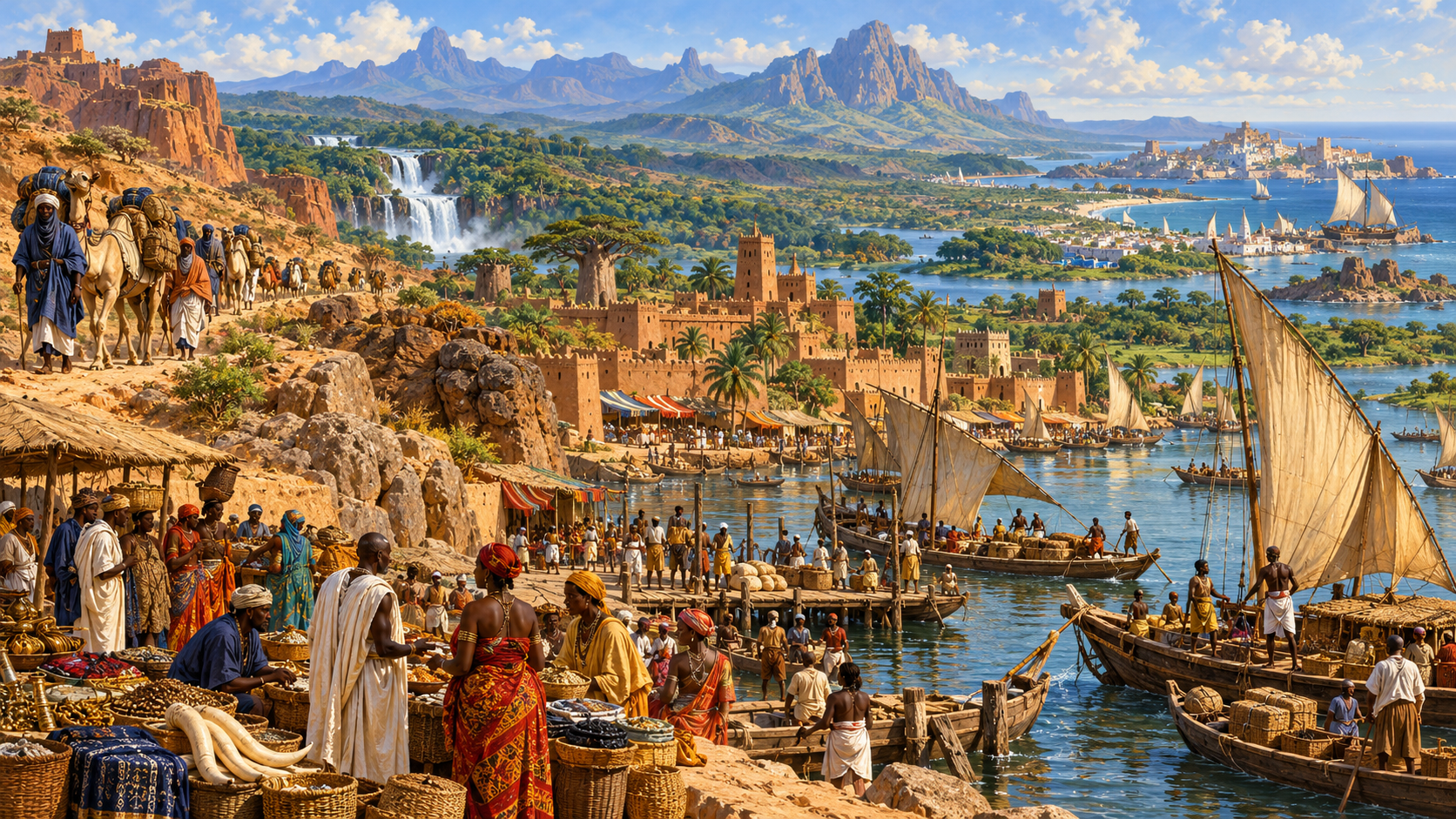
Continental gateway · Nile kingdoms · caravan roads · river empires · Indian Ocean ports · sacred landscapes · monster territories
At a Glance
| Scale | A continent of distinct kingdoms, peoples, wildernesses and trade systems |
|---|---|
| Major theatres | Kemet and the Nile, the Maghreb, Sahara and Sahel, West Africa, the Ethiopian highlands and Horn, Congo Basin, East African coast, southern plateaus and Madagascar |
| Great routes | Nile traffic, trans-Saharan caravans, Niger roads, Red Sea shipping, Swahili sea lanes, Zambezi gold routes and Atlantic coastal voyages |
| Common expeditions | Court intrigue, caravan travel, river expeditions, lost cities, sacred landscapes, monster hunting, trade wars and long-distance exploration |
| Current pressure | Old powers are weakening, new kingdoms are rising, trade routes are shifting and several frontiers are being redrawn |
| Supernatural pressure | Active gods, ancient Nile powers, desert spirits, river beings, hidden oases, shapechangers and creatures tied to specific regional traditions |
Africa’s roads cross kingdoms, deserts, forests and riverlands. Travellers crossing the Atlas can descend into Saharan caravan country; merchants following the Niger enter a political world very different from the Nile; ships on the western Indian Ocean move between Swahili ports, island routes and the gold-bearing lands of the south; farther inland, river systems and forest roads connect powers that coastal travellers may know only by rumour.
The regions are bound together by trade, tribute and rival courts. Caravan masters guard water and information as carefully as coin. River crossings, mountain passes and coastal anchorages matter because movement creates power. Beyond the roads lie monster territories, sacred landscapes, ruined centres and hidden routes into places such as Zerzura.
Explore Africa
North Africa and the Sahara
- Atlas Mountains — passes, high valleys and the approaches between the Maghreb and the desert.
- Hafsid Kingdom — Tunis, Mediterranean commerce, caravan wealth and a court whose influence reaches beyond its direct control.
- Sahara — caravan roads, oases, ruined routes and some of the harshest travel on Earth.
- Zerzura — the hidden oasis sought beyond ordinary desert roads.
The Nile and North-East Africa
- North-East Africa — the Ethiopian highlands, Horn, Red Sea approaches and contested inland corridors.
- Ethiopian Empire — a highland power whose court, armies and roads shape the region.
Kemet is an ancient Catfolk Nile civilisation of royal courts, temple estates, river cities and sacred power. Its rulers, culture and worship of the gods and goddesses of the Pharaonic Pantheon have endured from remote antiquity.
West Africa and the Sahel
- West Africa — Mali, Niger trade, forest kingdoms, rising rivals and coastward commercial change.
- Sudanian Savanna — the great grassland belt connecting courts, rivers, herds, markets and caravan roads.
Central, Eastern and Southern Africa
- Central Africa — Congo Basin waterways, forest-edge kingdoms and deep inland travel.
- Sub-Saharan Africa — the lands south of the Sahara, from western savannas to southern plateaus.
- Mount Kilimanjaro — forest, alpine desert, volcanic heights and one of the continent’s greatest natural landmarks.
- Namib Desert — fog, dunes, cold nights, scarce water and brutal coastal approaches.
- Skeleton Coast — surf, fog, stranded ships and difficult escape into the Namib.
What Is Happening Right Now?
Power on the Nile
Kemet remains one of the continent’s great old powers. Its strength comes from the river: grain, barges, royal estates, temple networks and cities strung along a route that is both road and lifeline. Catfolk courts watch the desert approaches, Red Sea traffic and southern riverlands carefully, while merchants and temple agents carry Kemet’s influence far beyond the fields of the Nile.
The Maghreb Is Politically Uneven
Across the north-west, no single dynasty commands the entire Maghreb. The Marinid sultanate survives under Abd al-Haqq II while powerful court interests constrain the throne. Tlemcen remains an important Zayyanid state between western and eastern rivals. Farther east, Abu ‘Amr ‘Uthman rules the Hafsid realm from Tunis, where Mediterranean shipping and Saharan trade create wealth even when distant cities and tribes pursue their own interests.
Mali Is Weakening, but West Africa Is Not Standing Still
Mali is no longer at the height associated with Mansa Musa, yet it remains a major political name and commercial force. Tuareg power controls important northern trade centres, while Songhai is rising along the Niger and rivals compete for river traffic and northern markets. Forest and savanna states are growing through trade of their own, and coastal contact is beginning to alter older commercial routes.
The Ethiopian Highlands Face a Powerful Frontier
Zara Yaqob rules the Ethiopian highlands, while Muhammad ibn Badlay holds Adal to the east. Their world is shaped by highland roads, tribute, military frontiers, caravan traffic and the routes running toward the Red Sea and Horn.
The Indian Ocean Carries Wealth Inland
Swahili ports on the eastern coast connect inland products with sea routes stretching across the western Indian Ocean. Merchant councils, navigators, caravan leaders and port authorities can matter as much as kings. Gold, ivory and other goods move toward the coast; cloth, metalwork, news and foreign cargo move inland.
Great Zimbabwe’s World Is Changing
Great Zimbabwe’s political prominence is fading. New centres are gaining strength as trade and authority shift north and west. Mutapa is emerging around the Zambezi world, while Khami grows in importance farther south-west. Old roads still lead to old stone walls, while new courts compete to control the wealth that once flowed through them.
Madagascar’s Coastal and Highland Powers
Madagascar’s coastal communities, central-highland settlements and older peoples follow their own alliances and rivalries. Sea routes connect its ports to the western Indian Ocean, while difficult inland roads keep many settlements beyond the authority of coastal rulers.
Nonhuman Powers and Peoples
Catfolk hold Kemet through an ancient civilisation of royal households, temple estates and river cities. Their merchants and envoys travel beyond the Nile, but Kemet is their great seat of power. Halflings labour under enslavement on Nile estates; escape routes and western communities keep ties to families still held along the river.
Gnoll clans range across parts of the Sahel, Nile frontier, Nubian borderlands and Horn. Their territories overlap other peoples’ lands. Rival packs raid, seize captives and fight over wells and roads; temporary alliances break when a chief loses strength or plunder runs short. Their ranges form no single kingdom.
Beyond these settled and raiding powers, the beings of Africa’s forests, rivers and wildernesses defend territories of their own. A royal claim on a map does not guarantee safe passage through their lands.
Courts, Factions and Agents
Envoys, factors and armed retainers carry the authority of distant courts. Powerful factions include the Kemet Dynastic Court, Catfolk Merchant Houses of Kemet, Kemet Temple Networks, Houses of Thoth, Mali Court, Tuareg Caravan Powers and Swahili Merchant Councils.
- Kemet envoys and merchants travel with river contracts, temple authority and royal interests.
- Malian court agents defend old privileges while rival powers test the empire’s shrinking reach.
- Tuareg caravan leaders control knowledge of wells, tracks, escorts and northern trade centres.
- Swahili merchant councillors connect port politics to inland caravans and overseas shipping.
- Hafsid officials and factors operate around Tunis, coastal ports and the routes feeding the Saharan trade.
- Ethiopian and Adal messengers move through a frontier where roads, tribute and military intelligence matter.
African rulers, travellers and legendary figures carry their own ambitions into the courts, roads and wildernesses of the continent.
Landmarks and Places to Know
The Atlas Mountains
The Atlas forms a vast barrier and corridor at once. Passes connect Mediterranean and Atlantic-facing lands to the Sahara, and control of a route can matter more than nominal ownership of empty mountain ground.
The Sahara
The desert is crossed by roads that exist because generations of travellers know where water, shelter and safe passages lie. Leaving those networks turns a commercial journey into a survival expedition.
The Nile
The river is Kemet’s great road. Settlements, farms, temples and royal power crowd its banks, while desert routes and southern approaches feed into the same long corridor.
The Niger Bend
The Niger and its cities tie together Mali, Tuareg-controlled trade centres and the rising strength of Songhai. A change of control over one market or crossing can redirect caravans far beyond the battlefield.
The Ethiopian Highlands
High plateaus, steep approaches and defended routes give the region a geography of strongholds and difficult campaigns. Roads toward the Red Sea and Horn link court politics to long-distance trade.
Mount Kilimanjaro
The mountain rises from inhabited lower country through forest and high barren ground. It is visible from far away and remains a natural focus for journeys, omens and dangerous ascents.
The Congo Basin
Rivers are the principal roads through much of the central forest world. Canoes, ferries, portages and local guides matter more than straight-line distance on a map.
Great Zimbabwe and the Southern Plateau
Great stone enclosures mark a centre whose political power is declining even while its roads, memories and material wealth remain important. New powers are forming around the routes that once fed it.
The Namib and Skeleton Coast
Fog, surf and desert meet along a coast where landing can be easier than leaving. Inland, water and navigation become the central problems.
Where Travellers Rest, Resupply and Find Information
Africa has no continent-wide network of inns. Adventurers rely on the institutions appropriate to each route: caravan camps and oasis lodging in the Sahara; market compounds and guest quarters in cities; river ports and ferry settlements on the Nile, Niger and Congo systems; merchant houses on the Swahili coast; cattle camps and local compounds across pastoral country; and expedition camps in true wilderness.
Reliable shelter is therefore part of route planning. A guide who knows the next well, a factor willing to store goods, a boat owner with local pilots or a caravan master prepared to take armed strangers may be more valuable than an expensive room.
Trade Roads and Sea Lanes
Trans-Saharan Roads
Caravans move salt, metals, cloth, gold, ivory, captives, news and political messages between the Maghreb, desert oases and the Sahel. Wells and oasis towns create the real map of the desert.
The Nile Corridor
River transport supports Kemet’s agriculture, royal administration, trade and military movement. Routes east toward the Red Sea and west into desert country turn Nile ports into continental junctions.
The Niger Network
River movement and overland roads bind together farming lands, court centres, market towns and trans-Saharan terminals. The struggle between Mali, Tuareg interests and rising Songhai power is inseparable from control of this network.
The Western Indian Ocean
Swahili ports face a sea crossed by experienced navigators. Monsoon winds, harbour knowledge and merchant relationships determine when cargo can move and which ports are safe.
The Southern Gold Routes
Gold-bearing inland regions connect to the east coast through long chains of exchange. As Great Zimbabwe declines, emerging powers have every reason to fight for the roads, tribute and cattle that sustain this trade.
Magic, Sacred Places and Specialist Services
Magic is bound to local institutions and landscapes. In Kemet, temple networks, divine cults and specialist scribes stand beside royal authority. Across West Africa, Yoruba, Akan and other sacred traditions retain their own gods, stories and obligations. River communities, smiths, diviners, healers, shrine keepers and oath specialists may all hold practical authority that travellers ignore at their cost.
On the road, magical assistance can be as simple as a ward against desert spirits, an omen read before a river crossing, a guide who knows a forbidden grove or a navigator who understands why a stretch of sea has become unnaturally still. Such aid depends on the provider’s loyalties, customs and obligations.
Dangers and Monsters
The creatures of the African Bestiary belong to distinct landscapes and traditions. Nile sphinxes guard riverland secrets; forest and river beings hold their own territories; southern storm creatures threaten particular waters and communities.
- Nile and desert: sphinxes, uraei, jackal shapeshifters, desert spirits and tomb guardians.
- Horn and north-east: gnolls, werehyenas, highland beasts and creatures tied to contested frontiers.
- West and central forests: Abiku, Adze, Biloko/Eloko, Miengu and other beings rooted in particular regional traditions.
- East African rivers and lakes: Dingonek, large predators and water creatures.
- Southern Africa: Impundulu, Inkanyamba, Mamlambo, Tokoloshe and Umdhlebi in the lands bound to their own local traditions.
Ordinary hazards remain just as dangerous: heat, cold desert nights, floodwater, disease, difficult surf, altitude, drought, predators, fire, bad guides and political borders can end an expedition before a monster appears.
Trouble on the Roads
The Caravan That Returned Too Soon
A caravan arrives from the Sahara weeks before it should be possible. Its animals are exhausted, its water skins are full, and every traveller refuses to name the oasis where they resupplied. A Tuareg caravan chief wants the route found before a rival court learns it exists.
The Gold Road Has Moved
Merchants who normally send cargo through one southern route abruptly begin paying a new power for passage. An old Great Zimbabwe-linked road is empty, a new Mutapa agent is buying cattle and guards, and someone is destroying waymarkers behind the caravans.
The River Shrine Is Dry
A sacred tributary in West Africa stops flowing while the main river remains high. Farmers blame an upstream rival, diviners warn that an oath has been broken, and traders care only that barges can no longer reach the market.
The Message from the Highland Court
A sealed dispatch from the Ethiopian court must cross frontier country before its contents become useless. Two different escorts claim legitimate authority to carry it, and neither will explain why Adal riders are already searching the road.
The Wreck Beyond the Fog
A ship is driven onto the Skeleton Coast carrying a passenger whom three distant courts want alive. Reaching the wreck is dangerous; getting inland through the Namib with survivors is worse.
The Gate Beneath the Nile
Low water exposes worked stone below a Kemet river landing. Temple officials close the quay, merchants demand access, and something beneath the sealed stair begins answering questions asked on the riverbank.
Travel, Borders and Local Law
There is no single African law, currency or border system. Adventurers move through royal domains, city jurisdictions, clan lands, caravan territories, sacred places and wilderness where practical authority belongs to whoever controls water, boats, roads or armed followers.
Local rulers grant passage and collect tolls; market authorities may require sponsors, ferry owners defend their rights, and sacred spaces restrict hunting, timber cutting or entry after dark. Customs governing weapons vary between jurisdictions. Coastal law can change from port to port; caravan law changes with the people responsible for the road; river travel may require agreements with several authorities during one journey.
Long-distance parties should plan for guides, interpreters, replacement animals, boat hire, water, seasonal weather and political letters of introduction. Travelling without local relationships is possible, but usually more expensive and more dangerous.
Hidden Roads and Other Worlds
Some routes leave ordinary geography. Zerzura hides beyond the Sahara’s known roads. Ancient caves, sacred mountains, river depths and lost ruins may touch the Fey realms, Shadow, elemental worlds or deeper places beneath the Earth. Each crossing is bound to the secrets, customs and dangers of its own place.
Deeper History
Africa’s kingdoms stand upon layers of older states, migrations, trade systems and sacred landscapes. Kemet’s continuity reaches deep into the Nile past. West African empires grew through control of gold, salt and river trade. Great Zimbabwe became the centre of a major southern state before its political importance waned and new centres rose. Indian Ocean commerce linked eastern ports to inland producers long before the present generation of rulers.
The history of Africa and the wider Timeline trace the older conquests, migrations and alliances behind today’s frontiers.
Campaign Map
Sources
- Zara Yaqob — biographical chronology — chronology for the Ethiopian court.
- Metropolitan Museum of Art — Western and Central Sudan, 1400–1600 — Tuareg and Songhai chronology.
- UNESCO — Great Zimbabwe National Monument — the fifteenth-century political transition and rise of Khami.
- World History Encyclopedia — Mutapa — early Mutapa formation and the limits of the evidence.