
Kingdom of Naples — Alfonso’s Southern Court
At a Glance
| Region | Southern Italian mainland; part of the Italy campaign network |
|---|---|
| Capital | Naples |
| Ruler | Alfonso V of Aragon, ruling Naples as Alfonso I |
| Heir | Ferdinand “Ferrante”, Duke of Calabria |
| Government | Royal court and territorial lords under strong Aragonese administration |
| Pressure | Succession, baronial power, Aragonese ties and the Sacred College’s claims |
| Campaign tone | Court terror, harbour trade, captivity and restless dead |
Naples is a magnificent place to arrive by sea and a dangerous place to enter royal service. Alfonso V has made the city the centre of his southern kingdom and a court of soldiers, diplomats, scholars and ambitious nobles. His heir Ferdinand “Ferrante”, Duke of Calabria, already has his own clients, enemies and ruthless reputation. Behind the splendour lie barons with private soldiers, merchants who need the port open and courtiers calculating what happens when the old king dies.
Current Pressures
The succession after Alfonso
Alfonso has ruled Naples since his conquest of the kingdom, but the future already matters. Ferdinand is his designated heir in Naples, while the king’s wider Aragonese inheritance will not pass to him in the same way. Barons, foreign courts and sacred lawyers are positioning themselves before the succession becomes a crisis.
Rodrigo’s judgement
Rodrigo Borgia, the Golden Pontiff, can question a marriage, title or oath that supports the succession. Alfonso needs the Sacred College kept inside the settlement; Ferdinand needs it prevented from deciding his future for him.
Sea and southern roads
Genoese vessels, Aragonese interests and island trade meet in the harbour. Inland lords can hinder grain, tax a bridge or shelter a claimant.
Places and People
Castel Nuovo
The royal fortress guards the court and its archives. An audience can win a commission or a place among those who cannot leave.
The harbour
Quays receive grain, timber, wine and news from the islands and northern ports. A shipmaster can evade a courtier more easily than a customs seal.
Ferdinand’s household
The Duke of Calabria keeps his own officers, guards and confidants close to the royal court. Prisoners and enemies who fall into his hands may become warnings long before he wears a crown.
Royal roads and baronial lands
Fortified estates and market towns carry the kingdom beyond the capital. A decree needs local soldiers and creditors to make it real.
Services and Access
Ship brokers arrange passage to Sicily and other island ports. Court advocates seek safe conduct, ransom and the release of prisoners. Physicians, ritual workers and confidential agents may be summoned to royal or ducal households, where curiosity about private prisoners can itself become dangerous. Bring a named patron and avoid accepting secluded invitations without witnesses.
Dangers and Adventure Hooks
- The prisoner who remembers: an undead captive knows where an incriminating royal charter was hidden. The party must free the witness or learn the secret under Ferdinand’s eyes.
- A poisoned monopoly: a new tax destroys a port guild. Its treasurer offers evidence that the king’s favourite broker forged the order.
- The Golden Pontiff’s seal: a ruling from Rome threatens a royal succession. Ferdinand offers sanctuary to anyone who can replace the document before it is read.
- A galley off the coast: a Genoese ship carries a claimant and several coffins. Only one passenger appears on the manifest.
Travel and Connections
Coastal routes lead toward Rome, Genoa and the islands. The Appian Way and other inland roads cross estates whose lords may honour different passes. Use Italy for the wider political map, Sicily for Alfonso’s island kingdom and the Roman States for the sacred-legal pressure surrounding the succession.
History and Sources
Naples is the mainland kingdom that emerged from the separation of Sicily and its southern territories. Alfonso V conquered the kingdom and entered Naples in 1443; in 1454 he still rules it as Alfonso I of Naples. Ferdinand, Duke of Calabria, is the designated heir and an increasingly important political actor, but he does not become king until after Alfonso’s death in 1458.
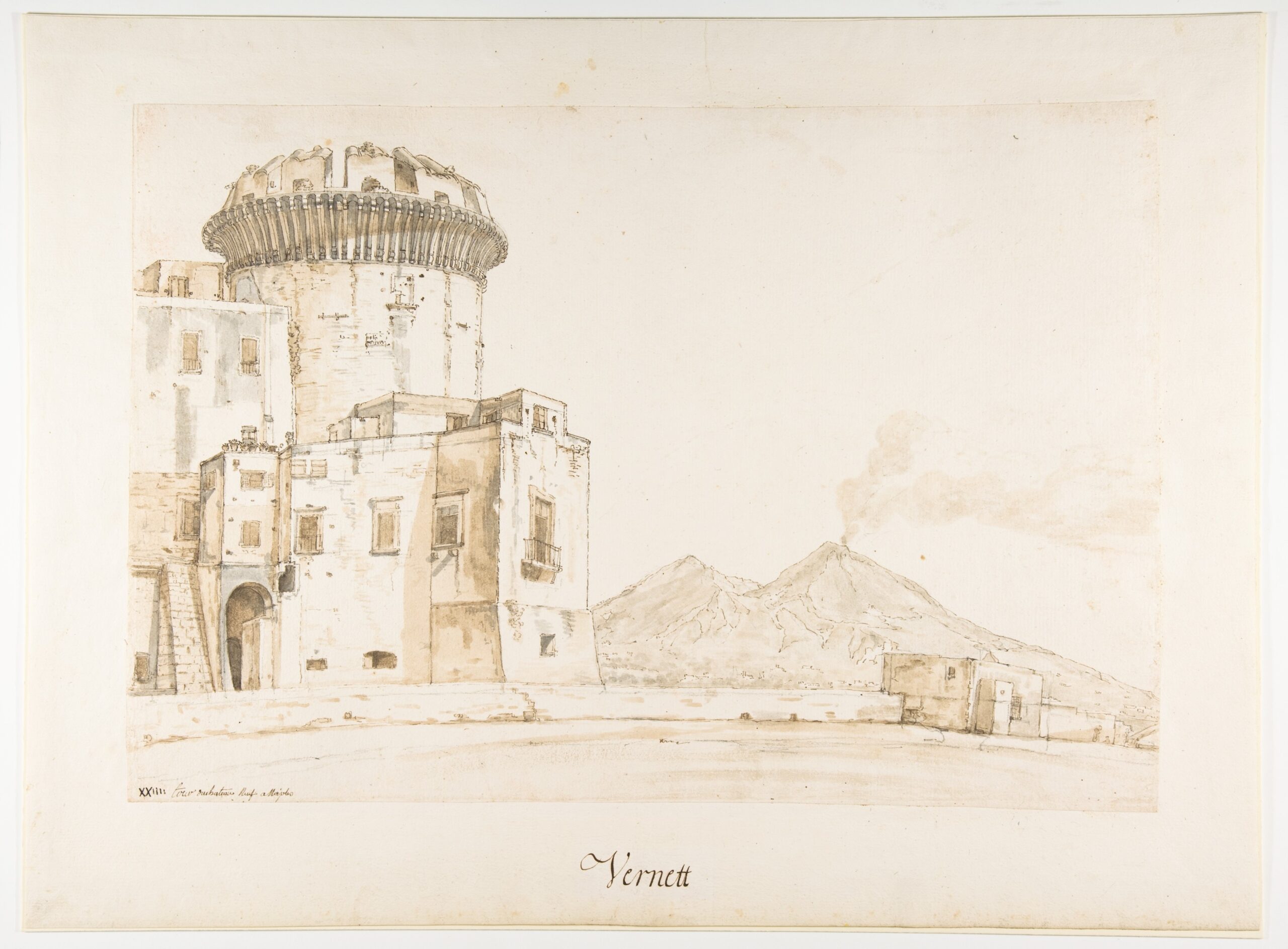
Historical background: Treccani, Ferdinand I of Naples; Treccani, Alfonso the Magnanimous. Image: Joseph Vernet, Castel Nuovo and Vesuvius (CC0).
Keep this reference growing
If this page helped with your reading or game, you can support its upkeep or explore the curated books.
Explore the Bookshop — epics, classics and stories behind imagined worlds.