
Republic of Genoa — A Harbour of Rival Houses
At a Glance
| Region | Ligurian coast of northwestern Italy |
|---|---|
| Capital | Genoa, a fortified maritime city |
| Ruler | Doge Pietro di Campofregoso |
| Government | Merchant republic contested by noble houses and foreign patrons |
| Trade | Shipping, silk, credit and Mediterranean and Black Sea routes |
| Rivals | Venice, Aragonese captains and hostile Genoese factions |
| Campaign tone | Harbour intrigue, family feuds, naval contracts and contested islands |

A ship entering Genoa can sell silk, hire a crew and acquire three enemies before the tide turns. Doge Pietro di Campofregoso rules through bargains among merchant houses, captains and relatives with their own claims. The republic calls itself free, yet its leaders must watch Milan, France and Aragon while trying to keep rival Genoese from selling tomorrow’s advantage today.
Current Pressures
Fregoso and the families
The doge’s position depends on support that can vanish after an arrest or an unpaid ship. Fieschi, Doria, Spinola, Grimaldi and rival Fregoso branches maintain clients, guards and long memories.
Milanese friendship, Genoese fear
Pietro has reasons to deal with Milan, but a ducal ally can look like a future master. The coast remembers earlier periods of foreign domination and will scrutinise every new treaty.
War with Aragon is immediate
Pietro is not merely watching Aragonese pressure: Genoa has mounted a naval campaign against Naples while trying to hold together a republic divided by family rivalries. A ship bound south may therefore be a merchantman, a private contract, an intelligence mission or part of a wider war plan.
Places and People
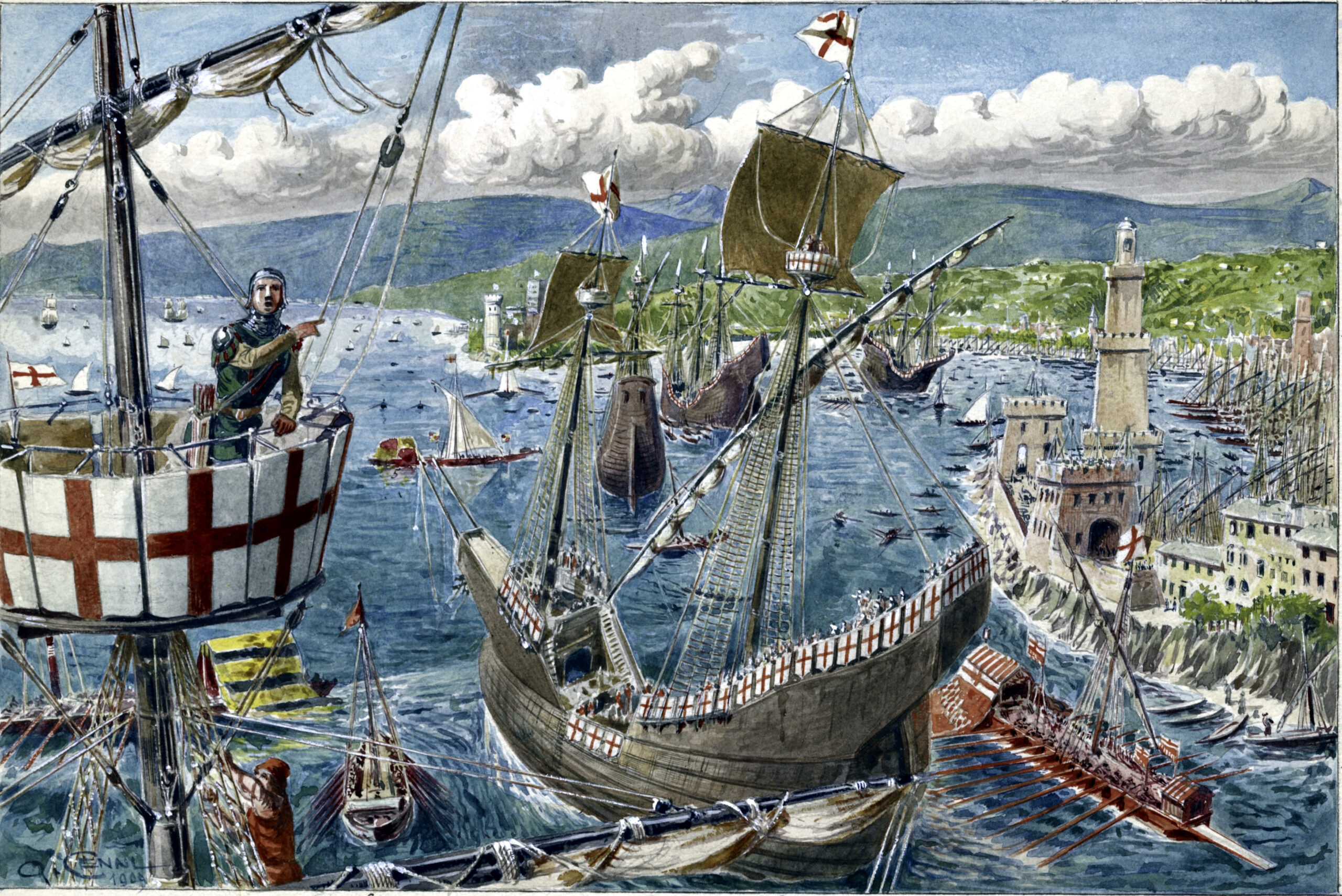
The old harbour
Wharves, warehouses and customs officers receive grain, silk, spices and news. A merchant may need a family sponsor to unload before an official has finished checking a seal.
The Lanterna
The harbour light marks the approach and serves as a signal point. A change in its watch can hide a ship’s arrival or reveal an ambush.
House courts
Leading families occupy palaces and fortified streets. Alliances are made at table and enforced by clients at the next corner. Pietro’s own household is as politically exposed as the council chamber.
Doge Pietro
Campofregoso balances factional threats with a wary eye on Naples and Aragon. A practical patron can earn his protection, then be asked to serve at sea.
Services and Access
Shipowners hire crews and escorts, brokers assess cargo, silk workshops buy raw material and bankers arrange credit between ports. A party looking for a vessel should ask whose flag, whose debt and whose charter it carries. A captain with a clean manifest may still be carrying a family quarrel below deck.
Dangers and Adventure Hooks
- A ship without a crew: a galley arrives with its cargo intact but no sailors aboard. The log names an island that the harbour office insists was never on the route.
- The Fieschi letters: intercepted correspondence suggests a reconciliation with Pietro. One letter is genuine, one forged and both could start an arrest.
- The Pisan prize: a Genoese captain seizes goods from Florentine-controlled Pisa. Returning them angers the crew; keeping them risks a Tuscan diplomatic dispute.
- A southern convoy: Aragonese raiders shadow a ship carrying coin to Naples. Its owner has concealed the real passenger.
Travel and Connections
The Ligurian coast ties Genoa to western Mediterranean routes and the road inland toward Milan. Mariners cross toward Corsica, Sardinia and farther ports when weather and politics permit. Italy’s regional guide lays out the rival states; Venice offers the other great republic’s view of the sea.
History and Sources
Genoa’s merchants turned its harbour into a Mediterranean power, though wars and internal feuds repeatedly changed who could speak for the republic. In 1454 Pietro di Campofregoso is balancing a fragile settlement with Gian Filippo Fieschi, conflict inside the Fregoso world, relations with Francesco Sforza and an active naval struggle against the Aragonese kingdom of Naples.
Historical context: Treccani, Pietro Fregoso; Genoa civic tourism, the Lanterna and port. Image: Quinto Cenni’s historical harbour illustration (public domain).
Keep this reference growing
If this page helped with your reading or game, you can support its upkeep or explore the curated books.
Explore the Bookshop — epics, classics and stories behind imagined worlds.