
Cleves — The Swan Castle and the Ducal Court
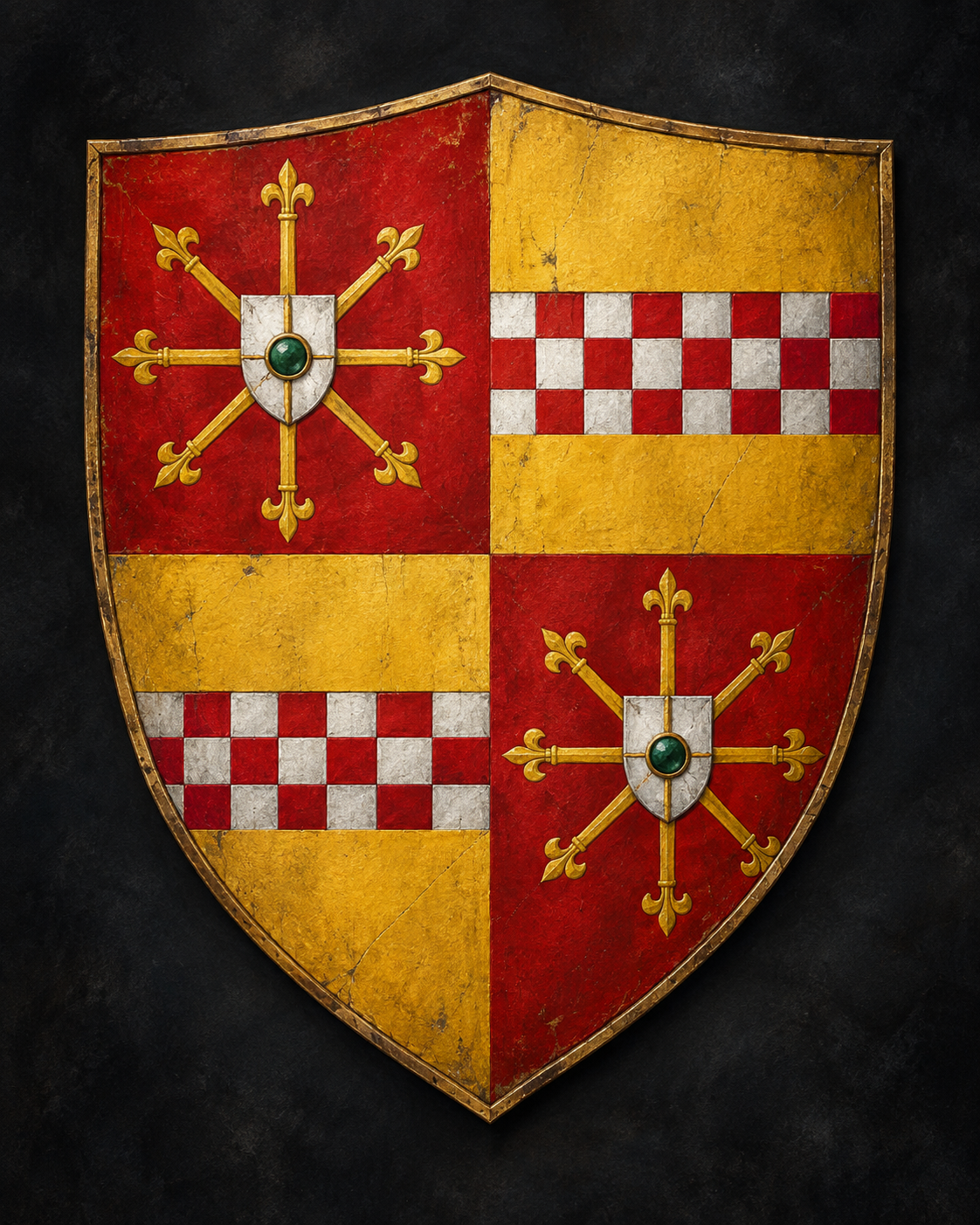
John I of Cleves · Schwanenburg · The Lower Rhine · Court, guilds and swan legends
At a Glance
| Settlement | Cleves (Kleve), fortified ducal capital in the Lower Rhine lands of the Holy Roman Empire |
|---|---|
| Lord | John I, Duke of Cleves, successor to Adolf I and an ambitious guardian of the dynasty’s rights |
| Court | Schwanenburg, the Swan Castle above the town, with its recently rebuilt great tower and working archive |
| Political Concern | The ducal family’s interests in the County of Mark, relations with Cologne, and authority over the Rhine roads |
| Linked Places | Wesel, Emmerich, Goch and Xanten |
| Languages | Lower Rhine dialects, neighbouring Netherlandic merchant speech and the languages of visiting courtiers |
| Livelihood | Market trade, ducal household service, metal and textile crafts, wagon traffic and nearby river commerce |
| Sacred Traditions | Road, river and household gods; oaths witnessed by temple stewards and ancestors of the ducal line |
| Present Threat | Rival safe-conducts, disputed family succession, missing records and the reputation of the Swan Castle |
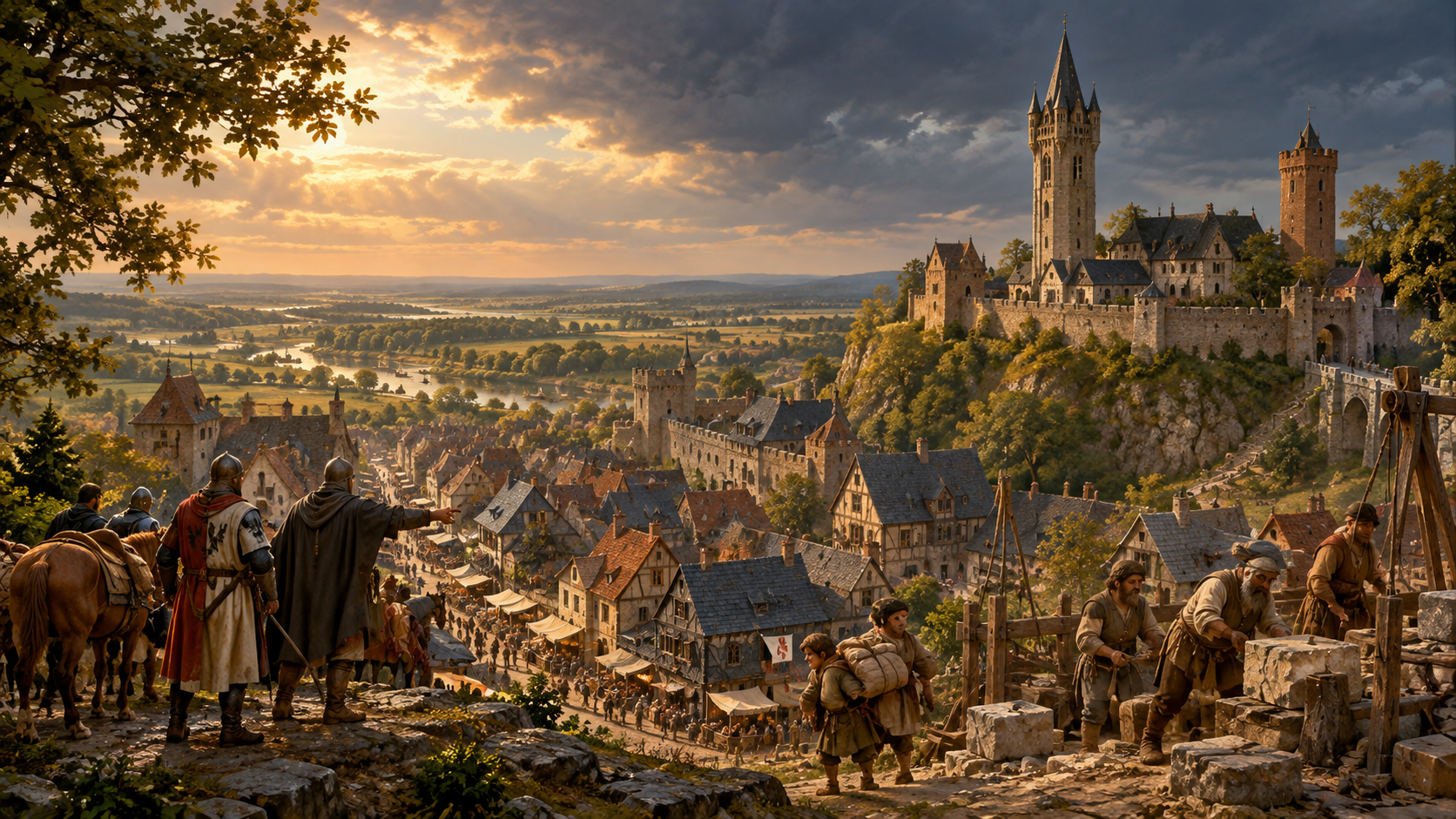
The Swan Tower Watches the Road
Someone has entered the ducal archive by night, and the duke wants to know which of his relatives helped them. Beneath the high castle a scribe argues with a soldier over a missing family charter. A merchant from Wesel waits for permission to take a convoy west; a knight says the pass is worth nothing unless the count in Mark will honour it.
Cleves is the seat of Duke John I, who inherited in 1448. The old great tower of Schwanenburg collapsed in 1439; its rebuilt Swan Tower now commands the skyline above the older courtyards and working chambers. The Spiegelturm had already been adapted as an archive under John’s father, Adolf I, and its documents now matter as much as the stone walls.
What Is Happening Right Now?
The Archive That Will Not Open
An ancient property record has disappeared from the Spiegelturm. One household accuses a Burgundian envoy; another blames a clerk who was dismissed after the duke’s accession. Both sides are willing to hire outsiders, but neither wants a public investigation to expose which oaths of allegiance are still unpaid. The document concerns lands the County of Mark considers its own.
The Truce after Soest
The struggle against Dietrich II von Moers has left merchants and noble families arguing over tolls and responsibilities. John’s uncle Gerhard of the Mark retains a separate interest in that county. Soldiers who marched under Cleves banners return with debts, and some have learned to collect private payments from passing wagons.
The Duke’s Sister Writes from Abroad
Marie of Cleves, Duchess of Orléans, lives in the orbit of the French court, not as a permanent resident of this town. Her letters carry family influence and information unavailable to local nobles. A courier has arrived with two sealed packets from France, but the duke has received only one.
Places Worth Visiting
Schwanenburg and the Spiegelturm
The upper castle contains the duke’s guarded household, meeting rooms and the archive made under Adolf I in 1429. Its newly rebuilt tower overlooks the settlement and roads below. Master builders, masons and armourers find employment here, but visitors require a patron or written summons to enter sensitive rooms.
The Old Market and Guild Streets
Merchants sell grain, cloth, leather and metalwork beside warehouses and wagon yards. Guild halls hear disputes about measurement, delayed consignments and the quality of commissioned work. Visiting traders may obtain a bed through a merchant household or a licensed hostelry, but protection of a loaded wagon needs a separate agreement.
Lower Roads to Wesel and Emmerich
Wesel’s Hanseatic merchants bring Rhine and Lippe cargo inland. Ferrymen, pack carriers and guards know which crossings belong to Cleves and where a neighbouring lord can demand another fee. The broad river is not at the castle gate; goods must follow the roads and waterways that connect the town with its river markets.
Old Shrines and the Castle Slope
Family ancestor rites mingle with woodland and water offerings. The ducal line values its swan emblem, and the castle’s older stories bring visitors whose interests extend beyond trade.
People, Factions and Rumours
John I seeks loyal officers and enforceable agreements with neighbouring lords. The castle’s archivists want missing records recovered without implicating patrons. The guild merchants favour predictable tolls and reliable roads. Gerhard’s supporters watch for any attempt to absorb the County of Mark.
Wandering storytellers claim a mysterious Swan Knight once approached these waters. Others know tales of the Swan Maidens, whose favours cannot be compelled by a duke’s seal. Court chroniclers quarrel over how old the stories are, and no surviving ducal charter settles the matter. A stranger at the ferry claiming to serve the Swan Knight might be a con artist, an envoy from a fey court, or the genuine bearer of an old oath.
Dwarven stonecutters, halfling carriers, elven travellers and gnome artisans work within the same competing household and guild systems as their neighbours; their interests need not coincide.
Magic, Services and Dangerous Choices
Temple houses provide healing, burial rites, witnessed contracts and advice about sacred obligations. Ordinary artisans can repair weapons and wagons; specialists are hired through ducal patrons and the markets of Wesel. A powerful enchantment is not an item routinely sold across a counter. The castle’s documents may reveal a buried oath, while a river spirit may agree to witness an honest bargain without caring whether the petitioner is noble.
Adventure Hooks
- The Missing Archive Seal. Recover a charter before the ducal council meets; its wording could decide whether Gerhard’s bailiffs can collect a disputed toll.
- The Swan at the Ferry. A boatman will carry no passengers after a woman in white feathers warned him against a particular knight. The party may investigate, bargain or escort the knight by another road.
- The Unopened French Letter. A packet addressed to John from Marie of Cleves reaches the wrong household. Delivering it intact could prevent a feud—or expose one.
- The Mercenary’s Pass. A company demands pay for guarding the road to Wesel despite holding no valid ducal commission. Merchants seek witnesses before hiring force.
Travel, Law and the Road out of Town
A Cleves seal provides real protection only where Cleves’s authority is recognised. Travellers entering Mark, Moers or the electoral estates of Cologne should obtain fresh safe-conducts and keep receipts. Roads through flat, wet country are difficult after sustained rain; guild guides know the passable causeways. A petitioner can resolve a problem through archives, witnesses or a respected temple mediator before swords are drawn.
History and Sources
Schwanenburg occupied its hill from the early medieval period. Adolf I adapted the Spiegelturm for records in 1429, and the old keep collapsed in October 1439, prompting construction of the Swan Tower. John I succeeded to Cleves in 1448. The Swan Knight is associated with Kleve in later medieval chronicles, while the ducal household has its own living tales. Historical references: European Castles Institute architectural record and Klevischer Verein castle history.
Keep this reference growing
If this page helped with your reading or game, you can support its upkeep or explore the curated books.
Explore the Bookshop — epics, classics and stories behind imagined worlds.