
Witch Tradition, Chovihani
Witch Tradition, Chovihani
Liber Mysterium
The Netbook of Witches and Warlocks
By Timothy S. Brannan and The Netbook of Witches and Warlocks Team
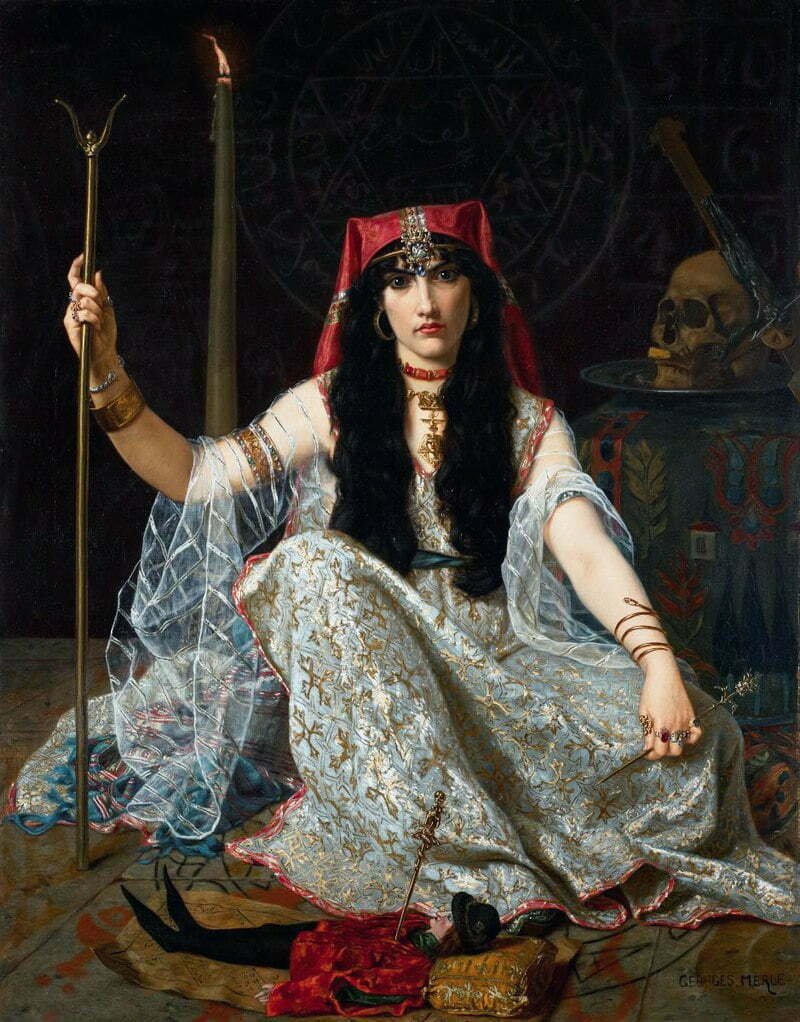
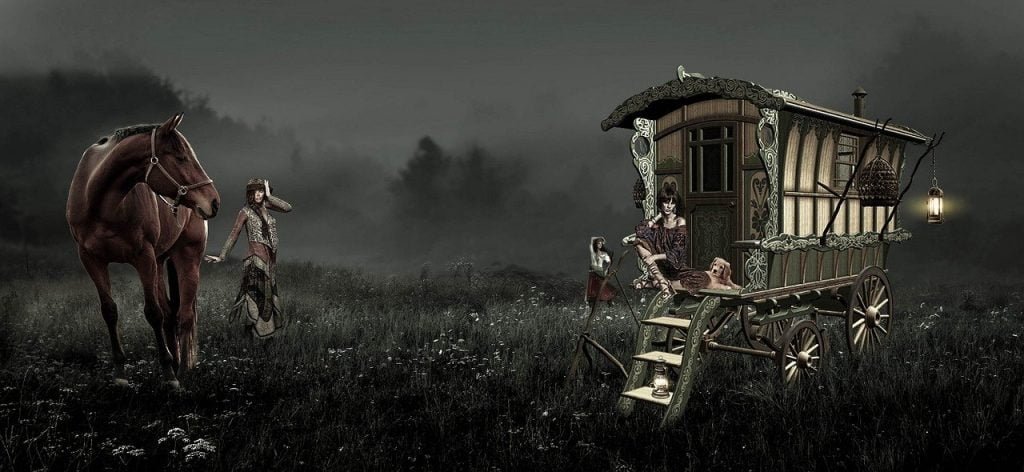
Chovihani Description: The Chovihani are a hereditary witch tradition found mainly among itinerant halfling families and caravan households. Their magic grows from family teaching, roadside practice, protective rites, divination, herbal knowledge and encounters with many local supernatural traditions. They are not assumed to be sinister, criminal or deceptive simply because they travel.
It is possible that the witches of the Chovihani tradition are only one type of Family tradition; both traditions do share similarities. Witches tend to run in families and family is the most important part of life. But it is the differences that really set these two apart.
It is believed by some that witches of the Chovihani tradition can trace their magical practices all the way back to the magi of ancient Egypt. There is no outside confirmation of this, and the Chovihanies themselves are less than forthcoming with the information.
Chovihani witches are respected specialists within the families that preserve the tradition. A senior witch may serve as healer, adviser, midwife, diviner or keeper of family lore without necessarily leading the household. A large travelling network may include one experienced witch and several younger students. Adoption, fostering and apprenticeship are ordinary family practices and carry no implication of child-stealing or criminality.
Chovihani witches revere Bibi, the Goddess of Night. Other Gods in their belief system are, Del, the supreme Goddess, Beng, the
God of Evil and Alako, the God of the Moon and the son of Del. Also, the witch is likely to keep all her secrets to herself.
Halflings form the core of this tradition, especially among old itinerant families whose routes connect markets, farms, orchards, river crossings and seasonal work. Outsiders can occasionally be adopted or apprenticed into a household branch, but Chovihani identity is primarily familial and halfling rather than a universal travelling culture.
Role: Chovihani witches are uncommon family practitioners rather than representatives of every travelling halfling. They work well as healers, diviners, advisers, protectors, occult investigators or adventurers temporarily separated from a caravan or settled branch of their family. A player character might travel to recover lost family lore, protect a route, find missing kin or learn how another region practises magic.
Typical roles for these witches are fortunetellers, midwives, herbalist, and sages of the tribe. If a midwife is required Chovihani witches of good alignments will almost always give aid, despite their tribe’s fear of strangers.
Joining this Tradition: Most Chovihani learn within a family line through inheritance, fostering or formal adoption into a teaching household. Women are prominent among many branches because midwifery, healing and household ritual are often passed through maternal lines, but the tradition does not claim that only one sex can understand or practise magic.
Leaving this Tradition: Chovihani magic does not vanish merely because a witch settles permanently. The tradition belongs to both settled and itinerant halflings. A witch can abandon the practice, break with a teaching household or lose access to particular family rites, but residence in one place is not itself a magical failure.
Skills & Feats: Survival and Perform are class skills for the Chovihani witch.
Required: None required.
Suggested: Life on the road demands practical skills. A Chovihani witch should choose at least one skill related to outdoor survival, at least one performance or craft skill and useful divination skills. Perform (Fortune Telling) may be used as one traditional means of ritual communication.
One or more knowledge skills related to the chosen skills.
Occult Powers
- Minor: 7th Level: Undetectable Presence. At 7th level the witch gains the ability to pass through any terrain undetected. This extends to her caravan, up to 20 members plus her level. This functions as the druid spell Pass without a Trace, save that magical means will also not reveal that the witch has passed by.
- Medial: 13th Level: Visage of Another. At 13th level the witch may disguise herself, as per the druid power A Thousand Faces.
- Greater: 19th Level: Evil Eye. Once per day, the witch can place on one subject the combined effects of the reverse of Aid (2nd Level Cleric spell), bestow curse (3rd Level Cleric spell) and Circle of Doom (5th Level Cleric spell, target only). The total benefits are -4 to attack, -4 to saves vs. Fear, -6 to any ability, 19+1d8 damage to hit points. This lasts a number of hours equal to the witch’s level.
Or, this curse may take the form of a -1 to any one roll (chosen by the GM) every day for the recipient’s life. A witch cannot cast this spell on herself,
nor can the recipient receive any more Witch’s Curses. A remove curse spell will fix this as will a properly used Witch’s Blessing.
Special Benefits: The Chovihani witch is usually a very well respected member of her tribe and thus will have means to obtain help if necessary. The GM needs to decide how well the witch is regarded by her tribe (a function of Charisma and level) and who might help her. Typically any of these witches traveling with her tribe can at the very least call upon the aid of a halfling fighter of equal level.
Special Restrictions: To maintain the above benefit, the witch must stay on good terms with her tribe and be with them. A witch traveling alone does not gain this benefit. Plus, given the nature of superstition and distrust that surrounds both Chovihanies and witches, the Chovihani witch is treated as if her Charisma score was lower by 2 (-2 penalty) against those who know her true nature. This is for NPCs only.
Equipment: Often the witch will get a ritual tool as a gift that had belonged to a deceased family member. Additionally, the Chovihani witch will have one or more divine devices; Tarot Cards and Crystal Balls (mundane or magical) are the most common.
Coven Domains: Luck, Trickery, Travel
Preferred/Barred Covens: This tradition is so closely tied to its tribe and coven that it is often difficult to separate the three. The leaders of the coven are often the oldest and most powerful witches in the tribe. Generally only one coven per tribe exists with typically three to four members.
Relationship to the Goddess/Patron: Chovihani witches are very private about their religious practices. Unlike other witches who gather in covens for celebrations and sabbats, the Chovihani witch relies on her use of her divine powers and tools to commune with her patrons.
Source/Views of Magic: Magic is a force of the World. Only by traveling the world can one understand magic. Wizards who stay rooted in one place become complacent and stagnant, they never learn the full nature of magic, only their own local variety. Often the witch will “dress-up” simpler magic or herbal remedies to seem more mysterious than they are. As with most witches, often her best defense is a strong sense of superstition in her enemies and friends alike. A Chovihani witch is trained to protect private family rites and need not reveal them to outsiders.
Wealth: Chovihani witches start with the normal amount of wealth allotted to any witch. Many supplement their wealth by performing “fortune telling” for paying crowds. These divinations may or may not be accurate, and many are based on “cold reading” (see Perform, Fortune Telling skill) of the customer.
Other: Chovihani witches get along with other traditions as long as the interaction is kept to a minimum. The respect both the Craft of the Wise and the Faerie, but feel their claims of being the first witches are erroneous when the Chovihani have an oral tradition that goes back for thousands of years as well. Chovihani witches get along very well with Lorelei witches. Both appreciate the other’s independence and worldview. Additionally, Lorelei witches are always welcome in Chovihani camps, for they love song and dance. The Gnomish Benandanti, or Good Walker, is also an oddly welcomed guest to many Chovihani witches. The Chovihani witch finds a kindred and an accepting spirit in the Gnomish Benandanti. What the Chovihani witches like best about these two groups is that neither will remain with the Chovihani tribe for very long.
Chovihani tribes have their own fair share of bards, fighters and rangers and the witches of the tribes seem them as an integral part of the tribe’s makeup. Thieves are also found, but in less numbers than the Chovihanies have been blamed for. clerics, paladins and druids are rare, but for different reasons. The Chovihani witch fails to see the need for organized religion and the wanderings of the tribe often take them far beyond the druid protected groves. Wizards are also somewhat rare, as Chovihani tend not to have access to formal training centers of magic or the ability to lug around extensive libraries and magical paraphernalia. sorcerers are far more common. Chovihanies have encountered Barbarians in their travels and have learned to respect their territories or stay away. Barbarians typically react as if all Chovihanies were spellcasters.
Chovihani witches will sometimes multiclass as rogues when it seems convenient for them to do so, but the vast majority of them avoid multiclassing. The same can be said for prestige classes. Evil Chovihani witches may opt to be Warlocks. Despite similar philosophies on the origins of their magic, Chovihani witches are never found among the ranks of the Hermetic Mages, mostly due to the Hermetic mages’ more urbane locales.