
Kingdom of Candia (Crete)
Crete Between Two Courts
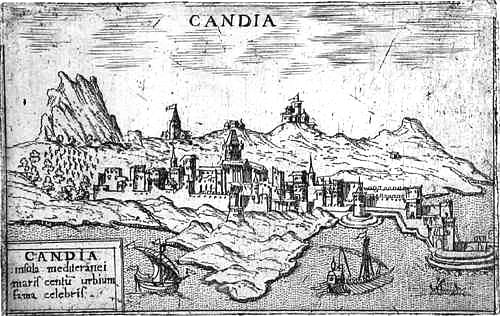
The Realm or Kingdom of Candia is currently the official name of Crete as an overseas island colony of the Republic of Venice. The island is commonly known as Candia after its capital.
- Capital City- Candia
- Common Languages – Greek (Cretan Greek), Venetian, Latin
- Sacred traditions – Hellenic gods, Cretan bull rites and local precincts; Venetian and Cretan religious authorities compete for influence.
- Government – Colony
- Current powers – Venetian administration at Candia; the white-furred minotaur ruler Minos at Minoa.
- Figures of Crete’s heroic age – Daedalus, Icarus, Ariadne, Theseus and Asterion.
- Creatures and enduring threats – Cretan Bulls, Minotaurs, Talos and the cults of Baphomet. The ancient Asterion belongs to the island’s earlier history.
- Currency – Venetian coins
Two Powers on One Island
The Republic of Venice governs Candia and its principal harbour routes. Its officials collect revenue, defend shipping and bargain with Cretan landholders. Away from those ports, Minoa has a different master: a white-furred minotaur ruler known as Minos. He claims kingship from a maze-like palace, while the Venetian government claims authority over the island. Neither claim alone tells a traveller whose guards control the next road.
The Older Labyrinth
Crete’s heroic history belongs to an earlier age. The ancient King Minos, a human son of Zeus, compelled Athens to send tribute into a Labyrinth built by Daedalus. Ariadne aided Theseus, who killed Asterion and ended the tribute. Those events remain part of the world’s Bronze Age history. Their deeds survive in chronicles, sacred disputes and old foundations, shaping an island ruled by people far removed from that heroic age.
The white-furred ruler’s use of the name Minos gives weight to his claims, but no known record establishes his relationship to the Bronze Age king. His palace passages may be ancient, rebuilt or newly cut; no surviving plan proves they are Daedalus’s work. An expedition into the older royal sites could settle a claim to land, uncover an abandoned chamber or draw the attention of both courts.
What Is Happening Now?
A storm has opened a sinkhole beside the road to Minoa. Two workers sent to inspect the exposed stonework have not returned. Venetian guards want to close the road; minotaur guides insist they know the passages beneath it. The farmer whose land has collapsed wants her well protected before either party begins digging. The missing workers may still be alive.
Travel, Supplies and Shelter
Candia’s harbour provides ships, provisions, lodging and merchants accustomed to foreign visitors. Beyond the busiest routes, hire a local guide and carry water: Crete’s stony hills, gorges and isolated farms are less forgiving than the waterfront. A traveller entering Minoa should learn whose protection is recognised there before approaching the palace.
Culture and Livelihood
Communities around Minoa raise sheep, goats and pigs, grow wheat, barley, pulses, grapes, figs and olives, and keep bees. Their patterned cloth and distinctive dress mark households and festival gatherings. Wine, oil, wool and honey give the island goods worth shipping; whoever controls inland roads and the approaches to Candia can tax that trade. Minotaur settlements are part of this living economy, not simply monsters waiting in an ancient maze.
Keep this reference growing
If this page helped with your reading or game, you can support its upkeep or explore the curated books.
Explore the Bookshop — epics, classics and stories behind imagined worlds.