
Gwynedd — The Old Heartland of North Wales

Wales · Princely heartland · Mountain roads · Royal castles · Living myth
At a Glance
| Region | North-west Wales, from the Menai coast and Llŷn to the mountains and southern valleys |
|---|---|
| Mortal authority | English Crown institutions, castle officers, local landholders, towns and surviving Welsh networks |
| Historic identity | Heartland of the medieval princes of Gwynedd and the strongest memory of native Welsh sovereignty |
| Key strongholds | Caernarfon, Conwy, Harlech and the older Welsh princely castles and courts |
| Best for | Dynastic politics, castle intrigue, rebellion memories, bardic missions, old courts and journeys into Eryri |
| Supernatural powers | Math fab Mathonwy, Arianrhod, Arawn, Annwn courts and the great red dragons of north Wales |
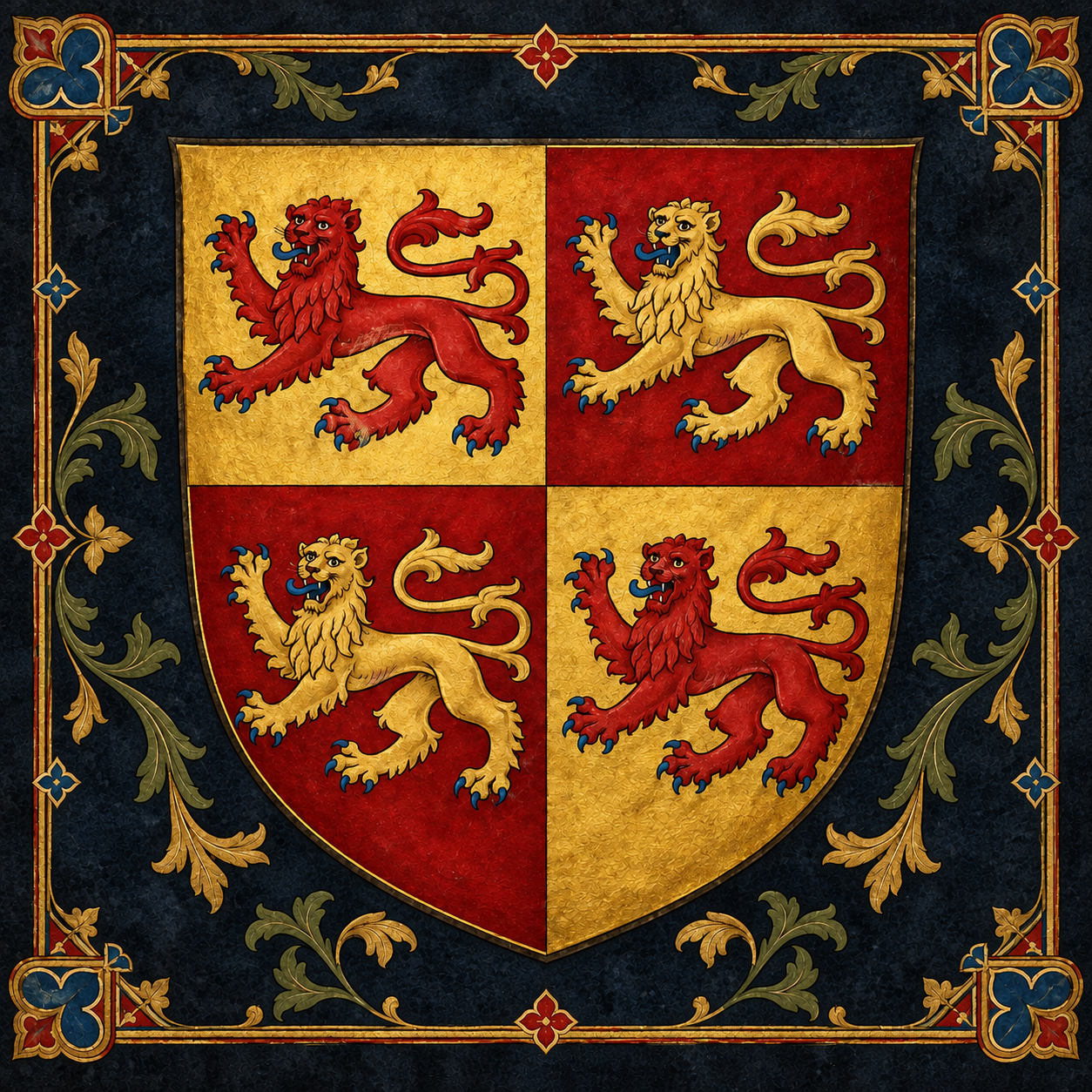
Gwynedd is the old heartland of the princes of north Wales: a country of sea roads, fertile coastal land, mountain passes and fortified towns where native royal memory survives beneath a later order. A charter issued from a castle may govern an estate, but genealogy, bardic witness, draconic oath and supernatural law can all produce older claims to the same ground.
What Is Happening Right Now?
The conquest of the thirteenth century is long past, but its architecture still controls roads, harbours and taxation. Caernarfon, Conwy and the other great royal strongholds dominate strategic approaches while Welsh households retain language, lineage, customary memory and stories of the age when Gwynedd’s rulers could speak for much of Wales.
Owain Glyndŵr’s rising is far more recent. Harlech was a royal court and rebel capital before its fall, and people still live who carried messages, hid fugitives, lost kin or profited from confiscated estates. Old loyalties decide marriages, employment and revenge; a careless question about a grandfather can be more dangerous than drawing steel.
Above all of this sits draconic sovereignty. The Red of Gwynedd has spent generations learning which mortal houses can be bought, frightened or bound by oath. Farther into Eryri, Penddraig of Dinas Emrys answers to no mortal ruler at all.
Run Gwynedd Tonight
The Missing Genealogy
A bard carrying a pedigree that proves an inheritance claim vanishes between two noble households. Mortal land law recognises one branch of the family; an older compact made before the conquest recognises another. The missing pedigree proves both.
The Castle Key
A royal officer hires the party to recover a stolen key. It opens no visible door in the castle it belongs to. An elderly Welsh servant knows the truth: the key fits a sealed gate in a former princely court, and the thief is trying to recover something confiscated generations ago.
The Prince Who Never Ruled
A young claimant begins receiving dreams from Annwn in which unseen courtiers address him by an obsolete royal title. Supporting the claim risks a charge of treason. Ignoring it risks breaking an oath made by his ancestors to powers that still remember the bargain.
Courts, Castles and Households
Gwynedd’s politics are layered rather than replaced. Crown officers control major castles, customs and strategically important towns. Local landholders control tenants, grazing, mills and armed followings. Welsh families preserve pedigrees and reciprocal obligations that predate the present administration. Bards and learned specialists can make an inheritance politically real simply by proving that everybody already knows whose bloodline is whose.
The royal castles are therefore more than fortresses. They are archives, prisons, treasuries, courts and symbols of conquest. Caernarfon’s walls dominate the Menai approaches; Conwy controls the northern coast and river crossing; Harlech watches western routes. The older Welsh castles at Dolbadarn, Dolwyddelan and Criccieth carry a different memory: they were built by native princes rather than imposed after their defeat.
Every stronghold produces a shadow network of servants, guides, ferrymen, scribes, hostages, smugglers and families who have learned how official power really moves. A locked gate may belong to the Crown, but the person who knows where its key is kept may belong to a household that remembers another lord entirely.
Roads, Harbours and Boundaries
The Menai Strait links Gwynedd to Anglesey, whose grain, cattle and old royal estates remain essential to the mainland. Westward, Llŷn runs between sea and mountain; southward the coast leads toward Harlech and Meirionnydd; inland roads narrow into passes where weather and supernatural interference can close a journey faster than any garrison.
Old boundary stones matter. Some mark estates, some remember commotes and princely jurisdictions, and some are older than either. Moving the wrong stone can begin a mortal lawsuit in the morning and bring an Otherworld claimant to the door by night.
Dungeon: The Buried Llys of Abergwyngregyn
Abergwyngregyn was one of the great courts of the princes of Gwynedd. The living estate still uses the ground around the old llys, but later buildings and yards cover foundations that descend farther than the present household understands.
The Upper Court
Store rooms, animal pens, kitchens and administrative chambers occupy the working site. Tenants arrive with rents and disputes; messengers come and go; local families know which walls reuse stone from the old princely buildings. Any intrusion below therefore has immediate consequences above.
The Hall Foundations
Below later floors survive the footings of the princely hall and chamber, together with drains, storage pits and a narrow stone passage sealed after the conquest. Charred beams and smashed fittings mark the point where one occupation ended and another began. A concealed recess holds copies of pedigrees and oath rolls that were meant to disappear.
The Oath Vault
The passage ends in an older chamber cut into the slope behind the llys. Its central stone bears handprints rather than writing. Here the princes swore territorial oaths before witnesses both mortal and supernatural. Math’s servants still recognise the forms of those oaths, even when every living official calls them void.
The Living Consequence
A document brought out of the llys can overturn an inheritance. A broken seal can release a claimant from Annwn. Flooding the lower passage can foul the estate’s water. If the Red of Gwynedd learns that an oath-roll survives, it will send agents to seize or destroy it. The dungeon cannot be cleared and forgotten because every chamber below is attached to a political relationship above.
Creatures of Gwynedd
Gwyllion
Gwyllion haunt steep roads, lonely passes and misted uplands. They misdirect travellers, imitate voices and turn familiar routes into loops that end far from any mortal road. A messenger carrying a politically dangerous letter is exactly the sort of isolated traveller their country can swallow.
Cŵn Annwn
Cŵn Annwn, the white hounds with blood-red ears, cross from Annwn when the Wild Hunt rides. Their cries above a valley can empty a road before any rider is seen, and their pursuit ignores many of the boundaries that protect mortals from ordinary enemies.
Blodeuwedds
Blodeuwedds are not generic woodland fairies in Gwynedd. Their presence is tied to the old magical history of Math, Gwydion, Lleu and the flower-made woman whose betrayal ended in owl-shape. They appear where beauty, oath and transformation have been forced together by magic.
Bendith y Mamau
Bendith y Mamau remain close to old farmsteads, boundary places and hidden hollows. Courtesy matters more to them than rank. A castle officer who laughs at an old household custom may discover that every horse in his stable has been led away before dawn.
Dragon Sovereignty
Gwynedd is where mortal lordship and draconic sovereignty most dangerously overlap. The Red of Gwynedd is Chaotic Evil, a dynastic manipulator that uses bloodline, charter and sworn succession to bind mortal houses to its interests. The far greater Penddraig of Dinas Emrys is an exceptional Chaotic Neutral red whose authority dominates the dragon politics of Eryri.
The great red dragons of Wales recognise treasure, bloodline, oath and territorial right according to laws older than the present administration. A noble family can possess a perfectly valid mortal charter and still discover that a dragon remembers another claimant.
The Red of Gwynedd bargains more readily with courts and households than the Penddraig. Its favour can protect a road, recognise a succession or make a princely claim suddenly dangerous to ignore. Younger red scions move between mountain margins and lowland estates, testing boundaries and looking for territories of their own.
Penddraig’s seat at Dinas Emrys is different. Mortal rulers negotiate around that power rather than through it. The old story of the red and white dragons beneath the hill is not a dead legend here: it is the remembered beginning of a territory whose master still lives.
The Old Powers of Gwynedd
Math fab Mathonwy is the magician-king most tightly bound to Gwynedd: a power of court-law, naming, transformation, hidden speech and the dangerous precision of oaths. His authority is strongest when a dispute concerns who has the right to rule, inherit, name or transform.
Arianrhod belongs to the same northern mythic landscape. Her court at Caer Arianrhod lies off the Arfon coast beyond ordinary approach, and her influence touches fate, stars, curses and dynastic magic. The Menai and western shore carry more stories of her than any castle archive admits.
Arawn rules in Annwn rather than Gwynedd, but his court becomes immediately relevant when roads vanish into impossible mist or the Cŵn Annwn hunt across a mortal boundary. Mortal titles mean little once a traveller has crossed into his jurisdiction.
People Who Walk These Roads
Merlin, Myrddin Emrys, is inseparable from Dinas Emrys. He knows why the hill rejected Vortigern’s fortress, what was released beneath it and which parts of the old prophecy mortals have misunderstood.
Gwyn ap Nudd is encountered at the edge of Gwynedd rather than in a mortal court: as lord of the Wild Hunt, master of spectral riders and a king whose roads cross the border of Annwn. The sound of hounds on a clear night is warning enough that his business is near.
Taliesin is welcomed in noble halls for his poetry and feared for the same reason. In a country where genealogy, prophecy and political memory overlap, a single remembered verse can validate a claim that armed men have spent generations trying to suppress.
Into Eryri and Môn
Gwynedd opens directly into Eryri, where mountains, lakes and narrow passes preserved native power and now conceal ruins, fey roads and dangerous crossings. The deeper a traveller moves into the mountains, the less useful ordinary assumptions about distance and jurisdiction become.
Across the Menai Strait, Anglesey remains tied to Gwynedd by grain, estates, old royal courts and the separate territorial pressure of the Red of Môn. Mainland politics cannot be understood without the island, but neither dragon accepts the other’s sovereignty.
Old Tales That Still Walk Gwynedd
The stories later gathered as the Mabinogion are not dead literature here. Math fab Mathonwy, Arianrhod, Gwydion and the powers around them still shape the way learned households understand oath, kinship, magic and sovereignty.
Bendith y Mamau appear at farm boundaries and old roads, while Cŵn Annwn are treated as evidence that a road has crossed too close to Annwn.
A ruler who dismisses such stories as peasant superstition will soon discover that some of the people named in them can still answer.
Historical and Mythological Context
Gwynedd was the principal power base of the native princes who dominated Welsh politics before Edward I’s campaigns. Cadw identifies Llywelyn the Great and Llywelyn ap Gruffudd as the great thirteenth-century rulers of that dynasty, and records the conquest castles at Caernarfon, Conwy, Harlech and Beaumaris as part of the system created to hold the north after the wars of 1276–77 and 1282–83.
The surviving landscape preserves both sides of that history. Dolbadarn, Dolwyddelan and Criccieth belong to the castle-building of the Welsh princes; Abergwyngregyn preserves the site of one of their principal royal courts. The later rising of Owain Glyndŵr returned Harlech to Welsh rule for a time before the castle fell again, leaving rebellion close enough to the present generation to remain personal.
The mythic geography is equally local. Dinas Emrys preserves the story of Myrddin and the two dragons beneath the hill. The Fourth Branch of the Mabinogi places Math, Arianrhod, Gwydion, Lleu and Blodeuwedd in the landscape of Gwynedd and Arfon, making royal courts, naming, transformation and supernatural kinship part of the region’s oldest remembered law.
Cadw — Medieval Wales · Cadw — Castles and Town Walls of Edward I in Gwynedd · Cadw — Castles of the Princes of Wales · National Trust — Dinas Emrys · National Library of Wales — The White Book of Rhydderch
Keep this reference growing
If this page helped with your reading or game, you can support its upkeep or explore the curated books.
Explore the Bookshop — epics, classics and stories behind imagined worlds.