
Lorelei Witch Tradition — Song, Travel and Enchantment
Lorelei Witches turn travel, memory and emotion into song-magic. They preserve stories through performance, use music as a ritual focus and often wander between covens, courts and settlements collecting new verses and experiences.
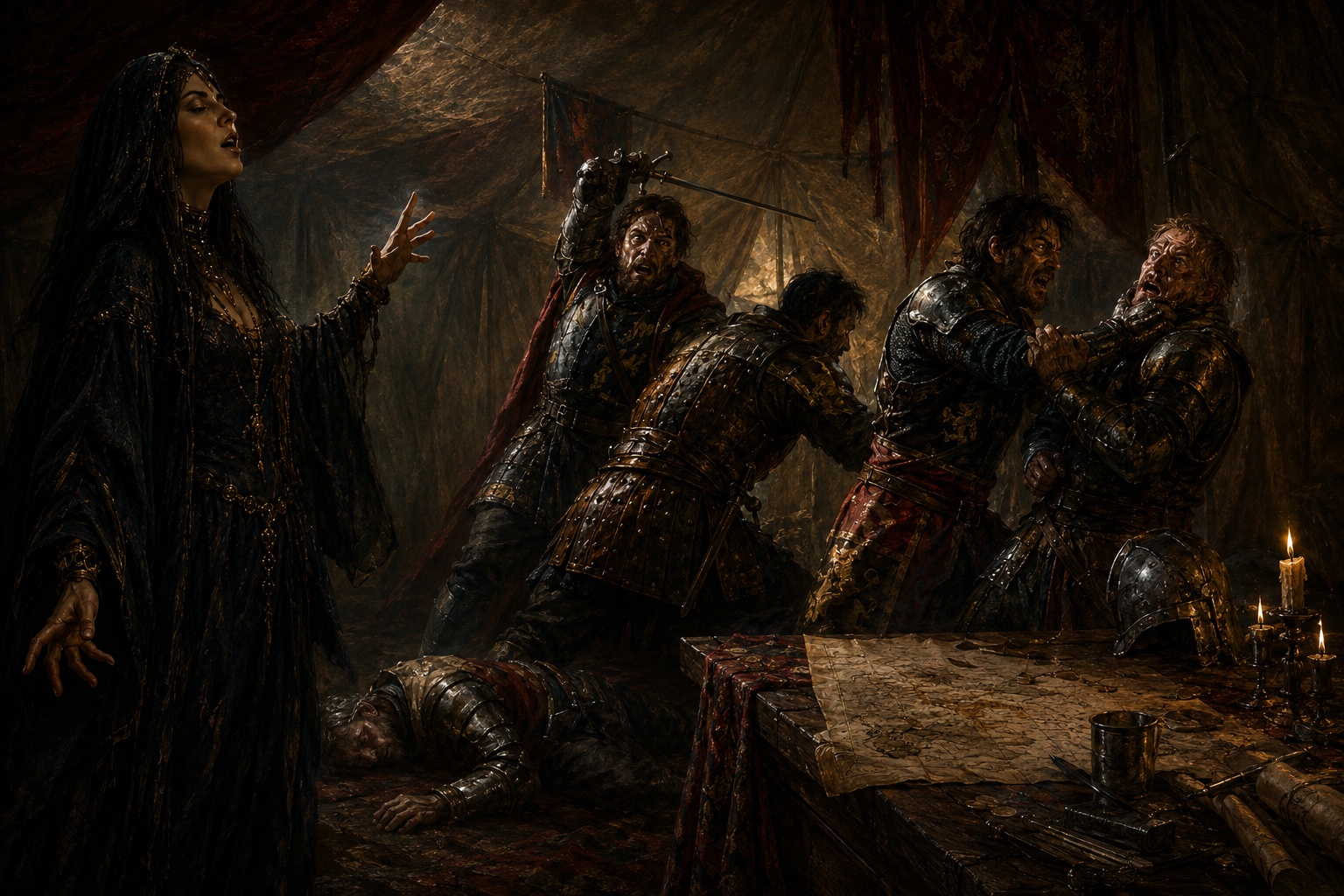
Choose the Lorelei Tradition If…
- You want a Witch whose magic is carried through song, performance and memory.
- You enjoy travelling characters who collect stories, melodies and secrets wherever they go.
- You like social magic, enchantment and support abilities without simply playing a Bard.
- You want performance to be part of how your Witch casts, bargains and remembers the world.
At a Glance
| Play style | Social caster, support Witch, traveller and magical performer. |
|---|---|
| Signature ability | Bardic Music and later song-based supernatural effects. |
| Key stories | Lost songs, forbidden verses, travelling teachers, rival performers and patrons of memory or inspiration. |
| Performance | Voice, instrument, signed rhythm, vibration or another agreed form can carry the tradition. |
What it feels like to play: Lorelei turns travel into character progression. Every road, court, tavern and ruin can give you another story worth remembering—and sometimes another piece of magic.
5.5e / 2024 Tradition
Level 3: Witchsong
You gain proficiency in Performance and one musical instrument; if already proficient in Performance, gain Expertise instead. Your voice, instrument, signed rhythm or another agreed performance method can serve as a Spellcasting Focus for Witch spells.
Lorelei spells: Charm Person and Heroism are always prepared. At Witch level 5 add Suggestion; at level 7 add Hypnotic Pattern; at level 9 add Greater Invisibility.
Level 6: Refrain of Courage
As a Bonus Action, expend one Hexcraft use and choose a number of creatures within 30 feet equal to your Intelligence modifier. Until the start of your next turn, each chosen creature has Advantage on saving throws against Charmed and Frightened and can add your Hex Die to one damage roll or ability check it makes.
Level 10: Travelling Song
You and companions travelling with you can maintain a normal pace while using Stealth. In addition, when you finish a Short Rest, choose yourself and up to five creatures that can hear or perceive your performance; each gains Temporary Hit Points equal to your Witch level + your Intelligence modifier.
Level 14: Song That Cannot Be Forgotten
When a creature fails a saving throw against one of your Enchantment or Illusion spells, you can expend one Hexcraft use to deepen the effect. The creature cannot repeat a saving throw granted by that spell until the end of its next turn. Once you use this feature on a creature, you cannot use it on that creature again until you finish a Long Rest.
Legacy rules source
Liber Mysterium: The Netbook of Witches and Warlocks, Timothy S. Brannan and the Netbook of Witches and Warlocks team.
Description: The Lorelei is an artistic witch, who takes everything they do in life and expresses it in poetry and song. They hold the philosophy that life is a song in and of itself. Graceful and talented, the Lorelei are usually the most tolerated of the witches, because they fit in better with mundane society than other Traditions.
Lorelei cultivate presence because performance is part of their craft, but individual personalities vary widely. A Lorelei may be exuberant, solemn, sardonic, shy offstage or relentlessly professional; the tradition requires dedication to expression, not one temperament.
Lorelei traditions appear wherever song, poetry, oral history or performance carry social importance. Elves, humans, gnomes, halflings, dwarves, orcs and other peoples develop different musical forms, instruments and performance customs; no people is naturally too graceless or serious for the craft.
Role: The Lorelei are travelers at heart. They record their travels nearly entirely in song. To a Lorelei, to live is to experience, and to experience is to sing.
Lorelei often work well with bards and other performers, but they can adventure beside paladins, monks or any other class when their goals align. Differences arise from oaths, patrons and behaviour rather than a presumed clash between law and music.
Joining this Tradition: When a Lorelei receives a call, they receive a vision to meet a more experienced Lorelei. When the new Lorelei finds the more experienced one, they travel together and the experienced Lorelei teaches the young Lorelei the philosophy and magic of their song.
Since many are travelers, it is extremely difficult for an entire coven to meet. Only once every couple of years does an entire coven get together. These coven meetings are filled with beautiful displays of song and talent, taking place in reclusive settings where few non- Lorelei will witness.
Leaving this Tradition: Under the legacy rules, abandoning the musical discipline suspends Lorelei tradition abilities until the Witch reconciles with the craft and patron. The original non-lawful alignment restriction is a legacy prerequisite; discipline and creativity are not mutually exclusive in the wider setting.
Skills: Lorelei receive Perform as a Class Skill
- Minor: 7th Level: Bardic Music. At 7th level the Lorelei receives the Bardic Music ability. She can use this ability a number of times per day equal to 1/4th her Lorelei level.
- Medial: 13th Level: Song of suggestion. As a special use of the Bardic Music ability, the Lorelei can make a Diplomacy or Perform check (whichever is better) with a DC equal to 10 plus the targets hit dice plus the targets Wisdom modifier to plant a suggestion in a target. This is as per the spell suggestion.
- Greater: 19th Level: Song of Enthrall. As a special use of the Bardic Music ability, the Lorelei can perform a song of charming. This song requires targets to make a will save equal 10 + half the Lorelei’s level + the Lorelei’s Charisma modifier or be charmed as per the spell Charm Person, at a caster level equal to the Lorelei’s own caster level.
Special: Lorelei have Perform as a class skill.
Legacy Restriction: The original d20 rules assume Lorelei magic is vocal and add a verbal component to every spell. A campaign can preserve the same mechanical limitation through another performance channel—instrument, signed rhythm, vibration or magical notation—so loss of hearing does not automatically end a character’s Witch career.
The original d20 write-up bars lawful alignment. Treat this as a legacy rule or a particular coven’s philosophy; alignment remains guidance rather than destiny.
Equipment: Lorelei generally use Musical instruments as the focus for their magic rituals.
Coven Domains: Chaos, Luck, Travel, Trickery
Preferred/Barred Covens: Lorelei often belong to covens related to music. Lorelei get along well with a surprising amount of different types of witches, and can be found in many different types of covens.
Relationship to the Patron: Lorelei patrons are often associated with beauty, memory, travel, emotion, luck or artistic inspiration. Many Lorelei describe existence as a complex song whose rhythm and melody can be heard, altered and answered through magic.
Source/Views of Magic: Lorelei treat song as a magical structure: rhythm orders power, melody carries emotion and performance turns intention into effect. A patron may teach or empower that practice without requiring one universal deity.
Wealth: Standard
Other: Since they are found more in cities than any other witch, the Lorelei multiclass with the rogue better than any other class. The Lorelei and bard are too similar to make an effective combination; any in existence were usually bards before they received the call to become witch.
Lorelei typically do not take prestige classes for similar reasons. But like most witches, find the Warlock to be distasteful in the extreme.
Keep this reference growing
If this page helped with your reading or game, you can support its upkeep or explore the curated books.
Explore the Bookshop — epics, classics and stories behind imagined worlds.