
Evocation • The breaking note
Shatter Spell
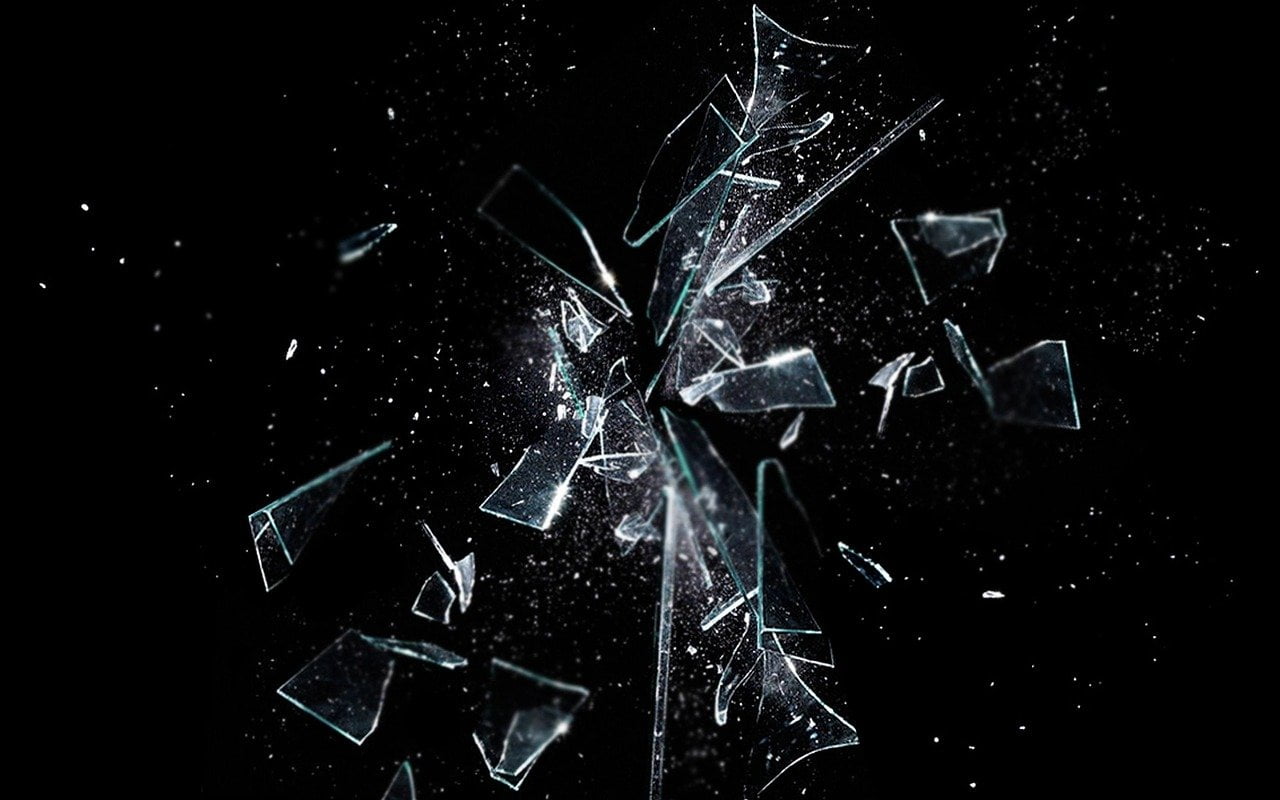
A ringing note cracks glass and turns a crowded chamber into a storm of fragments. Shatter is a level-2 Bard spell across all four editions, with sharply different rules for creatures, objects, and areas.
At a Glance
| 5.5e / 2024 | Bard 2 • 3d8 Thunder • 10-foot-radius Sphere • Constructs save with Disadvantage |
|---|---|
| 5e / 2014 | Bard 2 • inorganic creatures save with disadvantage |
| Pathfinder 1e | Bard 2 • brittle-object area, single object, or crystalline creature |
| D&D 3.5e | Bard 2 • weight-limited objects or up to 10d6 sonic versus a crystalline creature |
| Browse | Bard class and spell catalogue • Cleric spells • Cleric class |
Spell Rules by Edition
Shatter — 5.5e / 2024
Bard spell level 2. Standard class lists are shown below; Cleric access in this edition depends on domain or subclass features. Edition source.
| Spell | Level 2 Evocation (Bard, Sorcerer, Wizard) |
|---|---|
| Casting Time | Action |
| Range | 60 feet |
| Components | V, S, M (a chip of mica) |
| Duration | Instantaneous |
A loud noise erupts from a point of your choice within range. Each creature in a 10-foot-radius Sphere centered there makes a Constitution saving throw, taking 3d8 Thunder damage on a failed save or half as much damage on a successful one. A Construct has Disadvantage on the save. A nonmagical object that isn’t being worn or carried also takes the damage if it’s in the spell’s area.
Using a Higher-Level Spell Slot. The damage increases by 1d8 for each spell slot level above 2.
Shatter — 5e / 2014
Bard spell level 2. Standard class lists are shown below; Cleric access in this edition depends on domain or subclass features. Edition source.
| Spell | 2nd-level evocation (Bard, Sorcerer, Warlock, Wizard) |
|---|---|
| Casting Time | 1 action |
| Range | 60 feet |
| Components | V, S, M (a chip of mica) |
| Duration | Instantaneous |
A sudden loud ringing noise, painfully intense, erupts from a point of your choice within range. Each creature in a 10-foot-radius sphere centered on that point must make a Constitution saving throw. A creature takes 3d8 thunder damage on a failed save, or half as much damage on a successful one. A creature made of inorganic material such as stone, crystal, or metal has disadvantage on this saving throw. A nonmagical object that isn’t being worn or carried also takes the damage if it’s in the spell’s area.
At Higher Levels. When you cast this spell using a spell slot of 3rd level or higher, the damage increases by 1d8 for each slot level above 2nd.
Shatter — Pathfinder 1e
Bard and Cleric spell level 2. Edition source.
| School | evocation [sonic] |
|---|---|
| Level | Arcanist 2, Bard 2, Bloodrager 2, Cleric 2, Magus 2, Occultist 2, Oracle 2, Psychic 2, Skald 2, Sorcerer 2, Warpriest 2, Wizard 2 |
| Casting Time | 1 standard action |
| Components | V, S, M/DF (a chip of mica) |
| Range | close (25 ft. + 5 ft./2 levels) |
| Area or Target | 5-ft.-radius spread; or one solid object or one crystalline creature |
| Duration | instantaneous |
| Saving Throw | Will negates (object); Will negates (object) or Fortitude half; see text |
| Spell Resistance | yes |
Shatter creates a loud, ringing noise that breaks brittle, nonmagical objects; sunders a single solid, nonmagical object; or damages a crystalline creature.
Used as an area attack, shatter destroys nonmagical objects of crystal, glass, ceramic, or porcelain. All such unattended objects within a 5-foot radius of the point of origin are smashed into dozens of pieces by the spell. Objects weighing more than 1 pound per your level are not affected, but all other objects of the appropriate composition are shattered.
Alternatively, you can target shatter against a single solid nonmagical object, regardless of composition, weighing up to 10 pounds per caster level. Targeted against a crystalline creature (of any weight), shatter deals 1d6 points of sonic damage per caster level (maximum 10d6), with a Fortitude save for half damage.
Shatter — D&D 3.5e
Bard and Cleric spell level 2. Edition source.
| School | Evocation [Sonic] |
|---|---|
| Level | Bard 2, Chaos domain 2, Cleric 2, Destruction domain 2, Sorcerer/Wizard 2 |
| Components | V, S, M/DF |
| Casting Time | 1 standard action |
| Range | Close (25 ft. + 5 ft./2 levels) |
| Area or Target | 5-ft.-radius spread; or one solid object or one crystalline creature |
| Duration | Instantaneous |
| Saving Throw | Will negates (object); Will negates (object) or Fortitude half; see text |
| Spell Resistance | Yes (object) |
Shatter creates a loud, ringing noise that breaks brittle, nonmagical objects; sunders a single solid, nonmagical object; or damages a crystalline creature.
Used as an area attack, shatter destroys nonmagical objects of crystal, glass, ceramic, or porcelain. All such objects within a 5-foot radius of the point of origin are smashed into dozens of pieces by the spell. Objects weighing more than 1 pound per your level are not affected, but all other objects of the appropriate composition are shattered.
Alternatively, you can target shatter against a single solid object, regardless of composition, weighing up to 10 pounds per caster level. Targeted against a crystalline creature (of any weight), shatter deals 1d6 points of sonic damage per caster level (maximum 10d6), with a Fortitude save for half damage.
Arcane Material Component: A chip of mica.
What Changed
The 2024 spell imposes Disadvantage on Constructs. The 2014 spell instead imposes disadvantage on creatures made of inorganic material such as stone, crystal, or metal, and also appears on the Warlock list. Both modern spells damage all creatures in a 10-foot-radius area, plus nonmagical objects that are not worn or carried; higher slots add 1d8 damage per slot level above 2.
Pathfinder and 3.5 offer three different uses: break appropriately brittle objects in a 5-foot-radius spread, target a single solid object within the weight limit, or deal level-scaled sonic damage to a crystalline creature. Those older versions do not deal their creature damage to every creature in an area.
Practical Use
Place the area carefully. Modern Shatter can hurt allies and damage unattended belongings. Choose a point that includes the threat while avoiding people or objects the party needs intact.
Check the target category. Constructs in 2024, inorganic creatures in 2014, and crystalline creatures in the legacy rules are different tests.
Use the correct object limit. Legacy area destruction affects suitable objects up to 1 pound per caster level; the single-object option reaches 10 pounds per level. Pathfinder’s area text specifically requires unattended objects.
Rules Sources and Licensing
This work includes material taken from the System Reference Document 5.1 (“SRD 5.1”) by Wizards of the Coast LLC and available at https://dnd.wizards.com/resources/systems-reference-document. The SRD 5.1 is licensed under the Creative Commons Attribution 4.0 International License available at https://creativecommons.org/licenses/by/4.0/legalcode.
This work includes material from the System Reference Document 5.2.1 (“SRD 5.2.1”) by Wizards of the Coast LLC, available at https://www.dndbeyond.com/srd. The SRD 5.2.1 is licensed under the Creative Commons Attribution 4.0 International License, available at https://creativecommons.org/licenses/by/4.0/legalcode.
The Pathfinder and 3.5 spell mechanics and their tables are Open Game Content under the Open Game License v1.0a. Artwork and original setting prose are excluded from that designation.
Open Game License v1.0a and copyright notices
Permission to copy, modify and distribute the files collectively known as the System Reference Document (“SRD”) is granted solely through the use of the Open Gaming License, Version 1.0a.
This material is being released using the Open Gaming License Version 1.0a and you should read and understand the terms of that license before using this material.
The text of the Open Gaming License itself is not Open Game Content. Instructions on using the License are provided within the License itself.
The following items are designated Product Identity, as defined in Section 1(e) of the Open Game License Version 1.0a, and are subject to the conditions set forth in Section 7 of the OGL, and are not Open Content: Dungeons & Dragons, D&D, Player’s Handbook, Dungeon Master, Monster Manual, d20 System, Wizards of the Coast, d20 (when used as a trademark), Forgotten Realms, Faerûn, proper names (including those used in the names of spells or items), places, Red Wizard of Thay, the City of Union, Heroic Domains of Ysgard, Ever-Changing Chaos of Limbo, Windswept Depths of Pandemonium, Infinite Layers of the Abyss, Tarterian Depths of Carceri, Gray Waste of Hades, Bleak Eternity of Gehenna, Nine Hells of Baator, Infernal Battlefield of Acheron, Clockwork Nirvana of Mechanus, Peaceable Kingdoms of Arcadia, Seven Mounting Heavens of Celestia, Twin Paradises of Bytopia, Blessed Fields of Elysium, Wilderness of the Beastlands, Olympian Glades of Arborea, Concordant Domain of the Outlands, Sigil, Lady of Pain, Book of Exalted Deeds, Book of Vile Darkness, beholder, gauth, carrion crawler, tanar’ri, baatezu, displacer beast, githyanki, githzerai, mind flayer, illithid, umber hulk, yuan-ti.
All of the rest of the SRD is Open Game Content as described in Section 1(d) of the License.
More information on the Open Game License can be found at www.wizards.com/d20.
The terms of the Open Gaming License Version 1.0a are as follows:
OPEN GAME LICENSE Version 1.0a
The following text is the property of Wizards of the Coast, Inc. and is Copyright 2000 Wizards of the Coast, Inc (“Wizards”). All Rights Reserved.
1. Definitions: (a)”Contributors” means the copyright and/or trademark owners who have contributed Open Game Content; (b)”Derivative Material” means copyrighted material including derivative works and translations (including into other computer languages), potation, modification, correction, addition, extension, upgrade, improvement, compilation, abridgment or other form in which an existing work may be recast, transformed or adapted; (c) “Distribute” means to reproduce, license, rent, lease, sell, broadcast, publicly display, transmit or otherwise distribute; (d)”Open Game Content” means the game mechanic and includes the methods, procedures, processes and routines to the extent such content does not embody the Product Identity and is an enhancement over the prior art and any additional content clearly identified as Open Game Content by the Contributor, and means any work covered by this License, including translations and derivative works under copyright law, but specifically excludes Product Identity. (e) “Product Identity” means product and product line names, logos and identifying marks including trade dress; artifacts; creatures characters; stories, storylines, plots, thematic elements, dialogue, incidents, language, artwork, symbols, designs, depictions, likenesses, formats, poses, concepts, themes and graphic, photographic and other visual or audio representations; names and descriptions of characters, spells, enchantments, personalities, teams, personas, likenesses and special abilities; places, locations, environments, creatures, equipment, magical or supernatural abilities or effects, logos, symbols, or graphic designs; and any other trademark or registered trademark clearly identified as Product identity by the owner of the Product Identity, and which specifically excludes the Open Game Content; (f) “Trademark” means the logos, names, mark, sign, motto, designs that are used by a Contributor to identify itself or its products or the associated products contributed to the Open Game License by the Contributor (g) “Use”, “Used” or “Using” means to use, Distribute, copy, edit, format, modify, translate and otherwise create Derivative Material of Open Game Content. (h) “You” or “Your” means the licensee in terms of this agreement.
2. The License: This License applies to any Open Game Content that contains a notice indicating that the Open Game Content may only be Used under and in terms of this License. You must affix such a notice to any Open Game Content that you Use. No terms may be added to or subtracted from this License except as described by the License itself. No other terms or conditions may be applied to any Open Game Content distributed using this License.
3.Offer and Acceptance: By Using the Open Game Content You indicate Your acceptance of the terms of this License.
4. Grant and Consideration: In consideration for agreeing to use this License, the Contributors grant You a perpetual, worldwide, royalty-free, non-exclusive license with the exact terms of this License to Use, the Open Game Content.
5.Representation of Authority to Contribute: If You are contributing original material as Open Game Content, You represent that Your Contributions are Your original creation and/or You have sufficient rights to grant the rights conveyed by this License.
6.Notice of License Copyright: You must update the COPYRIGHT NOTICE portion of this License to include the exact text of the COPYRIGHT NOTICE of any Open Game Content You are copying, modifying or distributing, and You must add the title, the copyright date, and the copyright holder’s name to the COPYRIGHT NOTICE of any original Open Game Content you Distribute.
7. Use of Product Identity: You agree not to Use any Product Identity, including as an indication as to compatibility, except as expressly licensed in another, independent Agreement with the owner of each element of that Product Identity. You agree not to indicate compatibility or co-adaptability with any Trademark or Registered Trademark in conjunction with a work containing Open Game Content except as expressly licensed in another, independent Agreement with the owner of such Trademark or Registered Trademark. The use of any Product Identity in Open Game Content does not constitute a challenge to the ownership of that Product Identity. The owner of any Product Identity used in Open Game Content shall retain all rights, title and interest in and to that Product Identity.
8. Identification: If you distribute Open Game Content You must clearly indicate which portions of the work that you are distributing are Open Game Content.
9. Updating the License: Wizards or its designated Agents may publish updated versions of this License. You may use any authorized version of this License to copy, modify and distribute any Open Game Content originally distributed under any version of this License.
10. Copy of this License: You MUST include a copy of this License with every copy of the Open Game Content You Distribute.
11. Use of Contributor Credits: You may not market or advertise the Open Game Content using the name of any Contributor unless You have written permission from the Contributor to do so.
12. Inability to Comply: If it is impossible for You to comply with any of the terms of this License with respect to some or all of the Open Game Content due to statute, judicial order, or governmental regulation then You may not Use any Open Game Material so affected.
13. Termination: This License will terminate automatically if You fail to comply with all terms herein and fail to cure such breach within 30 days of becoming aware of the breach. All sublicenses shall survive the termination of this License.
14. Reformation: If any provision of this License is held to be unenforceable, such provision shall be reformed only to the extent necessary to make it enforceable.
15. COPYRIGHT NOTICE
Open Game License v 1.0a Copyright 2000, Wizards of the Coast, Inc.
System Reference Document Copyright 2000-2003, Wizards of the Coast, Inc.; Authors Jonathan Tweet, Monte Cook, Skip Williams, Rich Baker, Andy Collins, David Noonan, Rich Redman, Bruce R. Cordell, John D. Rateliff, Thomas Reid, James Wyatt, based on original material by E. Gary Gygax and Dave Arneson.
Pathfinder Roleplaying Game Core Rulebook. © 2009, Paizo Publishing, LLC; Author: Jason Bulmahn, based on material by Jonathan Tweet, Monte Cook, and Skip Williams. END OF LICENSE
Keep this reference growing
If this page helped with your reading or game, you can support its upkeep or explore the curated books.
Explore the Bookshop — epics, classics and stories behind imagined worlds.