
William Marshal — The Regent’s Echo
Knight, statesman and regent of an earlier England, William Marshal is not a living contemporary of the present campaign; his armour, castles, household traditions and reputation remain powerful political currency centuries later.
At a Glance
- Race: Human
- Role: Legendary knight, magnate and regent of an earlier age
- Present status: Historical; direct encounters require supernatural survival, vision or time displacement
- Campaign use: Relics, disputed arms, chivalric claims, household traditions and impossible knightly apparitions
- Key region: Pembroke, the Welsh Marches and Marshal family estates
5.5e / 2024
William Marshal — CR 10 humanoid; AC 20; HP 168; Speed 30 ft.; Str 20, Dex 14, Con 20, Int 14, Wis 16, Cha 18. Multiattack: three longsword or lance attacks. Master of the Melee: once per turn William deals an extra 2d6 damage when fighting from horseback or when an ally threatens the same target. Marshal the Line: up to two allies within 30 feet may move half their speed as a reaction.
Pathfinder 1e
William Marshal CR 11; human aristocrat 2/fighter 10; hp 138; AC 25; longsword +20/+15/+10 (1d8+8/19–20), lance +20/+15/+10; Str 20, Dex 14, Con 18, Int 14, Wis 16, Cha 18. Feats include Leadership, Mounted Combat, Ride-By Attack, Spirited Charge, Power Attack and Weapon Focus.
D&D 3.5e
William Marshal CR 11; human aristocrat 2/fighter 10; hp 118; AC 24; base attack +11; longsword +18/+13/+8, lance +18/+13/+8; Leadership, Mounted Combat, Ride-By Attack, Spirited Charge, Power Attack and Weapon Focus; Str 20, Dex 14, Con 18, Int 14, Wis 16, Cha 18.
What Is William Marshal Doing Now?
William Marshal died long before the present campaign. What still matters are the castles he shaped, the arms and pedigrees that claim his authority, tournament traditions attached to his name and families that use his reputation as proof of what a knight ought to be. A direct meeting should be a ghost, ancestral vision, enchanted memory or time-displaced encounter.
Encounters
- The Marshal’s Harness: A suit of armour attributed to William appears at auction with two noble houses claiming ownership.
- The Regent’s Seal: A forged medieval seal is being used to legitimise a modern land claim.
- The Last Tournament: An unknown knight fights according to an archaic tournament code no living master teaches.
Personality
In supernatural appearances and remembered tradition, William is disciplined, pragmatic and intensely conscious of sworn service. He values prowess, but even more the ability to remain useful when loyalties become complicated.
Relationships
His present relationships are inherited through Marshal descendants, Marcher families, castles associated with his household and knights who invoke his reputation to justify their own conduct.
Adventure Hooks
Use William Marshal when the party must decide whether an old reputation proves anything about a modern claim. His legacy is strongest when relic, genealogy and present politics collide.
William Marshal, also known as the “greatest knight who ever lived”, is a skilled and accomplished warrior in the Kingdom of England. Born into a minor noble family, he was taken as a hostage during a civil war but was later freed and trained as a knight. With his loyalty and chivalrous code, William quickly gained the trust and admiration of the English monarchs he served.
Throughout his life, William Marshal faced many challenges, both on and off the battlefield. He fought in numerous battles and tournaments, proving himself as a skilled warrior and earning great honor and wealth. However, he also faced political intrigue and betrayal, including being accused of treason and exiled from England for a time.
Despite these challenges, William remained steadfast in his loyalty and service to the crown, always striving to do what is right and just. He is known for his legendary courage and skill in battle, as well as his wisdom and fairness in peacetime. William was also a devoted family man, with a wife and five sons whom he loved deeply.
William was a patron of the arts and literature, and his court was renowned for its culture and refinement.
Before him, the hereditary title of “Lord Marshal” meant head of household security for the king of England, when people in Europe say, “the Marshal,” they mean William.
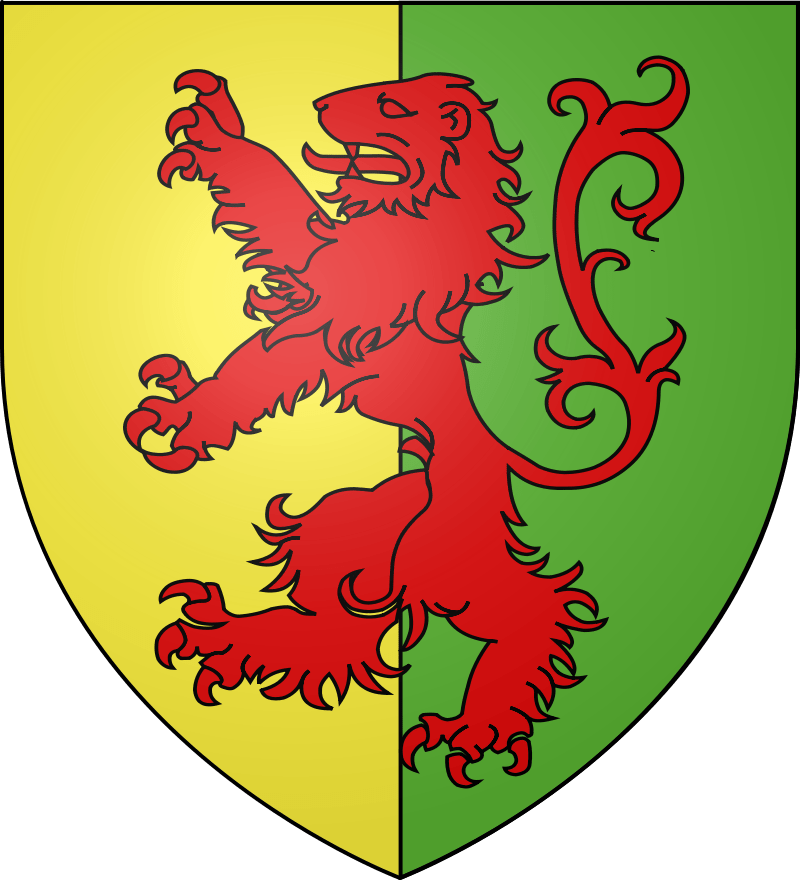
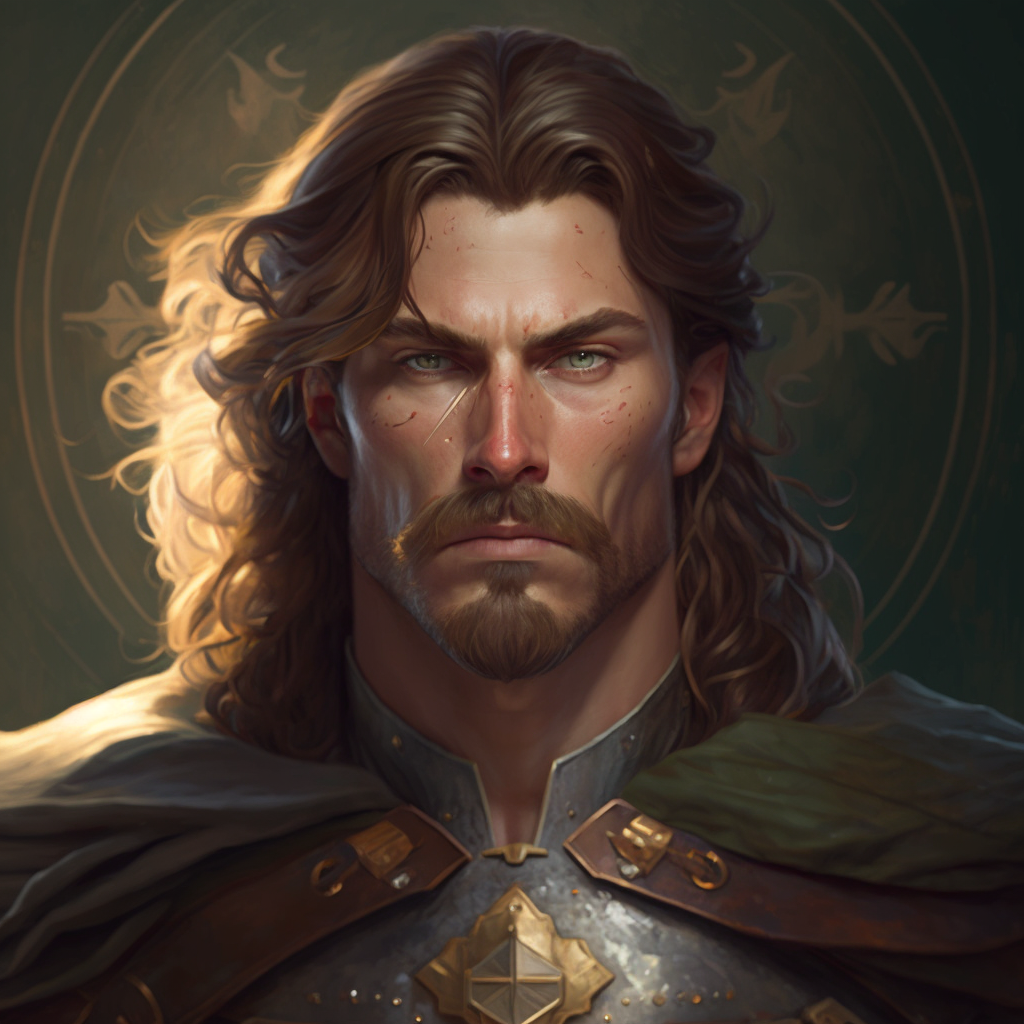
William Marshal is a tall and muscular man, standing over six feet with broad shoulders and a powerful build. His weathered face is marked with scars earned in battle, and he has piercing blue eyes that reflect his intelligence and determination. His hair and beard are thick and dark, and he wears a trimmed mustache. He is always well-dressed, often in fine mail and a surcoat adorned with his heraldry.
Overall, William Marshall is a complex and fascinating figure, known for his prowess on the battlefield and his loyalty to the crown. His story is one of honor, loyalty, and determination in the face of adversity.
William Marshal, Knight-Errant
Medium humanoid (human), lawful good
Armor Class 20 (plate armor, shield)
Hit Points 250 (20d10 + 100)
Speed 30 ft., 60 ft. (on horseback)
STR 22 (+6) | DEX 18 (+4) | CON 20 (+5) | INT 14 (+2) | WIS 16 (+3) | CHA 18 (+4)
Saving Throws Str +12, Dex +10, Con +11
Skills Athletics +12, History +8, Intimidation +9, Perception +9
Senses passive Perception 19
Languages English, Latin, French
Challenge 20 (25,000 XP)
Noble Born. William has advantage on Intelligence and Charisma saving throws.
Indomitable. William can reroll a failed saving throw. He must use this feature before he knows whether the saving throw succeeds or fails.
Legendary Resistance (3/day). If William fails a saving throw, he can choose to succeed instead.
Actions
Multiattack. William can make three attacks: with his longsword or two and one with his lance.
Longsword. Melee Weapon Attack: +12 to hit, reach 5 ft., one target. Hit: 11 (1d8 + 6) slashing damage, or 13 (1d10 + 6) slashing damage if used with two hands.
Lance. Melee Weapon Attack: +12 to hit, reach 10 ft., one target. Hit: 14 (1d12 + 6) piercing damage.
Mounted Combatant. William gains the following benefits when he is mounted:
- He has advantage on melee attack rolls against any unmounted creature that is smaller than his mount.
- He can force an attack targeted at his mount to target him instead.
- If his mount is subjected to an effect that allows it to make a Dexterity saving throw to take only half damage, it takes no damage on a successful save.
Reckless Charge. William can spur his mount into a reckless charge. If he moves at least 20 feet straight toward a target and then hits it with a lance attack on the same turn, the target takes an extra 9 (2d8) piercing damage. However, this also imposes disadvantage on any attack rolls made against William until the start of his next turn.
Command. As a bonus action, William can command his mount to take the Dash, Disengage, or Dodge action.
Equipment
- Longsword
- Lance
- Plate armor
- Shield
- Warhorse with barding
- Three javelins
- Backpack, bedroll, mess kit, tinderbox, 10 torches, 10 days of rations, waterskin, 50 ft. of hempen rope
* Many events in William Marshal’s life were incorporated into the 2001 film A Knight’s Tale.
Keep this reference growing
If this page helped with your reading or game, you can support its upkeep or explore the curated books.
Explore the Bookshop — epics, classics and stories behind imagined worlds.