
Bard Magic • Spell Reference
Stinking Cloud Spell
Nauseating Fog and Battlefield Control
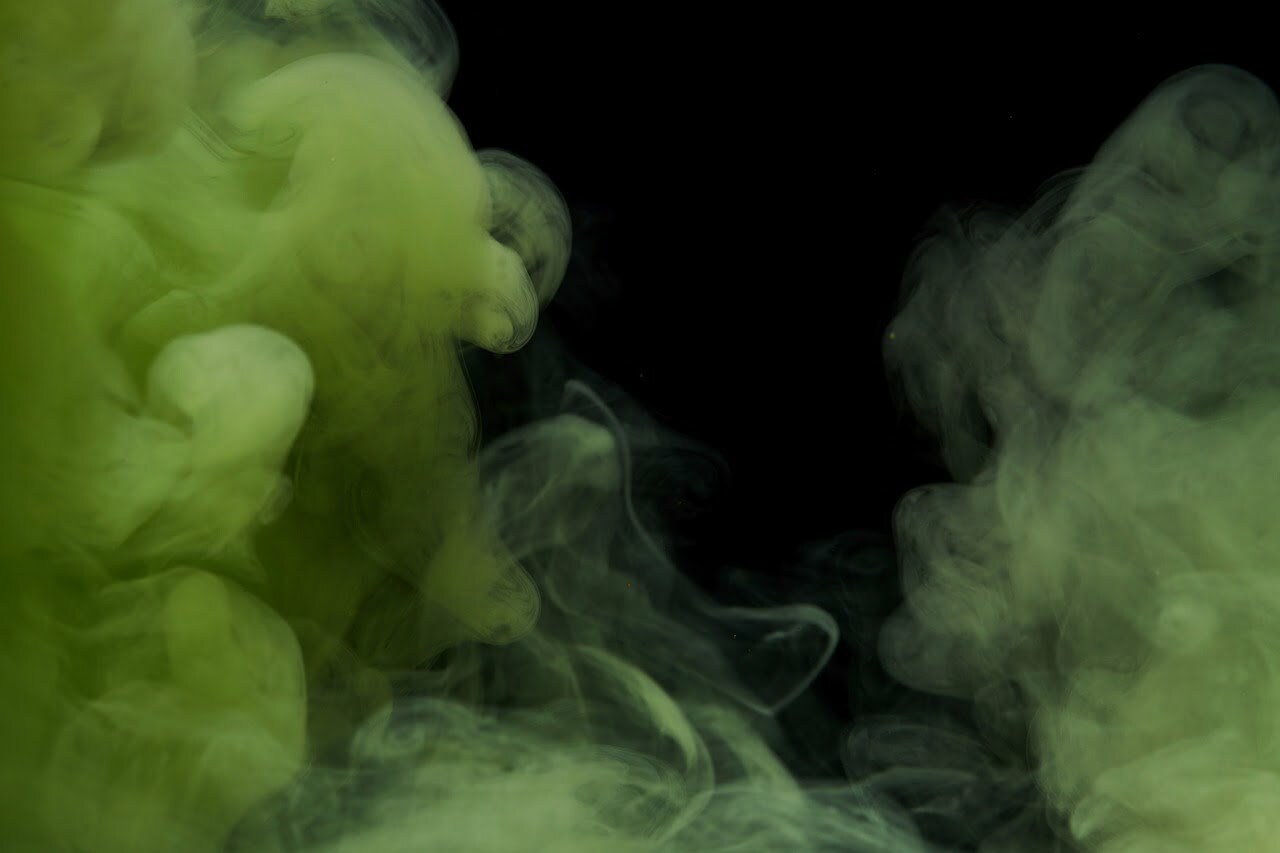
Stinking Cloud fills an area with obscuring, nauseating gas. Its modern action restrictions differ from the lasting Nauseated effect in Pathfinder 1e and D&D 3.5e.
Stinking Cloud at a Glance
| Bard access | Level 3 in 2024 and 2014; absent from the standard legacy Bard lists. |
|---|---|
| Role | Area obstruction, obscured sight and action disruption. |
| Resistance | Constitution in modern D&D; Fortitude in the legacy games. |
| Duration | Concentration, up to 1 minute in modern D&D; 1 round/level in legacy games. |
| Counterplay | Leave the area, disperse it with wind or end the spell under the relevant edition’s rules. |
Spell Rules by Edition
Stinking Cloud — 5.5e / 2024
Rules source: System Reference Document 5.2.1.
| Level & school | 3rd-level Conjuration |
|---|---|
| Classes | Bard, Sorcerer, Wizard |
| Casting time | Action |
| Range | 90 feet |
| Area | 20-foot-radius sphere |
| Components | V, S, M (a rotten egg) |
| Duration | Concentration, up to 1 minute |
A yellow, nauseating cloud fills a 20-foot-radius Sphere centred on a point within range. Its area is Heavily Obscured. The cloud remains for the duration unless a strong wind, such as Gust of Wind, disperses it.
Every creature starting its turn in the Sphere makes a Constitution saving throw. Failure gives it the Poisoned condition until the end of that turn. While Poisoned by this spell, it cannot take an action or a Bonus Action.
Stinking Cloud — 5e / 2014
Rules source: System Reference Document 5.1.
| Level & school | 3rd-level Conjuration |
|---|---|
| Classes | Bard, Sorcerer, Wizard |
| Casting time | 1 action |
| Range | 90 feet |
| Area | 20-foot-radius sphere |
| Components | V, S, M (a rotten egg or several skunk cabbage leaves) |
| Duration | Concentration, up to 1 minute |
A sphere of yellow, nauseating gas appears around a point within range, spreads around corners and makes its area heavily obscured. It lingers in the air for the duration.
A creature completely within the cloud when its turn starts makes a Constitution saving throw against poison. On failure, it spends that turn’s action retching and reeling. A creature that does not need to breathe or is immune to poison succeeds automatically.
A moderate wind of at least 10 mph disperses the cloud after 4 rounds. A strong wind of at least 20 mph disperses it after 1 round.
Stinking Cloud — Pathfinder 1e
Rules source: Archives of Nethys — Stinking Cloud.
| School | Conjuration (Creation) [Poison] |
|---|---|
| Level | Arcanist 3, Bloodrager 3, Magus 3, Shaman 3, Sorcerer 3, Unchained Summoner 3, Witch 3, Wizard 3 |
| Components | V, S, M (a rotten egg or cabbage leaves) |
| Casting time | 1 standard action |
| Range | Medium (100 ft. + 10 ft./level) |
| Effect | Cloud spreads in a 20-ft. radius, 20 ft. high |
| Duration | 1 round/level |
| Saving throw | Fortitude negates; see text |
| Spell Resistance | No |
Stinking cloud creates a bank of fog like that created by fog cloud, except that the vapors are nauseating.
- Living creatures in the cloud become nauseated. This condition lasts as long as the creature is in the cloud and for 1d4+1 rounds after it leaves. (Roll separately for each nauseated character.) Any creature that succeeds on its save but remains in the cloud must continue to save each round on your turn.
- Stinking cloud can be made permanent with a permanency spell. A permanent stinking cloud dispersed by wind reforms in 10 minutes.
This is a poison effect.
Inherited Fog Cloud Rules
The fog blocks sight, including darkvision, beyond 5 feet. Creatures within 5 feet have concealment, producing a 20% miss chance; creatures farther away have total concealment, producing a 50% miss chance and preventing sight from locating them.
A moderate wind of 11+ mph disperses the fog in 4 rounds; a strong wind of 21+ mph disperses it in 1 round. It does not function underwater. These limits follow the legacy Fog Cloud effect referenced by the spell.
Rules source: Archives of Nethys — Fog Cloud.
Stinking Cloud — D&D 3.5e
Rules source: Revised System Reference Document — Stinking Cloud.
| School | Conjuration (Creation) |
|---|---|
| Level | Sorcerer/Wizard 3 |
| Components | V, S, M |
| Casting time | 1 standard action |
| Range | Medium (100 ft. + 10 ft./level) |
| Effect | Cloud spreads in a 20-ft. radius, 20 ft. high |
| Duration | 1 round/level |
| Saving throw | Fortitude negates; see text |
| Spell Resistance | No |
Stinking cloud creates a bank of fog like that created by fog cloud, except that the vapors are nauseating.
- Living creatures in the cloud become nauseated. This condition lasts as long as the creature is in the cloud and for 1d4+1 rounds after it leaves. (Roll separately for each nauseated character.) Any creature that succeeds on its save but remains in the cloud must continue to save each round on your turn.
- Stinking cloud can be made permanent with a permanency spell. A permanent stinking cloud dispersed by wind reforms in 10 minutes.
Material Component A rotten egg or several skunk cabbage leaves.
Inherited Fog Cloud Rules
The fog blocks sight, including darkvision, beyond 5 feet. Creatures within 5 feet have concealment, producing a 20% miss chance; creatures farther away have total concealment, producing a 50% miss chance and preventing sight from locating them.
A moderate wind of 11+ mph disperses the fog in 4 rounds; a strong wind of 21+ mph disperses it in 1 round. It does not function underwater. These limits follow the legacy Fog Cloud effect referenced by the spell.
Rules source: Revised System Reference Document — Fog Cloud.
What Changes by Edition?
| 2024 | A failed start-of-turn save causes Poisoned until that turn ends, with no action or Bonus Action while Poisoned this way. Strong wind disperses the cloud; this text does not give the older wind-speed schedule. |
|---|---|
| 2014 | The save applies when a creature is completely inside at the start of its turn. Failure spends its action retching. No-breathing and poison-immune creatures automatically succeed; moderate and strong winds have explicit dispersal times. |
| Pathfinder 1e and D&D 3.5e | The cloud lasts 1 round per level. Nauseation can continue for 1d4+1 rounds after leaving. Successful saves must be repeated on the caster’s turn while the creature remains inside. Permanency and inherited Fog Cloud concealment rules apply. |
| Bard access | Level 3 in both modern editions. The ordinary spell is not on the standard legacy Bard lists. |
Practical Uses and Limits
Stinking Cloud combines obscured vision with an edition-specific disruption of enemy actions. Place it where enemies must stay, cross or abandon a useful position: a gate, bridge, defensive line or narrow approach.
The cloud affects qualifying creatures rather than selecting only your enemies. Plan an escape route for allies and remember that obscured sight can prevent abilities that require a visible target.
Leaving the cloud does not work the same way in every game. Modern penalties last for the stated turn; the legacy Nauseated effect has a separate 1d4+1-round tail. The fog’s duration and the victim’s lingering condition are distinct timers.
The 2024 spell omits the 2014 automatic-success clause for creatures that do not breathe. Do not carry that exemption into the revised rules. Immunity to the Poisoned condition still prevents that condition under the general rules.
Wind is a direct answer, but use the selected edition’s dispersal wording. The modern spells require Concentration; Dispel Magic and disrupting the caster are other possibilities under their own rules.
Stinking Cloud in the World of 1454
A foul cloud can empty a gatehouse, obstruct a boarding action or break the discipline of soldiers who expected a clear field of battle. Its visible presence may announce magical interference even when it leaves no direct wounds.
Guards can prepare open exits, windward positions and routes around enclosed approaches. A spellcaster must still weigh lost visibility and allied exposure against the advantage of forcing an enemy to leave a strong position.
The spell’s rotten-egg component makes its supernatural effect familiar to witnesses: a sudden bank of foul vapour where no fire, sewer or marsh should produce it. In a crowded street, panic and blocked movement can become part of the scene without adding damage to the spell.
Adventure Hooks
- A cloud repeatedly disrupts a market gate at the precise moment a covered wagon passes through.
- A siege engineer needs the party to approach a permanently enchanted legacy cloud, disperse it and act before it reforms.
- A ship’s defenders must choose between a contaminated deck and abandoning the windward rail to boarders.
Rules Sources and Licensing
This work includes material taken from the System Reference Document 5.1 (“SRD 5.1”) by Wizards of the Coast LLC and available at https://dnd.wizards.com/resources/systems-reference-document. The SRD 5.1 is licensed under the Creative Commons Attribution 4.0 International License available at https://creativecommons.org/licenses/by/4.0/legalcode.
This work includes material from the System Reference Document 5.2.1 (“SRD 5.2.1”) by Wizards of the Coast LLC, available at https://www.dndbeyond.com/srd. The SRD 5.2.1 is licensed under the Creative Commons Attribution 4.0 International License, available at https://creativecommons.org/licenses/by/4.0/legalcode.
The Pathfinder and 3.5 spell mechanics and their tables are Open Game Content under the Open Game License v1.0a. Artwork and original setting prose are excluded from that designation.
Open Game License v1.0a and copyright notices
Permission to copy, modify and distribute the files collectively known as the System Reference Document (“SRD”) is granted solely through the use of the Open Gaming License, Version 1.0a.
This material is being released using the Open Gaming License Version 1.0a and you should read and understand the terms of that license before using this material.
The text of the Open Gaming License itself is not Open Game Content. Instructions on using the License are provided within the License itself.
The following items are designated Product Identity, as defined in Section 1(e) of the Open Game License Version 1.0a, and are subject to the conditions set forth in Section 7 of the OGL, and are not Open Content: Dungeons & Dragons, D&D, Player’s Handbook, Dungeon Master, Monster Manual, d20 System, Wizards of the Coast, d20 (when used as a trademark), Forgotten Realms, Faerûn, proper names (including those used in the names of spells or items), places, Red Wizard of Thay, the City of Union, Heroic Domains of Ysgard, Ever-Changing Chaos of Limbo, Windswept Depths of Pandemonium, Infinite Layers of the Abyss, Tarterian Depths of Carceri, Gray Waste of Hades, Bleak Eternity of Gehenna, Nine Hells of Baator, Infernal Battlefield of Acheron, Clockwork Nirvana of Mechanus, Peaceable Kingdoms of Arcadia, Seven Mounting Heavens of Celestia, Twin Paradises of Bytopia, Blessed Fields of Elysium, Wilderness of the Beastlands, Olympian Glades of Arborea, Concordant Domain of the Outlands, Sigil, Lady of Pain, Book of Exalted Deeds, Book of Vile Darkness, beholder, gauth, carrion crawler, tanar’ri, baatezu, displacer beast, githyanki, githzerai, mind flayer, illithid, umber hulk, yuan-ti.
All of the rest of the SRD is Open Game Content as described in Section 1(d) of the License.
More information on the Open Game License can be found at www.wizards.com/d20.
The terms of the Open Gaming License Version 1.0a are as follows:
OPEN GAME LICENSE Version 1.0a
The following text is the property of Wizards of the Coast, Inc. and is Copyright 2000 Wizards of the Coast, Inc (“Wizards”). All Rights Reserved.
1. Definitions: (a)”Contributors” means the copyright and/or trademark owners who have contributed Open Game Content; (b)”Derivative Material” means copyrighted material including derivative works and translations (including into other computer languages), potation, modification, correction, addition, extension, upgrade, improvement, compilation, abridgment or other form in which an existing work may be recast, transformed or adapted; (c) “Distribute” means to reproduce, license, rent, lease, sell, broadcast, publicly display, transmit or otherwise distribute; (d)”Open Game Content” means the game mechanic and includes the methods, procedures, processes and routines to the extent such content does not embody the Product Identity and is an enhancement over the prior art and any additional content clearly identified as Open Game Content by the Contributor, and means any work covered by this License, including translations and derivative works under copyright law, but specifically excludes Product Identity. (e) “Product Identity” means product and product line names, logos and identifying marks including trade dress; artifacts; creatures characters; stories, storylines, plots, thematic elements, dialogue, incidents, language, artwork, symbols, designs, depictions, likenesses, formats, poses, concepts, themes and graphic, photographic and other visual or audio representations; names and descriptions of characters, spells, enchantments, personalities, teams, personas, likenesses and special abilities; places, locations, environments, creatures, equipment, magical or supernatural abilities or effects, logos, symbols, or graphic designs; and any other trademark or registered trademark clearly identified as Product identity by the owner of the Product Identity, and which specifically excludes the Open Game Content; (f) “Trademark” means the logos, names, mark, sign, motto, designs that are used by a Contributor to identify itself or its products or the associated products contributed to the Open Game License by the Contributor (g) “Use”, “Used” or “Using” means to use, Distribute, copy, edit, format, modify, translate and otherwise create Derivative Material of Open Game Content. (h) “You” or “Your” means the licensee in terms of this agreement.
2. The License: This License applies to any Open Game Content that contains a notice indicating that the Open Game Content may only be Used under and in terms of this License. You must affix such a notice to any Open Game Content that you Use. No terms may be added to or subtracted from this License except as described by the License itself. No other terms or conditions may be applied to any Open Game Content distributed using this License.
3.Offer and Acceptance: By Using the Open Game Content You indicate Your acceptance of the terms of this License.
4. Grant and Consideration: In consideration for agreeing to use this License, the Contributors grant You a perpetual, worldwide, royalty-free, non-exclusive license with the exact terms of this License to Use, the Open Game Content.
5.Representation of Authority to Contribute: If You are contributing original material as Open Game Content, You represent that Your Contributions are Your original creation and/or You have sufficient rights to grant the rights conveyed by this License.
6.Notice of License Copyright: You must update the COPYRIGHT NOTICE portion of this License to include the exact text of the COPYRIGHT NOTICE of any Open Game Content You are copying, modifying or distributing, and You must add the title, the copyright date, and the copyright holder’s name to the COPYRIGHT NOTICE of any original Open Game Content you Distribute.
7. Use of Product Identity: You agree not to Use any Product Identity, including as an indication as to compatibility, except as expressly licensed in another, independent Agreement with the owner of each element of that Product Identity. You agree not to indicate compatibility or co-adaptability with any Trademark or Registered Trademark in conjunction with a work containing Open Game Content except as expressly licensed in another, independent Agreement with the owner of such Trademark or Registered Trademark. The use of any Product Identity in Open Game Content does not constitute a challenge to the ownership of that Product Identity. The owner of any Product Identity used in Open Game Content shall retain all rights, title and interest in and to that Product Identity.
8. Identification: If you distribute Open Game Content You must clearly indicate which portions of the work that you are distributing are Open Game Content.
9. Updating the License: Wizards or its designated Agents may publish updated versions of this License. You may use any authorized version of this License to copy, modify and distribute any Open Game Content originally distributed under any version of this License.
10. Copy of this License: You MUST include a copy of this License with every copy of the Open Game Content You Distribute.
11. Use of Contributor Credits: You may not market or advertise the Open Game Content using the name of any Contributor unless You have written permission from the Contributor to do so.
12. Inability to Comply: If it is impossible for You to comply with any of the terms of this License with respect to some or all of the Open Game Content due to statute, judicial order, or governmental regulation then You may not Use any Open Game Material so affected.
13. Termination: This License will terminate automatically if You fail to comply with all terms herein and fail to cure such breach within 30 days of becoming aware of the breach. All sublicenses shall survive the termination of this License.
14. Reformation: If any provision of this License is held to be unenforceable, such provision shall be reformed only to the extent necessary to make it enforceable.
15. COPYRIGHT NOTICE
Open Game License v 1.0a Copyright 2000, Wizards of the Coast, Inc.
System Reference Document Copyright 2000-2003, Wizards of the Coast, Inc.; Authors Jonathan Tweet, Monte Cook, Skip Williams, Rich Baker, Andy Collins, David Noonan, Rich Redman, Bruce R. Cordell, John D. Rateliff, Thomas Reid, James Wyatt, based on original material by E. Gary Gygax and Dave Arneson.
Pathfinder Roleplaying Game Core Rulebook. © 2009, Paizo Publishing, LLC; Author: Jason Bulmahn, based on material by Jonathan Tweet, Monte Cook, and Skip Williams. END OF LICENSE
Keep this reference growing
If this page helped with your reading or game, you can support its upkeep or explore the curated books.
Explore the Bookshop — epics, classics and stories behind imagined worlds.