
Divine Magic • Core Spell Reference
Restoration
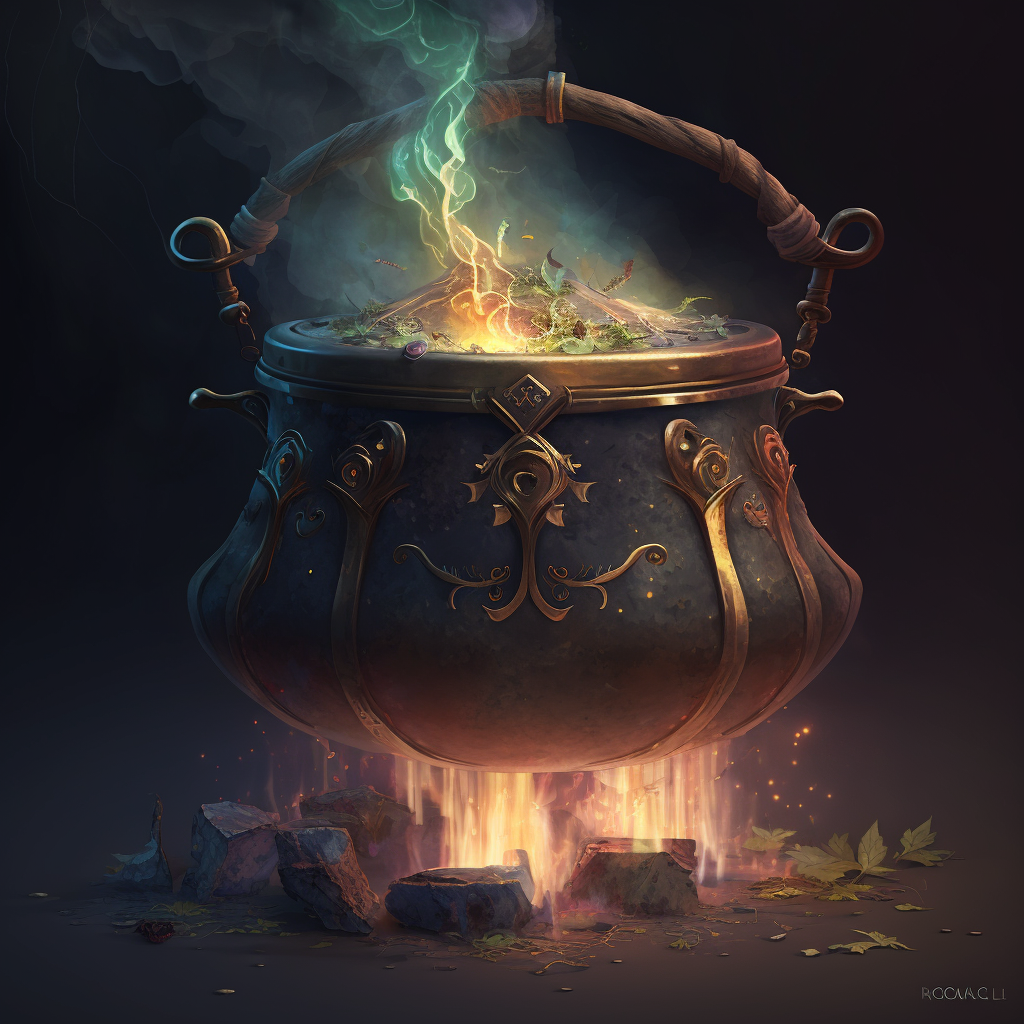
Restoration repairs damage to a creature’s vitality and removes certain debilitating magical effects. Pathfinder 1e and D&D 3.5e use the original 4th-level Restoration spell with different rules for negative levels and ability drain. In fifth edition, Lesser Restoration and Greater Restoration are separate spells—not conversions of this exact d20 spell.
Restoration at a Glance
| 5.5e / 2024 | No spell named simply Restoration in SRD 5.2.1; see Lesser Restoration and Greater Restoration |
|---|---|
| 5e / 2014 | No core spell by this exact name; Lesser Restoration and Greater Restoration have their own rules |
| Pathfinder 1e | Cleric 4, Paladin 4 |
| D&D 3.5e | Cleric 4, Paladin 4; Witch 6 in the preserved legacy archive only |
| Browse | Cleric spells • Cleric class |
Spell Rules
Restoration — 5.5e / 2024
Status: no spell by this exact name in SRD 5.2.1. The 2024 Lesser Restoration and Greater Restoration spells have their own levels, casting times, costs and effects. Do not transfer the legacy negative-level mechanic.
Restoration — 5e / 2014
Status: the core 2014 spell list uses Lesser Restoration and Greater Restoration rather than a spell named simply Restoration. Use the 2014 versions of those spells and do not import 3.5e experience-level rules.
Restoration — Pathfinder 1e
Cleric spell level 4. Edition source.
| School | conjuration (healing) |
|---|---|
| Level | cleric 4, paladin 4 |
| Casting Time | 3 rounds |
| Components | V, S, M (diamond dust worth 100 gp or 1,000 gp, see text) |
| Range | touch |
| Target | creature touched |
| Duration | instantaneous |
| Saving Throw | Will negates (harmless) |
| Spell Resistance | yes (harmless) |
Base Procedure
Lesser restoration dispels any magical effects reducing one of the subject’s ability scores or cures 1d4 points of temporary ability damage to one of the subject’s ability scores. It also eliminates any fatigue suffered by the character, and improves an exhausted condition to fatigued. It does not restore permanent ability drain.
Changes and Additional Effects
Changes for this spell: it also dispels temporary negative levels or one permanent negative level. If this spell is used to dispel a permanent negative level, it has a material component of diamond dust worth 1,000 gp. This spell cannot be used to dispel more than one permanent negative level possessed by a target in a 1-week period.
Restoration cures all temporary ability damage, and it restores all points permanently drained from a single ability score (your choice if more than one is drained). It also eliminates any fatigue or exhaustion suffered by the target.
Restoration — D&D 3.5e
Cleric spell level 4. Edition source.
| School | Conjuration (Healing) |
|---|---|
| Level | Clr 4, Pal 4 |
| Components | V, S, M |
| Casting Time | 3 rounds |
| Range | Touch |
| Target | Creature touched |
| Duration | Instantaneous |
| Saving Throw | Will negates (harmless) |
| Spell Resistance | Yes (harmless) |
Base Procedure
Lesser restoration dispels any magical effects reducing one of the subject’s ability scores or cures 1d4 points of temporary ability damage to one of the subject’s ability scores. It also eliminates any fatigue suffered by the character, and improves an exhausted condition to fatigued. It does not restore permanent ability drain.
Changes and Additional Effects
Changes for this spell: it also dispels negative levels and restores one experience level to a creature who has had a level drained. The drained level is restored only if the time since the creature lost the level is equal to or less than one day per caster level. A character who has a level restored by restoration has exactly the minimum number of experience points necessary to restore him or her to his or her previous level.
Restoration cures all temporary ability damage, and it restores all points permanently drained from a single ability score (your choice if more than one is drained). It also eliminates any fatigue or exhaustion suffered by the target.
Restoration does not restore levels or Constitution points lost due to death.
Material Component: Diamond dust worth 100 gp that is sprinkled over the target.
What Changed?
Both older d20 versions retain ability damage, permanent ability drain and negative-level rules. Pathfinder charges additional diamond dust for removal of a permanent negative level and limits how frequently this can be done. D&D 3.5e handles the restoration of lost experience levels differently. Neither set of mechanics should be imported into the two separate fifth-edition Restoration spells.
Using Restoration in Play
Restoration matters after encounters with creatures that drain abilities or levels. Before the party spends rare material components, identify the specific condition and use the appropriate older-edition version. A single 4th-level casting does not automatically cure every form of injury, curse or death.
Counterplay and GM Rulings
- Cost: distinguish Pathfinder’s 100 gp and 1,000 gp diamond-dust applications and the 3.5e 100 gp component; use the rules for the chosen edition.
- Time: the three-round casting time is relevant if the party tries to cast in an unsafe area.
- Scope: restoring one damaged ability score, curing temporary ability damage and removing negative levels each have separate rules. The spell does not undo death.
- Counterspell/Dispel Magic: the casting can be countered using the original edition’s rules; ordinary dispelling after an instantaneous cure does not put the cured damage back.
Related Healing Magic
Lesser Restoration · Greater Restoration · Remove Curse · Witch Spell Lists
Mythical Context
Asclepius was honoured in Greek tradition as a hero and god of healing, often shown with a serpent. Restoration suits the idea of restoring a wounded person’s strength after a supernatural ordeal; the serpent, a sign of renewal, makes a compelling emblem for the healer. See the Metropolitan Museum’s Roman gem showing Asclepius.
Historical Context
Egyptian medicine and protective ritual could exist side by side. The Metternich Stela, made in the fourth century BCE, carries texts and images intended to protect from snake and scorpion venom; water poured over it could be drunk as part of the ritual. This documents belief and practice, not a working cure-all spell. See The Met’s exhibition on medicine in ancient Egypt.
Rules Sources and Licensing
The Pathfinder and 3.5 spell mechanics and their tables are Open Game Content under the Open Game License v1.0a. Artwork and original setting prose are excluded from that designation.
Open Game License v1.0a and copyright notices
Permission to copy, modify and distribute the files collectively known as the System Reference Document (“SRD”) is granted solely through the use of the Open Gaming License, Version 1.0a.
This material is being released using the Open Gaming License Version 1.0a and you should read and understand the terms of that license before using this material.
The text of the Open Gaming License itself is not Open Game Content. Instructions on using the License are provided within the License itself.
The following items are designated Product Identity, as defined in Section 1(e) of the Open Game License Version 1.0a, and are subject to the conditions set forth in Section 7 of the OGL, and are not Open Content: Dungeons & Dragons, D&D, Player’s Handbook, Dungeon Master, Monster Manual, d20 System, Wizards of the Coast, d20 (when used as a trademark), Forgotten Realms, Faerûn, proper names (including those used in the names of spells or items), places, Red Wizard of Thay, the City of Union, Heroic Domains of Ysgard, Ever-Changing Chaos of Limbo, Windswept Depths of Pandemonium, Infinite Layers of the Abyss, Tarterian Depths of Carceri, Gray Waste of Hades, Bleak Eternity of Gehenna, Nine Hells of Baator, Infernal Battlefield of Acheron, Clockwork Nirvana of Mechanus, Peaceable Kingdoms of Arcadia, Seven Mounting Heavens of Celestia, Twin Paradises of Bytopia, Blessed Fields of Elysium, Wilderness of the Beastlands, Olympian Glades of Arborea, Concordant Domain of the Outlands, Sigil, Lady of Pain, Book of Exalted Deeds, Book of Vile Darkness, beholder, gauth, carrion crawler, tanar’ri, baatezu, displacer beast, githyanki, githzerai, mind flayer, illithid, umber hulk, yuan-ti.
All of the rest of the SRD is Open Game Content as described in Section 1(d) of the License.
More information on the Open Game License can be found at www.wizards.com/d20.
The terms of the Open Gaming License Version 1.0a are as follows:
OPEN GAME LICENSE Version 1.0a
The following text is the property of Wizards of the Coast, Inc. and is Copyright 2000 Wizards of the Coast, Inc (“Wizards”). All Rights Reserved.
1. Definitions: (a)”Contributors” means the copyright and/or trademark owners who have contributed Open Game Content; (b)”Derivative Material” means copyrighted material including derivative works and translations (including into other computer languages), potation, modification, correction, addition, extension, upgrade, improvement, compilation, abridgment or other form in which an existing work may be recast, transformed or adapted; (c) “Distribute” means to reproduce, license, rent, lease, sell, broadcast, publicly display, transmit or otherwise distribute; (d)”Open Game Content” means the game mechanic and includes the methods, procedures, processes and routines to the extent such content does not embody the Product Identity and is an enhancement over the prior art and any additional content clearly identified as Open Game Content by the Contributor, and means any work covered by this License, including translations and derivative works under copyright law, but specifically excludes Product Identity. (e) “Product Identity” means product and product line names, logos and identifying marks including trade dress; artifacts; creatures characters; stories, storylines, plots, thematic elements, dialogue, incidents, language, artwork, symbols, designs, depictions, likenesses, formats, poses, concepts, themes and graphic, photographic and other visual or audio representations; names and descriptions of characters, spells, enchantments, personalities, teams, personas, likenesses and special abilities; places, locations, environments, creatures, equipment, magical or supernatural abilities or effects, logos, symbols, or graphic designs; and any other trademark or registered trademark clearly identified as Product identity by the owner of the Product Identity, and which specifically excludes the Open Game Content; (f) “Trademark” means the logos, names, mark, sign, motto, designs that are used by a Contributor to identify itself or its products or the associated products contributed to the Open Game License by the Contributor (g) “Use”, “Used” or “Using” means to use, Distribute, copy, edit, format, modify, translate and otherwise create Derivative Material of Open Game Content. (h) “You” or “Your” means the licensee in terms of this agreement.
2. The License: This License applies to any Open Game Content that contains a notice indicating that the Open Game Content may only be Used under and in terms of this License. You must affix such a notice to any Open Game Content that you Use. No terms may be added to or subtracted from this License except as described by the License itself. No other terms or conditions may be applied to any Open Game Content distributed using this License.
3.Offer and Acceptance: By Using the Open Game Content You indicate Your acceptance of the terms of this License.
4. Grant and Consideration: In consideration for agreeing to use this License, the Contributors grant You a perpetual, worldwide, royalty-free, non-exclusive license with the exact terms of this License to Use, the Open Game Content.
5.Representation of Authority to Contribute: If You are contributing original material as Open Game Content, You represent that Your Contributions are Your original creation and/or You have sufficient rights to grant the rights conveyed by this License.
6.Notice of License Copyright: You must update the COPYRIGHT NOTICE portion of this License to include the exact text of the COPYRIGHT NOTICE of any Open Game Content You are copying, modifying or distributing, and You must add the title, the copyright date, and the copyright holder’s name to the COPYRIGHT NOTICE of any original Open Game Content you Distribute.
7. Use of Product Identity: You agree not to Use any Product Identity, including as an indication as to compatibility, except as expressly licensed in another, independent Agreement with the owner of each element of that Product Identity. You agree not to indicate compatibility or co-adaptability with any Trademark or Registered Trademark in conjunction with a work containing Open Game Content except as expressly licensed in another, independent Agreement with the owner of such Trademark or Registered Trademark. The use of any Product Identity in Open Game Content does not constitute a challenge to the ownership of that Product Identity. The owner of any Product Identity used in Open Game Content shall retain all rights, title and interest in and to that Product Identity.
8. Identification: If you distribute Open Game Content You must clearly indicate which portions of the work that you are distributing are Open Game Content.
9. Updating the License: Wizards or its designated Agents may publish updated versions of this License. You may use any authorized version of this License to copy, modify and distribute any Open Game Content originally distributed under any version of this License.
10. Copy of this License: You MUST include a copy of this License with every copy of the Open Game Content You Distribute.
11. Use of Contributor Credits: You may not market or advertise the Open Game Content using the name of any Contributor unless You have written permission from the Contributor to do so.
12. Inability to Comply: If it is impossible for You to comply with any of the terms of this License with respect to some or all of the Open Game Content due to statute, judicial order, or governmental regulation then You may not Use any Open Game Material so affected.
13. Termination: This License will terminate automatically if You fail to comply with all terms herein and fail to cure such breach within 30 days of becoming aware of the breach. All sublicenses shall survive the termination of this License.
14. Reformation: If any provision of this License is held to be unenforceable, such provision shall be reformed only to the extent necessary to make it enforceable.
15. COPYRIGHT NOTICE
Open Game License v 1.0a Copyright 2000, Wizards of the Coast, Inc.
System Reference Document Copyright 2000-2003, Wizards of the Coast, Inc.; Authors Jonathan Tweet, Monte Cook, Skip Williams, Rich Baker, Andy Collins, David Noonan, Rich Redman, Bruce R. Cordell, John D. Rateliff, Thomas Reid, James Wyatt, based on original material by E. Gary Gygax and Dave Arneson.
Pathfinder Roleplaying Game Core Rulebook. © 2009, Paizo Publishing, LLC; Author: Jason Bulmahn, based on material by Jonathan Tweet, Monte Cook, and Skip Williams. END OF LICENSE
Keep this reference growing
If this page helped with your reading or game, you can support its upkeep or explore the curated books.
Explore the Bookshop — epics, classics and stories behind imagined worlds.