
Illusion • Legacy Enchantment of Perception
Blind Love
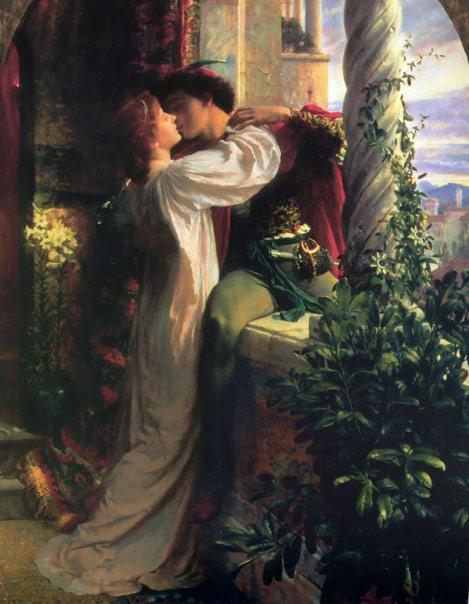
Blind Love reshapes how its victim perceives one named humanoid, making that person seem the victim’s ideal beloved. The enchantment changes perception, not the chosen person’s body or decisions. It is a legacy d20 Witch 7 spell and is not an official spell of the same name in 2024 D&D, 2014 D&D or Pathfinder 1e.
Blind Love at a Glance
| 5.5e / 2024 | No spell with this name in SRD 5.2.1 |
|---|---|
| 5e / 2014 | No core spell by this name |
| Pathfinder 1e | Not a standard Pathfinder Witch spell |
| D&D 3.x legacy | Witch 7, Bard 6, Sorcerer/Wizard 7, Satire 7 in the preserved source tradition |
Spell Rules by Edition
Blind Love — 5.5e / 2024
Status: no published SRD 5.2.1 spell by this name. The modern Charm Person and other enchantments have different targeting, conditions and limits; do not use the legacy spell as a free conversion.
Blind Love — 5e / 2014
Status: not a core 2014 spell. If used in a fifth-edition Witch campaign, any conversion requires a separate agreed spell entry and balancing; use the historical text only as inspiration.
Blind Love — Pathfinder 1e
Status: not on the default Pathfinder Witch spell list. Pathfinder charm and illusion magic are separate rules effects; the older save penalties and unlimited range do not carry across automatically.
Blind Love — D&D 3.x Legacy
| School | Illusion (Phantasm) [Mind-affecting] |
|---|---|
| Level | Bard 6, Sorcerer/Wizard 7, Witch 7, Satire 7 in the legacy source tradition |
| Components | V, S, M |
| Casting Time | 30 minutes |
| Range | Unlimited |
| Target | One living creature |
| Duration | 1 day/level |
| Saving Throw | Will disbelief; see the special legacy evidentiary rules below |
| Spell Resistance | Yes |
The victim perceives one named, living humanoid as the perfect beloved. The source describes how contrary evidence may permit another Will save, potentially at a penalty ranging from −1 to −10 under its original circumstances. The apparent beloved’s true physical form and behaviour do not change. The phantasm neither supplies mutual affection nor guarantees a particular action by either character.
Material components: a figure resembling the victim; hair, a nail or another small part from the victim and the chosen person; and special herbs worth 100 gp, all consumed during casting.
What Changed?
The archived mind-affecting phantasm has its own long casting time, unlimited range and unusually specific rules for disbelieving contradictory evidence. None of these features appears in an official conversion in 2024, 2014 or Pathfinder 1e.
Using Blind Love in Play
Blind Love is best used as a mystery or intrigue complication: a witness suddenly misidentifies someone they once feared, or an heir’s perception of a prospective spouse no longer matches what others see. Investigation can reveal the disparity without making a simple conversation an automatic dispel.
Counterplay and Rulings
- Mind-affecting defences: check the original subject’s eligibility, spell resistance and Will disbelief rules.
- Visible contradictions: the original source permits a further Will saving throw when strong evidence contradicts the phantasm; use its stated modifiers rather than introducing modern advantage or disadvantage.
- No body transformation: the targeted humanoid is unchanged, and the spell does not grant control over their will or personal decisions.
- Removal: counterspelling, dispelling and illusion-detection depend on the historical edition’s rules; the consumed doll is not an ongoing object that can simply be broken to end the spell.
Original Legacy Text
Read the preserved historical description and material components
The victim of the spell will see one specific humanoid as the perfect lover, and will fall in love with him/her. The spell creates a so intense phantasm in the head of the victim, that it will overcome any fact, event, etc., which would otherwise make such a love impossible, or even absurd.
Celtic Druids and the Tuatha de Dannan
By Dominique Crouzet
Illusion (Phantasm) [Mind-affecting]
Level: Bard 6, Sorcerer/Wizard 7, Witch 7, Satire 7
Components: V, S, M
Casting Time: 30 minutes
Range: Unlimited
Target: One living creature
Duration: 1 day/level
Saving Throw: Will disbelief
Spell Resistance: Yes
The caster must designate one specific living humanoid (it doesn’t work with undead), that the victim of the spell will perceive thereafter as the ideal lover. Then, the spell will draw from the subject’s mind what he considers as ideal, then will put that false perception on the named humanoid. As such, suppose the victim of the spell would fall in love with a beautiful big breasted blonde. If the –humanoid– designated by the caster is already a big breasted woman, with everything ideal but the colour of her hair, the spell will only change that colour in the eyes of the victim. Now suppose that the designated humanoid is a male bugbears, then the spell will make the victim perceives that bugbears as a beautiful big breasted blonde all the same. However, the spell doesn’t change nor influence anything else. So in the first case the victim won’t understand why his friends keep on pretending her wonderful lover has black hair, while they are obviously blond. In the second case, he will certainly think that they have gone mad, or are mocking him. If the ·beloved bugbears· lives in a tribe of bugbears, the victim will believe ‘she’ is a slave from the odious brutes, and so forth. Otherwise, the spell won’t influence in any way the designated lover’s behaviour, but the victim will nonetheless perceive it in the most favourable way, even if it is obviously absurd. However, the enamoured victim won’t act in a manner different from that he would have if he was passionately in love normally.
In the worst of cases, the victim is entitled to a Will saving throw, only if confronted to strong evidences that something is amiss (like several friends telling him that they only see a stinking bugbears where he sees a beautiful girl). Then, according to circumstances, a penalty of -1 to -10 will be applied to that saving throw. If the victim believes he sees a beautiful blonde where there is only a normal girl, despite what his friends could say, he will get a -10 penalty to his save. Otherwise, the victim acts as if under a powerful charm spell toward the ‘designated lover’. Lastly, if the victim doesn’t meet the object of his love, the spell won’t produce much effects, except that the victim will vaguely feel longing for the perfect lover that he would like to meet.
Arcane Material Components: a doll figurine crudely resembling the victim, in which have been put some ·body part· from both the victim and the humanoid destined to be seen as the ideal lover. That body part may be a lock of hair, a nail, etc. Special herbs and other materials worth 100 gp are also required. Everything is consumed during the casting, so there is no doll to be destroyed as a mean to end the spell effects before end of normal duration.
Related Magic
Charm Person · Detect Magic · Dispel Magic · Witch Spell Lists
Mythical Context
In Ovid’s tale of Apollo and Daphne, divine desire becomes a power imposed on another person, with Daphne seeking escape through transformation into a tree. The story gives Blind Love a moral tension: an enchanted perception of a beloved is not the same as genuine affection or consent. See The Metropolitan Museum’s account of Daphne.
Historical Context
Love charms and attempts to influence affection are attested in surviving magical texts. The British Museum’s London Magical Papyrus includes recipes for divination, healing and love spells written in late antique Egypt. This is evidence of historical ritual writing, not proof that such charms controlled anyone’s feelings. See the British Museum’s London Magical Papyrus.
Rules Sources and Attribution
The original legacy text credits Celtic Druids and the Tuatha de Dannan by Dominique Crouzet. It is preserved here as historical source content and is not presented as a modern SRD conversion. Attribution and permissions for the original third-party text should be checked separately from site-authored analysis. The original Frank Bernard Dicksee painting is retained.
Keep this reference growing
If this page helped with your reading or game, you can support its upkeep or explore the curated books.
Explore the Bookshop — epics, classics and stories behind imagined worlds.