
Groningen — The Merchant City and the Ommelanden
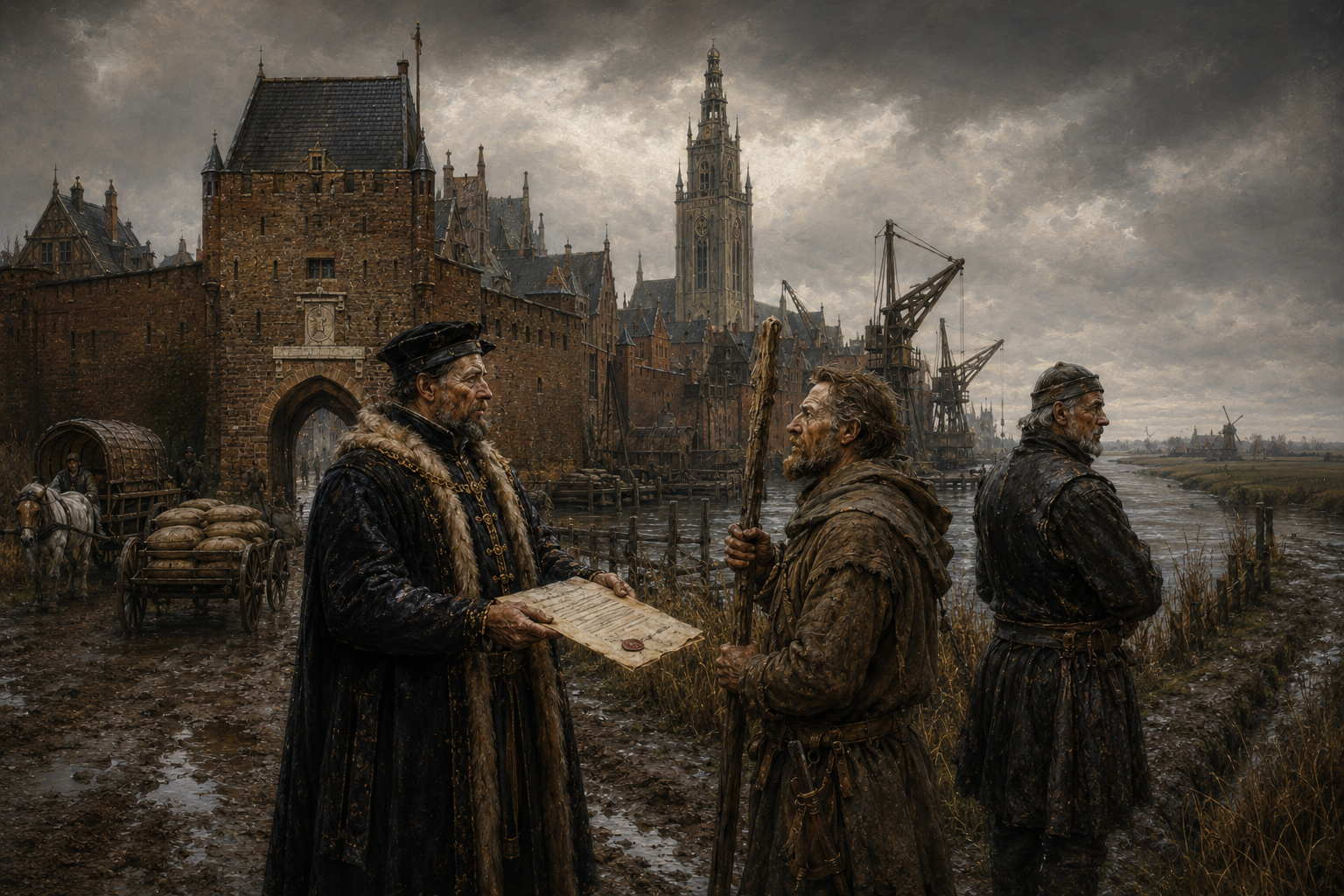
The Hondsrug · The A river harbour · Wierde villages · The Ommelanden
At a Glance
| Region | Northern Low Countries, where the Hondsrug rises above wet grasslands and tidal waterways |
|---|---|
| Ruler | Groningen’s council of burgomasters and merchant families; surrounding Ommelanden communities guard their independence |
| Places | Grote Markt, the A harbour, city gates, Aduard and the surrounding wierde villages |
| Livelihoods | Grain, cattle, barges, markets, fisheries, salt, crafts and the work of keeping the water out |
| Folklore | Widde juffers at raised village mounds and the Borries, a black hound haunting lonely roads |
| Roads | South along the Hondsrug into Drenthe; east towards East Frisia; canals and river routes towards the sea |

The road rises out of the wet country before Groningen’s brick walls come into view. In the Grote Markt, grain carts wait behind cattle pens; farther west, boatmen pole barges along the A while fishmongers call across the quays. It is a useful place to buy a horse, hire a pilot, find a bed—or lose several days when the marsh road disappears beneath floodwater. Beyond the walls, villages built on raised mounds watch the city as carefully as the city watches them.
What Is Happening Right Now?
The Boat with No Boatman
A grain barge has drifted into the A harbour with its cargo intact, its mooring line tied correctly and nobody aboard. The harbour keeper, Jurre Wold, will pay for anyone who can retrace the boat’s passage before the tide and river current erase its course. A damp wool cloak and two sets of muddy prints lie below the stern bench. The missing crew was last seen near a river village that has not sent its usual market boats.
The Broken Sluice
A stretch of dike near a Westerkwartier village is leaking through old timber. Tamme, the local dike-master, needs carpenters, ropes and labourers before the next high water. The council offers guards, but the villagers want workers who know their ground. The choice matters when a family refuses to abandon a house lying below the failing bank. A recent night visitor may have damaged the timbers deliberately—or discovered the weakness first.
Footsteps on the Wierde
At a raised settlement mound after dark, two white-clad women walk the same path without leaving footprints. One has led a child safely home; another has been seen beside a newly opened grave. The village healer, Abele, asks visitors to find the missing grave offering before the women begin gathering at the bridge. Abele calls them widde juffers. She thinks the white women will keep returning until someone puts the missing offering back inside the grave.
Arriving in Groningen
The dry approach follows the northern end of the Hondsrug. Travellers from Drenthe come up past wet meadows and peat country; those from the coast often arrive by boat or by roads raised above drainage ditches. Ask about the water level before promising a day’s journey. At the gate, city guards are more interested in stolen livestock, weapons and contagious illness than in making visitors recite a charter.
Inside, the Grote Markt and Vismarkt are the best places to seek guides, supplies and gossip. The city grew around the higher ground between the rivers A and Hunze. From the fish stalls and bridge approaches, a stranger can find the warehouses, ferry landings, hostelries and craftsmen who make Groningen useful to an adventuring company.
Places Worth Exploring
The Grote Markt and the Sacred Precinct
Tall brick buildings enclose the busy market, where porters unload wagons beside livestock pens. Across the square, temple attendants carry water and lamp oil into the city’s main sanctuary. The tower rises above the roofs while masons repair its walls and gateways. Bell-ringers watch the city for smoke.
The A Harbour and Vismarkt
On the western side, the A carries barges, river mud and gossip into the harbour. The fish market is crowded before dawn. A sailor who needs a quiet berth should speak to Jurre Wold; someone hunting contraband should look for the storage sheds where river cargo changes hands before it reaches the main square. The canals are safer than an exposed tidal crossing, but a forgotten water gate can trap a boat against rising current.
The Wierden of the Ommelanden
Beyond the walls stand farmsteads and villages on wierden, raised mounds above the floodplain. Hunsingo, Fivelingo, Westerkwartier and Oldambt have their own routes and local leaders. Herdsmen know where the wet grass becomes deep water; ferrymen know which bridges can still take a loaded cart. A visitor asking after an ancestor or an old burial place is better served by a village family than by a council clerk.
Aduard’s Sacred Estate
North-west of Groningen, the sacred estate at Aduard houses healers, copyists, storekeepers and a busy community of workers. Its attendants shelter travellers and help nearby villages tend the wet fields. The estate’s records track floods, failed harvests and families forced from their homes. A village struggling to repair its dike may find an answer in those old books.
The Dikes and Marsh Roads
The dike-master’s inspection path is not a scenic walk. Rain softens the banks, a broken sluice floods pastures, and a single wagon can tear up a narrow causeway. Stone, timber and skilled labour are valuable here. People will gladly pay for a cart brought safely through, or for a watch kept while workers brace an unstable bank against the incoming water.
Where to Stay and Find Help
- The Blue Herring, near the Vismarkt: an inexpensive, crowded alehouse kept by Janna. Fish stew, bread and straw beds are available; no private stable, but Janna can introduce a carter with a secure yard. Sailors and fishwives bring news of boats overdue on the A.
- The Copper Measure, off the Grote Markt: a clean, moderately expensive inn run by Renske, with two private rooms, locked chests and four stalls for horses. Merchants and visiting artisans eat here. Renske can find a wheelwright or arrange a quiet meeting with a grain factor, although she will not guarantee anyone’s honesty.
- The Reed Lantern, on the western waterside: simple lodging, a hot meal and a dry shed offered by Harmen, a former bargeman. He keeps rope, tar, spare oars and a boat pole for hire. The house is useful to travellers planning to leave by water; at high tide the lower floor becomes a poor place to store valuables.
Repair and recovery: smiths and carpenters work near the markets, and boatwrights are easiest to find by the river. Healers and trained attendants can be sought at the city sanctuary or Aduard’s sacred estate. Rare alchemical supplies and specialist spellwork depend on introductions; they are not guaranteed on every stall. Visitors bringing wounded companions, familiars or animals should first secure clean water, shelter and a place away from the crowded market.
The Northern Folklore Is Alive
The Widde Juffers
White-clad women appear near village mounds, bridges and old graves. Locals call them widde juffers. One leads a lost child home along the dry bank; another returns each night to a grave where an offering was stolen. They are as real to the people here as Drenthe’s witte wieven. Watch where they walk before following them into the mist.
The Borries of the Outlying Roads
In Westerkwartier folklore, a Borries is a great black spectral hound, sometimes described with an oversized head or burning eyes. One now prowls a road west of the city after midnight. A charcoal-burner who shouted at it fell ill; a drover who kept silent watched it pass without harm. It is no ordinary guard dog, and its appearance does not mean every traveller is marked for death. At the old mound, its tracks end beside a patch of fresh earth. Someone has dug here recently, but no one in the nearby farms will say what was taken.
Villagers know which old mounds to avoid after dusk. A white woman who protects one burial place may guide a traveller safely past another.
People, Trade and the Ommelanden
Groningen’s council oversees the gates, warehouses and markets. Beyond the walls, farmers and dike-masters keep the fields working and the sea out. They do not always welcome the council’s orders. Hille Faber, a council clerk, can help trace stolen cargo. Tamme knows which embankment will fail next, while Abele, a village healer, knows why the white women have returned to the mound. Each can help visitors in a different part of Groningen.
Merchants arrive from East Frisia and across the Low Countries. Their crews need dry storage, boat repairs, safe stables and news of the next crossing. Sailors bring tales from the Frisian coast, including stories of fighters such as Pier Gerlofs Donia. For the people who live here, the urgent questions are closer to home: will the floodwater rise, and where has the grain boat gone?
Travel and Onward Routes
- South to Drenthe: follow the Hondsrug’s higher sandy ground towards Rolde and the heath, carrying water and asking about bog crossings before departure.
- East towards East Frisia: marsh roads, dike paths and river crossings link market communities; allow for weather and ferry delays rather than treating the road as a fixed journey time.
- North and west by water: boatmen use the A and waterways toward the Reitdiep and coastal settlements. Cargo and passengers travel at different speeds, and navigable channels can change after storms.
A route that is safe in a dry week can disappear after two days of heavy rain. River pilots, herders and dike workers are often more valuable guides than a soldier with a map.
History and Sources
Groningen grew on the high ground of the Hondsrug, where roads met the northern waterways. Its market streets lead towards the A harbour. Across the Ommelanden, Frisian farm communities guard their own customs, while the city’s merchants increasingly draw grain and livestock towards Groningen. The city’s reach over the Oldambt and neighbouring districts provokes resistance from households who control their own dikes and grazing land.
Further reading: Groningen municipal heritage history; Groningen built heritage and medieval street plan; regional Hanseatic trade history; University of Groningen on Aduard; University of Groningen on Borries and Widde Juffers; regional black-dog folklore. Additional background: Britannica, Ommelanden and the later Lordship of Groningen.
Keep this reference growing
If this page helped with your reading or game, you can support its upkeep or explore the curated books.
Explore the Bookshop — epics, classics and stories behind imagined worlds.