
Reign of Fire (2002)
When dragons return to the modern world, a fortified community must decide whether to defend its remaining supplies or risk a campaign against the creatures.
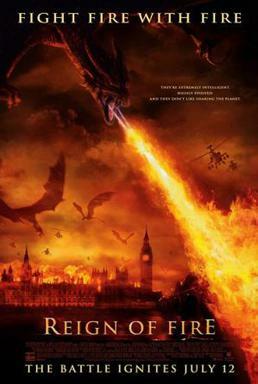
Rob Bowman’s Reign of Fire (2002) combines dragon fantasy with post-apocalyptic survival. It gives its supernatural creatures an animal-like physical presence and examines how human communities adapt to a radically changed landscape.
At a Glance
| Film | Reign of Fire (2002) |
|---|---|
| Director | Rob Bowman |
| Screenplay | Gregg Chabot, Kevin Peterka and Matt Greenberg |
| Cast | Christian Bale, Matthew McConaughey, Izabella Scorupco, Gerard Butler |
| Music | Edward Shearmur |
| Runtime | 102 minutes |
| Genre | Post-apocalyptic fantasy, action adventure |
Why This Film Matters
The dragons change an entire region rather than threatening a single village. Agriculture, travel, architecture and authority adapt to their presence. A fantasy campaign can borrow this principle by considering how a dangerous monster population affects ordinary communities, even when the adventurers never encounter the creatures directly.
The Story — Without Major Spoilers
As a child, Quinn Abercromby witnesses the awakening of a dragon beneath London. Years later, he leads a community sheltering in a fortified refuge. Its inhabitants struggle to maintain supplies and avoid the predators dominating the skies. An expedition led by Denton Van Zan arrives with a more aggressive approach, forcing Quinn to reconsider the limits of his defensive strategy.
Characters and Performances
Quinn (Christian Bale) carries responsibility for people who cannot easily leave their refuge. Van Zan (Matthew McConaughey) argues that defensive survival alone cannot secure a future. Their contrasting physical presence and leadership styles give the conflict its human centre. Alex Jensen (Izabella Scorupco) provides aviation expertise and practical support. Creedy (Gerard Butler) helps maintain the community’s morale. Alice Krige appears as Quinn’s mother in the opening sequence.
The World on Screen — Dragons and Survival
The film’s dragons possess two hind legs and wings that form their forelimbs. Their movement and anatomy draw on animal references. The fictional account of their fire and life cycle should not be mistaken for established biology. The dragons’ widespread presence leaves human settlements dependent upon shelter, communication and carefully managed supplies. In a campaign, a creature population that disrupts migration, trade or agriculture can generate adventures long before the creatures themselves appear.
Behind the Camera
Bowman sought a convincing sense of physical mass and animal behaviour. The Secret Lab’s effects team developed the dragons’ appearance and movement using digital imagery supported by practical sets and location photography. Co-visual-effects supervisor Dan DeLeeuw discusses that work in a contemporary interview. The contrast between the refuge and the exposed landscape gives the creatures’ presence meaningful consequences.
Themes and Critical Assessment
The story is strongest when Quinn’s caution and Van Zan’s willingness to take risks arise from different responsibilities rather than a simple division between bravery and cowardice. The fortress gives the action a human scale, while the digital dragons remain distinctive examples of early-2000s creature design. The compressed account of civilisation’s collapse leaves much of its world unexplored, and the speculative biology behind the concluding conflict receives limited development. Its ideas about scarcity and collective survival remain useful for fantasy adventure design.
Trailer and Production Deep Dive
Watch the theatrical trailer via MUBI. Animation World Network’s contemporary interview with Dan DeLeeuw examines the dragon effects. Rob Bowman’s production interview discusses the challenges of making a convincing dragon film. The original home-video release includes the documentary Breathing Life into the Terror, identified in Slant’s DVD review.
Explore Related Fantasy Lore
Explore the Dragon Bestiary and Red Dragon for independent game lore. Compare Dragonslayer (1981) and DragonHeart (1996). The film’s modern chronology and dragon biology do not establish the campaign’s canon.
Ideas for the Table
The last harvest. A dragon’s new territory cuts a valley’s farms off from their market. Investigate its movements, find alternative routes and organise supplies for isolated households.
The divided refuge. Leaders disagree over accepting the aid of a dangerous expedition. Discover what the visitors can actually accomplish and establish safeguards for those who cannot travel with them.
The abandoned road. A newly discovered route crosses supposedly uninhabitable land. Survey its condition, search for missing travellers and decide how it can be reopened without displacing another community.
Sources and Credits
Disney D23 — official film record; BBFC — runtime and classification; Animation World Network — effects production. The film, characters and poster belong to their respective rights holders. This review and adventure ideas are independent commentary.
Keep this reference growing
If this page helped with your reading or game, you can support its upkeep or explore the curated books.
Explore the Bookshop — epics, classics and stories behind imagined worlds.