
Kalma — The Breath of the Grave

At a Glance
| Divine identity | Kalma — the grave, corpse-cold and the presence of burial earth |
|---|---|
| Tradition | Finnish and Karelian grave-language and underworld lore |
| Nature | Neutral lesser divine personification; guardian of the stillness of the dead, not Tuonela’s sovereign |
| Home | Grave-fields on the approaches to Tuonela, within the realm of Tuoni |
| Concerns | Graves, death pollution, funerary boundaries, burial protection and the price of disturbing a corpse |
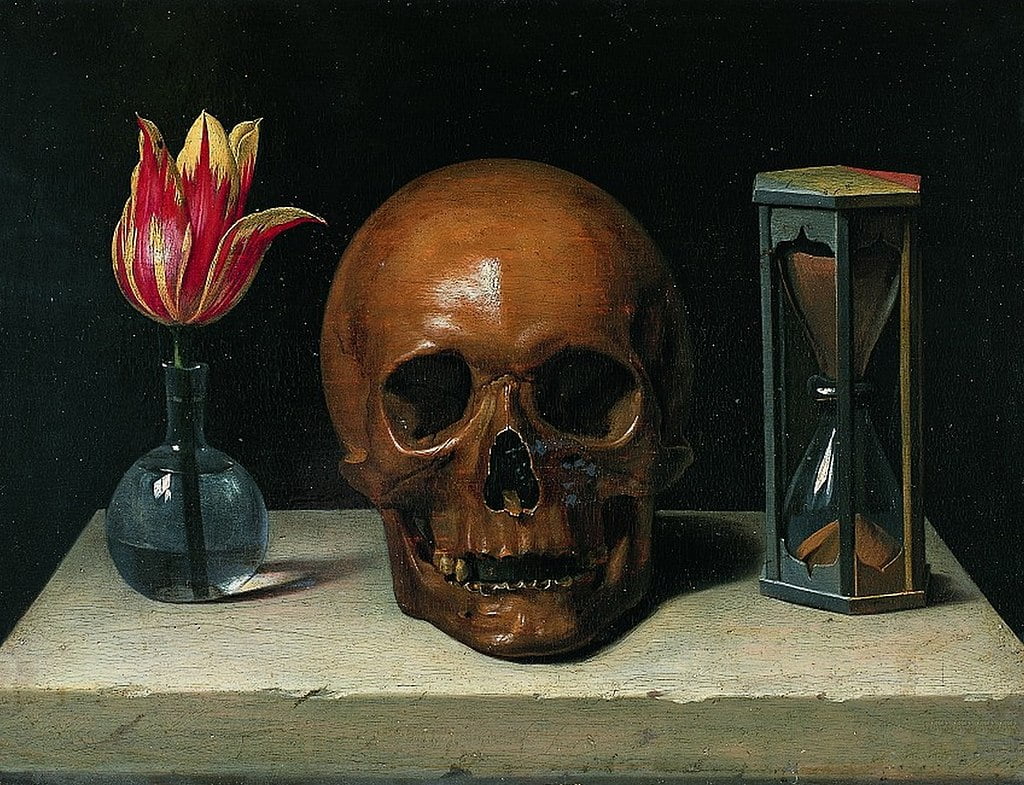
| Emblem | Pale skull upon dark soil, with the last winter leaf; a campaign emblem, not an attested universal Finnish cult symbol |
| Domains | Death, Repose, Darkness (where available) |
| In the world | Fresh graves breathe cold mist, wandering dead stop at the churchyard fence and families argue over a body that will not decay |
Kalma is the chill left when the living have departed. She clings to burial earth, sealed chambers and the names that a family will not speak above a grave. She does not collect the dead for pleasure. When a body has been wrongly taken, she makes its absence known.
What Is Happening Right Now?
Graves beside a Finnish woodland settlement are beginning to frost in summer. The oldest burial has been opened, and a small iron ring removed from the finger of a woman laid to rest three generations ago. The cemetery watchman has fallen ill with a smell of cold soil about his clothes. No corpse has risen, yet people bar their doors against the dead.
The ring is held by a distant descendant trying to prove her inheritance. A rival family accuses her of witchcraft. Kalma has not unleashed a plague: she has stopped the grave’s rest until the claim is settled and the dead woman’s name is spoken at her stone. The characters can investigate without fighting, and a just resolution need not surrender the property to the loudest claimant.
Kalma and Tuonela
Tuoni rules the black river and the country of the dead. Kalma is not another throne-holder pretending to command his realm. She rules the closer boundary: earth over bone, the unfinished grave, the cold place where the living must decide whether to leave the dead in peace.
In a village graveyard she appears as a woman cloaked in frost-stiffened linen. She smells of soil and the sweet decay of leaves, not deliberate filth. When her presence is unwelcome she speaks quietly, and the dead rest less easily. Her demand is usually precise: return the object, identify the body, correct the burial, or stop using a grave for a lie.
Kalman impi: The maiden named as Kalma’s daughter in some surviving runic accounts can appear as an independent dangerous figure whose gifts and poisons are not automatically Kalma’s wishes. The daughter and the grave power do not share a mind or stat block.
Visiting the Grave-Fields
Beyond the black river, paths branch into graves that belong to no human cemetery. Every marker bears a name; some are so old that nobody living knows who carried them there. Kalma walks these fields and knows which burial promises are unfinished. The place belongs within Tuonela and does not replace Tuoni’s judgment.
Estate effects: In a one-mile area, unauthorized grave-breaking carries a smell of damp earth back to the thief’s home; every corpse buried with its true name and proper testimony stays still for a year unless a stronger necromantic power intervenes; candles gutter near a hidden disturbed grave. These signs are not automatic guilt or proof of murder. They lead mortals toward investigation.
Kalma accepts a living traveller who brings evidence on behalf of the dead. She does not promise resurrection. Demanding a body’s return without a just cause puts a visitor at odds with the ancient law of the underworld.
Worship, Signs and Gifts
Kalma’s attendants are grave diggers, boundary wardens, the bereaved and those who mend desecrated graves. Villages have their own rites. No universal Finnish priestly order or fabricated annual festival commands them all.
Signs: A clean grave turning white at dusk, a handprint of cold clay on the threshold, or a bowl of water going still while others ripple. Gift: Last Name on the Stone. A person who has repaired a violated burial may ask once for the truthful name of one body in that cemetery. Kalma gives the name, not the circumstances of death or a confession by the living.
Kalma rebukes corpse thieves, predatory necromancers and those who profit by denying burial. She does not automatically punish mourners who are poor, displaced or prevented from practising the customs they know.
Divine Mechanics
The following statistics are for Kalma herself. The local grave spirit can appear without combat; these rules govern a confrontation with the grave’s own divine power. Choose only the panel matching the game in play.
Kalma — D&D 2024
Medium Celestial (Deity), Neutral · AC 25 · Initiative +3 (13) · Hit Points 450 (36d8 + 288) · Speed 30 ft., burrow 30 ft. through loose soil · CR 24 (62,000 XP; PB +7)
| STR | DEX | CON | INT | WIS | CHA |
|---|---|---|---|---|---|
| 24 (+7) | 16 (+3) | 26 (+8) | 24 (+7) | 30 (+10) | 24 (+7) |
Saves: Str +14, Con +15, Wis +17, Cha +14 · Skills: Insight +17, Medicine +17, Perception +17, Religion +14, Stealth +10 · Resistances: cold, necrotic and bludgeoning, piercing and slashing from nonmagical attacks · Immunities: Exhaustion, Frightened, Poisoned · Senses: Truesight 120 ft., passive Perception 27 · Languages: Finnish and Karelian tongues, understanding of speech addressed to the dead, telepathy 120 ft.
Traits
Legendary Resistance (3/Day). Kalma may succeed on a failed saving throw. Grave-Sense. Within 120 feet she knows the position of corpses not concealed by a plane boundary or complete magical obstruction. This does not disclose the cause of death or thoughts. Rest without Rising. Nonhostile corpses within 30 feet cannot become undead while she remains in that area; existing undead are unaffected.
Actions
Multiattack. Three Grave-Cold Touch attacks. Grave-Cold Touch. Melee Attack Roll: +17, reach 10 ft.; Hit: 32 (4d10 + 10) Necrotic damage. A living target cannot regain Hit Points until the beginning of Kalma’s next turn.
The Grave Keeps Its Name (Recharge 5–6). Kalma chooses creatures within a 30-foot-radius sphere centered on a corpse or grave marker she can see within 120 feet. Each chosen living creature makes a DC 25 Constitution save, taking 72 (16d8) Necrotic damage on failure, or half on success. A target that fails is also Frightened until the end of its next turn; this condition does not force it to flee. Corpses in the area become protected from being animated for 24 hours. This does not kill a healthy creature automatically.
Spellcasting. Wisdom, save DC 25, attack +17; at will Gentle Repose, Speak with Dead; 3/day Death Ward, Hallow, Blight; 1/day Harm, Finger of Death. Kalma pays spell components only when an action explicitly calls for a costly component, and follows concentration normally.
Bonus Action, Reaction and Legendary Actions
Burial Mist (Bonus Action). Teleport up to 30 feet to a grave, stone marker or bare soil she sees. Last Shelter (Reaction). When a creature within 60 feet drops to 0 Hit Points, Kalma can cause the creature to remain at 1 Hit Point instead (3/day); this cannot prevent destruction by a specific effect that kills without reducing Hit Points.
Legendary Actions (3/Round). At the end of another creature’s turn choose: Step (1): move half speed; Grave-Cold Touch (1): make one attack; Keep Silence (2): one target within 60 ft. makes DC 25 Wisdom save or becomes unable to speak until the end of its next turn. It can still use nonverbal abilities and spell components that do not require speech. Regain three uses at the beginning of her turn.
Granted Domain and Spells
Cleric: Life Domain for warding and burial duty among the 2024 Player’s Handbook choices. This is a role assignment, not a claim that a Death Domain appears in those core rules. Campaign blessings: Gentle Repose (2nd), Speak with Dead (3rd), Death Ward (4th), Hallow (5th); these gifts do not alter the published subclass’s spell preparation without GM permission.
Kalma — D&D 2014
Medium Celestial, Neutral; Armour Class 25; Hit Points 450 (36d8 + 288); Speed 30 ft., burrow 30 ft. in loose earth; Challenge 24 (62,000 XP; proficiency +7).
Abilities: Str 24 (+7), Dex 16 (+3), Con 26 (+8), Int 24 (+7), Wis 30 (+10), Cha 24 (+7). Saving Throws: Str +14, Con +15, Wis +17, Cha +14. Skills: Insight +17, Medicine +17, Perception +17, Religion +14. Damage Resistances: cold, necrotic, bludgeoning/piercing/slashing from nonmagical attacks. Condition Immunities: exhaustion, frightened, poisoned. Senses: truesight 120 ft.; passive Perception 27. Languages: the living tongues of Finland and Karelia, telepathy 120 ft.
Traits
Legendary Resistance (3/Day). If she fails a saving throw, she may choose to succeed. Grave-Sense. Kalma knows the locations of corpses within 120 feet unless concealed beyond planar or strong magical boundaries; this is not divination of their last words. Peace in the Soil. While she stands within 30 feet of an unanimated corpse, it cannot rise as undead, but an existing undead creature is unaffected.
Actions
Multiattack. Three Grave-Cold Touch attacks. Grave-Cold Touch. Melee Spell Attack: +17 to hit, reach 10 ft., one target. Hit: 32 (4d10 + 10) necrotic damage, and living target cannot regain hit points until the beginning of her next turn.
The Grave Keeps Its Name (Recharge 5–6). Living creatures of Kalma’s choice within 30 feet of a corpse or grave marker within 120 feet make a DC 25 Constitution saving throw. Failed save: 72 (16d8) necrotic damage and frightened until end of next turn. Successful save: half damage, no fear. The bodies in the affected area cannot be raised as undead for 24 hours unless a deity of equal or higher standing overrules the ward.
Innate Spellcasting. Wisdom (DC 25, +17 spell attack); no material components except specifically expensive ones. At will Gentle Repose, Speak with Dead; 3/day Death Ward, Hallow, Blight; 1/day Harm, Finger of Death.
Burial Mist (Bonus Action): teleport 30 feet to visible bare soil or a grave. Last Shelter (Reaction, 3/Day): a visible creature dropping to 0 hit points within 60 feet remains at 1 hit point, except when an effect kills it independently of hit points.
Legendary Actions
Three uses at the end of other creatures’ turns: Step (1) move half speed; Grave-Cold Touch (1) make one touch attack; Keep Silence (2) one creature within 60 ft. must succeed on a DC 25 Wisdom save or cannot speak until end of its next turn. Kalma recovers three uses at the beginning of her own turn.
Domain and Domain Spells
Cleric domain: Death Domain from the 2014 Dungeon Master’s Guide, if that optional subclass is permitted. Its domain spells are 1st: False Life, Ray of Sickness; 3rd: Blindness/Deafness, Ray of Enfeeblement; 5th: Animate Dead, Vampiric Touch; 7th: Blight, Death Ward; 9th: Antilife Shell, Cloudkill. Clerics devoted to burial protection may instead follow Life Domain without requiring the Death subclass. The deity’s own statistics do not grant a player free necromancy powers.
Kalma — Pathfinder 1e
CR 27/MR 5; XP 3,276,800; N Medium outsider (extraplanar, mythic); Init +5; Perception +44; darkvision 60 ft., true seeing.
Defence
AC 44, touch 22, flat-footed 39 (+5 Dex, +14 natural including mythic armour, +8 graveplate, +7 deflection); HP 610 (20d10 + 20d8 + 360, plus 50 mythic HP); Fort +33, Ref +23, Will +34; DR 15/epic; Immune death effects, fear, disease; Resist cold 20, negative energy 20; SR 38.
Offence
Speed 30 ft., burrow 20 ft. (earth only); Melee +5 grave scythe +48/+43/+38/+33 (2d4 + 17 slashing plus 4d6 negative energy, ×4); Space/Reach 5 ft./5 ft.; BAB +35; CMB +43; CMD 65.
Grave’s Due (Su; 1/day, standard action): Creatures selected by Kalma in a 30-ft.-radius burst around a grave within 120 feet make DC 29 Fortitude saves. Failure deals 16d6 negative-energy damage and leaves the target staggered for 1 round; success deals half damage without stagger. Spell resistance applies. A corpse touched by this magic is warded against necromantic animation for 24 hours. This effect is not a death effect and cannot kill a healthy target merely because it fails the save.
Spell-like Abilities: CL 26; concentration +36, DC 20 + spell level; at will Gentle Repose, Speak with Dead; 3/day Death Ward, Hallow, Blight; 1/day Harm, Finger of Death. Mythic power 13/day, surge +1d8 (MR5). Burial Shelter (Su; immediate action, 1 mythic power): a creature within 60 ft. gains +6 sacred bonus on a Fortitude saving throw against poison, disease or death magic before the result is known.
Statistics
Str 26, Dex 20, Con 28, Int 24, Wis 30, Cha 24. Feats Improved Initiative, Toughness, Combat Casting, Iron Will, Skill Focus (Knowledge [religion]), Spell Focus (necromancy), Greater Spell Focus (necromancy), Quicken Spell-Like Ability (gentle repose), Dodge, Mobility, and other feats appropriate to outsider/cleric HD. Skills Heal +44, Intimidate +40, Knowledge (religion) +44, Perception +44, Sense Motive +44, Spellcraft +44, Survival +40. Languages Finnish, Karelian, other nearby Finnic tongues, telepathy 120 ft.
Granted Domains and Spells
Domains: Death, Repose, Darkness; subdomains: Undead or Murder only for hostile cults, Souls for burial keepers where permitted. Clerics select two normal domains. Repose domain spells (levels 1–9): Deathwatch, Gentle Repose, Speak with Dead, Death Ward, Slay Living, Undeath to Death, Destruction, Waves of Exhaustion, Wail of the Banshee. Use normal Pathfinder spell slots and the linked domain powers.
Kalma — D&D 3.5e
CR 32; N Medium outsider (extraplanar); Divine rank 6 (lesser deity); Outsider 20/Cleric 20; Init +5; divine senses and darkvision 60 ft.; Listen +49, Spot +49.
Defence
AC 50, touch 28, flat-footed 45 (+5 Dex, +14 natural, +6 divine, +7 deflection, +8 sacred armour); HP 580 (40d8 + 400); Fort +40, Ref +29, Will +40; DR 20/epic; SR 38; divine immunities to death effects, disease, energy drain, ability damage and other effects as defined for her rank.
Offence
Speed 30 ft., burrow 20 ft. (earth only); Melee +5 grave scythe +55/+50/+45/+40 (2d4 + 14 slashing plus 4d6 negative energy, critical ×4); BAB +35; Grapple +44; 5-ft. space and reach.
Cleric spellcasting: CL20, Wisdom 30 (+10), prepared as a 20th-level cleric, save DC 20 + spell level; useful prepared spells include Gentle Repose, Speak with Dead, Death Ward, Hallow, Harm, Finger of Death. Two granted domains are chosen from Death, Repose and Darkness, with their full domain-slot spells.
Grave’s Due (Su; 1/day): Kalma fixes her gaze on a grave or corpse within 120 feet and marks a 30-foot-radius spread. Each selected living creature makes Fortitude DC 41 or takes 16d6 negative energy and is sickened for 1 round; save for half damage and no condition. Spell resistance applies to the harmful effect. The effect is not a death spell. Corpses affected cannot be animated for 24 hours without an equal or greater divine power.
Salient Divine Abilities: Divine Knowledge (burial names), Divine Spellcasting, See Magic, Divine Shield (protects lawful burial places), and Life and Death (restricted to guiding souls and recognising proper funeral passages). Apply the deity-rank rules for divine resistance, immunities and contests.
Statistics and Domains
Str 28, Dex 20, Con 30, Int 24, Wis 30, Cha 24. Skills Heal +50, Intimidate +44, Knowledge (religion) +52, Listen +49, Sense Motive +49, Spellcraft +49, Spot +49. Feats Combat Casting, Iron Will, Improved Initiative, Spell Focus (Necromancy), Greater Spell Focus (Necromancy), Quicken Spell, Empower Spell, Toughness, and appropriate outsider/cleric divine and epic feats.
Granted domains: Death, Repose, Darkness. Repose domain spells: Deathwatch (1), Gentle Repose (2), Speak with Dead (3), Death Ward (4), Slay Living (5), Undeath to Death (6), Destruction (7), Waves of Exhaustion (8), Wail of the Banshee (9). Each cleric prepares one domain spell in its corresponding slot per spell level.
Use Kalma at the Table
The Grave that Breathes
A grave sends a cloud of cold air into the village every morning. A false stone bears the name of a child who did not die there. Discovering the true burial forces the parish elder to choose between preserving a family secret and giving an innocent child proper remembrance.
The Iron Ring
A widow claims a signet from the dead to establish ownership of a winter orchard. Her rivals accuse her of theft, but one witness remembers seeing a second ring on the body’s other hand. The characters must trace the original funeral witnesses before frost claims the tree roots.
The Maiden of Venom
Snakebite victims across the marsh have the same mark on their hands. Kalman impi has made a bargain with the ferry keeper and her mother neither endorses nor opposes it. The party can return the stolen cauldron to the daughter, break the bargain, or earn passage without accepting its price.
Travel, Law and the Burial Boundary
Tuonela is not a shortcut to any missing person. Living travellers need an actual route, a guide or appropriate magic to cross its river, and the permission of those who guard its boundary. A correct burial has lasting legal consequences in towns, farms and clans. A divination or spell that speaks through a corpse cannot on its own transfer a title, overturn a witness or establish a murder charge.
For context see the Finnish Pantheon, Tuoni, and Gentle Repose.
Sources and Artwork
The Finnish word kalma denotes the grave, corpse or grave-cold, and some sources treat its personalization as disputed. The personified Kalma of this world is not evidence that a universal goddess cult was historically attested. See John Abercromby’s translations and discussion of Finnish death-language, and the scholarship discussed in Finnish-language studies of the Kalevala and burial vocabulary. Tuoni and his underworld remain distinct.
The Kalma portrait comes from the site’s existing art library. The second image is a later European vanitas still-life, used as an illustrative mortality symbol rather than a claim of historical Finnish heraldry. Edition-specific spell names link to the relevant published spell pages; the statistics and grave-field encounters are original game material.
Keep this reference growing
If this page helped with your reading or game, you can support its upkeep or explore the curated books.
Explore the Bookshop — epics, classics and stories behind imagined worlds.