
Brunswick–Wolfenbüttel — The Welf Court on the Oker
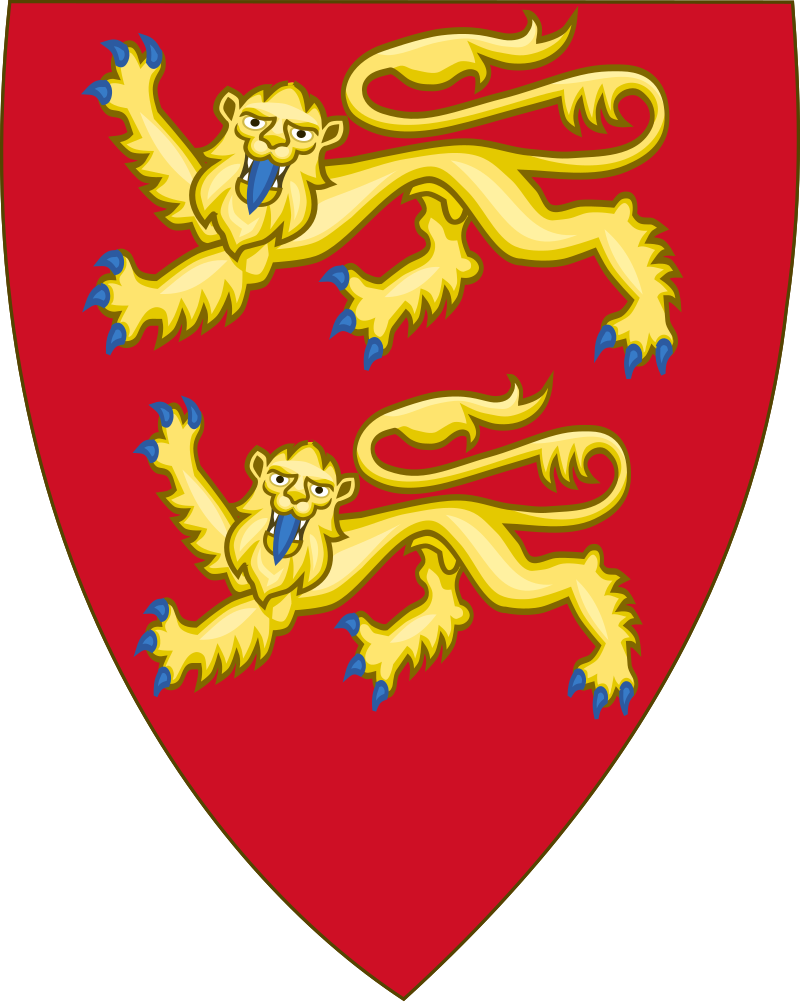
The dukes of Brunswick–Lüneburg do not rule one undivided country. Their Wolfenbüttel branch holds a patchwork of lands around the Oker and the Harz approaches, but the ducal court no longer resides in the great merchant city of Brunswick. It keeps its chancery and household behind the moats of Wolfenbüttel, where a prince can receive envoys without having to negotiate each entrance through Brunswick’s proud city council.
- Realm: princely Welf lands of Brunswick–Lüneburg within the Holy Roman Empire
- Ruler: Henry the Peaceful, Prince of Brunswick–Wolfenbüttel, of the House of Welf
- Court seat: the moated stronghold of Wolfenbüttel on the River Oker
- Major neighbouring city: Brunswick, rich in merchants and governed by powerful civic institutions
- Other Welf branch: Calenberg, held by Henry’s brother William the Victorious; Lüneburg and Grubenhagen have further princes
- Livelihoods: estates, river and road tolls, grain, timber, court crafts, Harz metalwork and Brunswick markets
- Speech and custom: local Low German dialects, court records and distinct village laws and sacred traditions
- Principal tensions: Welf inheritance, contested revenue and city privileges, rights of passage and the loyalty of castle officers
What Is Happening Right Now?
Henry’s steward has ordered a new accounting of ducal tolls on the road from Brunswick to Wolfenbüttel. Merchants protest that they already pay the city’s officers; the castle clerk replies that the dues support bridges used by both parties. Meanwhile a Calenberg agent arrives carrying William the Victorious’s seal and asks to inspect records that Henry’s men consider their own. Neither Welf brother wishes to turn a family disagreement into an open breach, but their servants are less cautious.
Wolfenbüttel — Seat of the Court
Wolfenbüttel grew beside an Oker crossing and the water castle that controls it. The stronghold stands amid low, wet ground, with moats, causeways and storehouses suited to a prince who needs a defensible residence. Since 1432 it has served as the principal Welf residence of this branch. Petitioners, guards, clerks and craftsmen gather at its gates; the settlement around it remains modest beside Brunswick’s much larger markets.
The court is a travelling household as much as a group of buildings. Dues must supply horses, fodder, food, writing materials, pay for retainers and gifts to visitors. A captain ordering timber from the Harz must bargain with forest officers and carriers before a single beam reaches the Oker. Dwarven metalworkers and merchants from the Harz bring worked iron and fine tools to the ducal household, travelling alongside the miners, cart drivers and merchants who supply the court.
Brunswick and Its Liberties
Brunswick remains the region’s great town, with five established civic quarters, trading wealth and strong councils. The dukes have rights in and around it, but the burghers cannot be treated as servants living within the castle enclosure. Past disputes over civic freedoms help explain why the ruling household made Wolfenbüttel its principal seat. Someone arrested under ducal authority may still have friends among the city’s magistrates capable of demanding a hearing.
Roads, Markets and Military Service
The Oker routes connect Brunswick’s warehouses to the countryside, the Harz foothills and the roads towards the Weser and Leine. A successful journey needs more than a straight road: bridges, ferries, local toll rights and safe conduct can change between one court’s officers and another’s. Grain and livestock feed the ducal household; timber, iron and skilled hands keep its defences and carts in repair.
The princely levy relies on mounted retainers and lesser nobles as well as foot soldiers supplied through local obligations. The prince may call men to escort a convoy or guard a castle, but those who own the horses and hold the fields must still agree who pays for damage done on the way. A magistrate in Brunswick will count the consequences of such a summons differently from Henry’s officers.
The Divided Welf Inheritance
The Welf dynasty holds several principalities and shares the ducal title. Henry the Peaceful governs Wolfenbüttel; William the Victorious holds Calenberg, separated in 1432. Elsewhere, the Lüneburg court draws wealth from the salt trade, while the Grubenhagen line pursues its own interests. A family seal therefore identifies a claimant but does not make a warrant valid throughout every Welf possession.
Adventures at the Court
- The flooded causeway. After two days of rain, a mill dam breaks above Wolfenbüttel and strands a household and its livestock beyond the castle crossing. The ducal boats are being held for an arriving envoy, while the miller insists the water will rise again by night.
- Calenberg’s courier. William’s agent has lost a sealed packet inside the Wolfenbüttel household. Recovering it quietly could prevent a family dispute from becoming a public accusation of theft.
- The forest contract. A court officer promises a large timber order to one Harz supplier, while the estate that owns the cutting rights insists the wood was pledged to winter fuel. Carriers and charcoal burners may be left unpaid unless the two sides reach terms.
Historical Sources and Related Places
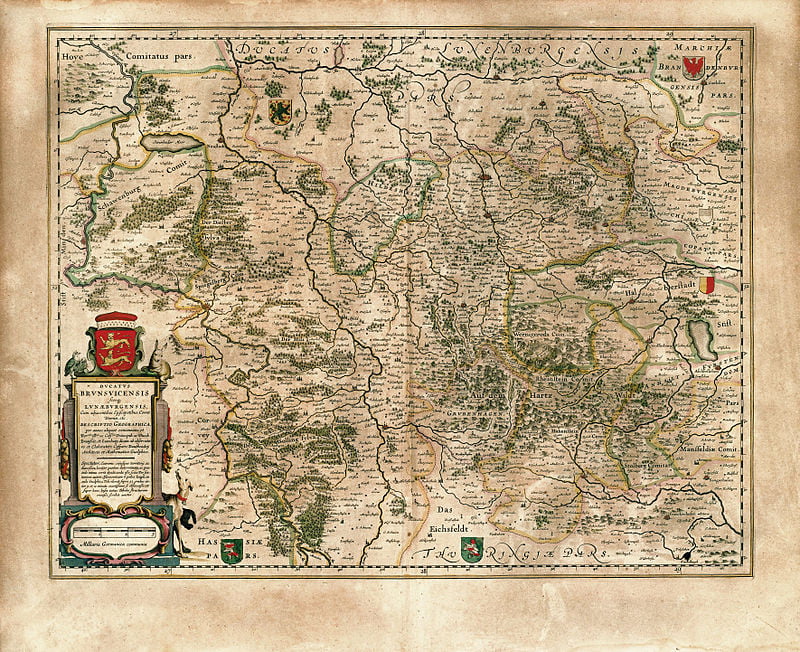
The City of Wolfenbüttel places the permanent princely residence here from around 1430; the Göttingen Academy’s medieval court history identifies 1432 as the start of the main residence and describes the Oker fortress. The Brunswick–Lüneburg regional entry sets out the connected Welf rulers and Brunswick’s separate civic interests. The map below dates to 1645, long after the campaign’s opening, and should be read as later cartography rather than a contemporary political map.
Keep this reference growing
If this page helped with your reading or game, you can support its upkeep or explore the curated books.
Explore the Bookshop — epics, classics and stories behind imagined worlds.