
Laponia (Sápmi)
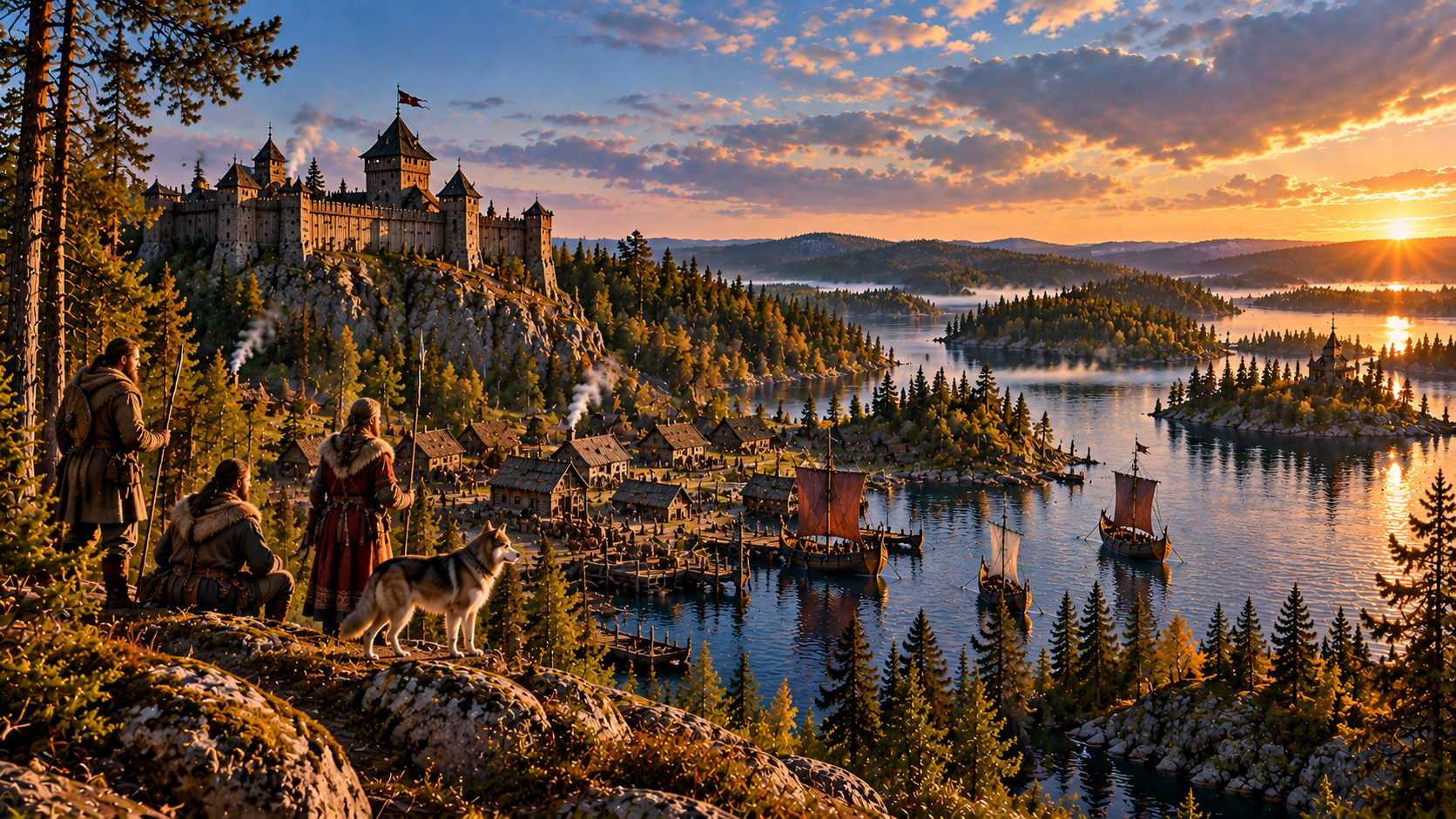
The northern Sámi homelands beyond neat royal borders, shaped by rivers, reindeer, fishing waters and long-distance seasonal routes
At a Glance
| Region | Northern Fennoscandia extending across the lands claimed by Norway, Sweden and the eastern powers |
|---|---|
| Preferred Name | Sápmi in Northern Sámi; “Laponia” is a southern administrative and geographical exonym |
| Political Character | No single crown governs the whole region; Sámi communities follow local kinship, seasonal, trading and sacred obligations while outsiders compete for tribute and access |
| Peoples and Languages | Diverse Sámi communities speaking related Sámi languages, alongside Finnish, Norse and Karelian contact zones |
| Livelihoods | Fishing, hunting, gathering, duodji craft, reindeer use and herding, small-scale farming in suitable districts and long-distance seasonal movement |
| Notable Place | Korvatunturi |
| Notable Figure | Joulupukki, a powerful winter wanderer—not ruler of the Sámi homelands |
| Campaign Themes | Seasonal travel, competing tribute collectors, sacred landscapes, winter spirits, long-distance trade, reindeer routes and northern diplomacy |
Laponia is not a single Finnish province and it has no capital. It is the southern name for a vast northern world whose Sámi inhabitants have lived across what later rulers try to divide into Norway, Sweden, Finland and the Kola lands. Those political claims matter, but they do not define the region’s older geography.
Movement follows season, water, animals and inherited knowledge. Rivers, lakes, coasts, forests, fells and winter routes connect communities over enormous distances. Fishing, hunting, gathering, reindeer-related livelihoods and skilled craft make survival possible without forcing every community into the same pattern.
Outsiders arrive as traders, priests, tax collectors, hunters and envoys. Their maps tend to show empty spaces between settlements. Local knowledge shows something different: named waters, seasonal camps, sacred sites, pasture, fishing places, family routes and territories whose boundaries can be precise without being fenced.
Explore: Finland · Pohjola · Korvatunturi · Finnish Pantheon · Union of Midgard
What Is Happening Right Now?
Two Crowns Claim the Same Tribute
Collectors arriving from different directions each insist that a northern community owes them payment. The people being taxed consider both claims incomplete and neither collector understands the seasonal routes involved.
The Reindeer Route Has Shifted
Animals avoid a valley used for generations. Hunters find no predator, only stones arranged in a spiral beneath the snow.
Joulupukki Is Travelling Early
Joulupukki is seen far from Korvatunturi before the deep winter. Elders disagree whether his journey is warning, punishment or preparation.
A Southern Map Has Become Dangerous
Royal agents follow a new survey that ignores seasonal water and pasture. Their attempt to enforce it is creating disputes between communities that previously shared access without difficulty.
Places to Use in Play
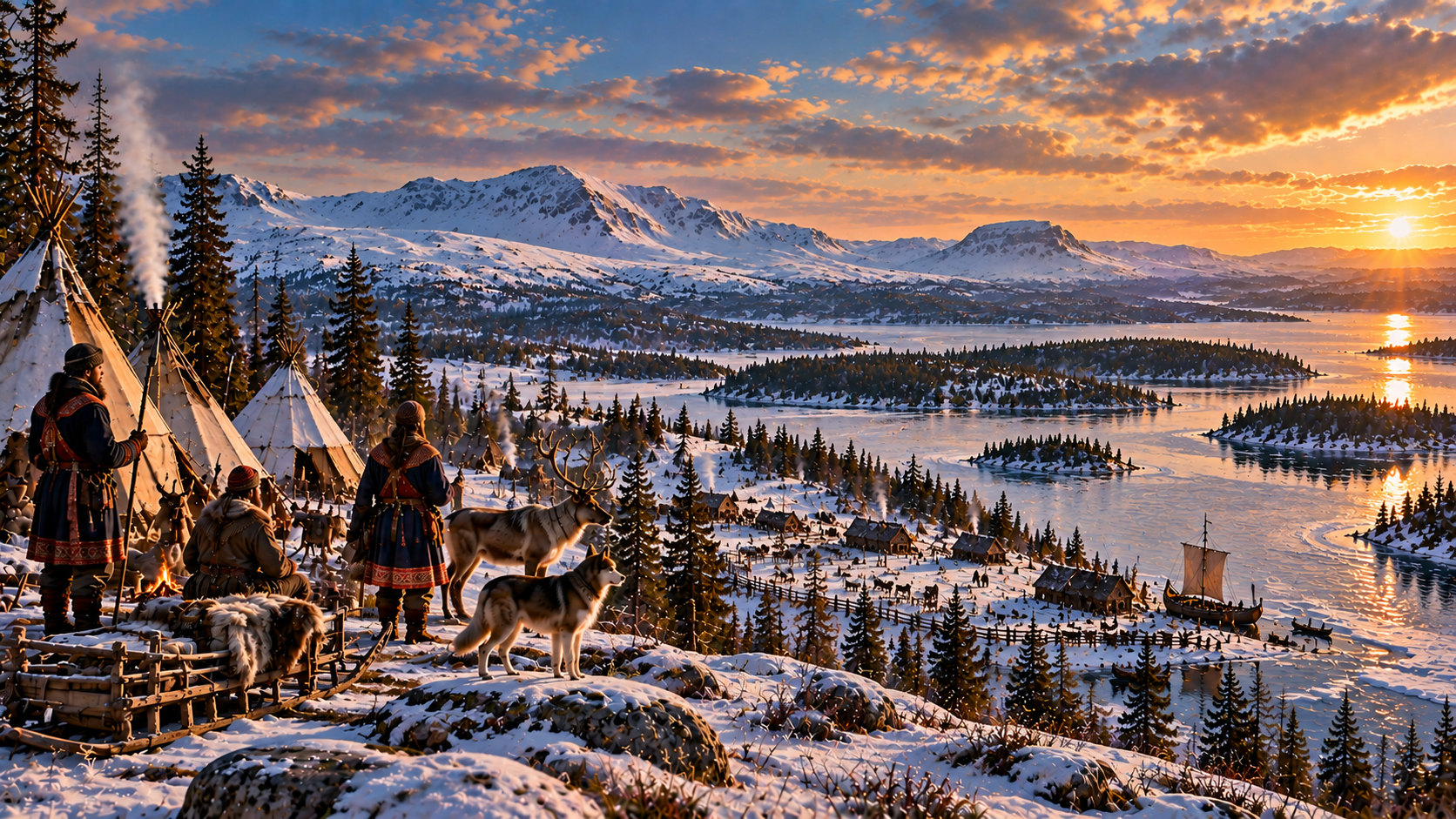
Korvatunturi
The fell is associated with deep winter power and with Joulupukki’s movements. It should feel like a place known through routes, stories and signs rather than a southern-style town.
The Great Rivers
Rivers are roads, fisheries and boundaries. Boats dominate warmer seasons; frozen surfaces transform movement in winter. Water spirits and dangerous ice make expertise essential.
Seasonal Camps
A camp may be inhabited intensely for part of the year and nearly empty at another. Outsiders who mistake seasonal movement for abandonment can trespass on active territory without realising it.
The Fell Country
Open uplands create long sightlines, violent weather and routes defined by experience rather than permanent roads. Supernatural processions, winter hunters and sky omens are easier to encounter here than in the forested south.
People and Powers
| Power | What It Wants | Adventure Pressure |
|---|---|---|
| Sámi Families and Communities | Continued access to fishing waters, hunting grounds, reindeer routes, sacred sites and inherited knowledge. | Diplomacy, rescue, contested access and protection from outsiders who misunderstand the land. |
| Southern Tribute Collectors | Furs, fish, taxes, political recognition and proof that distant claims mean something. | Double taxation, hostage-taking, forged authority and escort work. |
| Traders | Furs, hides, fish, craft goods and safe long-distance routes. | Convoys, missing goods, debt and bargaining across several languages. |
| Shamans and Sacred Specialists | Correct relationships with ancestors, landscape powers, animals and dangerous places. | Spirit journeys, healing, divination and taboo. |
| Joulupukki | Winter obligations of his own, not governance over the region. | Gifts, judgement, impossible journeys and requests made at the wrong season. |
Dangers, Rumours and Adventure Hooks
- The Double Tax. Two rival collectors seize the same winter stores under different royal seals.
- The Empty Herd. Reindeer return without their herders, every animal carrying a strip of red cloth tied to one antler.
- The Frozen Drum. A ritual drum is found sealed inside clear lake ice that never melts around it.
- The Wrong Winter Road. A familiar frozen route leads travellers hundreds of miles north in a single night.
- The Missing Camp. A seasonal settlement appears abandoned until the party realises every track leads upward into the sky.
- The Gift Debt. A southern noble accepts something from Joulupukki without understanding that receiving it creates an obligation.
Travel, Territory and Law
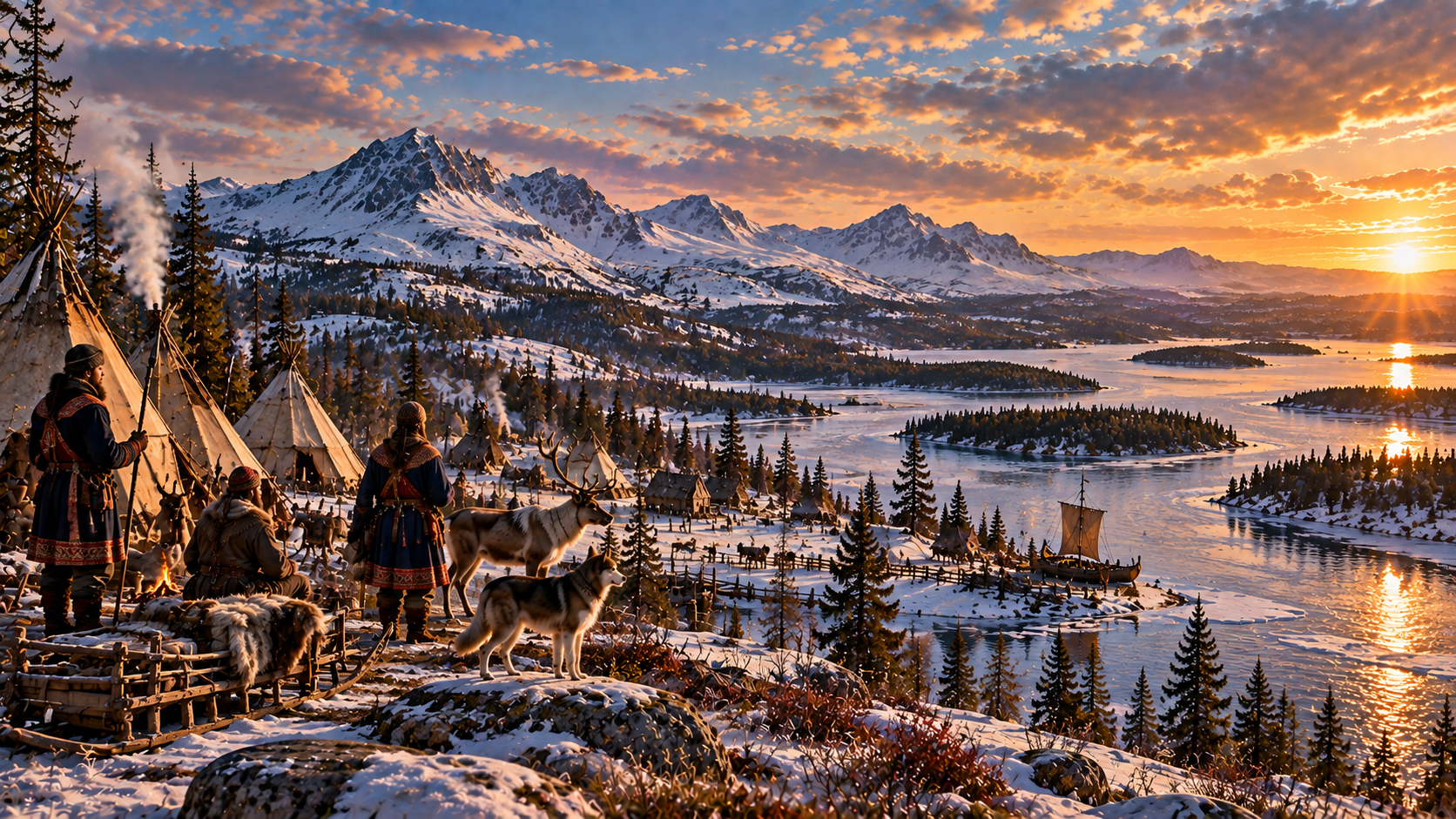
There is no single road network. Rivers, coasts, winter ice, forest paths, fells and seasonal routes form a changing system. A route that is easy in February can be impossible in June. Local guidance is strategic knowledge.
Territory should not be portrayed as ownerless because it lacks southern-style walls or charters. Fishing waters, hunting grounds, migration routes, sacred places and family use can all carry recognised claims. Outsider law overlays those systems but does not erase them.
Deeper History
Sámi homelands extend across northern Fennoscandia and the Kola interior, predating modern state borders. In the fifteenth century, control by southern kingdoms remains incomplete and uneven. Tribute and trade networks reach north, but no single ruler can plausibly govern the whole region as one province.
The northern world is culturally diverse. Fishing, hunting, gathering, reindeer-related livelihoods and craft traditions vary by environment and community. Reindeer are important, but they are not the only foundation of Sámi life and should not flatten every group into the same social pattern.
Explore the Midgard Cluster
Union of Midgard · Finland · Pohjola · Korvatunturi · Finnish Pantheon · Joulupukki