
Hausa Kingdoms — Rival Cities of the Savanna
Hausa Kingdoms — Rival Cities of the Savanna
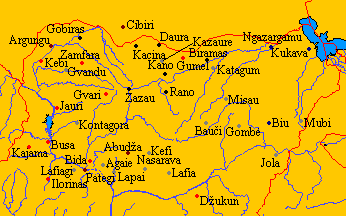
The gates open before sunrise. Traders lead pack animals through walled streets as dyers prepare their vats and smiths set their hammers to work. A rider arrives bearing a summons from Zazzau, but the ruler of the next city refuses to accept it. The Hausa kingdoms are rich in trade and skilled crafts, and each guards its own independence.
People and Political Loyalties
- Queen Amina of Zazzau: In the campaign’s royal histories, Amina commands Zazzau’s warriors and guards its southern approaches. Her power does not extend over all Hausa cities.
- The Kano Court: A separate ruler and merchant elite control Kano’s workshops and regional markets, and defend their own interests against rival Hausa states.
- Daura’s elders: Councillors, lineage leaders and keepers of the city’s foundation traditions dispute who may speak for their people.
| Political form | Independent Hausa-speaking city-states and surrounding districts; no single unified crown |
|---|---|
| Great cities | Daura, Kano, Katsina, Gobir, Zazzau, Rano and other towns |
| Rulers | Distinct royal households, city courts and local authorities; Queen Amina governs Zazzau within the campaign |
| Peoples | Hausa communities and neighbours linked by markets, pastoral paths, caravan roads and family ties |
| Languages | Hausa and the languages of neighbouring peoples and visiting traders |
| Livelihoods | Market trade, farming, leatherwork, weaving, metalwork, dyeing and caravan transport |
| Sacred life | Local ancestral traditions, sacred places, community rites, divination and protective practices |
| Regional symbols | No single historic coat of arms or flag for all independent cities |
| Campaign present | 1454 CE |
What Is Happening Right Now?
Rival city courts compete for trade without obeying one overall ruler. A merchant carrying leatherwork from Kano seeks protected passage through Katsina while a party from Zazzau tries to persuade smaller towns to recognise its fighters as escorts. A promise made in one market binds only the people who accepted it. When a harvest fails, a ruler may show generosity to the neighbouring village or seize stores for a military campaign, and the difference decides who will serve that court next season.
The walled settlements of Kano, Daura, Katsina, Gobir, Rano and Zazzau each have their own court, markets, artisans and networks of dependants. Queen Amina’s campaign seat is Zazzau; her military strength and the alliances she attracts do not make her monarch of all Hausaland. Between the principal cities are farming settlements, shrines, grazing country and local leaders whose interests are not always those of the nearest royal household.
Cities, Sacred Places and Work
Kano: markets, dyers, cloth makers, leatherworkers and metal artisans draw caravans through the city gates. Daura: ancestral traditions and the stories of the city’s founding shape its prestige. Zazzau: its independent court raises warriors and protects routes between savanna and forest. Katsina and Gobir: rulers bargain with merchants and guard valuable approaches to the wider trade network.
Households maintain shrines, ritual specialists interpret omens and ancestral places mark each community’s obligations. Some rulers honour sacred customs scrupulously but press farmers too hard for grain; others protect the vulnerable while neglecting the larger trade routes. Craftspeople, farmers, herders and merchants influence whether any king’s orders are obeyed. Do not assume every town practises identical rites or shares one political identity.
Markets, Lodging and Useful Help
Travellers find meals and shelter through market compounds, caravan courtyards and hosts introduced by local merchants. Smiths, dyers, leatherworkers and weavers sell skilled work; guides know the safest wells and roads. A small settlement with reliable water may offer better shelter than a rich city that has locked its gates for fear of raiders.
Dangers and Adventure Hooks
- The dye-house fire: a Kano dyer blames an arriving caravan for ruining his stock. A rival craftsman has been seen carrying away sealed jars at night.
- The closed well: two towns claim the right to water an arriving herd. The owner is willing to pay, but both communities fear the first to give way will lose the well forever.
- Amina’s missing scout: a rider sent from Zazzau fails to report from the southern road. Merchants claim bandits took her, but a farming family says she asked for shelter after questioning a corrupt officer.
Travel and Deeper History
Roads pass through cultivated savanna, seasonal grassland and the approaches to the Sahara. Harvests of millet and sorghum sustain settled communities, while cloth, leatherwork, salt and other goods travel through caravan markets. These routes connect to West Africa and its Sudanian Savanna. The original Niger trade city of Houssa is a separate western trading centre, not the capital of all the Hausa city-states.
Daura’s foundational traditions, Kano’s successive rulers and Zazzau’s celebrated commanders form part of a long history of rivalry and regional exchange. A court’s title is no guarantee that its people will follow an unpopular order, and royal power reaches only as far as its allies, soldiers, fields and markets sustain it.
Historical Sources
Cambridge: interpretation of the Kano Chronicle · Metropolitan Museum: Western Sudan chronology.
Keep this reference growing
If this page helped with your reading or game, you can support its upkeep or explore the curated books.
Explore the Bookshop — epics, classics and stories behind imagined worlds.