
Bard Magic • Spell Reference
Fear Spell
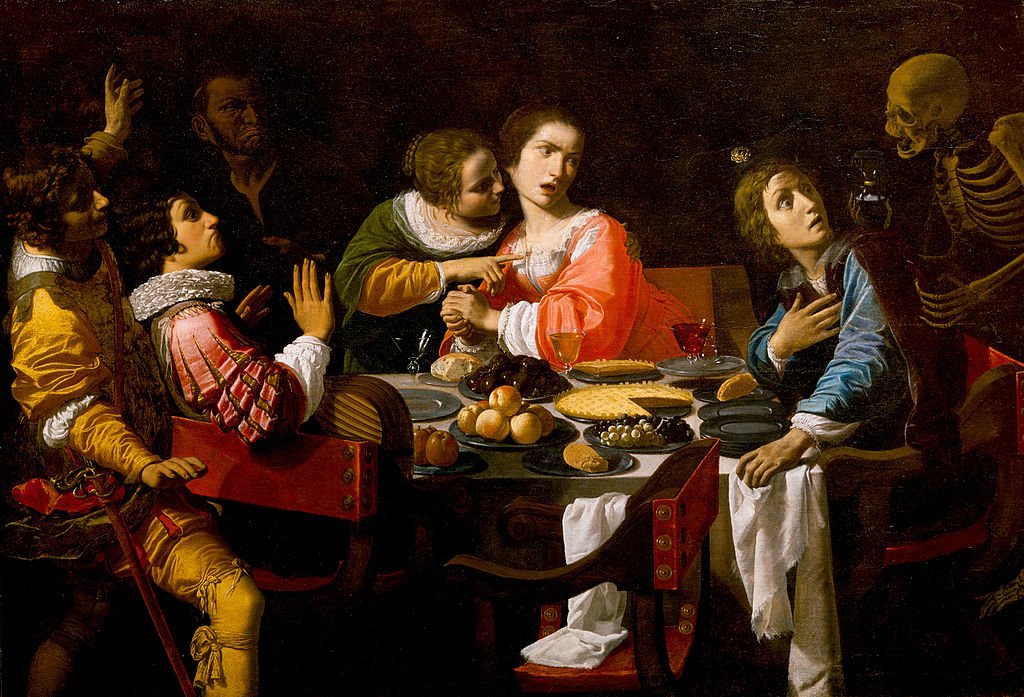
The Fear Spell turns courage into immediate flight. Weapons fall, defenders abandon their positions and a disciplined formation can dissolve into retreat before a blade is drawn.
It is most dangerous where holding ground matters: gateways, bridges, breaches, stairways, barricades and crowded battle lines.
Fear at a Glance
| 5.5e / 2024 | 3rd-level Illusion; Bard, Sorcerer, Warlock, Wizard; 30-foot Cone; Wisdom negates; Concentration, up to 1 minute |
|---|---|
| 5e / 2014 | 3rd-level Illusion; Bard, Sorcerer, Warlock, Wizard; 30-foot cone; Wisdom negates; Concentration, up to 1 minute |
| Pathfinder 1e | Necromancy [emotion, fear, mind-affecting]; Witch 4, Bard 3, Sorcerer/Wizard 4; 30-foot cone; Will partial; Spell Resistance yes; 1 round/level |
| D&D 3.5e | Necromancy [fear, mind-affecting]; Bard 3, Sorcerer/Wizard 4; 30-foot cone; Will partial; Spell Resistance yes; 1 round/level |
Critical difference: the fifth-edition spell imposes the Frightened condition and forces fleeing; Pathfinder and 3.5e inflict Panicked on a failed Will save, and even a successful Will save inflicts Shaken for 1 round. In Pathfinder this is a 4th-level Witch spell, not a 3rd-level Witch spell.
Spell Rules by Edition
Fear — 5.5e / 2024
Rules source: System Reference Document 5.2.1.
| Level | 3rd |
|---|---|
| School | Illusion |
| Classes | Bard, Sorcerer, Warlock, Wizard |
| Casting Time | Action |
| Range | Self |
| Area | 30-foot Cone |
| Components | V, S, M (a white feather) |
| Duration | Concentration, up to 1 minute |
| Saving Throw | Wisdom |
Each creature in the 30-foot Cone makes a Wisdom saving throw. On a failed save, the creature drops whatever it is holding and gains the Frightened condition for the duration.
On each of its turns while affected, the creature takes the Dash action and moves away from the caster by the safest available route unless there is nowhere it can move.
If the creature ends its turn somewhere it does not have line of sight to the caster, it makes another Wisdom saving throw. A successful save ends the spell on that creature.
Fear — 5e / 2014
Rules source: System Reference Document 5.1.
| Level & School | 3rd-level illusion |
|---|---|
| Classes | Bard, Sorcerer, Warlock, Wizard |
| Casting Time | 1 action |
| Range | Self (30-foot cone) |
| Components | V, S, M (a white feather or the heart of a hen) |
| Duration | Concentration, up to 1 minute |
| Saving Throw | Wisdom |
You project a phantasmal image of a creature’s worst fears. Each creature in the 30-foot cone makes a Wisdom saving throw. On a failed save, it drops whatever it is holding and becomes Frightened for the duration.
While Frightened by this spell, a creature must take the Dash action and move away from you by the safest available route on each of its turns, unless there is nowhere to move.
If it ends its turn somewhere without line of sight to you, it can make a Wisdom saving throw; on success, the spell ends for that creature. Losing sight alone does not immediately release it. The spell also ends when your Concentration ends or its duration expires.
Fear — Pathfinder 1e
Rules source: Archives of Nethys — Fear.
| School | Necromancy |
|---|---|
| Descriptors | Emotion, Fear, Mind-Affecting |
| Classes | Antipaladin 4, Arcanist 4, Bard 3, Bloodrager 4, Inquisitor 4, Medium 4, Mesmerist 3, Occultist 4, Psychic 4, Shaman 4, Skald 3, Sorcerer 4, Spiritualist 4, Witch 4, Wizard 4 |
| Casting Time | 1 standard action |
| Components | V, S, M |
| Material Component | The heart of a hen or a white feather |
| Range | 30 ft. |
| Area | Cone-shaped burst |
| Duration | 1 round/level or 1 round; see text |
| Saving Throw | Will partial |
| Spell Resistance | Yes |
An invisible cone of terror causes each living creature in the area to become Panicked unless it succeeds on a Will save.
A creature that fails remains panicked for 1 round per caster level. If cornered, it begins Cowering.
A creature that succeeds on its Will save is instead Shaken for 1 round.
Fear — D&D 3.5e
Rules source: D&D 3.5 SRD — Fear.
| School | Necromancy |
|---|---|
| Descriptors | Fear, Mind-Affecting |
| Classes | Bard 3, Sorcerer/Wizard 4 |
| Casting Time | 1 standard action |
| Components | V, S, M |
| Material Component | Either the heart of a hen or a white feather |
| Range | 30 ft. |
| Area | Cone-shaped burst |
| Duration | 1 round/level or 1 round; see text |
| Saving Throw | Will partial |
| Spell Resistance | Yes |
An invisible cone of terror causes each living creature in the area to become Panicked unless it succeeds on a Will save.
A creature that fails remains panicked for 1 round per caster level. If cornered, it begins Cowering.
A creature that succeeds on its Will save is instead Shaken for 1 round.
What Changed Between Editions
| 2024 versus 2014 | Both are 3rd-level Illusion spells for Bard, Sorcerer, Warlock, and Wizard, affect a 30-foot cone, and force a Frightened creature to drop held items and flee using Dash. 2024 uses a white feather; 2014 also permits a hen’s heart. 2024 requires the new save after ending a turn out of line of sight; 2014 says the creature can make it. |
|---|---|
| Pathfinder and 3.5 | Both are Necromancy fear effects. Bard casts them at level 3, while Sorcerer/Wizard use level 4; Pathfinder also grants Fear to the Witch at spell level 4. They affect living creatures, last 1 round per caster level after a failed Will save, and have Spell Resistance. The legacy material component can be a hen’s heart or a white feather. |
| Successful saving throws | A successful initial modern Wisdom save avoids the effect. A successful legacy Will save still leaves the creature Shaken for 1 round. Failed legacy saves cause Panicked, with Cowering when cornered. |
| Area and later movement | The cone selects creatures at casting. Leaving that original area does not itself remove a modern creature’s fear. Breaking line of sight provides the stated end-of-turn save, rather than an immediate ending. |
Worked Example: Terror at the Gatehouse
5.5e / 2024. A 7th-level Bard casts Fear with a spell save DC of 15, catching two enemy guards in the 30-foot Cone. Each makes a Wisdom save. A guard who fails drops what they are holding and becomes Frightened. On their turn the guard must Dash away by the safest route unless there is nowhere to go. If the guard finishes that turn behind a stone corner, out of line of sight of the Bard, it makes another Wisdom save; success ends Fear on that guard. Concentration is required for up to 1 minute, and the cone affects creatures caught in its area rather than enemies chosen individually.
5e / 2014. The same 3rd-level spell has the same initial cone, save, item-dropping and forced retreat. In the 2014 wording, when the guard ends a turn out of the caster’s sight it can make the repeated Wisdom save. The optional wording is an edition distinction; simply leaving the original cone does not end either spell.
Pathfinder 1e. An 8th-level Witch casts Fear (a 4th-level Witch spell). A living guard who fails its Will save is Panicked for 8 rounds and Cowers if cornered. A guard who succeeds on the Will save is still Shaken for 1 round. Spell Resistance applies. The effect is not a fifth-edition Frightened condition.
D&D 3.5e. An 8th-level Bard casting the 3rd-level Bard version likewise causes Panicked for 8 rounds on a failed Will save or Shaken for 1 round on success; creatures unable to flee Cower. The D&D 3.5e Sorcerer/Wizard version is a 4th-level spell. Do not apply 5e line-of-sight saving throws to either legacy edition.
Using Fear in Play
This magic is strongest when movement matters more than raw damage. A well-placed cone can empty a doorway, break defenders away from a barricade, scatter creatures guarding an objective or create space for wounded allies to escape.
Narrow terrain makes forced retreat particularly valuable. Bridges, stairs, alleys, gatehouses and dungeon corridors limit the routes available to affected creatures and make their movement easier to exploit.
The area is not selective, so positioning matters when allies and enemies occupy the same line of attack.
Fear Spell Rulings
Does leaving the cone end the modern spell?
No. The cone determines which creatures make the initial saving throw. Once affected, a creature does not escape simply by moving beyond 30 feet.
Does breaking line of sight end it immediately?
No. The end of a turn outside line of sight provides the new Wisdom save: the 2024 creature makes it, while the 2014 text says the creature can make it. A successful save ends the effect on that creature.
What happens if there is nowhere to flee?
In D&D 5.5e and 5e / 2014, the creature is not required to Dash away when there is nowhere it can move. It remains Frightened until the effect ends.
In Pathfinder 1e and D&D 3.5e, a panicked creature that is cornered cowers.
What happens on a successful Pathfinder or 3.5e save?
The creature is shaken for 1 round. Success reduces the effect rather than avoiding it completely.
Can undead be affected?
The D&D 5.5e and 5e / 2014 versions affect creatures generally. An Undead creature can therefore be affected unless its statistics or another rule protect it from the Frightened condition.
Pathfinder 1e and D&D 3.5e expressly affect living creatures.
Fear Magic in the World
On a fifteenth-century battlefield, courage is often collective. Soldiers hold because the line holds with them. Supernatural terror attacks that strength directly.
A caster near a breached wall can send defenders away from the opening. Used before mounted troops arrive, the spell can disrupt a spear line before impact. In a street fight it can clear a barricade or gate; aboard a ship it can drive defenders away from a ladder or contested section of deck.
Mercenary captains therefore have good reason to fear hostile spellcasters even when those casters possess little destructive magic. A formation that suffers few casualties but loses cohesion can still lose the field.
Learned natural philosophers debate whether this magic creates terror, exposes an existing instinct or forces the body to behave as though flight were the only rational choice. Soldiers generally prefer the simpler description: men who were standing suddenly run.
Related Spells
- Cause Fear — A smaller legacy fear effect aimed at a single creature.
- Remove Fear — Protects against fear and suppresses existing fear effects in legacy rules.
- Calm Emotions — Suppresses or protects against emotional effects rather than causing flight.
- Phantasmal Killer — Turns an individual victim’s terror into a more dangerous magical assault.
- Symbol of Fear — Places terror magic into a prepared magical trigger.
Mythical Context
Battlefield dread has a face in Hellenic myth. Phobos embodies panic, flight and rout; Deimos embodies terror and dread. The sons of Ares ride into battle alongside their father, dissolving resolve before armies even strike. A frightened host scattering before an invisible cone of dread recalls their power, though the poets give no numbered range, spell level or saving throw.
Ancient texts and imagery of Phobos and Deimos — Theoi · Phobos, spirit of battle panic
Historical Context
On a late-medieval battlefield, morale is often collective: a line can hold because its neighbours hold, and a sudden rout can expose the flank of an otherwise sound formation. In play, the spell offers a supernatural cause for such flight; ordinary historical sources do not establish that armies were ever dispersed by literal magic.
Giovanni Martinelli’s Death Comes to the Banquet Table, painted around 1630–1640, shows guests recoiling from a skeletal figure appearing among them. The work belongs to a later century, but its depiction of a gathering overwhelmed by terror makes it a fitting artistic image for Fear. The original painting is held by the New Orleans Museum of Art.
Primary Rules and Further Reading
Rules Sources and Licensing
This work includes material taken from the System Reference Document 5.1 (“SRD 5.1”) by Wizards of the Coast LLC and available at https://dnd.wizards.com/resources/systems-reference-document. The SRD 5.1 is licensed under the Creative Commons Attribution 4.0 International License available at https://creativecommons.org/licenses/by/4.0/legalcode.
This work includes material from the System Reference Document 5.2.1 (“SRD 5.2.1”) by Wizards of the Coast LLC, available at https://www.dndbeyond.com/srd. The SRD 5.2.1 is licensed under the Creative Commons Attribution 4.0 International License, available at https://creativecommons.org/licenses/by/4.0/legalcode.
The Pathfinder and 3.5 spell mechanics and their tables are Open Game Content under the Open Game License v1.0a. Artwork and original setting prose are excluded from that designation.
Open Game License v1.0a and copyright notices
Permission to copy, modify and distribute the files collectively known as the System Reference Document (“SRD”) is granted solely through the use of the Open Gaming License, Version 1.0a.
This material is being released using the Open Gaming License Version 1.0a and you should read and understand the terms of that license before using this material.
The text of the Open Gaming License itself is not Open Game Content. Instructions on using the License are provided within the License itself.
The following items are designated Product Identity, as defined in Section 1(e) of the Open Game License Version 1.0a, and are subject to the conditions set forth in Section 7 of the OGL, and are not Open Content: Dungeons & Dragons, D&D, Player’s Handbook, Dungeon Master, Monster Manual, d20 System, Wizards of the Coast, d20 (when used as a trademark), Forgotten Realms, Faerûn, proper names (including those used in the names of spells or items), places, Red Wizard of Thay, the City of Union, Heroic Domains of Ysgard, Ever-Changing Chaos of Limbo, Windswept Depths of Pandemonium, Infinite Layers of the Abyss, Tarterian Depths of Carceri, Gray Waste of Hades, Bleak Eternity of Gehenna, Nine Hells of Baator, Infernal Battlefield of Acheron, Clockwork Nirvana of Mechanus, Peaceable Kingdoms of Arcadia, Seven Mounting Heavens of Celestia, Twin Paradises of Bytopia, Blessed Fields of Elysium, Wilderness of the Beastlands, Olympian Glades of Arborea, Concordant Domain of the Outlands, Sigil, Lady of Pain, Book of Exalted Deeds, Book of Vile Darkness, beholder, gauth, carrion crawler, tanar’ri, baatezu, displacer beast, githyanki, githzerai, mind flayer, illithid, umber hulk, yuan-ti.
All of the rest of the SRD is Open Game Content as described in Section 1(d) of the License.
More information on the Open Game License can be found at www.wizards.com/d20.
The terms of the Open Gaming License Version 1.0a are as follows:
OPEN GAME LICENSE Version 1.0a
The following text is the property of Wizards of the Coast, Inc. and is Copyright 2000 Wizards of the Coast, Inc (“Wizards”). All Rights Reserved.
1. Definitions: (a)”Contributors” means the copyright and/or trademark owners who have contributed Open Game Content; (b)”Derivative Material” means copyrighted material including derivative works and translations (including into other computer languages), potation, modification, correction, addition, extension, upgrade, improvement, compilation, abridgment or other form in which an existing work may be recast, transformed or adapted; (c) “Distribute” means to reproduce, license, rent, lease, sell, broadcast, publicly display, transmit or otherwise distribute; (d)”Open Game Content” means the game mechanic and includes the methods, procedures, processes and routines to the extent such content does not embody the Product Identity and is an enhancement over the prior art and any additional content clearly identified as Open Game Content by the Contributor, and means any work covered by this License, including translations and derivative works under copyright law, but specifically excludes Product Identity. (e) “Product Identity” means product and product line names, logos and identifying marks including trade dress; artifacts; creatures characters; stories, storylines, plots, thematic elements, dialogue, incidents, language, artwork, symbols, designs, depictions, likenesses, formats, poses, concepts, themes and graphic, photographic and other visual or audio representations; names and descriptions of characters, spells, enchantments, personalities, teams, personas, likenesses and special abilities; places, locations, environments, creatures, equipment, magical or supernatural abilities or effects, logos, symbols, or graphic designs; and any other trademark or registered trademark clearly identified as Product identity by the owner of the Product Identity, and which specifically excludes the Open Game Content; (f) “Trademark” means the logos, names, mark, sign, motto, designs that are used by a Contributor to identify itself or its products or the associated products contributed to the Open Game License by the Contributor (g) “Use”, “Used” or “Using” means to use, Distribute, copy, edit, format, modify, translate and otherwise create Derivative Material of Open Game Content. (h) “You” or “Your” means the licensee in terms of this agreement.
2. The License: This License applies to any Open Game Content that contains a notice indicating that the Open Game Content may only be Used under and in terms of this License. You must affix such a notice to any Open Game Content that you Use. No terms may be added to or subtracted from this License except as described by the License itself. No other terms or conditions may be applied to any Open Game Content distributed using this License.
3.Offer and Acceptance: By Using the Open Game Content You indicate Your acceptance of the terms of this License.
4. Grant and Consideration: In consideration for agreeing to use this License, the Contributors grant You a perpetual, worldwide, royalty-free, non-exclusive license with the exact terms of this License to Use, the Open Game Content.
5.Representation of Authority to Contribute: If You are contributing original material as Open Game Content, You represent that Your Contributions are Your original creation and/or You have sufficient rights to grant the rights conveyed by this License.
6.Notice of License Copyright: You must update the COPYRIGHT NOTICE portion of this License to include the exact text of the COPYRIGHT NOTICE of any Open Game Content You are copying, modifying or distributing, and You must add the title, the copyright date, and the copyright holder’s name to the COPYRIGHT NOTICE of any original Open Game Content you Distribute.
7. Use of Product Identity: You agree not to Use any Product Identity, including as an indication as to compatibility, except as expressly licensed in another, independent Agreement with the owner of each element of that Product Identity. You agree not to indicate compatibility or co-adaptability with any Trademark or Registered Trademark in conjunction with a work containing Open Game Content except as expressly licensed in another, independent Agreement with the owner of such Trademark or Registered Trademark. The use of any Product Identity in Open Game Content does not constitute a challenge to the ownership of that Product Identity. The owner of any Product Identity used in Open Game Content shall retain all rights, title and interest in and to that Product Identity.
8. Identification: If you distribute Open Game Content You must clearly indicate which portions of the work that you are distributing are Open Game Content.
9. Updating the License: Wizards or its designated Agents may publish updated versions of this License. You may use any authorized version of this License to copy, modify and distribute any Open Game Content originally distributed under any version of this License.
10. Copy of this License: You MUST include a copy of this License with every copy of the Open Game Content You Distribute.
11. Use of Contributor Credits: You may not market or advertise the Open Game Content using the name of any Contributor unless You have written permission from the Contributor to do so.
12. Inability to Comply: If it is impossible for You to comply with any of the terms of this License with respect to some or all of the Open Game Content due to statute, judicial order, or governmental regulation then You may not Use any Open Game Material so affected.
13. Termination: This License will terminate automatically if You fail to comply with all terms herein and fail to cure such breach within 30 days of becoming aware of the breach. All sublicenses shall survive the termination of this License.
14. Reformation: If any provision of this License is held to be unenforceable, such provision shall be reformed only to the extent necessary to make it enforceable.
15. COPYRIGHT NOTICE
Open Game License v 1.0a Copyright 2000, Wizards of the Coast, Inc.
System Reference Document Copyright 2000-2003, Wizards of the Coast, Inc.; Authors Jonathan Tweet, Monte Cook, Skip Williams, Rich Baker, Andy Collins, David Noonan, Rich Redman, Bruce R. Cordell, John D. Rateliff, Thomas Reid, James Wyatt, based on original material by E. Gary Gygax and Dave Arneson.
Pathfinder Roleplaying Game Core Rulebook. © 2009, Paizo Publishing, LLC; Author: Jason Bulmahn, based on material by Jonathan Tweet, Monte Cook, and Skip Williams. END OF LICENSE
Keep this reference growing
If this page helped with your reading or game, you can support its upkeep or explore the curated books.
Explore the Bookshop — epics, classics and stories behind imagined worlds.