
Deceptive Object Spell
Deceptive Object Spell
A targeted illusion that makes one chosen victim see a false item while everyone else sees the truth.

The Deceptive Object spell does not hide an item from the world. It does something subtler and more dangerous: it leaves the object unchanged, plainly visible, and perfectly ordinary to everyone except the one person the caster has chosen to deceive.
Overview
Deceptive Object is a selective phantasm that alters one victim’s perception of a prepared item. The object itself does not transform. Its weight, shape, texture, and function remain exactly as they were. The deception exists inside the target’s mind, causing the chosen observer to interpret the item according to the caster’s prepared false appearance.
A rusted key may seem to be a noble signet. A plain dagger may appear to be a saint’s relic. A blank parchment may look like a royal warrant, a spell scroll, a confession, or a letter bearing a familiar hand. A cheap cloak may seem to be ceremonial court dress, while a worthless trinket may appear to be the lost jewel of a noble house.
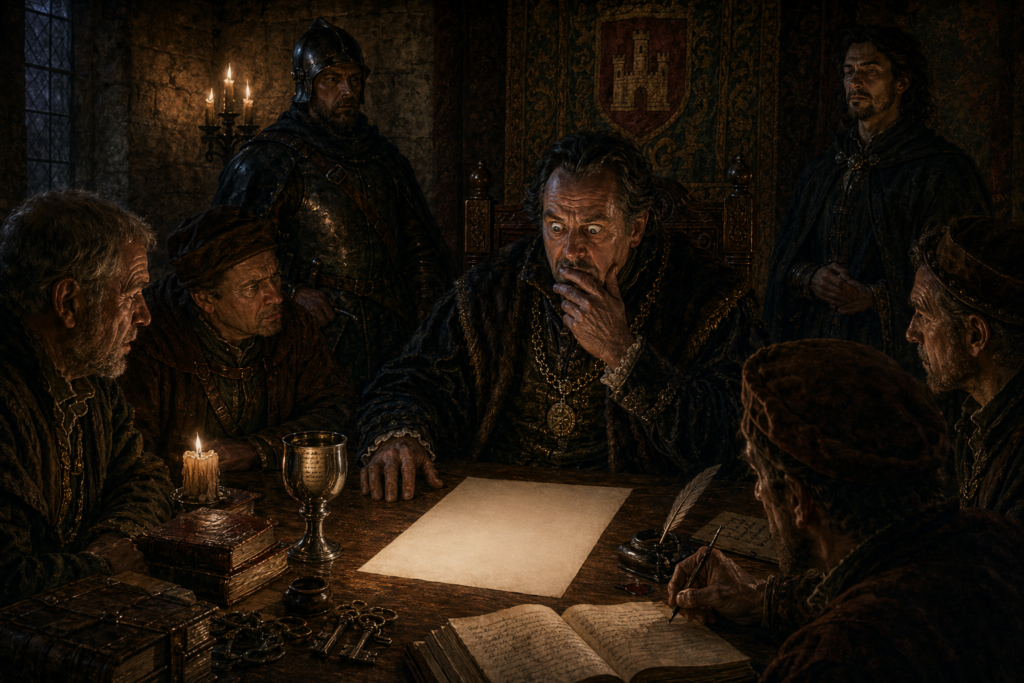
The danger of Deceptive Object Spell lies in its privacy. Other creatures perceive the object normally unless affected by some other magic. This means the victim’s mistake can look like madness, guilt, drunkenness, corruption, or deliberate lying. In courts, shrines, trade halls, faerie bargains, and criminal dealings, one person seeing the wrong thing at the right moment can ruin a family, open a gate, break an oath, or begin a war.
Deceptive Object Spell 5.5e / 2024
Deceptive Object Spell Pathfinder 1e
Deceptive Object Spell 3.5
Deceptive Object Spell
4th-Level Illusion
Casting Time: 1 minute
Range: 60 feet
Components: V, S, M
Material Component: A drop of blood from a supernatural creature of deception, such as a rakshasa, doppelganger, or similar shapeshifting deceiver; the blood may be fresh or dried to powder.
Duration: Until dispelled or triggered, then 8 hours
Available To: Bard, Sorcerer, Wizard
Alternative Spell Name: The False Token
Effect
You cast this spell on one nonmagical object you can see within range. The object must be Tiny, Small, or Medium, and it must not be worn or carried by an unwilling creature when the spell is cast.
When you cast the spell, choose the kind of creature that can trigger it. The trigger may be broad, such as “the next humanoid who sees the object,” or narrow, such as “the next knight wearing a red cloak,” “the next elf who touches the object,” or “Lord Maelwyn of Dun Glas.” To key the spell to a specific individual, you must have a physical token from that creature, such as a lock of hair, nail clipping, drop of blood, or personal possession.
You also decide what the triggering creature will perceive the object to be. The false appearance can alter the object’s apparent material, decoration, writing, quality, purpose, origin, or identity. A club might seem to be a famous sword. A blank parchment might seem to be a written contract. A plain robe might seem to be a lordly garment. The illusion may be drastic, but it cannot make the object function as the thing perceived.
The first creature matching the trigger that clearly sees, touches, examines, or otherwise meaningfully notices the object becomes the spell’s victim. For that creature only, the object appears to be the false item you described. Other creatures see the object as it truly is.
The victim does not automatically make a saving throw when the spell is triggered. The victim makes an Intelligence saving throw only when the false perception comes under meaningful doubt: direct physical use, close examination, obvious contradiction, convincing evidence from another creature, or suitable magical scrutiny. On a failed save, the victim explains away the inconsistency and continues to perceive the object falsely. On a successful save, the victim recognizes the deception, sees the object as it truly is, and the spell ends for that victim.
Examples of situations that call for a saving throw include trying to wield a garment believed to be a sword, attempting to read a false scroll that produces no usable magical response, or being shown clear proof that the object is not what it appears to be. Merely wearing a robe that appears finer than it is, accepting a false seal at a glance, or seeing a forged-looking document from across a table may not grant a save until closer scrutiny creates a contradiction.
The spell ends when its triggered duration expires, when it is dispelled, or when the victim succeeds on the saving throw.
At Higher Levels
When you cast this spell using a spell slot of 5th level or higher, the triggered duration increases by 8 hours for each slot level above 4th.
Deceptive Object Spell
School: Illusion (phantasm) [mind-affecting]
Level: Bard 4, Sorcerer/Wizard 4
Casting Time: 1 full round
Components: V, S, M
Range: Close, 25 ft. + 5 ft./2 levels
Target: One unattended object of Tiny to Medium size
Duration: Permanent until discharged; then 1 hour/level
Saving Throw: Will disbelief, see text
Spell Resistance: Yes
You place a phantasmal deception upon one unattended object, causing the first creature that matches a trigger you define to perceive the object as something else. The trigger may be broad, such as “the next humanoid to see the object,” or highly specific, such as “the next albino half-orc in full plate armor to touch the object.” A trigger keyed to a specific individual requires a physical token from that creature, such as hair, nail, blood, or a personal possession.
When Deceptive Object Spell is cast, you also determine the object’s false appearance in the victim’s mind. The object may seem finer, poorer, more valuable, more dangerous, more official, more magical, or entirely different from its true nature. A blank parchment might appear to be a magical scroll, a club might appear to be a named sword, or common clothing might appear to be ceremonial robes. The spell alters only the victim’s perception and does not alter the object’s actual shape, weight, texture, function, or magical properties.
The first creature matching the trigger that sees, touches, examines, or otherwise meaningfully notices the object becomes the spell’s victim. To all other creatures, the object appears normal.
The victim receives a Will save to disbelieve only when interaction with the object creates a meaningful contradiction between the object’s real nature and its perceived nature. Wearing common clothing that appears to be rich ceremonial dress may not allow a save. Attempting to wield clothing perceived as a sword does. A successful save reveals the object’s true nature to the victim and ends the spell’s effect for that creature.
Material Component: A drop of blood from a supernatural creature of deception, such as a rakshasa or doppelganger. The blood may be fresh or dried into powder.
Deceptive Object Spell

The purpose of this spell is to make the victim believe that an item is something else that it really is, while all other peoples perceive it normally.
Celtic Druids and the Tuatha de Dannan
By Dominique Crouzet
Illusion (Phantasm) [Mind-affecting]
Level: Bard 4, Sorcerer/Wizard 4, Satire 4
Components: V, S, M
Casting Time: 1 full round
Range: Close (25 ft. + 5ft./2 levels)
Target: 1 item of tiny to medium size
Duration: Permanent until discharged; then 1 hour/level
Saving Throw: Will disbelief
Spell Resistance: Yes
The spell is to be cast upon an item the caster wants to alter in the perception of the first appropriate person seeing it. The caster thus first determines who will be subject to the spell. This may be as vague as -any humanoid-, or as complex as ·an albinos half-orc in full plate armour·, or keyed to a specific individual through the use of a lock of hair, nail, etc. from that character.
Thereafter, the first person conforming to the trigger’s specifications, who gets by the item (seeing it, touching it, etc.) will be affected by the spell. Then the caster determines how the item will be perceived by the victim. So the light clothes of a prostitute could be made appear as a rich ceremonial robe; a club like the sword of Selthor; a blank parchment as a magical scroll; etc. The alteration may be even more drastic, as to make the light clothes of a Shiranese prostitute appear as the sword of Selthor. However the Will saving throw is dependant upon the correlation between what the item really is, and what the victim is to perceive.
That is, the victim will be entitled a saving throw for disbelief only in cases of non correlated interaction with the item. Wielding clothes as if they were a sword entitles a saving throw for disbelief; not wearing clothes altered to appear as another sort of garb.
Material Components: a drop of blood of a supernatural creature of deception such as a rakshasa or doppleganger. This blood may be fresh, or have long be turned to powder.
Why using the Deceptive Object Spell Is Dangerous in the World
Deceptive Object is dangerous because it does not need to fool a crowd. It only needs to fool the right person.
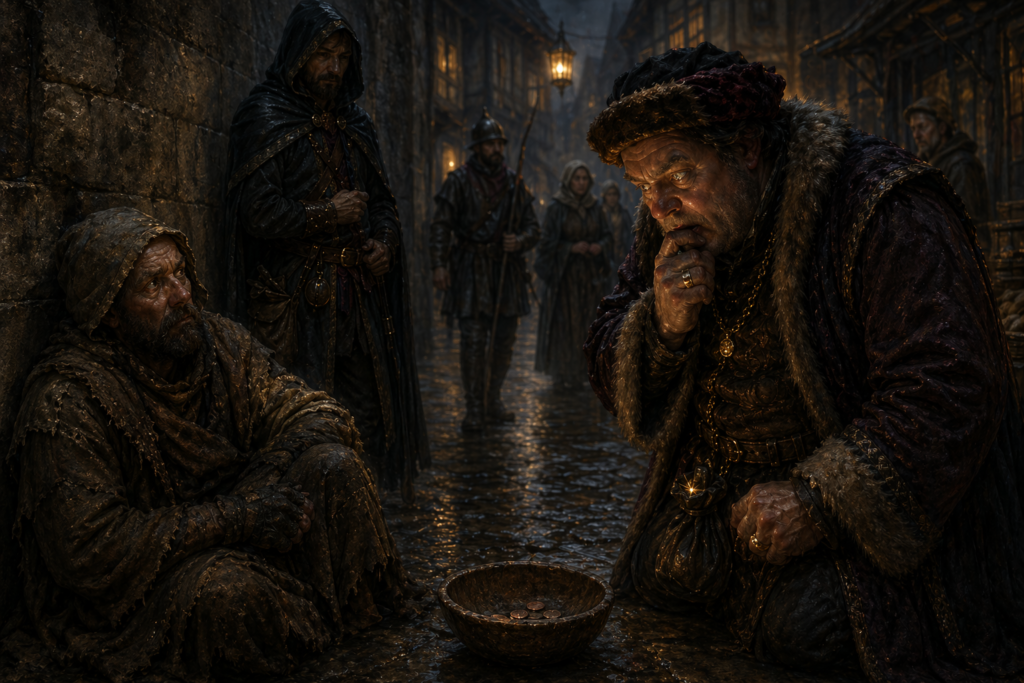
A guard who sees a false writ may open a gate. A noble who sees a false heirloom may accept a marriage bargain. A priest who sees a false relic may admit a stranger into a shrine. A merchant who sees false gold may surrender real wealth. Because everyone else sees the object normally, the victim may be isolated by the very honesty of the witnesses around them.
This makes the Deceptive Object Spell especially useful to satirists, court magicians, spies, thieves, blackmailers, faerie agents, and political saboteurs. Its true power is not disguise, but targeted misjudgment.
Best Uses
- Courtly deception: Make a false seal, robe, badge, or token appear legitimate to one official.
- Theft and fraud: Cause a worthless object to appear valuable to a chosen buyer, collector, or patron.
- Trap preparation: Make a dangerous object seem harmless to the intended victim.
- Assassination plots: Make a weapon, poison vessel, or incriminating token appear innocent.
- Social sabotage: Make one person insist on a false reality that no one else can see.
- Faerie bargains: Turn a symbolic object into a private temptation, warning, insult, or test.
Tactics
The Deceptive Object Spell works best when the false object remains close enough to the truth that the victim has little reason to test it. A plain robe made to look like embroidered court clothing is more reliable than a robe made to look like a sword. A blank parchment made to look like an official letter is stronger if the victim is expected to glance at it quickly rather than study it line by line.
The trigger should be chosen with care. A broad trigger is easier to set but risks affecting the wrong person. A narrow trigger gives greater control but may never discharge if the chosen creature does not interact with the item.
The strongest uses combine the spell with pressure: a crowded hall, a rushed checkpoint, a night journey, a public ceremony, a dangerous negotiation, or a moment when the victim must act before careful inspection is possible.
DM Notes
The key ruling point is correlation. The more closely the false appearance matches the object’s real physical use, the fewer chances the victim should have to disbelieve. If the deception asks the victim to accept a better, poorer, older, holier, more official, or more valuable version of the same general thing, the spell should be difficult to expose. If the deception asks the victim to treat the object as something physically incompatible, a saving throw should come quickly.
Do not let the spell create functional objects. A club perceived as a sword does not become sharp. A blank parchment perceived as a scroll does not cast a spell. A stone perceived as bread does not nourish anyone. The spell alters belief, not matter.
Deceptive Object is strongest in social, investigative, political, criminal, and faerie-themed adventures. It is less useful in direct combat unless prepared in advance as part of a trap, ambush, ransom, test, or public deception.
Good Combinations
- Disguise Self: Helps the caster match the social context of the false object.
- Major Image: Creates surrounding evidence that supports the victim’s mistaken interpretation.
- Suggestion: Pushes the victim toward acting on the false belief before doubts arise.
- Modify Memory: Conceals the moment when the victim first encountered the deceptive object.
- Nystul’s Magic Aura: Makes the object’s magical or nonmagical nature support the lie.
- Arcane Lock: Protects a false seal, chest, door, or document from immediate investigation.
Using This Spell in Your Game
Use Deceptive Object when you want a mystery in which different witnesses honestly report different truths. One person saw the duke’s ring. Everyone else saw a brass trinket. One guard saw a royal warrant. The captain saw blank vellum. One priest saw a saint’s relic. The acolytes saw a bone wrapped in dirty cloth.
The spell also works well as a player tool. It rewards planning, timing, and target selection rather than brute force. A clever party can use it to pass a checkpoint, expose a corrupt official, bait a villain, deceive a collector, or trick a faerie envoy into revealing what they desire most.
Spellcasting Culture and Worldbuilding Hooks
Among bards, the spell is associated with satire, scandal, and the weaponizing of embarrassment. A satirist does not need to make a king look foolish to everyone; making the king alone misread a gift in public can be enough.
Among wizards, Deceptive Object is treated as a specialist phantasm used in espionage and controlled tests of perception. Magical colleges may restrict its teaching because the spell is difficult to prove after the fact unless the object, victim, and circumstances are all examined together.
Among druids and faerie-touched spellcasters, the spell has older roots. It belongs to the magic of riddling gifts, cursed tokens, glamoured offerings, and objects that reveal more about the beholder than the thing beheld.
Adventure Hooks
- The False Charter: A border lord surrendered a disputed bridge after seeing a royal charter no one else can confirm. The document still exists, but every witness describes it differently.
- The Saint’s Bone: A shrine has accepted a relic that appears holy only to the high priest. The acolytes fear either fraud, madness, or a faerie test.
- The Wrong Sword: A champion entered a duel carrying what he believed was an ancestral blade. In every other hand, it is only a carved length of dark wood.
- The Impossible Dowry: A marriage bargain collapses when one family swears they received a chest of gold, while the other insists the chest contained only river stones.