
Gao — City of the Niger and Songhai Court
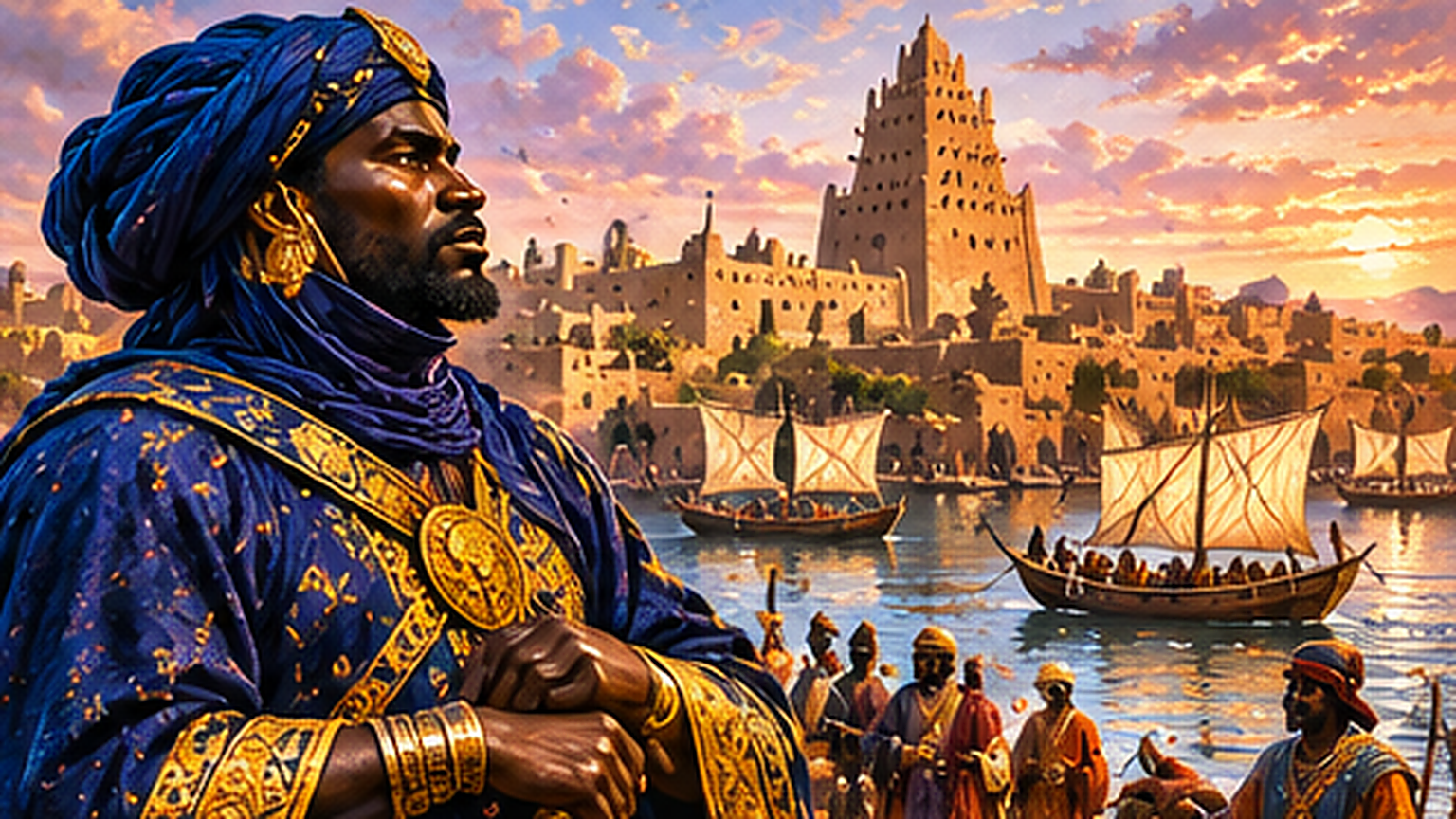
Eastern Niger Bend · Songhai River Power · Tuareg Pressure · 1454 CE
At a Glance
| Place | Large river trading city and heartland of Songhai political power |
|---|---|
| Political situation | Competing Tuareg overlordship and Songhai dynastic authority, negotiated through river households and merchant alliances |
| Landscape | Wide Niger river, mud-brick quarters, cultivated floodplain, river islands and dry savanna approaches |
| Livelihoods | Fishing, grain markets, boat transport, salt, copper, textiles and long-distance trade |
| Routes | River canoe routes, eastern caravan roads, desert trails and journeys toward Timbuktu |
| Dangers | Shifting channels, divided loyalties, caravan raids and threats to food supplies |
| Campaign present | 1454 CE |

The boats come in before the heat gathers. Fishers stand on planked decks calling for porters, and a train of pack animals waits near the grain stores. At the gate, a Songhai captain argues with a desert escort whose chief demands authority over the crossing. Both men have armed followers. Neither can afford to stop the river market for long.
What Is Happening Right Now?
Gao’s houses, river pilots and merchants are wealthy enough to attract powerful patrons and military rivals. Songhai royal households still command loyalty here, but Tuareg overlords also assert their authority on the Niger Bend. Neither can rely upon every river landing, and the city’s merchants judge both by the protection they actually provide. An agreement made with an armed caravan commander may be enforced on the bank for a season and rejected a few miles downstream. A court whose guards protect the docks can win the city’s support; one that raids the stores for troops will create enemies among merchants and boat crews alike.
Mali’s influence has weakened, while Songhai authority is strengthening around the eastern Niger. The great imperial victories associated with later rulers have not yet taken place. Timbuktu lies upstream within another contested sphere, and a traveller carrying a letter from that city cannot assume every officer in Gao will honour it.
River levels are falling after an uncertain season. Grain must reach the poorest neighbourhoods before a wealthy household buys the remaining boats for a private caravan. That is a political decision as well as a commercial one.
Places to Explore
The River Landing
Heavy boats, narrow canoes and bundles of reed float at the edge of the floodplain. Landing masters choose where larger cargoes can be unloaded safely. Traders argue over goods damaged by water, crews negotiate their next journey and porters build temporary awnings above stacks of grain. A boat may be safely moored at one bank only to be stranded after a change in current.
The Songhai Court Quarters
The city’s ruling households maintain residences, compounds for visiting envoys and places where captains settle disputes. Officers rely upon local informants and boat pilots for their influence. A guest presenting gifts to one household can attract the suspicion of another, especially when the gift contains news of which desert raiders control the roads.
Grain and Craft Markets
Fields along the river provide millet and other food crops, while fishermen bring daily catches. Artisans sell pottery, ropes, textile work, knives, tools and leather goods. Copper, salt and fine cloth come by caravan or through linked markets, but shortages can raise prices quickly. An official who seizes a trader’s boat to feed the garrison may anger the whole quarter.
Older River Settlements
Across the floodplain and upstream are established settlements with their own leaders, gardens, sacred places and river rights. They are not extensions of a royal palace. A court emissary must negotiate with the people who can actually supply the food, repair the landing or find a boat when the current rises.
Desert Caravan Camps
Caravans rest on the dry approaches before entering the busy town. Tuareg captains and guides know wells and desert crossings that many river families have never visited. Agreements over water, escorts and lost animals are settled here; occasionally a wounded rider arrives carrying news that his convoy has been destroyed beyond the last known well.
People, Power and Sacred Life
Songhai captains seek to secure the river and strengthen their ruler against challengers. Their soldiers are feared when they requisition food, but welcome when they protect farmers from raiders. Tuareg commanders control desert knowledge and may demand recognition at a crossing; a fair escort is worth its price, while one who takes hostages loses the next caravan’s trust. Boat families understand the changing Niger better than any visitor. They can refuse to carry troops across dangerous shallows, and wealthy merchants know how to influence a court that depends on river transport.
Local households honour their own ancestors, sacred places and communal obligations. River rites belong to particular people and places, not a single faith imposed upon all travellers. Elders may demand that an armed crew explain its purpose before passing a ritual landing. A ruler’s treatment of ordinary households is remembered long after his court has forgotten the order.
Markets, Shelter and Help
Gao offers food, animal fodder, boat repair, small metalwork, cloth, shelter through merchants’ compounds and guides familiar with both riverside and savanna routes. Boatmen know which islands remain above water, while caravan leaders know where an entire company can obtain water on the road. The most important service is often an introduction to someone whom the next village trusts.
Coin and valuable trade goods can ease a bargain, but neither guarantees passage through a settlement that has recently suffered a raid. Food and clean water are never an unlimited commodity, especially when an armed convoy plans to arrive unannounced.
Magic and Sacred Services
River elders, healers and specialist boat families guard knowledge of currents, sacred landings and protective rites for dangerous crossings. A ferryman says an old bronze sounding weight will always find the true channel, but it has begun pointing toward a forbidden island. The ruler’s captain calls the weight a valuable tool; the river families say it belongs to the ancestral landing. The party cannot use it without deciding which obligation to honour.
Dangers and Adventure Hooks
- The empty grain boat: a vessel expected to feed two districts arrives with its hold emptied. Its crew swears that an officer carried a sealed order requiring delivery elsewhere, but nobody at the court will admit sending it.
- The missing river pilot: a guide who knows a safe route past a dangerous channel disappears during a dispute between a Songhai captain and a Tuareg caravan chief. Both blame the other, while a young fisher says she crossed to the island alone.
- Hostages at the caravan camp: a trader accuses an escort of taking his family captive. The escort leader replies that the trader has refused to honour a bargain that kept every traveller alive through the desert.
- The bank that moved: floodwater exposes a former landing and cuts off a market quarter. Two communities must work together to rescue their grain before armed rivals decide whose supplies are worth saving.
Travel and Wider Geography
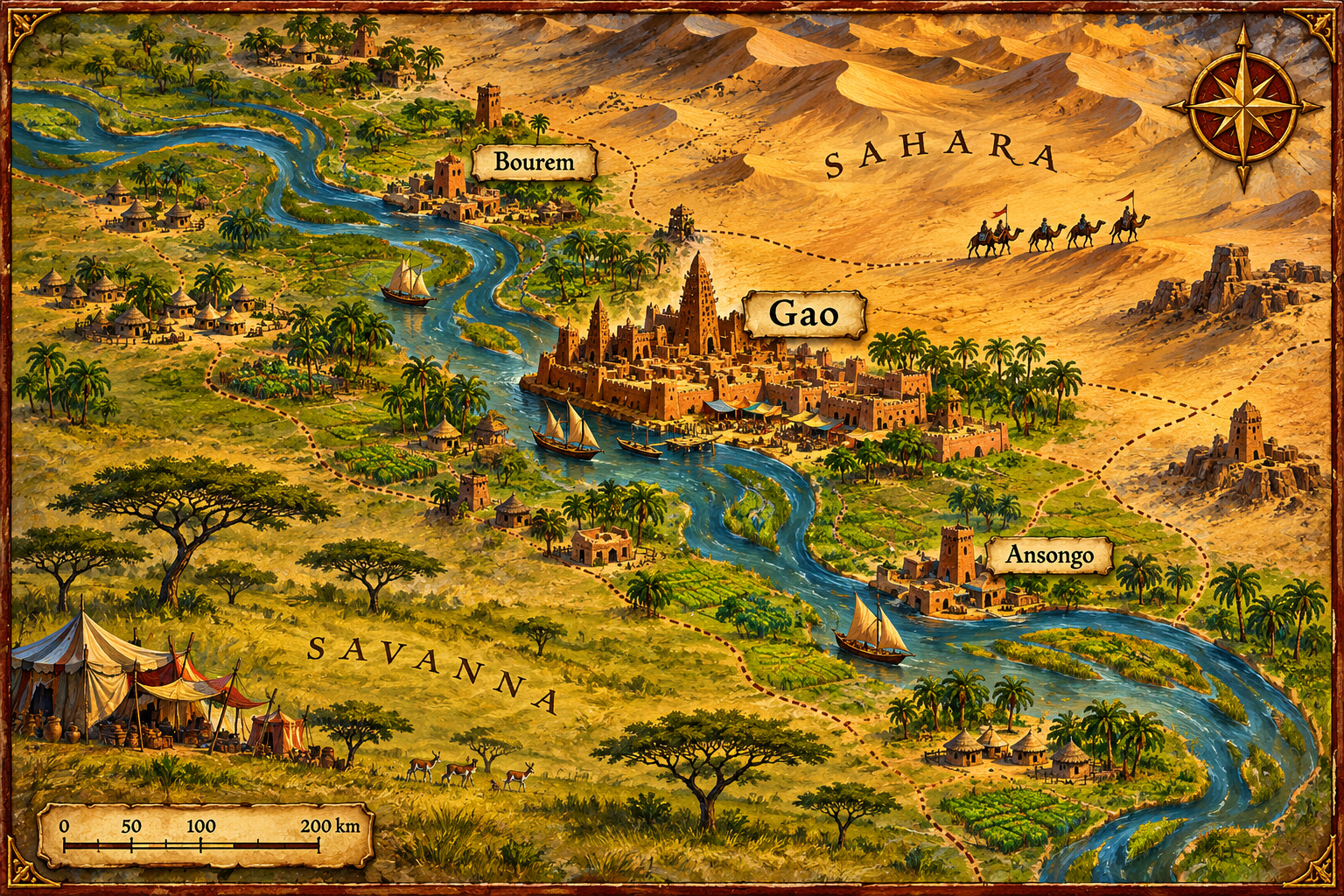
Gao sits at the eastern Niger Bend. River voyages depend on current, channels, season, boat design and the skill of their crews. Overland paths lead through market settlements and toward long Saharan crossings; the safest journey follows established wells and agreements rather than a straight line on a map. Those travelling northwest may reach Timbuktu; the wider West Africa guide covers the shifting balance of Mali, Tuareg and Songhai powers.
Southward, caravan roads connect with the Hausa city-states and the Sudanian Savanna. Deserts and riverbanks belong to different worlds of travel, both dangerous to those without suitable guides.
Deeper History
Gao has been a significant Niger and Saharan trading centre for centuries. Its Songhai dynasties and markets have long linked farming and fishing communities to desert merchants. The 1450s precede the great conquests of Sonni Ali, and control of the Niger Bend remains politically contested. The city is not yet the unquestioned capital of the later vast Songhai Empire. The named disputes, characters and specific incidents above are adventures of the campaign present.
Historical Sources
Metropolitan Museum: Western and Central Sudan, 1400–1600 · OpenStax: Songhai’s rise.
Keep this reference growing
If this page helped with your reading or game, you can support its upkeep or explore the curated books.
Explore the Bookshop — epics, classics and stories behind imagined worlds.